Window Tool Set
CN → US| HS Code | Tariff Rate | Origin | Destination | Doc |
|---|---|---|---|---|
| 8205906000 | 0.0% | CN | US | Official Doc |
Product Images
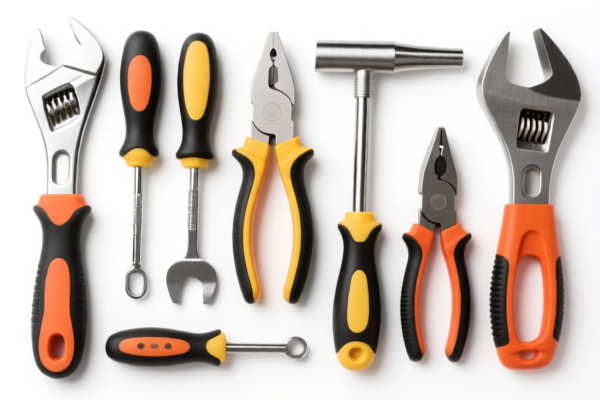
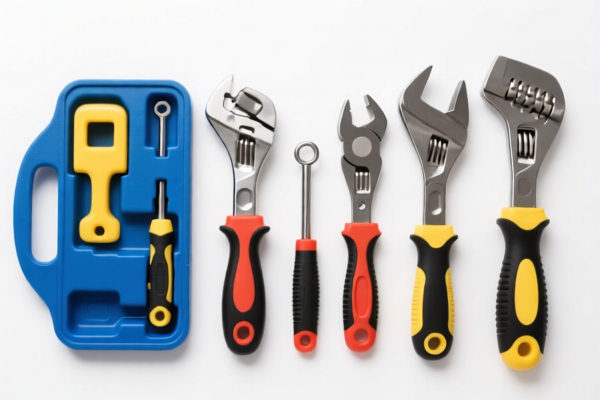
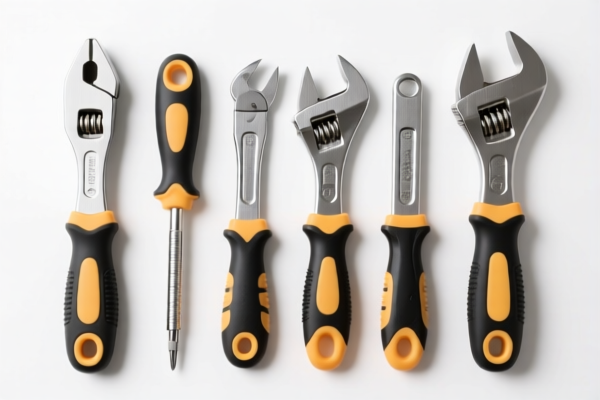
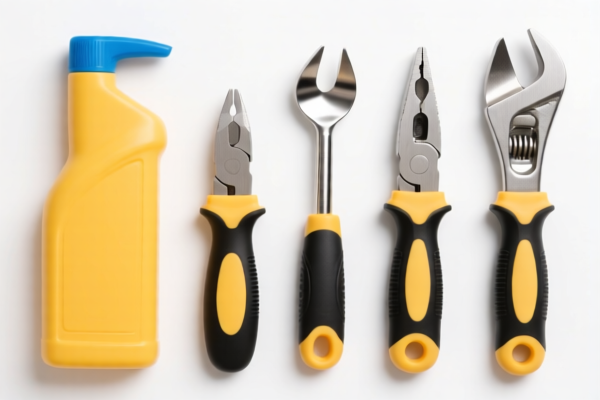
AI Analysis
🖥️ Window Tool Set (Manual Window Repair & Installation Kits)
🌐 HS Code Reference & Clearance Guide | 2026 Latest Tariff Analysis | Professional Customs Strategy
📌 I. Product Definition & Classification: What is a "Window Tool Set"?
A "Window Tool Set" in international trade typically refers to a collection of handheld tools specifically designed for the installation, repair, or maintenance of windows and glass. These kits often include items such as: * Glass Cutters: For scoring and breaking glass. * Putty Knives/Scrappers: For removing old glazing compound. * Glazing Spatulas: For applying new putty. * Clamps/Vices: For holding glass in place. * Blow Torches: For softening old putty (if included).
⚠️ Key Distinction:
- If the set contains handtools of base metal (e.g., steel putty knives, glass cutters, small vices) that fall under different subheadings within Heading 8205, it is classified as a "Set of articles."
- If the tools are made of other materials (e.g., plastic handles only, or non-metal tools), they may fall under different headings (e.g., 8208 or 8501), but "Window Tool Sets" are predominantly base metal handtools.
- Exclusion: These are not machine tools (Heading 84) or water-jet cutting machine parts. They are strictly handheld.
📦 II. HS Code Classification Details (2026 Latest Tariff Authority Comparison)
The provided data points to a specific classification for sets of base metal handtools not elsewhere specified.
| HS Code | Product Description | Applicable Scenario | Material Composition |
|---|---|---|---|
8205.90.60.00 |
Handtools (including glass cutters) not elsewhere specified; blow torches; vices, clamps... Other, including sets of articles of two or more subheadings of this heading: Sets of articles of two or more of the foregoing subheadings | A kit containing multiple types of manual tools (e.g., a glass cutter + a putty knife + a small vice) made of base metal, packaged together for retail sale. | Base Metal (Steel, Iron, etc.) |
🔍 Key Note:
- The code8205.90.60.00is specifically for "Sets of articles of two or more of the foregoing subheadings."
- This means if your window tool set contains at least two different types of handtools from the list in Heading 8205 (e.g., a glass cutter and a blow torch, or a vice and a grinders wheel framework), it must be classified here.
- If it contains only one type of tool (e.g., just a glass cutter), it should be classified under the specific subheading for that tool (e.g.,8205.10.00.00for glass cutters), NOT8205.90.60.00.
💰 III. 2026 Latest Tariff Rate Breakdown (Including Additional Duties)
✅ Applicable Country: United States (US)
✅ Origin: China (CN)
✅ Effective Date: Current rates apply (Subject to Section 301 & IEEPA)
🎯 1. 8205.90.60.00 —— Sets of Base Metal Handtools (Including Window Tool Sets)
| Item | Content |
|---|---|
| Base Duty Rate | The rate of duty applicable to that article in the set subject to (Note: This is a variable rate depending on the specific tools inside, but typically low, e.g., 0-5.6% for base metal tools). |
| Additional Duty (Section 301) | +25.0% |
| Total Effective Tax Rate | Base Rate + 25.0% |
| Tax Calculation | CIF Value × (Base Rate + 25%) |
| De Minimis Exemption | ❌ Not Applicable for sets subject to additional duties. |
| Legal Basis Path | USITC:8205.90.60.00 → Section 301: 25% |
📌 Explanation:
- "Base Rate": The standard Most Favored Nation (MFN) duty for handtools is generally low (often 0% or 5.6% depending on the specific tool type within the set). However, because this is a set, the duty is calculated on the value of the entire set at the rate applicable to the article in the set.
- "+25.0%": This is the Section 301 additional duty applied to Chinese-origin goods falling under Chapter 82 (Articles of Iron or Steel).
- Total Cost Impact: Even if the base duty is 0%, the minimum additional duty is 25%. If the base duty is 5.6%, the total becomes 30.6%.
🛠️ IV. Clearance Practical Advice (Real-World Pitfall Avoidance)
✅ 1. Documentation Checklist (Mandatory)
| Document | Required | Description |
|---|---|---|
| ✅ Commercial Invoice | ✔️ | Must clearly state "Window Tool Set (Handtools)" and list each item inside the set with its individual value. |
| ✅ Packing List | ✔️ | Detail the contents: e.g., "1x Glass Cutter, 2x Putty Knives, 1x Small Vice." |
| ✅ Product Photos | ✔️ | Show the set as sold (packaged together) to prove it is a "set" under HS 8205.90. |
| ✅ Material Declaration | ✔️ | Confirm all tools are made of base metal (steel/iron). If any tool is plastic or ceramic, the classification may change. |
| ✅ Country of Origin Certificate | ✔️ | Essential for applying (or disputing) the 25% additional duty. |
✅ 2. Declaration Tips (Critical Rules)
🔥 "One Set, One HS Code, List All Items Inside!"
| Scenario | Correct Declaration | Incorrect Practice |
|---|---|---|
| Set contains multiple handtools (e.g., cutter + knife) | 8205.90.60.00 - "Window Tool Set" |
Splitting into two separate line items → Customs May Reclassify & Penalty |
| Set contains only one type of tool (e.g., only glass cutters) | 8205.10.00.00 (Glass Cutters) |
Using 8205.90.60.00 → Over-declaring & Potential Penalty |
| Tools include non-base metal items (e.g., wooden handle) | Verify if still "base metal" dominant. If mixed, consult specialist. | Assuming all handtools are 8205 without checking material. |
| "Professional" vs. "Consumer" Set | Classification depends on composition, not price or branding. | Using "Professional" to claim lower duty → Fraud Risk |
✅ 3. Special Cases
| Situation | Handling Advice |
|---|---|
| Set includes a blow torch | Blow torches are also in Heading 8205. If included, it’s still part of the "set" under 8205.90.60.00 if other handtools are present. |
| Set includes a portable forge | Portable forges are in 8205.80. If included in a set with other 8205 items, it qualifies for the "set" classification. |
| Set is not a "retail set" | If items are packed together but not sold as a single unit (e.g., bulk shipment of mix), declare each item under its own HS code. |
🌍 V. Global Market Comparison (2026 Latest)
| Country/Region | Recommended HS Code | Duty Rate | Certification | Notes |
|---|---|---|---|---|
| 🇺🇸 USA | 8205.90.60.00 |
Base + 25% | None specific | High Duty. Section 301 applies. |
| 🇨🇳 China | 8205.90.60.00 |
15% (Import) | CCC (if applicable) | No additional duties. |
| 🇪🇺 EU | 8205.90.60.00 |
6.5% | CE (if power tools, but these are manual) | No additional duties. |
| 🇬🇧 UK | 8205.90.60.00 |
6.5% | UKCA (if applicable) | No additional duties. |
| 🇨🇦 Canada | 8205.90.60.00 |
0% - 6.5% | None | CUSMA may apply 0% if origin meets rules. |
📌 Conclusion:
- USA is the most expensive market for these tools due to the 25% additional duty.
- China, EU, and Canada offer significantly lower total duty burdens.
- If exporting to the US, consider costing models that include the 25% surcharge.
📌 VI. Common Mistakes & Pitfalls (Lessons Learned)
❌ Mistake 1: Declaring a "Window Tool Set" as a single item without listing contents.
👉 Consequence: Customs may reject the declaration, requiring a re-file and incurring delays/fees.
❌ Mistake 2: Misclassifying a set as "Parts of Machines" (8483) to avoid duty.
👉 Consequence: Reclassification to 8205 + 25% Duty + Penalties. Window tools are handtools, not machine parts.
❌ Mistake 3: Assuming plastic handles disqualify the item from Chapter 82.
👉 Consequence: Base metal determines classification. Plastic handles do not exclude it from 8205.
❌ Mistake 4: Using a different HS Code for each tool in a set.
👉 Consequence: Incorrect. Sets must be declared under one HS code (8205.90.60.00) if they meet the "set" definition.
✅ Correct Practice:
"Window Installation Tool Set, Consisting of 1 Glass Cutter, 2 Putty Knives, and 1 Small Vice, Made of Steel, Packaged for Retail Sale, Model XYZ"
🎯 VII. Conclusion: Professional Declaration, Cost Optimization!
🎯 Remember the Golden Rule:
🔹 "If it's a set of handtools, use 8205.90.60.00."
🔹 "Base Duty + 25% = Total Cost."
🔹 "List every item inside the set to avoid customs holds."
📌 Pro Tip:
If your "Window Tool Set" contains only one type of tool (e.g., only glass cutters), do NOT use
8205.90.60.00. Use the specific code for glass cutters (8205.10.00.00). This may save you the complexity of "set" classification, though the 25% additional duty likely still applies if the base tool is subject to Section 301. Always verify the specific tool's duty status.
📣 Immediate Action:
📞 Consult a Customs Broker to review your specific product content list.
📄 Prepare a Detailed Packing List for every set shipped.
🚀 Calculate Landed Cost including the 25% duty for accurate pricing in the US market.
✨ Professional Customs Clearance Starts with Accurate Classification!
💼 Your Profit Margin Depends on Precision!
Customer Reviews
About HS Code Classification
The Harmonized System (HS) is an internationally standardized nomenclature developed by the World Customs Organization (WCO) to classify traded products. Over 200 countries use the HS system as the basis for customs tariffs, trade statistics, and import/export regulations.
Each HS code follows a hierarchical structure:
- Chapter (2 digits) — Broad category of goods (e.g., Chapter 84: Machinery and Mechanical Appliances)
- Heading (4 digits) — More specific grouping within the chapter
- Subheading (6 digits) — Internationally standardized breakdown, used by all WCO member countries
- National subdivisions (8-10 digits) — Country-specific extensions for further classification, such as US HTSUS 10-digit codes
Correct HS code classification is essential for smooth customs clearance, accurate duty payment, and compliance with trade regulations. Misclassification can lead to customs delays, overpayment of duties, or penalties.
When importing from CN to US, the applicable tariff rates may include:
- Most-Favored-Nation (MFN) rate — The standard duty rate applied to WTO members
- General rate — Applied to countries without trade agreements
- Trade remedy duties — Additional tariffs such as Section 301 (anti-dumping), Section 232 (national security), or countervailing duties
The information provided on this page is for reference purposes only. For official classification, please consult with your local customs authority or a licensed customs broker.