Wine Label Kit
CN → US| HS Code | Tariff Rate | Origin | Destination | Doc |
|---|---|---|---|---|
| 4911996000 | 17.5% | CN | US | Official Doc |
| 4911914040 | 17.5% | CN | US | Official Doc |
| 4823908000 | 35.0% | CN | US | Official Doc |
| 4823906000 | 35.0% | CN | US | Official Doc |
Product Images
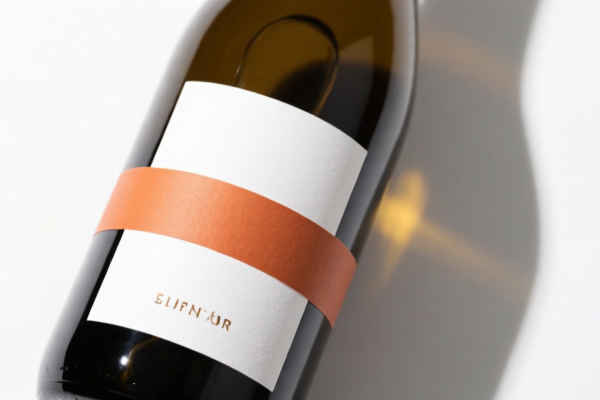
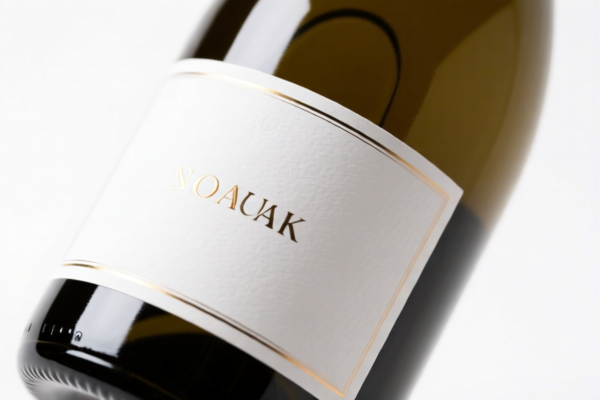
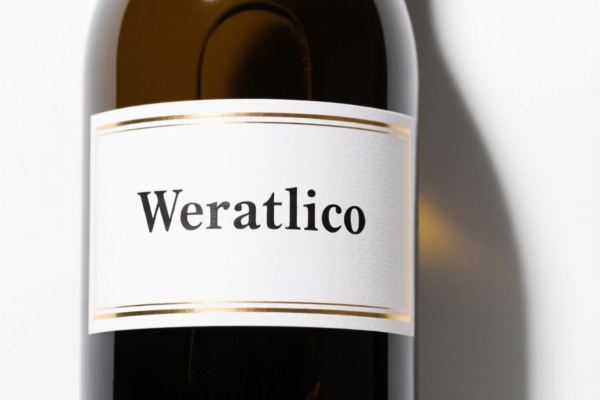

AI Analysis
🍷 Wine Label Kit (酒标套装)
🌐 HS Code Reference & Customs Clearance Guide | 2026 Latest Tariff Analysis | Professional Entry Strategy
📌 I. Product Definition & Classification: Do You Really Understand "Wine Labels"?
A Wine Label Kit typically consists of adhesive labels (paper or synthetic), sometimes including applicators or design templates, used for branding wine bottles. In international trade, the classification depends heavily on material and function:
1. Printed Paper Products (HS Chapter 49):
If the primary characteristic is the printing (logos, descriptions, artwork) on paper substrate, it falls under "Other printed matter."
2. Other Paper/Cellulose Products (HS Chapter 48):
If the focus is on the physical form (adhesive backing, specific shape/size) rather than just the content, it may be classified under "Other articles of paper or paperboard."
⚠️ Critical Distinction:
- Printed Content Dominant: If the value lies in the design/printing itself, lean towards Chapter 49.
- Material/Form Dominant: If it’s a generic adhesive label or a kit of blank/printed stickers where the substrate is the key feature, lean towards Chapter 48.
- Misclassification Risk: Declaring as "Printed Matter" (49) when it’s actually "Adhesive Paper Products" (48) can lead to significant tariff discrepancies due to US Section 301 and IEEPA tariffs.
📦 II. HS Code Classification Details (2026 Latest Tariff Authority Comparison)
| HS Code | Product Description | Classification Logic | Material Focus |
|---|---|---|---|
4911.99.60.00 |
Other printed matter, n.e.s. | Matches "Other printed matter." Assumes material is paper, form fits "printed on paper products," and use is for labeling (printed items). | Paper + Printing |
4911.91.40.40 |
Other printed matter: Pictures, designs, photos | Fits "Pictures and designs" category. Excludes posters. Assumes the label is primarily a printed design/graphic. | Printed Design |
4823.90.80.00 |
Other articles of paper, paperboard, cellulose wadding or webs of cellulose fibers, n.e.s. | Inferred material is paper/cellulose. Fits shape/size characteristics of label kits. No material conflict with Chapter 48. | Paper Product |
4823.90.60.00 |
Other articles of paper/paperboard, n.e.s. | Matches "Label components." Infer material is paper/cardboard. Form is printed/coated paper制品. Use is labeling assembly. Logic aligns with "Other paper products." | Paper/Cardboard |
🔍 Key Reminder:
- Chapter 49 (4911): Generally preferred if the printing/design is the main value driver.
- Chapter 48 (4823): Used if the item is treated as a manufactured paper good (like an adhesive tape roll or specific shaped paper item).
- Tariff Impact: Chapter 48 codes attract a higher Section 301 additional duty (25%) compared to Chapter 49 codes (7.5% + 10%), leading to a 35% vs. 17.5% total duty difference for Chinese origin goods.
💰 III. 2026 Latest Tariff Rate Breakdown (Including Additional Taxes & Policy Surcharges)
✅ Applicable Country: United States (US)
✅ Country of Origin: China (CN)
✅ Effective Date: Post-November 10, 2025 (Including subsequent imports)
🎯 1. 4911.99.60.00 & 4911.91.40.40 —— Printed Matter / Designs
(Lower Duty Tier)
| Item | Detail |
|---|---|
| Base Tariff | 0.0% (ad valorem) |
| Section 301 Additional Duty | +7.5% (List 4A/B items often apply to general printed matter) |
| IEEPA Surcharge | +10% (Specific to China/HK products under International Emergency Economic Powers Act) |
| Total Duty Rate | 17.5% |
| Tax Calculation | CIF Value × 17.5% |
| De Minimis Eligibility | ❌ Not Eligible (deny_de_minimis) |
| Legal Authority Path | IEEPA:9903.01.24 → USITC:4911.xx.xx → Section 301 Footnote |
📌 Explanation:
- The 7.5% comes from specific USITC footnotes for certain printed goods.
- The 10% is the baseline IEEPA surcharge for Chinese origin.
- Total 17.5% is moderate but still significant for low-margin printed goods.
🎯 2. 4823.90.80.00 & 4823.90.60.00 —— Other Paper Products / Label Components
(Higher Duty Tier)
| Item | Detail |
|---|---|
| Base Tariff | 0.0% (ad valorem) |
| Section 301 Additional Duty | +25.0% (Standard List 3/4A rate for most other paper articles) |
| IEEPA Surcharge | +10% (Specific to China/HK products) |
| Total Duty Rate | 35.0% |
| Tax Calculation | CIF Value × 35.0% |
| De Minimis Eligibility | ❌ Not Eligible (deny_de_minimis) |
| Legal Authority Path | IEEPA:9903.01.24 → USITC:4823.90.xx → Section 301 Footnote |
📌 Explanation:
- The 25% is the standard high-tier Section 301 duty for "other" manufactured goods from China.
- The 10% IEEPA surcharge applies on top.
- Total 35% is double the rate of Chapter 49 codes. This is a massive cost difference!
🛠️ IV. Customs Clearance Practical Advice (Battle-Tested Pitfall Avoidance)
✅ 1. Required Documentation Checklist (Non-Negotiable)
| Document | Required? | Purpose |
|---|---|---|
| ✅ Product Specifications | ✔️ | Must specify: Material (Paper vs. Vinyl/PET), Adhesive type, Printing method. |
| ✅ Product Photos | ✔️ | Clear shots of the label, backing, and kit contents. |
| ✅ Commercial Invoice | ✔️ | Must describe as "Wine Label Kit - Printed Paper Labels" (or similar). Avoid vague terms like "Stickers." |
| ✅ Packing List | ✔️ | Detail weight and dimensions. |
| ✅ HS Code Pre-Ruling | ✔️ | Highly Recommended to confirm 4911 vs. 4823. |
| ✅ Declaration of Origin | ✔️ | Proves CN origin to trigger/avoid correct tariffs. |
✅ 2. Declaration Strategy (Key Mnemonics)
🔥 “Print is King, Paper is Queen: 49 is Cheaper, 48 is Steeper!”
| Scenario | Correct HS Code | Error Risk |
|---|---|---|
| Custom Printed Labels (with logo/text) | 4911.99.60.00 |
If declared as 4823, you pay 35% instead of 17.5%. |
| Blank Adhesive Labels (for user printing) | 4823.90.80.00 |
Often falls under 4823 because the "printed matter" value is low/absent. |
| High-Value Artistic Design Kit | 4911.91.40.40 |
If the design is the primary feature, use 4911. |
| Generic "Stickers" | 4911.99.60.00 |
Avoid "Stickers" (often 4911 or 3506); be specific: "Labels." |
✅ 3. Special Cases & Handling
| Situation | Handling Advice |
|---|---|
| Mixed Material Kits (e.g., Paper Labels + Plastic Applicator) | Declare the primary value item. If labels are >50% value, use label HS code. Apply "Essential Character" rule. |
| Self-Adhesive vs. Paste-On | Self-adhesive often leans towards 4823 or 3506 (if purely adhesive). Paste-on paper labels lean strongly towards 4911. |
| Digital Printing on Demand | Still considered "Printed Matter" (4911) if the printing is the service/product delivered. |
| Luxury Embossed Labels | If embossing is the main feature, check if it exceeds printing value. May still be 4911 if printing is predominant. |
🌍 V. Global Market Comparison (2026 Latest)
| Country/Region | Recommended HS Code | Duty Rate (CN Origin) | Certification | Notes |
|---|---|---|---|---|
| 🇺🇸 USA | 4911.99.60.00 |
17.5% | None usually | Best option if printed. |
| 🇺🇸 USA | 4823.90.80.00 |
35.0% | None usually | Avoid if possible due to higher tax. |
| 🇪🇺 EU | 4911.99 |
0% - 6% | CE (if applicable) | Lower barriers. |
| 🇨🇳 China | 4911.99 |
10% | None | Export from China. |
| 🇬🇧 UK | 4911.99 |
0% - 6% | UKCA | Post-Brexit rules apply. |
📌 Conclusion:
- The US market is the most sensitive to the 4911 vs. 4823 distinction due to the 17.5% vs. 35.0% gap.
- Always argue for Chapter 49 if the product is printed with custom designs.
- Chapter 48 is a trap for blank or generic adhesive paper products.
📌 VI. Common Mistakes & Pitfall Guide (Blood-Teaching Lessons)
❌ Mistake 1: Declaring "Wine Labels" as 4823.90.80.00 when they are custom printed.
👉 Consequence: You pay 35% instead of 17.5%. Overpayment of 17.5%!
❌ Mistake 2: Declaring "Blank Label Rolls" as 4911.99.60.00.
👉 Consequence: Customs may reclassify as 4823 or 3506, leading to detention and retroactive duty.
❌ Mistake 3: Vague description "Stickers" on Invoice.
👉 Consequence: CBP may assign a generic code with higher duties or request manual examination.
❌ Mistake 4: Ignoring the IEEPA 10% surcharge.
👉 Consequence: Even if base duty is 0%, the 10% is mandatory for Chinese origin goods under current policy.
✅ Correct Approach:
"Custom Printed Wine Labels, Paper Stock, Self-Adhesive Backing, Model XYZ, HS 4911.99.60.00"
🎯 VII. Conclusion: Professional Declaration, Save Money, Ensure Compliance!
🎯 Remember the Mnemonic:
🔹 "Printed is 49 (17.5%), Paper is 48 (35%)!"
🔹 "Design pays less, blank paper pays more!"
🔹 "HS Code determines cost, 17.5% vs 35% is a huge gap!"
📌 Pro Tip:
If your wine labels are printed in Vietnam, Mexico, or Thailand, you may qualify for IEEPA Exemptions or lower Section 301 rates.
Recommendation: Apply for an Advance Ruling (Ruling Letter) from CBP if your shipment volume is high, to lock in the 17.5% rate for printed labels.
📣 Immediate Action:
📞 Consult a licensed customs broker.
📷 Provide high-res images of the printed design.
🚀 Ensure your invoice explicitly states "Printed Matter" to support HS 4911.
✨ Professional Clearance Starts with Accurate Classification!
💼 Your Every Dollar Should Be Calculated Precisely!
Customer Reviews
About HS Code Classification
The Harmonized System (HS) is an internationally standardized nomenclature developed by the World Customs Organization (WCO) to classify traded products. Over 200 countries use the HS system as the basis for customs tariffs, trade statistics, and import/export regulations.
Each HS code follows a hierarchical structure:
- Chapter (2 digits) — Broad category of goods (e.g., Chapter 84: Machinery and Mechanical Appliances)
- Heading (4 digits) — More specific grouping within the chapter
- Subheading (6 digits) — Internationally standardized breakdown, used by all WCO member countries
- National subdivisions (8-10 digits) — Country-specific extensions for further classification, such as US HTSUS 10-digit codes
Correct HS code classification is essential for smooth customs clearance, accurate duty payment, and compliance with trade regulations. Misclassification can lead to customs delays, overpayment of duties, or penalties.
When importing from CN to US, the applicable tariff rates may include:
- Most-Favored-Nation (MFN) rate — The standard duty rate applied to WTO members
- General rate — Applied to countries without trade agreements
- Trade remedy duties — Additional tariffs such as Section 301 (anti-dumping), Section 232 (national security), or countervailing duties
The information provided on this page is for reference purposes only. For official classification, please consult with your local customs authority or a licensed customs broker.