Wiper
CN → US| HS Code | Tariff Rate | Origin | Destination | Doc |
|---|---|---|---|---|
| 8512404000 | 37.5% | CN | US | Official Doc |
| 4016993000 | 35.0% | CN | US | Official Doc |
| 4016996010 | 37.5% | CN | US | Official Doc |
| 8512909000 | 37.5% | CN | US | Official Doc |
Product Images
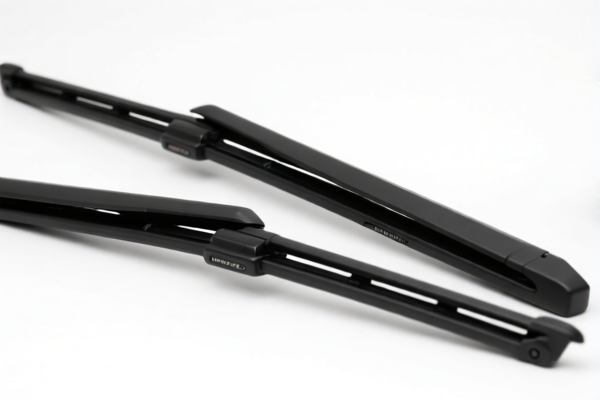
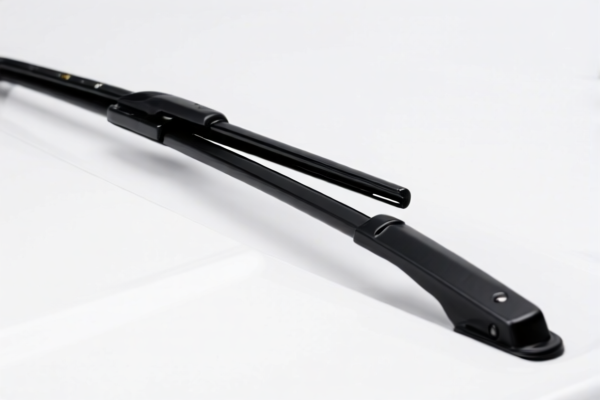
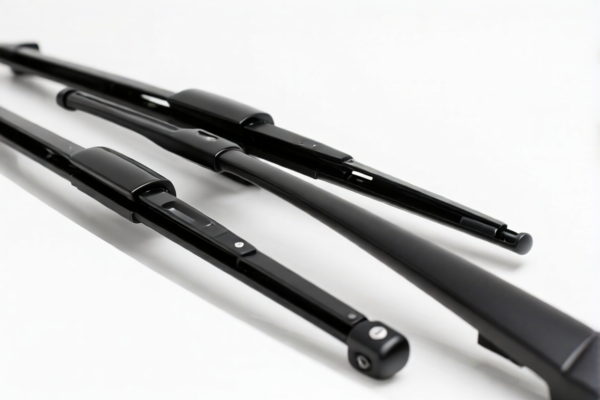
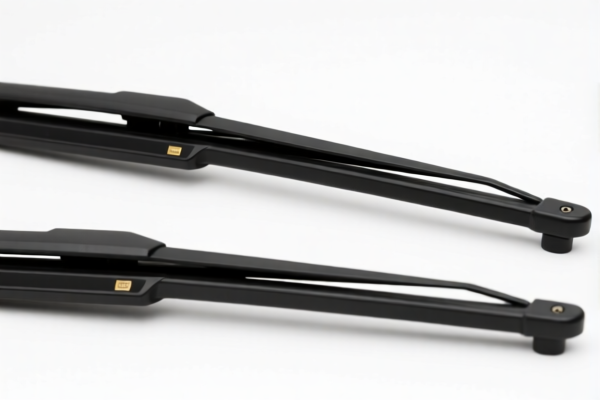
AI Analysis
🚗 Wipers (Windshield Wipers & Washer Systems)
🌐 HS Code Reference & Customs Clearance Guide | 2026 Latest Tariff Analysis | Professional Entry Strategies
📌 I. Product Definition & Classification: Do You Really Know "Wipers"?
Windshield wipers are critical safety components for vehicles, essential for visibility in adverse weather conditions. In international trade, they are classified based on their primary function, material composition, and structural integration.
There are two main classification pathways: 1. Electrical/Functional Assembly: If the wiper includes electric motors, sensors, or complex mechanisms, it is often viewed as an electrical part of a vehicle. 2. Material-Based Classification: If the focus is on the rubber blade or the simple mechanical arm made of rubber/metal, it may fall under rubber articles or other vehicle parts.
⚠️ Key Distinction Point:
- If the product is a complete wiper blade assembly with specific automotive styling and direct replacement function → Can be classified under Electrical Parts (8512) or Rubber Parts (4016) depending on the primary characteristic.
- If it is a simple rubber insert without complex housing → Often 4016.
- If it is a complete electric wiper system (motor + arm + blade) → Strong case for 8512.
📦 II. HS Code Classification Details (2026 Latest Tariff Authority Comparison)
Based on the provided data, there are four potential HS Codes for Wipers, each with different tax implications.
| HS Code | Product Description | Summary & Justification | Total Tax Rate |
|---|---|---|---|
8512.40.40.00 |
Windscreen Wipers | Core Product: Wipers and glass wipers share the same core function. This is the most direct classification for the primary function of the item. | 37.5% |
4016.99.30.00 |
Other Rubber Articles | Key Component Focus: The key component is vulcanized rubber (the blade). Fits the description of shock-absorbing or functional rubber components for vehicles. | 35.0% |
4016.99.60.10 |
Other Vulcanized Rubber Products | Material Focus: Falls under "other vulcanized rubber products." Recognized as an auto part made significantly of vulcanized rubber. | 37.5% |
8512.90.90.00 |
Other Electrical Equipment | Accessory Focus: Considered a "part/accessory" of the windscreen washer system. Classified under "Other" electrical parts of vehicles. | 37.5% |
🔍 Strategic Insight:
-8512.40.40.00is the most "standard" classification for wipers as a distinct functional unit.
-4016.99.30.00offers the lowest total tax rate (35.0%) but requires strong evidence that the vulcanized rubber is the essential character.
-8512.90.90.00and4016.99.60.10are alternative fallbacks if the specific sub-heading for wipers (8512.40) is deemed inapplicable due to specific product design.
💰 III. 2026 Latest Tariff Rate Breakdown (Including Additional Taxes & Policy Surcharges)
✅ Applicable Country: United States (US)
✅ Origin: China (CN)
✅ Effective Time: Current trade policies (Section 301 & IEEPA)
🎯 1. 8512.40.40.00 – Windscreen Wipers (Core Function)
| Item | Content |
|---|---|
| Basic Tariff | 2.5% (General Rate) |
| Section 301 Additional Tariff | +25.0% (Trade Act of 1974, Section 301) |
| 122 Provision Tariff | +10.0% (Specific Section 122 surcharge) |
| Total Tax Rate | 37.5% |
| Tax Calculation | CIF Value × 37.5% |
| De Minimis Exemption | ❌ Not Applicable (High value threshold for this category) |
| Legal Basis Path | HTSUS:8512.40.40 → USITC:301 → 122Provision |
📌 Explanation:
- This is the primary classification for wipers as a complete functional unit.
- The 25% Section 301 tariff is the largest component, reflecting the trade friction on Chinese automotive parts.
- The 10% Section 122 tariff adds further burden.
- Total: 37.5%. This is a high-cost category unless mitigated.
🎯 2. 4016.99.30.00 – Other Rubber Articles (Lowest Rate Option)
| Item | Content |
|---|---|
| Basic Tariff | 0.0% (Many rubber articles have lower base rates) |
| Section 301 Additional Tariff | +25.0% |
| 122 Provision Tariff | +10.0% |
| Total Tax Rate | 35.0% |
| Tax Calculation | CIF Value × 35.0% |
| De Minimis Exemption | ❌ Not Applicable |
| Legal Basis Path | HTSUS:4016.99.30 → USITC:301 → 122Provision |
📌 Explanation:
- Savings: By classifying as a rubber article (4016), you save 2.5% on the base rate compared to8512.
- Risk: Customs may challenge this if the wiper includes significant electrical or metal components. Must prove vulcanized rubber is the essential character.
- Total: 35.0%. This is the most cost-effective option if defensible.
🎯 3. 8512.90.90.00 – Other Electrical Equipment (Accessory)
| Item | Content |
|---|---|
| Basic Tariff | 2.5% |
| Section 301 Additional Tariff | +25.0% |
| 122 Provision Tariff | +10.0% |
| Total Tax Rate | 37.5% |
| Tax Calculation | CIF Value × 37.5% |
| De Minimis Exemption | ❌ Not Applicable |
| Legal Basis Path | HTSUS:8512.90.90 → USITC:301 → 122Provision |
📌 Explanation:
- Used if the wiper is considered a general accessory rather than a primary wiper system.
- Tax rate is identical to8512.40.40.00.
- Less specific than8512.40, so it may be subject to higher scrutiny if8512.40is deemed more accurate.
🎯 4. 4016.99.60.10 – Other Vulcanized Rubber Products
| Item | Content |
|---|---|
| Basic Tariff | 2.5% |
| Section 301 Additional Tariff | +25.0% |
| 122 Provision Tariff | +10.0% |
| Total Tax Rate | 37.5% |
| Tax Calculation | CIF Value × 37.5% |
| De Minimis Exemption | ❌ Not Applicable |
| Legal Basis Path | HTSUS:4016.99.60 → USITC:301 → 122Provision |
📌 Explanation:
- Similar to4016.99.30.00but with a 2.5% higher base rate.
- Only use if4016.99.30.00is not applicable due to specific rubber type or function.
🛠️ IV. Customs Clearance Practical Advice (Real-World Pitfall Guide)
✅ 1. Preparation Checklist (Non-Negotiable)
| Document | Required | Notes |
|---|---|---|
| ✅ Product Specification Sheet | ✔️ | Must detail material composition (rubber vs. metal/electric). |
| ✅ Bill of Materials (BOM) | ✔️ | Crucial for proving if "vulcanized rubber" is the essential character for 4016. |
| ✅ Product Photos | ✔️ | Show the entire unit, highlighting the rubber blade and any electrical connectors. |
| ✅ Commercial Invoice | ✔️ | Describe accurately: "Windshield Wiper Blade, Vulcanized Rubber, Model XYZ". |
| ✅ Origin Certificate | ✔️ | Required for Section 301 compliance. |
| ✅ HS Code Ruling (Optional) | ✔️ | Highly recommended to get a pre-classification ruling from CBP. |
✅ 2. Declaration Strategy (Key Tips)
🔥 “Rubber Focus for Savings, Electrical Focus for Accuracy”
| Scenario | Recommended HS Code | Why? |
|---|---|---|
| Pure Rubber Blade (No metal arm) | 4016.99.30.00 |
Lowest tax (35%). Proven as a rubber article. |
| Complete Wiper Assembly (Metal + Rubber + Motor) | 8512.40.40.00 |
Most accurate functional classification. Higher tax (37.5%). |
| Wiper Blade with Metal Frame | 8512.40.40.00 or 4016.99.60.10 |
Debatable. If metal is minor, try 4016. If major, use 8512. |
| Electric Wiper Motor Unit | 8512.90.90.00 |
If the motor is the main component. |
⚠️ Critical Warning:
- Do NOT misclassify an electric wiper system as a simple rubber part (4016) without solid justification. CBP may assess penalties.
- The 25% Section 301 tariff applies to ALL these codes for Chinese origin. There is no exemption for standard wipers.
✅ 3. Special Situations
| Situation | Advice |
|---|---|
| OEM Custom Wipers | Provide design specs to prove if rubber or electrical function dominates. |
| Aftermarket Replacement Blades | Strong case for 4016.99.30.00 if marketed as "Rubber Refills". |
| Heavy-Duty Truck Wipers | May still fall under 8512.40.40.00 as they are primary safety devices. |
| Wiper Fluid/Accessories | Do NOT include fluid in the same HS code. Fluid has different classification. |
🌍 V. Global Market Comparison (2026 Latest)
| Country/Region | Recommended HS Code | Estimated Tariff (China Origin) | Notes |
|---|---|---|---|
| 🇺🇸 United States | 8512.40.40.00 / 4016.99.30.00 |
35% - 37.5% | High Section 301 + 122 tariffs. No de minimis. |
| 🇨🇳 China | 8512.40.40.00 |
5% - 8% | Lower import duties. Check local VAT. |
| 🇪🇺 European Union | 8512.40.40.00 |
0% - 2% | Often duty-free for auto parts. No Section 301. |
| 🇬🇧 United Kingdom | 8512.40.40.00 |
0% - 2% | Post-Brexit tariff schedules often favor auto parts. |
| 🇨🇦 Canada | 8512.40.40.00 |
0% - 5% | CUSMA benefits may apply if originating. |
📌 Conclusion:
- The US market is the most expensive for Chinese wipers due to multiple layers of tariffs (Basic + 301 + 122).
- Diversification Strategy: Consider sourcing wipers from Vietnam, Mexico, or Thailand to avoid Section 301 tariffs (if rules of origin are met).
📌 VI. Common Mistakes & Pitfalls (Lessons Learned)
❌ Mistake 1: Classifying electric wiper motors as "Rubber Parts" to save 2.5%.
👉 Consequence: CBP audit, back-taxes, and potential fraud penalties.
❌ Mistake 2: Ignoring the Section 122 Tariff (10%).
👉 Consequence: Underpayment of duties. This surcharge is mandatory on many Chinese auto parts.
❌ Mistake 3: Claiming "De Minimis" for small shipments.
👉 Consequence: Wipers are often exempt from de minimis if they fall under specific HTS codes or if the value exceeds $800. Check current thresholds.
❌ Mistake 4: Using vague descriptions like "Car Parts".
👉 Consequence: CBP will classify under the highest general rate or assign a different code with penalties.
✅ Correct Approach:
"Windshield Wiper Blade, Vulcanized Rubber, Model ABC, For Passenger Cars, HS Code: 4016.99.30.00"
OR
"Complete Windscreen Wiper Assembly, Electric, Model XYZ, HS Code: 8512.40.40.00"
🎯 VII. Conclusion: Professional Classification, Cost Efficiency!
🎯 Remember the Strategy:
🔹 "Rubber Focus for 35%, Electrical Focus for 37.5%."
🔹 "301 Tariff is Non-Negotiable for China Origin."
🔹 "Always Prove the 'Essential Character' for Rubber Classification."
📌 Pro Tip:
If you are shipping large volumes, consider Advance Rulings from CBP to lock in the HS Code and avoid surprise audits.
For high-value OEM contracts, explore Foreign Trade Zones (FTZs) to defer duty payments.
📣 Immediate Action:
📞 Consult a Licensed Customs Broker to review your Bill of Materials.
🚀 Optimize Your Supply Chain to mitigate the 35-37.5% tax burden.
💡 Accurate Declaration Saves Money.
✨ Professional Customs Clearance Starts with Precise Classification!
💼 Every Percent of Tax Saved is Pure Profit!
Customer Reviews
About HS Code Classification
The Harmonized System (HS) is an internationally standardized nomenclature developed by the World Customs Organization (WCO) to classify traded products. Over 200 countries use the HS system as the basis for customs tariffs, trade statistics, and import/export regulations.
Each HS code follows a hierarchical structure:
- Chapter (2 digits) — Broad category of goods (e.g., Chapter 84: Machinery and Mechanical Appliances)
- Heading (4 digits) — More specific grouping within the chapter
- Subheading (6 digits) — Internationally standardized breakdown, used by all WCO member countries
- National subdivisions (8-10 digits) — Country-specific extensions for further classification, such as US HTSUS 10-digit codes
Correct HS code classification is essential for smooth customs clearance, accurate duty payment, and compliance with trade regulations. Misclassification can lead to customs delays, overpayment of duties, or penalties.
When importing from CN to US, the applicable tariff rates may include:
- Most-Favored-Nation (MFN) rate — The standard duty rate applied to WTO members
- General rate — Applied to countries without trade agreements
- Trade remedy duties — Additional tariffs such as Section 301 (anti-dumping), Section 232 (national security), or countervailing duties
The information provided on this page is for reference purposes only. For official classification, please consult with your local customs authority or a licensed customs broker.