Wiping Cloth
CN → US| HS Code | Tariff Rate | Origin | Destination | Doc |
|---|---|---|---|---|
| 5603110070 | 35.0% | CN | US | Official Doc |
| 6307909884 | 24.5% | CN | US | Official Doc |
| 5603120070 | 35.0% | CN | US | Official Doc |
| 6307102030 | 22.8% | CN | US | Official Doc |
| 5907008090 | 35.0% | CN | US | Official Doc |
Product Images
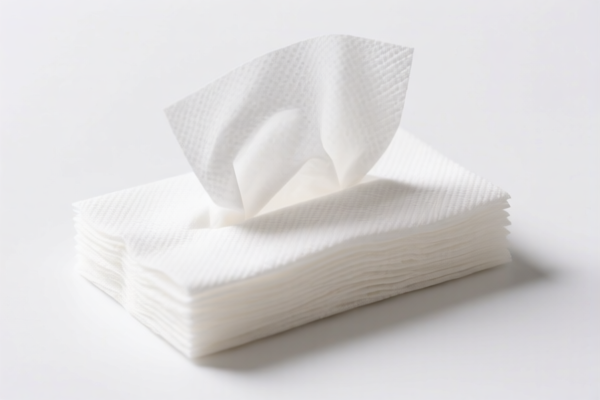
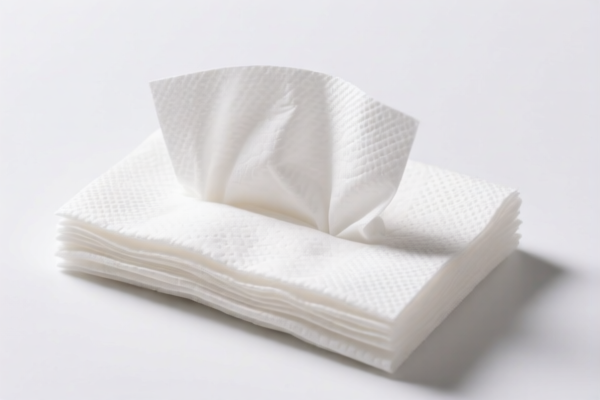
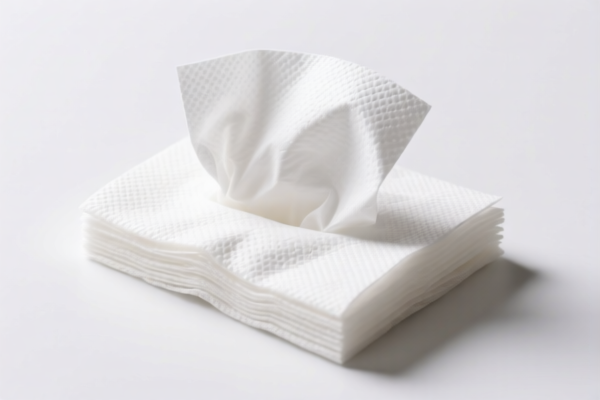
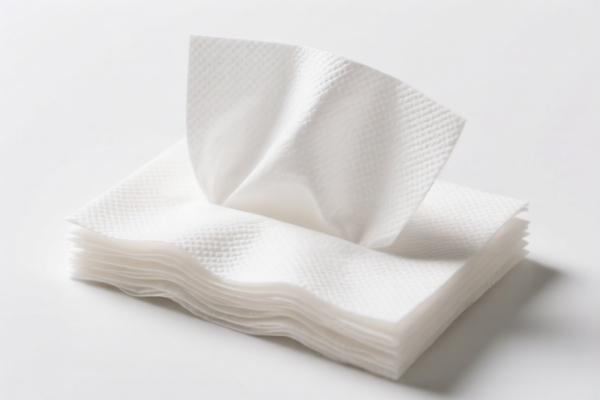
AI Analysis
🧼 Wiping Cloth (Cleaning Cloths for Industrial & Household Use)
🌐 HS Code Reference & Customs Clearance Guide | 2026 Latest Tariff Analysis | Professional Clearance Strategy
📌 I. Product Definition & Classification: Do You Really Understand "Wiping Cloths"?
Wiping cloths are essential consumables in industrial manufacturing, automotive care, electronics cleaning, and household maintenance. In international trade, they are categorized based on their material composition, structure (woven vs. non-woven), and specific usage. Misclassification is a common trap that leads to significant duty discrepancies and customs delays.
⚠️ Key Distinction Point:
- Non-Woven Fabrics (Unstitched): Made from bonded fibers (spunlace, melt-blown, etc.). Classified under Chapter 56.
- Woven/Looped Textiles (Towels/Cleaning Cloth): Structured fabric, often looped (terry) or plain woven. Classified under Chapter 63.
- Impregnated/Coated Cloths: Treated with chemicals or oils for specific cleaning properties. Classified under Chapter 59.
📦 II. HS Code Classification Details (2026 Latest Tariff Authority Comparison)
| HS Code | Product Description | Application Scenario | Structural Feature |
|---|---|---|---|
5603.11.00.70 |
Man-made Fiber Non-Woven Wiping Cloth | Industrial degreasing, auto polishing, disposable cleaning | ❌ Non-woven, continuous filaments |
6307.90.98.84 |
Man-made Fiber Wiping Cloth (Towel/Cloth Category) | Household cleaning, general purpose, reusable cloths | ✅ Woven/Looped textile structure |
5603.12.00.70 |
Man-made Fiber Non-Woven Fabric | Industrial filtration, base material for wipes | ❌ Non-woven, staple fibers |
6307.10.20.30 |
Man-made Fiber Cleaning Cloth | Specialized cleaning tasks, lint-free applications | ✅ Woven, specific "cleaning cloth" use |
5907.00.80.90 |
Cleaning Cloth (Impregnated/Coated Textile) | Chemical cleaning, industrial treatment, oil-based wipes | ✅ Treated/Covered textile surface |
🔍 Critical Reminder:
- Non-woven items (no weaving/knitting) go to Chapter 56.
- Woven/Knitted items go to Chapter 63 (specifically as "Other Made-up Articles").
- Chemically Treated items go to Chapter 59 (if impregnation is the primary feature).
💰 III. 2026 Latest Tariff Rate Breakdown (Including Surtaxes & Policy Add-ons)
✅ Applicable Country: United States (US)
✅ Country of Origin: China (CN)
✅ Effective Date: 2025/2026 (Subject to Section 301 & IEEPA provisions)
🎯 1. 5603.11.00.70 & 5603.12.00.70 —— Non-Woven Man-Made Fibers
| Item | Detail |
|---|---|
| Base Tariff | 0.0% (ad valorem) |
| Section 301 Surtax | +25.0% |
| IEEPA Add-on | +10.0% (122 Clause Tariff) |
| Total Rate | 35.0% |
| De Minimis Exemption | ❌ Denied (High tariff items usually excluded from $800 threshold benefits depending on enforcement) |
| Legal Basis | USITC:5603.11.00.70 → Footnote:301/25% → IEEPA:10% |
📌 Explanation:
- Non-woven man-made fibers are considered basic industrial materials but attract full Section 301 tariffs (25%).
- The additional 10% IEEPA tariff applies to Chinese-origin goods under specific emergency provisions.
- Total 35% is high for low-value consumables, impacting margin significantly.
🎯 2. 6307.90.98.84 —— Wiping Cloths (Towel/Cloth Category)
| Item | Detail |
|---|---|
| Base Tariff | 7.0% |
| Section 301 Surtax | +7.5% |
| IEEPA Add-on | +10.0% (122 Clause Tariff) |
| Total Rate | 24.5% |
| De Minimis Exemption | ⚠️ Check Specifics (Base rate is lower, but surtaxes may still apply) |
| Legal Basis | USITC:6307.90.98.84 → Footnote:301/7.5% → IEEPA:10% |
📌 Explanation:
- These are finished textile articles. The base rate is higher (7%) than non-wovens, but the Section 301 surtax is significantly lower (7.5% vs 25%).
- Total 24.5% makes this category slightly more competitive than non-wovens in the US market.
🎯 3. 6307.10.20.30 —— Specialized Cleaning Cloths
| Item | Detail |
|---|---|
| Base Tariff | 5.3% |
| Section 301 Surtax | +7.5% |
| IEEPA Add-on | +10.0% (122 Clause Tariff) |
| Total Rate | 22.8% |
| De Minimis Exemption | ⚠️ Check Specifics |
| Legal Basis | USITC:6307.10.20.30 → Footnote:301/7.5% → IEEPA:10% |
📌 Explanation:
- "Cleaning Cloths" specifically defined under this heading benefit from the lowest total rate (22.8%) among the options.
- Crucial: You must prove the product fits the "cleaning cloth" definition (lint-free, specific texture) rather than just a general towel.
🎯 4. 5907.00.80.90 —— Impregnated/Coated Cleaning Cloths
| Item | Detail |
|---|---|
| Base Tariff | 0.0% |
| Section 301 Surtax | +25.0% |
| IEEPA Add-on | +10.0% (122 Clause Tariff) |
| Total Rate | 35.0% |
| De Minimis Exemption | ❌ Denied |
| Legal Basis | USITC:5907.00.80.90 → Footnote:301/25% → IEEPA:10% |
📌 Explanation:
- If the cloth is heavily impregnated with chemicals, oils, or coatings, it shifts to Chapter 59.
- Despite a 0% base tariff, the 25% Section 301 surtax brings the total to 35%, similar to non-wovens.
🛠️ IV. Customs Clearance Practical Advice (Real-World Pitfall Guide)
✅ 1. Required Documentation Checklist
| Document | Mandatory | Description |
|---|---|---|
| ✅ Product Specifications | ✔️ | Material composition (100% Polyester? Viscose?), GSM (weight), dimensions |
| ✅ Structure Diagram | ✔️ | Must clarify: Non-woven vs. Woven vs. Loop (Terry). This determines Chapter 56 vs 63. |
| ✅ Product Photos | ✔️ | Show texture, edges (sewn vs. ultrasonic cut), and any coatings. |
| ✅ Bill of Lading/Invoice | ✔️ | Declare accurately: "Man-made Fiber Non-Woven Wiping Cloths" or "Cotton/Polyester Cleaning Cloths". |
| ✅ Material Test Report | ✔️ | Proving man-made fiber content (not natural cotton) to avoid incorrect Chapter 63/62 misclassification. |
✅ 2. Declaration Strategy (Key Mnemonics)
🔥 "Structure First, Then Treatment! Name Precision Saves Money!"
| Scenario | Correct HS Code | Incorrect Approach | Consequence |
|---|---|---|---|
| Disposable Non-Woven Wipes | 5603.11.00.70 (35%) |
Declare as "Towels" (6307...) |
❌ Risk: Customs may reject if structure doesn't match "textile article". If accepted, potential refund? No, usually strict scrutiny. |
| Reusable Terry Cloth Wipes | 6307.90.98.84 (24.5%) |
Declare as "Non-Woven" (5603...) |
❌ Risk: Overpaying 10.5% in tariffs! |
| Lint-Free Tech Wipes | 6307.10.20.30 (22.8%) |
Declare as "General Towel" (6307.90...) |
✅ Benefit: Lowest rate (22.8%) if proof of "cleaning" specific use is provided. |
| Chemical-Soaked Industrial Wipes | 5907.00.80.90 (35%) |
Declare as "Fabric" (5603...) |
❌ Risk: If impregnation is >20% by weight, it must be Ch 59. Misdeclaration leads to penalties. |
✅ 3. Special Handling Tips
| Situation | Recommendation |
|---|---|
| Mixed Shipments | If a container has both non-woven and woven cloths, separate HS Codes on the invoice. Do not mix to one "average" rate. |
| Packaging | If sold in retail packs, include "Wiping Cloths" in the product name. Bulk rolls? Specify "Non-Woven Fabric". |
| Origin Marking | Ensure "Made in China" is visible on the product or packaging to trigger correct IEEPA/Section 301 application. |
| Pre-Ruling | For large volumes, apply for an Advance Ruling (19 CFR Part 177) to lock in the HS Code and avoid audits. |
🌍 V. Global Market Comparison (2026 Overview)
| Market | Recommended HS Code | Estimated Duty (CN Origin) | Key Requirement |
|---|---|---|---|
| 🇺🇸 USA | 6307.10.20.30 or 6307.90.98.84 |
22.8% - 24.5% | Strict classification between "Non-Woven" (Ch 56) and "Textile" (Ch 63). |
| 🇨🇳 China (Import) | Varies | 5% - 10% | General import duties apply; no Section 301. |
| 🇪🇺 EU | 5603 / 6307 | 0% - 6% | Standard MFN rates; no heavy surtaxes like US. |
| 🇬🇧 UK | 5603 / 6307 | 0% - 6% | Post-Brexit tariffs apply; generally lower than US. |
📌 Conclusion:
- The US market is the most expensive due to Section 301 + IEEPA tariffs.
- Optimization Strategy: If your product can be certified as "Specialized Cleaning Cloth" (6307.10.20.30), you save ~12% compared to non-woven alternatives.
- Cost Saving Tip: For low-value small parcels, check if de minimis ($800) rules allow tax-free entry, but be aware that high-dutied Chinese goods are increasingly scrutinized.
📌 VI. Common Mistakes & Pitfalls (Lessons Learned)
❌ Mistake 1: Calling all wipes "Non-Woven" to claim lower base tax.
👉 Consequence: If it's woven, customs will reclassify to Ch 63, apply back-taxes, and fines.
❌ Mistake 2: Ignoring the "122 Clause" IEEPA tariff.
👉 Consequence: All Chinese textile/cleaning goods now face an extra 10%. Failing to declare this leads to detention.
❌ Mistake 3: Mixing "Wiping Cloths" with "Towels" in one line item.
👉 Consequence: Customs may select the highest duty rate for the entire batch. Always split by HS Code.
❌ Mistake 4: Declaring "Rags" without specifying material.
👉 Consequence: "Rags" is ambiguous. Customs will assign the highest applicable rate based on worst-case scenario.
✅ Correct Practice:
"Man-made Fiber Non-Woven Wiping Cloths, Ultrasonic Cut, 100% Polyester, for Industrial Use"
vs.
"Man-made Fiber Cleaning Cloth, Woven, for Household Use"
🎯 VII. Conclusion: Precision in Classification Drives Profit!
🎯 Remember the Mantra:
🔹 "Non-Woven is 35%, Woven is 24.5%, Special Cleaning is 22.8%!"
🔹 "Structure determines Chapter, Material determines Subheading, Tariffs determine Strategy!"
📌 Pro Tip:
If you are exporting to the US, consider:
1. Optimizing Product Structure: Can you make it a "woven" cleaning cloth (6307.10.20.30) instead of non-woven? Saving 12.2% on tariffs is huge for low-margin goods.
2. Pre-Import Consultation: Send photos and specs to your customs broker before shipment to confirm the HS Code.
📣 Take Action Now:
📞 Verify your product structure (Woven vs. Non-Woven vs. Coated).
🚀 Choose the lowest dutiable HS Code within the provided set.
💼 Clear Customs Smoothly, Maximize Your Profit Margin!
✨ Professional Clearance Starts with Accurate Classification!
💼 Every Cent Saved on Duties is Pure Profit!
Customer Reviews
About HS Code Classification
The Harmonized System (HS) is an internationally standardized nomenclature developed by the World Customs Organization (WCO) to classify traded products. Over 200 countries use the HS system as the basis for customs tariffs, trade statistics, and import/export regulations.
Each HS code follows a hierarchical structure:
- Chapter (2 digits) — Broad category of goods (e.g., Chapter 84: Machinery and Mechanical Appliances)
- Heading (4 digits) — More specific grouping within the chapter
- Subheading (6 digits) — Internationally standardized breakdown, used by all WCO member countries
- National subdivisions (8-10 digits) — Country-specific extensions for further classification, such as US HTSUS 10-digit codes
Correct HS code classification is essential for smooth customs clearance, accurate duty payment, and compliance with trade regulations. Misclassification can lead to customs delays, overpayment of duties, or penalties.
When importing from CN to US, the applicable tariff rates may include:
- Most-Favored-Nation (MFN) rate — The standard duty rate applied to WTO members
- General rate — Applied to countries without trade agreements
- Trade remedy duties — Additional tariffs such as Section 301 (anti-dumping), Section 232 (national security), or countervailing duties
The information provided on this page is for reference purposes only. For official classification, please consult with your local customs authority or a licensed customs broker.