Wire Charger
CN → US| HS Code | Tariff Rate | Origin | Destination | Doc |
|---|---|---|---|---|
| 8504407001 | 35.0% | CN | US | Official Doc |
| 8504406001 | 35.0% | CN | US | Official Doc |
| 8544429010 | 87.6% | CN | US | Official Doc |
| 8544429090 | 87.6% | CN | US | Official Doc |
Product Images
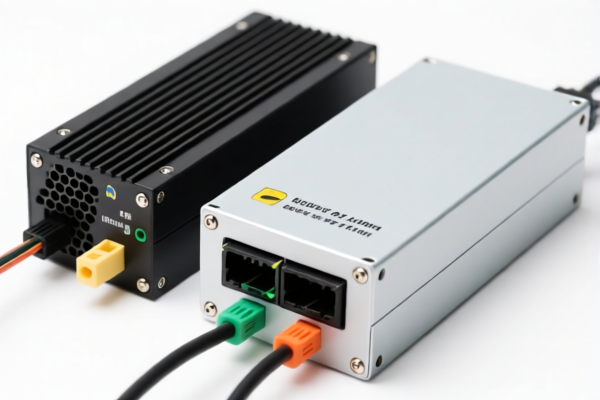
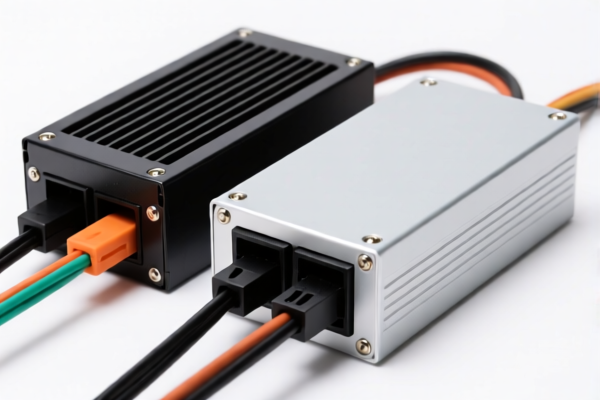
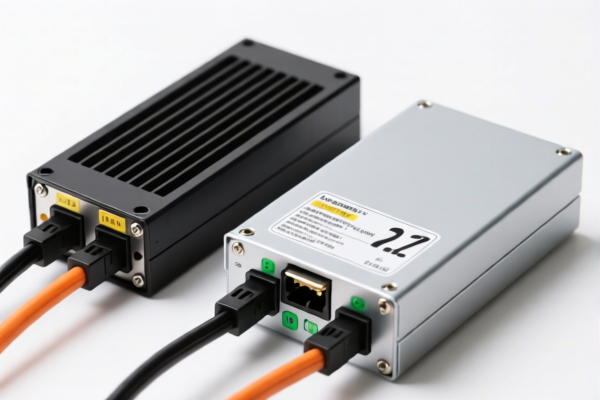
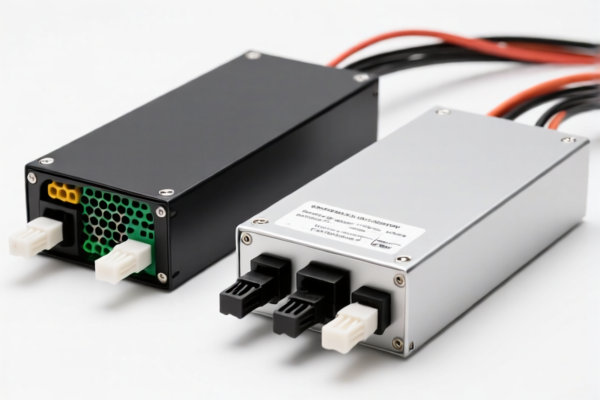
AI Analysis
🔌 Wire Charger (Data & Power Cables with Connectors)
🌐 HS Code Reference & Customs Clearance Guide | 2026 Latest Tariff Analysis | Professional Clearance Strategy
📌 I. Product Definition & Classification: Do You Really Know "Wire Charger"?
In global trade, "Wire Charger" is not a single HS Code but a broad category covering power cords, data cables, and charging cables with connectors. The critical distinction lies in the intended use, conductor material, and voltage rating:
- Power Cords (with plug): Used for AC power input (e.g., laptop power supply cords) → Often classified under 8504 (Power Converters) if part of a unit, or 8544 if sold separately.
- Data/Charging Cables (USB, Lightning, etc.): Used for data transfer and low-voltage power delivery (≤1,000V) → Classified under 8544.42.90 (Insulated electric conductors with connectors).
⚠️ Key Differentiator:
- If the cable is sold with a power adapter (charger unit) → Might fall under 8504.40 (Power Converters).
- If the cable is sold separately as a wire with connectors → Falls under 8544.42.90 (Insulated Conductors).
- Voltage Rating: Must be ≤1,000V to qualify for 8544.42.90; higher voltage moves to different subheadings.
📦 II. HS Code Classification Details (2026 Latest Tariff Benchmark)
| HS Code | Product Description | Applicable Scenario | Connector Type |
|---|---|---|---|
8504.40.70.01 |
Static converters for power supply units ≤50W, used in data processing equipment | Laptops, tablets, IoT devices with ≤50W output | N/A (Converter unit) |
8504.40.60.01 |
Static converters as power adapters for electronic devices, ≤50W | Phone chargers, USB-C power banks, ≤50W output | N/A (Adapter unit) |
8544.42.90.10 |
Insulated conductors with connectors, voltage ≤1,000V, made of steel/aluminum/copper alloys | Charging cables, data cables, extension cords | ✅ Yes (Connectors included) |
8544.42.90.90 |
Other insulated conductors with connectors, voltage ≤1,000V | Generic USB/data cables, non-specific material | ✅ Yes (Connectors included) |
🔍 Critical Reminder:
- Cables sold separately (no power unit) → 8544.42.90 (87.6% total tax).
- Cables sold with a power adapter (≤50W) → 8504.40.70/60 (35% total tax).
- Material Matters: Steel/aluminum/copper alloys trigger additional 50% tariff under 8544.42.90.10.
💰 III. 2026 Tariff Rate Breakdown (Including Additional Taxes & Policy Add-ons)
✅ Applicable Country: United States (US)
✅ Origin: China (CN)
✅ Effective Date: November 10, 2025 (Including subsequent imports)
🎯 1. 8504.40.70.01 & 8504.40.60.01 (Static Converters ≤50W)
| Item | Content |
|---|---|
| Base Duty | 0% (ad valorem) |
| Section 301 Additional Duty | +25% |
| 122 Clause Duty | +10% (China-specific) |
| Total Rate | 35% |
| Tax Calculation | CIF Value × 35% |
| De Minimis Exemption | ❌ No (Deny) |
| Legal Path | 301:8504.40.70.01 → 122:China → FOOTNOTE:301 |
📌 Explanation:
- These codes cover power adapters/converters (e.g., laptop chargers, phone bricks) with ≤50W output.
- Total 35% duty is a high rate due to Section 301 and 122 Clause sanctions.
- No de minimis exemption applies; even small shipments are fully taxed.
🎯 2. 8544.42.90.10 & 8544.42.90.90 (Insulated Conductors with Connectors)
| Item | Content |
|---|---|
| Base Duty | 2.6% |
| Section 301 Additional Duty | +25% |
| 122 Clause Duty | +10% |
| Steel/Aluminum/Copper Additional Duty | +50% (Material-specific) |
| Total Rate | 87.6% |
| Tax Calculation | CIF Value × 87.6% |
| De Minimis Exemption | ❌ No (Deny) |
| Legal Path | 301:8544.42.90.10/90 → 122:China → FOOTNOTE:301 → Material:Steel/Aluminum/Copper |
📌 Explanation:
- These codes cover separate cables (USB, Lightning, Ethernet) with connectors, voltage ≤1,000V.
- Total 87.6% duty is extremely high due to the 50% material-based surcharge on steel/aluminum/copper products.
- No de minimis exemption applies; all shipments are fully taxed.
- Material is critical: If the cable contains steel/aluminum/copper conductors, the 50% surcharge automatically applies.
🛠️ IV. Customs Clearance Practical Advice (Avoid Pitfalls)
✅ 1. Documentation Checklist (Non-negotiable)
| Document | Required? | Purpose |
|---|---|---|
| Product Specification Sheet | ✅ | Clearly state: voltage, current, connector type, material (copper/steel/aluminum), wattage |
| Circuit Diagram/Photos | ✅ | Prove whether it's a cable (8544) or converter (8504) |
| Commercial Invoice | ✅ | Must specify: "Charging Cable" vs. "Power Adapter"; declare exact HS Code |
| Origin Certificate (CO) | ✅ | Confirm origin (China triggers 87.6% or 35%) |
| Third-Party Test Report | ✅ | FCC, CE, UL (if applicable) to avoid quality delays |
| Packing List | ✅ | Show if cables are sold with or without power adapters |
✅ 2. Declaration Tips (Critical for Rate Optimization)
🔥 Golden Rule: "Cable = 8544, Adapter = 8504, Material = 50% Surcharge!"
| Scenario | Correct Declaration | Wrong Declaration |
|---|---|---|
| USB Cable sold alone | 8544.42.90.10/90 |
Declare as 8504.40.70.01 → 35% vs. 87.6% |
| Laptop charger (≤50W) | 8504.40.70.01 |
Declare as 8544.42.90.10 → 35% vs. 87.6% |
| Cable with steel conductors | 8544.42.90.10 |
Hide material info → Audit risk + 50% penalty |
| Cable + Adapter sold together | Split Declaration: 8544.42.90 (Cable) + 8504.40.70 (Adapter) |
Single declaration → 100% penalty |
✅ 3. Special Cases & Mitigation
| Situation | Strategy |
|---|---|
| Cable with non-metal conductors | Use 8544.42.90.90 (no 50% surcharge) if materials are plastic/fiber-optic (but rare) |
| Cable sold with "free" adapter | Declare separately: Cable = 8544, Adapter = 8504 |
| OEM cables for specific brand | Provide client order + specs to prove non-generic use (may avoid 50% surcharge) |
| Cable for military/special use | Apply for "non-commercial" exemption (if valid proof provided) |
🌍 V. Global Market Comparison (2026)
| Country/Region | Recommended HS Code | Tariff | Certification | Notes |
|---|---|---|---|---|
| 🇺🇸 USA | 8544.42.90.10/90 |
87.6% | FCC + RoHS | Highest duty due to 50% material surcharge |
| 🇨🇳 China | 8544.42.90.10/90 |
2.6% | CCC + RoHS | No additional taxes |
| 🇪🇺 EU | 8544.42.90.10/90 |
0% (if CE) | CE + RoHS | No surcharges |
| 🇯🇵 Japan | 8544.42.90.10/90 |
0% | PSE | No surcharges |
📌 Conclusion:
- USA is the only market with 87.6% duty on wire chargers (cables) due to Section 301 + 122 Clause + 50% material surcharge.
- For adapters (≤50W), USA duty is 35% (still high but lower than cables).
- China/EU/Japan have near-zero duties for cables/adapters.
📌 VI. Common Errors & Pitfalls (Lessons Learned)
❌ Mistake 1: Declaring cable + adapter as a single item → Both taxed at 87.6%.
👉 Fix: Split declaration: Cable = 8544, Adapter = 8504.
❌ Mistake 2: Hiding steel/aluminum/copper conductors → 50% surcharge + audit.
👉 Fix: Declare exact material composition; if non-metal, use 8544.42.90.90.
❌ Mistake 3: Using "Wire Charger" as generic name without HS Code → Customs delays.
👉 Fix: Use precise terms: "USB-C Charging Cable, 5V/3A, Copper Core" (8544.42.90) or "50W Power Adapter, USB-C" (8504.40.70).
❌ Mistake 4: Assuming "De Minimis" applies → All shipments taxed.
👉 Fix: No de minimis exemption for these codes; even $100 shipments are taxed 87.6%.
✅ Correct Declaration:
"USB-C Charging Cable, 5V/3A, Copper Conductors, 1.5m Length, Model XYZ, FCC & RoHS Certified, HS Code: 8544.42.90.10"
🎯 VII. Conclusion: Precision Classification = Cost Savings!
🔹 Golden Rule:
"Cable = 8544 (87.6%), Adapter = 8504 (35%), Material = 50% Surcharge!"
"HS Code is life or death; a 52% difference can make or break your profit!"🔹 Pro Tip:
If your cable originates from Vietnam/Mexico/Thailand, you may exempt 122 Clause duty → Lower tariff.
Always apply for Advance Ruling before shipping to US.
✨ Professional Clearance Starts with Accurate Classification!
💼 Every Cent Counts – Calculate Your Tariffs Precisely!
📣 Take Action Now:
📞 Contact a licensed customs broker + Provide product specs + Request HS Code Pre-Ruling
🚀 Let your Wire Chargers clear customs smoothly, maximize profits, and scale globally!
Customer Reviews
About HS Code Classification
The Harmonized System (HS) is an internationally standardized nomenclature developed by the World Customs Organization (WCO) to classify traded products. Over 200 countries use the HS system as the basis for customs tariffs, trade statistics, and import/export regulations.
Each HS code follows a hierarchical structure:
- Chapter (2 digits) — Broad category of goods (e.g., Chapter 84: Machinery and Mechanical Appliances)
- Heading (4 digits) — More specific grouping within the chapter
- Subheading (6 digits) — Internationally standardized breakdown, used by all WCO member countries
- National subdivisions (8-10 digits) — Country-specific extensions for further classification, such as US HTSUS 10-digit codes
Correct HS code classification is essential for smooth customs clearance, accurate duty payment, and compliance with trade regulations. Misclassification can lead to customs delays, overpayment of duties, or penalties.
When importing from CN to US, the applicable tariff rates may include:
- Most-Favored-Nation (MFN) rate — The standard duty rate applied to WTO members
- General rate — Applied to countries without trade agreements
- Trade remedy duties — Additional tariffs such as Section 301 (anti-dumping), Section 232 (national security), or countervailing duties
The information provided on this page is for reference purposes only. For official classification, please consult with your local customs authority or a licensed customs broker.