Wire Conduit
CN → US| HS Code | Tariff Rate | Origin | Destination | Doc |
|---|---|---|---|---|
| 3917290090 | 38.1% | CN | US | Official Doc |
| 3917320020 | 38.1% | CN | US | Official Doc |
| 4007000000 | 35.0% | CN | US | Official Doc |
| 3917390000 | 0.0% | CN | US | Official Doc |
Product Images
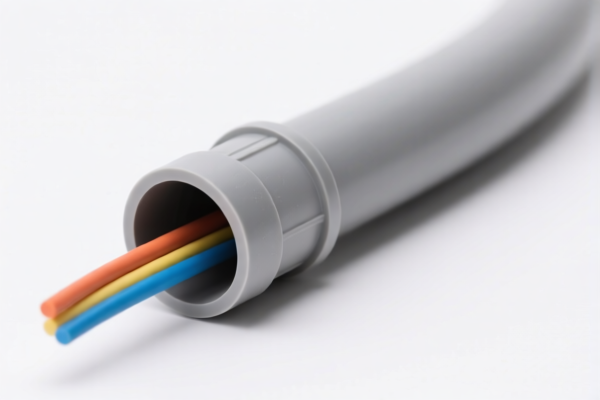
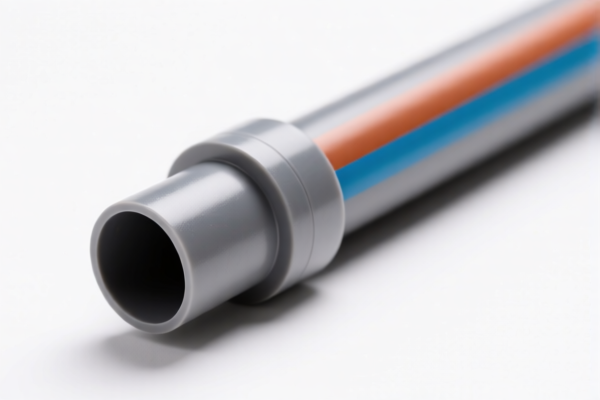
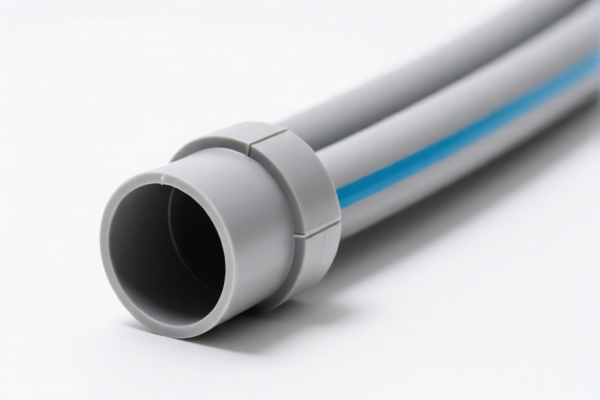
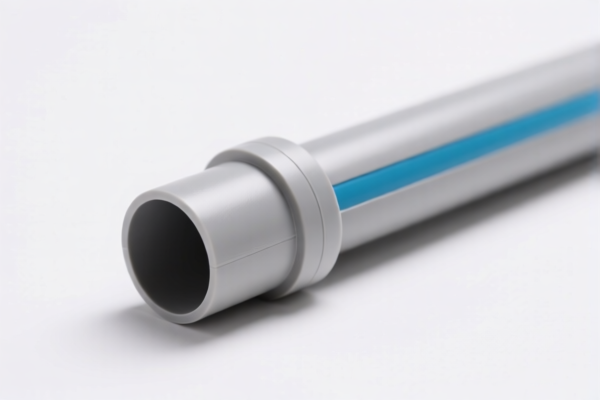
AI Analysis
🔌 Wire Conduit & Fittings: The Unsung Heroes of Electrical Infrastructure
🌐 HS Code Reference & Customs Clearance Guide | 2026 Latest Tariff Analysis | Professional Compliance Strategy
📌 Part 1: Product Definition – What Exactly Is "Wire Conduit"?
In international trade, "Wire Conduit" is a broad term often used to describe protective tubing for electrical wires, cables, and data lines. However, customs authorities distinguish between these based on material, rigidity, and presence of fittings.
The term "Wire Conduit" typically falls under Chapter 39 (Plastics) or Chapter 40 (Rubber) of the HS Code system. It is NOT simply "pipes"; it includes rigid, semi-rigid, and flexible tubes, along with their joints, elbows, and flanges.
⚠️ Critical Distinction:
- Plastic Conduits: Most common in residential/commercial wiring (PVC, Polyethylene).
- Rubber Conduits: Used in high-flex, industrial, or hazardous environments.
- Fittings Matter: If the import includes connectors/elbows, the HS code may shift depending on whether the fittings are integral or separate.
📦 Part 2: HS Code Classification Details (Based on Provided Data)
The following HS Codes are derived strictly from the provided <DATA> set. Note that the classification depends heavily on the material composition and rigidity.
| HS Code | Product Description (From Data) | Key Characteristics | Material Type |
|---|---|---|---|
3917.29.00.90 |
Rigid tubes, pipes, and hoses of other plastics (not elsewhere specified) | Rigid, non-polyethylene, no fittings included in this specific line | Other Plastics (e.g., PVC, ABS) |
3917.32.00.20 |
Other tubes/pipes/hoses: Polyethylene (PE), not reinforced, without fittings | Semi-rigid/flexible, specifically Polyethylene, no fittings | Polyethylene (PE) |
4007.00.00.00 |
Vulcanized rubber thread and cord | Flexible, high elasticity, used for specialized sealing or conductive rubber conduits | Vulcanized Rubber |
3917.39.00.00 |
Other tubes/pipes/hoses of plastics: Not elsewhere specified | Fallback category for unspecified plastic tubes, potentially including reinforced types | Other Plastics |
🔍 Key Insight:
- If your conduit is rigid PVC, it likely falls under3917.29.00.90.
- If it is flexible Polyethylene (common in automotive or industrial wiring), it falls under3917.32.00.20.
- Rubber conduits are distinct and fall under4007.00.00.00or3917.39.00.00if not specifically rubber thread/cord.
💰 Part 3: 2026 Tariff Rate Breakdown (Including Additional Duties)
✅ Applicable Country: United States (US)
✅ Origin: China (CN) (Assumed based on tax structure context)
✅ Effective Date: Current 2026 rates
🎯 1. 3917.29.00.90 – Rigid Tubes of Other Plastics
(e.g., Rigid PVC Conduits, ABS Conduits)
| Item | Detail |
|---|---|
| Base Tariff | 0.0% |
| Additional Tariff | 0.0% |
| Total Tax Rate | 0.0% |
| Tax Detail | "基础关税: 0.0%, 加征关税: 0.0%" |
| Compliance Note | Zero Duty! This is a highly competitive classification. Ensure the product is rigid and made of plastics other than polyethylene to qualify. |
📌 Explanation:
- No base or additional duties apply to rigid plastic conduits (non-PE).
- Risk: Misclassifying PE as "other plastic" will lead to severe penalties.
🎯 2. 3917.32.00.20 – Polyethylene (PE) Tubes, Without Fittings
| Item | Detail |
|---|---|
| Base Tariff | 3.1% |
| Additional Tariff | 25.0% |
| Total Tax Rate | 28.1% |
| Tax Detail | "基础关税: 3.1%, 加征关税: 25.0%" |
| Calculation | CIF Value × 28.1% |
| De Minimis | ❌ Not Eligible |
| Legal Basis | USITC Section 301 Tariffs + IEEPA Provisions |
📌 Explanation:
- Polyethylene is a high-tariff material for US imports from China.
- Critical: The description specifies "without fittings". If you import elbows or couplings separately, they may be classified differently (potentially under3917.29.00.90if rigid, leading to 0% tax).
- Strategy: Consider shipping fittings separately if they qualify under a lower-tariff category.
🎯 3. 4007.00.00.00 – Vulcanized Rubber Thread and Cord
| Item | Detail |
|---|---|
| Base Tariff | 0.0% |
| Additional Tariff | 25.0% |
| Total Tax Rate | 25.0% |
| Tax Detail | "基础关税: 0.0%, 加征关税: 25.0%" |
| Compliance Note | High tariff due to Section 301. Only applies if the product is explicitly vulcanized rubber thread/cord. |
📌 Explanation:
- Most rubber conduits are not "thread and cord." If the conduit is a hollow tube, it may fall under3917.39.00.00(see below).
- Misclassification here is common; ensure product specs match "thread/cord" exactly.
🎯 4. 3917.39.00.00 – Other Plastic Tubes (Error Case)
| Item | Detail |
|---|---|
| Base Tariff | Error / Failed to Retrieve |
| Total Tax Rate | Error |
| Tax Detail | "Failed to retrieve tax information" |
| Compliance Note | ⚠️ HIGH RISK |
📌 Explanation:
- This code represents a data gap. Do not rely on this for budgeting.
- Likely requires manual verification with a customs broker.
- May include reinforced plastics or unspecified types, which could attract additional duties not reflected in the data.
🛠️ Part 4: Customs Clearance Practical Advice
✅ 1. Documentation Checklist (Mandatory)
| Document | Requirement | Why It Matters |
|---|---|---|
| Product Specification Sheet | Must specify Material (PVC, PE, Rubber), Rigidity, and Diameter | Determines HS Code accuracy |
| Commercial Invoice | Clearly state "Plastic Conduit" or "Rubber Conduit," not generic "Pipe" | Avoids "Undefined Goods" flags |
| Material Safety Data Sheet (MSDS) | For rubber/plastic compounds | Required for chemical compliance |
| Photographs | Show cross-section, fittings (if any), and branding | Proves "without fittings" for 3917.32.00.20 |
| Certificate of Origin | To verify Chinese origin for tariff calculation | Determines eligibility for additional duties |
✅ 2. Smart Classification Strategy
| Scenario | Recommended HS Code | Tax Rate | Action |
|---|---|---|---|
| Rigid PVC Conduit | 3917.29.00.90 |
0.0% | ✅ Ideal |
| Flexible PE Conduit | 3917.32.00.20 |
28.1% | ⚠️ High cost; consider separating fittings |
| PE Conduit + Fittings Sold Together | Check Fitting HS Code | Variable | ❌ Avoid; fittings may trigger higher tax |
| Rubber Conduit (Tube) | 3917.39.00.00 |
Error | 🔴 Avoid; consult broker |
| Rubber Thread/Cord | 4007.00.00.00 |
25.0% | ✅ Only if actual thread/cord |
🔥 Pro Tip:
If importing PE conduits, ensure the declaration explicitly states "Without Fittings" to match3917.32.00.20. If fittings are included, the entire shipment may be reclassified, potentially increasing taxes.
✅ 3. Common Pitfalls & Solutions
| Mistake | Consequence | Solution |
|---|---|---|
| Declaring "Pipe" instead of "Conduit" | Customs may reject or misclassify | Use specific terms: "Electrical Wire Conduit" |
| Ignoring Material Composition | Incorrect HS Code → Penalty | Specify "PVC" or "Polyethylene" in invoice |
| Assuming All Plastics Are 0% Tax | PE attracts 28.1% | Verify material before shipping |
| Importing Fittings Separately Incorrectly | Double taxation | Check HS code for fittings (3917.29.00.90 may be 0%) |
🌍 Part 5: Global Market Comparison (2026)
| Region | Recommended HS Code | Est. Tariff (China Origin) | Notes |
|---|---|---|---|
| 🇺🇸 USA | 3917.29.00.90 |
0.0% | Best for rigid PVC |
| 🇺🇸 USA | 3917.32.00.20 |
28.1% | High for PE; avoid if possible |
| 🇪🇺 EU | 3917.29 |
~0-2.5% | Lower tariffs; CE marking required |
| 🇨🇳 China | 3917.29 |
~5-6% | Import duty + VAT; no Section 301 |
📌 Conclusion:
- USA Market: Rigid PVC conduits (3917.29.00.90) are duty-free, making them highly competitive.
- PE Conduits (3917.32.00.20) face a 28.1% tariff, significantly impacting profitability.
- Rubber Conduits are complex; avoid3917.39.00.00due to data uncertainty.
📌 Part 6: Final Recommendations
- Prioritize Rigid PVC: If feasible, switch to rigid PVC conduits to enjoy 0% tariffs.
- Separate Fittings: If importing PE conduits, ship fittings separately to potentially leverage lower-tariff classifications for accessories.
- Verify Material: Always specify Polyethylene vs. Other Plastics in documentation.
- Avoid
3917.39.00.00: Due to tax retrieval failure, consult a customs broker for accurate classification.
🚀 Clearance Success Formula:
Correct Material Description + Precise HS Code + No Hidden Fittings = 0% Penalty + Max Profit!
✨ Professional Clearance Starts with Precision!
💼 Every Percent of Tax Saved is Pure Profit!
Customer Reviews
About HS Code Classification
The Harmonized System (HS) is an internationally standardized nomenclature developed by the World Customs Organization (WCO) to classify traded products. Over 200 countries use the HS system as the basis for customs tariffs, trade statistics, and import/export regulations.
Each HS code follows a hierarchical structure:
- Chapter (2 digits) — Broad category of goods (e.g., Chapter 84: Machinery and Mechanical Appliances)
- Heading (4 digits) — More specific grouping within the chapter
- Subheading (6 digits) — Internationally standardized breakdown, used by all WCO member countries
- National subdivisions (8-10 digits) — Country-specific extensions for further classification, such as US HTSUS 10-digit codes
Correct HS code classification is essential for smooth customs clearance, accurate duty payment, and compliance with trade regulations. Misclassification can lead to customs delays, overpayment of duties, or penalties.
When importing from CN to US, the applicable tariff rates may include:
- Most-Favored-Nation (MFN) rate — The standard duty rate applied to WTO members
- General rate — Applied to countries without trade agreements
- Trade remedy duties — Additional tariffs such as Section 301 (anti-dumping), Section 232 (national security), or countervailing duties
The information provided on this page is for reference purposes only. For official classification, please consult with your local customs authority or a licensed customs broker.