Wire Connector Cap
CN → US| HS Code | Tariff Rate | Origin | Destination | Doc |
|---|---|---|---|---|
| 3926909989 | 22.8% | CN | US | Official Doc |
| 3926909987 | 22.8% | CN | US | Official Doc |
| 7326200090 | 88.9% | CN | US | Official Doc |
| 7326908688 | 87.9% | CN | US | Official Doc |
| 8536904000 | 35.0% | CN | US | Official Doc |
| 8536908530 | 35.0% | CN | US | Official Doc |
Product Images
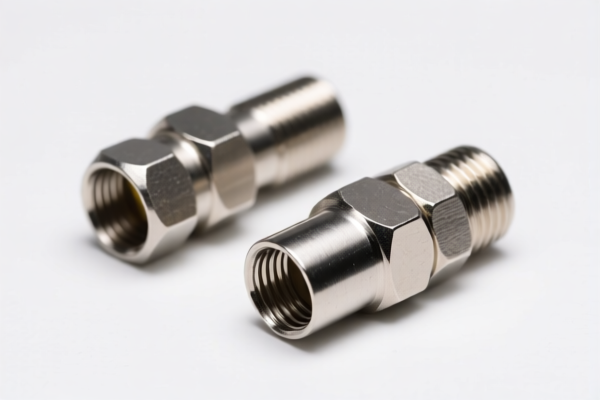
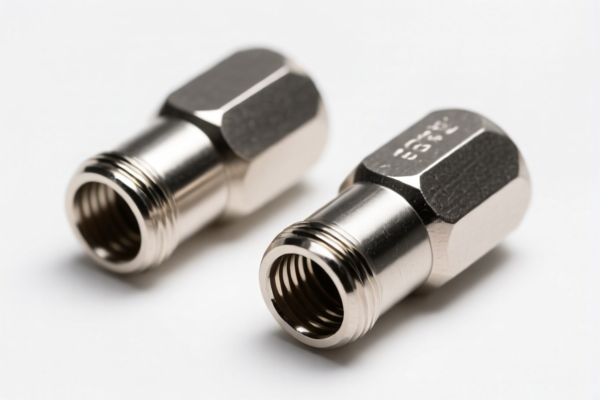
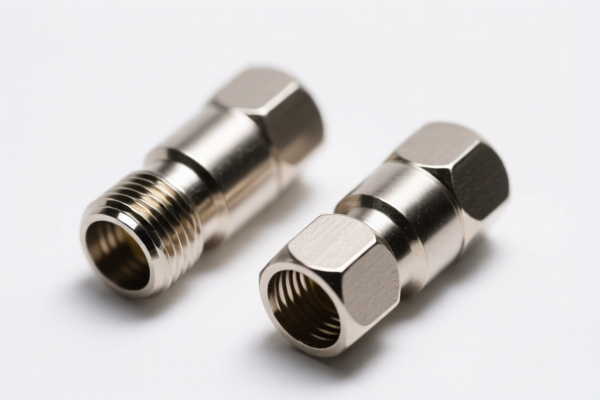
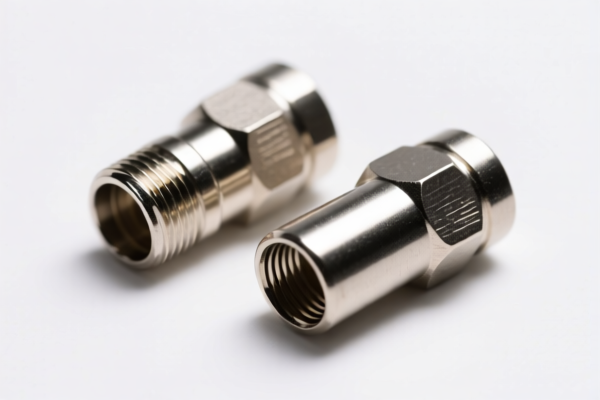
AI Analysis
🔌 Wire Connector Caps & Electrical Splices (Low Voltage Electrical Accessories)
🌐 HS Code Reference & Customs Clearance Guide | 2026 Latest Tariff Analysis | Professional-Level Entry Strategy
📌 Part 1: Product Definition & Classification: What Exactly is a "Wire Connector Cap"?
In international trade, "Wire Connector Caps" are not just simple plastic covers. They encompass a range of small electrical components used to insulate, protect, or connect conductors. The HS Code classification depends heavily on material, function, and voltage rating.
Generally, these items fall into two primary categories:
1. Electrical Insulating/Joining Devices (Voltage ≤ 1000V): Includes terminal blocks, splices, couplings, and junction boxes. These are classified under Chapter 85 (Electrical Machinery).
2. Plastic/Non-Conductive Parts: Simple caps or covers made of plastics (headings 3901–3914) that do not perform an electrical switching/protection function. These are classified under Chapter 39.
⚠️ Key Distinction Point:
- If the item is plastic-only (e.g., a simple screw cap, a plastic boot, or a non-conductive cover) → It likely belongs to HS 3926.90.99.
- If the item is an electrical terminal, splice, or coupling (even if partially plastic) designed to make/maintain electrical connections ≤ 1000V → It belongs to HS 8536.90.40 or 8536.90.85.
- Warning: Misclassifying an electrical splice as a "plastic part" can lead to severe penalties due to tax evasion (25% vs 7.5%).
📦 Part 2: HS Code Classification Details (2026 Latest Tariff Authority Cross-Reference)
| HS Code | Product Description | Application Scenario | Key Characteristics |
|---|---|---|---|
8536.90.40.00 |
Terminals, electrical splices, and electrical couplings; wafer probers | Quick-connect wire connectors, crimp terminals, wire nuts (conductive core), splice kits | ✅ Electrical Function: Makes/maintains circuit connection. Voltage ≤ 1000V. |
8536.90.85.30 |
Other Junction Boxes | Small electrical junction boxes, mounting plates for connectors, enclosures for splices | ✅ Electrical Function: Protects/contains connections. Voltage ≤ 1000V. |
3926.90.99.89 |
Other articles of plastics: Other: Other | Non-conductive plastic caps, insulating boots, decorative covers, non-electrical plastic hardware | ❌ Non-Electrical: Purely protective or structural. No current conduction. |
3926.90.99.87 |
Rigid tubes or pipes suitable for use as electrical conduit | Plastic conduit fittings, rigid pipe caps for cable protection | ⚠️ Structural: Part of the cable management system, not the connector itself. |
🔍 Crucial Reminder:
- Conductive Connectors: Any wire nut, twist-on connector, or terminal block with a metal spring or threaded metal insert MUST go to HS 8536.
- Pure Plastic Caps: If the item is purely a plastic cap with no metal contact and no electrical function (e.g., a dust cap for a non-live socket), it may go to HS 3926.
- Do Not Split: A "wire nut" (plastic body + metal spring) is classified as 8536, not 3926.
💰 Part 3: 2026 Latest Tariff Rate Details (Including Surtaxes, Policy Add-ons)
✅ Applicable Country: United States (US)
✅ Country of Origin: China (CN)
✅ Effective Date: 2025–2026 (Current Trade War Context)
🎯 1. 8536.90.40.00 — Terminals, Electrical Splices, and Couplings
| Item | Content |
|---|---|
| Base Tariff | 0.0% (ad valorem) |
| Section 301 Surcharge | +25.0% (Steel/Aluminum/Copper Products Surtax applies to many electrical components) |
| Total Tariff | 25.0% |
| Tax Calculation | CIF Value × 25.0% |
| De Minimis Exemption? | ❌ No (Section 301 goods are generally excluded from de minimis relief) |
| Legal Basis | USITC:8536.90.40.00 → Section 301: 25% |
📌 Explanation:
- Although the base MFN rate is 0%, Section 301 imposes a 25% surcharge on many electrical apparatus items, including connectors and terminals.
- Total Cost Impact: 25% is significant for low-value/high-volume items like wire nuts. Plan your pricing accordingly.
🎯 2. 8536.90.85.30 — Other Junction Boxes
| Item | Content |
|---|---|
| Base Tariff | 0.0% |
| Section 301 Surcharge | +25.0% |
| Total Tariff | 25.0% |
| Tax Calculation | CIF Value × 25.0% |
| De Minimis Exemption? | ❌ No |
| Legal Basis | USITC:8536.90.85.30 → Section 301: 25% |
📌 Note:
- Small plastic junction boxes or covers for electrical connections fall here.
- Same 25% surcharge applies. Do not attempt to classify as "plastic parts" to avoid this if the item has any electrical function.
🎯 3. 3926.90.99.89 — Other Articles of Plastics (Non-Electrical)
| Item | Content |
|---|---|
| Base Tariff | 5.3% |
| Section 301 Surcharge | +7.5% |
| Total Tariff | 12.8% |
| Tax Calculation | CIF Value × 12.8% |
| De Minimis Exemption? | ⚠️ Limited (Check latest IEEPA rules; many plastic goods are subject to 7.5% surcharge) |
| Legal Basis | USITC:3926.90.99.89 → Section 301: 7.5% |
📌 Explanation:
- This lower rate (12.8% vs 25%) applies ONLY if the item is strictly non-electrical.
- Example: A plastic cap that covers a plug but is not itself a connector.
- Risk: If Customs determines the cap is part of an electrical assembly, they may reclassify it to HS 8536 (25%).
🎯 4. 3926.90.99.87 — Rigid Tubes/Pipes as Electrical Conduit
| Item | Content |
|---|---|
| Base Tariff | 5.3% |
| Section 301 Surcharge | +7.5% |
| Total Tariff | 12.8% |
| Tax Calculation | CIF Value × 12.8% |
| De Minimis Exemption? | ⚠️ Limited |
| Legal Basis | USITC:3926.90.99.87 → Section 301: 7.5% |
📌 Note:
- Applies to plastic conduit fittings or caps for rigid pipes.
- Lower tariff than electrical connectors, but function must be clearly structural/piping, not connecting/conducting.
🛠️ Part 4: Customs Clearance Practical Advice (实战避坑指南)
✅ 1. Required Documentation Checklist (None Can Be Missing)
| Document | Must Provide | Description |
|---|---|---|
| ✅ Product Specifications | ✔️ | Material (Plastic/Metal), Voltage Rating, Current Rating, Dimensions |
| ✅ Product Photos | ✔️ | Clear images showing no metal contacts (for HS 3926) or metal springs (for HS 8536) |
| ✅ Commercial Invoice | ✔️ | Precise description: e.g., "Plastic Wire Nut, 24-12 AWG" vs "PVC Junction Box Cap" |
| ✅ Origin Certificate (CO) | ✔️ | To prove CN origin (triggers 301 tariffs) |
| ✅ Packaging List | ✔️ | Show if items are sold as kits (connectors + caps) |
| ✅ Electrical Certification (if applicable) | ✔️ | UL, CE, or RoHS reports prove intended use and voltage rating |
✅ 2. Declaration Tips (Key Mantra)
🔥 "Function is King: Electrical = 8536 (25%), Plastic Only = 3926 (12.8%)"
| Scenario | Correct Declaration | Wrong Practice |
|---|---|---|
| Wire Nut (Twist-on Connector) | 8536.90.40.00 |
Misdeclaring as "Plastic Cap" → 25% vs 12.8% penalty |
| Junction Box Cover | 8536.90.85.30 |
Misdeclaring as "Plastic Part" → 25% vs 12.8% penalty |
| Pure Plastic Dust Cap (No Metal) | 3926.90.99.89 |
Over-declaring as "Electrical" → Unnecessary 25% tax |
| Conduit Fitting | 3926.90.99.87 |
Misdeclaring as "Connector" → 25% vs 12.8% penalty |
✅ 3. Special Case Handling
| Scenario | Handling Advice |
|---|---|
| Mixed Kits (Connectors + Plastic Caps) | Declare as One Item: If sold as a kit, the primary function determines the HS Code. Usually, 8536 if it includes active connectors. |
| OEM Branded Connectors | Provide Customer PO + Drawing. Avoid generic "Wire Connector" descriptions. |
| High-Voltage Items (>1000V) | Not Covered Here: HS 8536 covers ≤1000V. Higher voltage items go to 8536.60 or other codes. Do not force into 8536.90. |
| Non-Conductive Boots for Automotive | If purely for protection (no electrical contact), use 3926.90.99.89. Provide proof of non-conductivity. |
🌍 Part 5: Global Market Customs Comparison (2026 Latest)
| Country/Region | Recommended HS Code | Tariff Rate | Certification Required | Notes |
|---|---|---|---|---|
| 🇺🇸 USA | 8536.90.40.00 |
25% (CN Origin) | UL, FCC (if applicable) | High Surtax. Check if any Section 301 exclusions apply. |
| 🇨🇳 China | 8536.90.40.00 |
~1.5–3% | CCC (if applicable) | Low entry tariff. No major surtaxes. |
| 🇪🇺 EU | 8536.90.90 |
0–2.7% | CE, RoHS | No Section 301. Favorable for EU exports. |
| 🇬🇧 UK | 8536.90.90 |
0–4% | UKCA | Post-Brexit rules apply. |
| 🇯🇵 Japan | 8536.90.90 |
0–2.5% | PSE | Low tariffs. |
📌 Conclusion:
- USA is the toughest market due to the 25% Section 301 surcharge on electrical components.
- EU/UK/Japan are much more favorable for electrical accessories.
- Strategy: If targeting the US, ensure precise classification to avoid 12.2% overpayment (25% vs 12.8%). If eligible for HS 3926, save money. If not, accept the 25% cost.
📌 Part 6: Common Errors & Pitfalls (Blood & Tears Lessons)
❌ Error 1: Declaring a Wire Nut (with metal spring) as "Plastic Connector Cap"
👉 Consequence: Customs reclassifies to HS 8536 → Backpay 12.2% + Penalties.
✅ Fix: Always declare "Electrical Terminal/Splice" if metal contact exists.
❌ Error 2: Declaring a Junction Box as "Plastic Hardware"
👉 Consequence: Same as above. 25% vs 12.8% discrepancy.
✅ Fix: Use "Junction Box" or "Electrical Enclosure" in description.
❌ Error 3: Vague Description: "Electrical Parts"
👉 Consequence: Customs detention for classification review → Delays + Storage Fees.
✅ Fix: Be specific: "Twist-on Wire Connector, Polypropylene, 250V".
❌ Error 4: Ignoring Voltage Rating
👉 Consequence: If >1000V, HS 8536.90 is wrong.
✅ Fix: Check voltage. If >1000V, consult HS 8536.60 or 8536.90 subheadings for high-voltage items.
🎯 Part 7: Conclusion: Precision Saves Money!
🎯 Remember the Mantra:
🔹 "Metal Contact = 8536 (25%)
🔹 Pure Plastic = 3926 (12.8%)
🔹 Wrong Code = Double Tax + Delay!"
🔹 "Describe Exactly: Voltage, Material, Function!"
📌 Pro Tip:
- For US Imports, if your product is a purely plastic, non-conductive cap (e.g., for a non-electrical application or a protective boot), fight for HS 3926 to save 12.2%.
- However, if it’s a wire connector, splice, or junction box, accept HS 8536 (25%). Do not risk it.
- Apply for a Pre-Ruling (CBP Binding Ruling) if unsure. It’s worth the fee for high-volume shipments.
📣 Immediate Action:
📞 Contact your customs broker with photos + specs.
🚀 Accurate Classification = Lower Costs + Faster Clearance.
💼 Your Profit Margin Depends on This 25% vs 12.8% Decision!
✨ Professional Clearance Starts with Correct Classification!
💼 Every Percent Matters in Global Trade!
Customer Reviews
About HS Code Classification
The Harmonized System (HS) is an internationally standardized nomenclature developed by the World Customs Organization (WCO) to classify traded products. Over 200 countries use the HS system as the basis for customs tariffs, trade statistics, and import/export regulations.
Each HS code follows a hierarchical structure:
- Chapter (2 digits) — Broad category of goods (e.g., Chapter 84: Machinery and Mechanical Appliances)
- Heading (4 digits) — More specific grouping within the chapter
- Subheading (6 digits) — Internationally standardized breakdown, used by all WCO member countries
- National subdivisions (8-10 digits) — Country-specific extensions for further classification, such as US HTSUS 10-digit codes
Correct HS code classification is essential for smooth customs clearance, accurate duty payment, and compliance with trade regulations. Misclassification can lead to customs delays, overpayment of duties, or penalties.
When importing from CN to US, the applicable tariff rates may include:
- Most-Favored-Nation (MFN) rate — The standard duty rate applied to WTO members
- General rate — Applied to countries without trade agreements
- Trade remedy duties — Additional tariffs such as Section 301 (anti-dumping), Section 232 (national security), or countervailing duties
The information provided on this page is for reference purposes only. For official classification, please consult with your local customs authority or a licensed customs broker.