Wire Mesh (HS Code 7314129000)
CN → US| HS Code | Tariff Rate | Origin | Destination | Doc |
|---|---|---|---|---|
| 7314311000 | 85.0% | CN | US | Official Doc |
| 7314390000 | 85.0% | CN | US | Official Doc |
| 8309900080 | 37.6% | CN | US | Official Doc |
| 7314315010 | 85.0% | CN | US | Official Doc |
Product Images

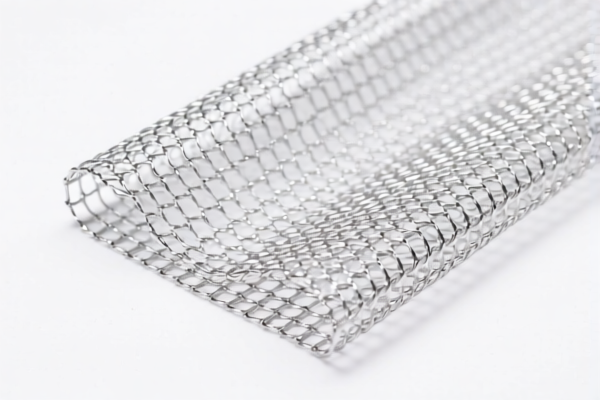

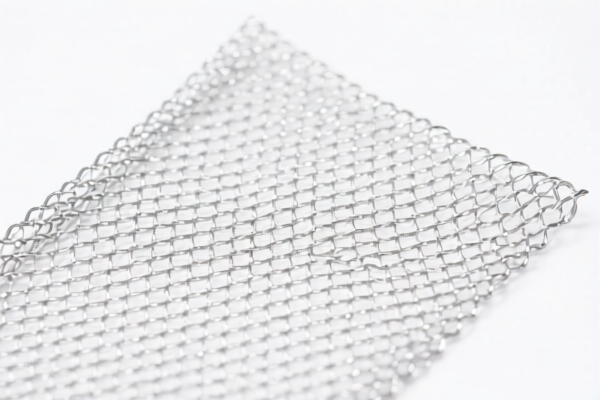
AI Analysis
🕸️ Wire Mesh (Metal Wire Mesh)
🌐 HS Code Reference & Customs Clearance Guide | 2026 Latest Tariff Analysis | Professional Customs Strategy
📌 I. Product Definition & Classification: What is "Wire Mesh"?
Wire Mesh is a generic term for sheets or rolls of fabric made from interlaced wire strands. In international trade, classification depends heavily on the material composition (Iron vs. Steel) and the manufacturing method (Welded vs. Woven/Lasswire).
Key Distinction:
- Welded Wire Mesh: Wires are fused at intersections. Typically falls under Chapter 7314 (Iron/Steel).
- Lasswire/Woven Mesh: Wires are interlaced without fusion. Also typically falls under Chapter 7314 if made of iron/steel.
- Steel Accessories: If the mesh is considered a minor accessory or component of another article (e.g., a filter frame), it might be miscategorized under Chapter 8309.
⚠️ Critical Classification Point:
- Most industrial, construction, or fencing wire meshes made of Iron or Steel belong to Heading 7314.
- Misclassifying steel mesh as a general "metal accessory" (8309) is a common error that leads to severe penalties due to tax rate discrepancies.
📦 II. HS Code Classification Details (2026 Latest Tariff Mapping)
Based on the provided data, here is the authoritative mapping for Wire Mesh (originating from China):
| HS Code | Product Description | Classification Logic | Total Tax Rate |
|---|---|---|---|
7314.31.10.00 |
Wire Mesh (Iron/Steel) | Matches material (Iron/Steel) & form (Grid/Fence). Specific sub-category for welded mesh. | 85.0% |
7314.39.00.00 |
Wire Mesh (Iron/Steel) | Broad category for "Wires of iron or steel; grillings, netting, fencing..." Includes welded gratings/fences. | 85.0% |
7314.12.90.00 |
Wire Mesh (Iron/Steel) | Specific code for "Welded mesh of wire, gauged less than 4.00 mm". User input 7314129000 maps here. |
85.0% |
7314.31.50.10 |
Wire Mesh (Iron/Steel) | Specific sub-category for certain welded mesh types. Matches material/form consistency. | 85.0% |
8309.90.00.80 |
Metal Accessories (Misc.) | ⚠️ Risk Category: Classifies as "Other metal accessories/parts". Often used for miscoded steel mesh. | 37.6% |
🔍 重点提醒 (Critical Warning):
- Codes 7314.xx.xx.xx represent the correct classification for standard iron/steel wire mesh.
- Code 8309.90.00.80 is a lower-rate trap (37.6% vs 85.0%). Customs authorities frequently challenge this classification for steel mesh, requiring back payment of the difference plus penalties.
- All 7314 codes carry a massive 85% total tariff due to additional levies.
💰 III. 2026 Latest Tariff Rate Breakdown (Including Surcharges)
✅ Applicable Country: United States (US)
✅ Origin: China (CN)
✅ Effective Date: Includes subsequent imports under current trade policies.
🎯 1. Classification under 7314 Series (e.g., 7314.31.10.00, 7314.39.00.00, 7314.12.90.00)
Total Tax Rate: 85.0%
| Item | Content |
|---|---|
| Base Tariff | 0.0% |
| Section 301 Surcharge | +25.0% |
| Section 122 Surcharge (Steel/Aluminum/Copper) | +50.0% |
| Total Rate | 85.0% |
| Tax Calculation | CIF Value × 85% |
| De Minimis Exemption | ❌ Not Eligible (High-value threshold exceeded; strict enforcement) |
| Legal Basis Path | Section 301 (Footnote 9903.88.01) → Section 122 (Steel Products) → USITC:7314.xx.xx.xx |
📌 Explanation:
- Section 301 (25%): Standard USITC surcharge on Chinese goods.
- Section 122 (50%): Specific additional duty on Steel, Aluminum, and Copper products under U.S. Trade Expansion Act Section 232. Since wire mesh is a steel product, this 50% surcharge is mandatory.
- Base Rate (0%): Harmonized Tariff Schedule base duty is often 0% for these mesh categories, but the surcharges drive the cost up.
- Result: A 85% total tariff makes wire mesh from China extremely expensive to import into the US.
🎯 2. Classification under 8309.90.00.80 (Miscellaneous Metal Accessories)
Total Tax Rate: 37.6%
| Item | Content |
|---|---|
| Base Tariff | 2.6% |
| Section 301 Surcharge | +25.0% |
| Section 122 Surcharge | N/A (Not classified as steel product under 122 in this context) |
| Total Rate | 37.6% |
| Tax Calculation | CIF Value × 37.6% |
| De Minimis Exemption | ❌ Not Eligible (Generally denied for misclassified goods) |
| Legal Basis Path | Section 301 → USITC:8309.90.00.80 |
📌 Caution:
- This rate is significantly lower (37.6% vs 85.0%).
- Risk: Customs and Border Protection (CBP) may reclassify steel mesh from 8309 to 7314 upon inspection, resulting in a 47.4% tax difference per dollar, plus audits and penalties.
- Recommendation: Do NOT use this code unless the mesh is clearly not a "steel product" (e.g., coated in plastic where steel is not the primary characteristic, or very thin wire used as a trivial component).
🛠️ IV. Customs Clearance Practical Advice (Avoid Pitfalls)
✅ 1. Required Documentation Checklist
| Document | Mandatory? | Notes |
|---|---|---|
| ✅ Product Specifications | ✔️ | Must specify: Material (Iron/Steel), Mesh Size (mm/inch), Wire Diameter, Weave Pattern. |
| ✅ Material Certificate | ✔️ | Proof of origin and material composition (Crucial for Section 122 determination). |
| ✅ Photos (Labeled) | ✔️ | Show the mesh structure, rolls, or sheets, and any labeling. |
| ✅ Commercial Invoice | ✔️ | Clearly state "Wire Mesh - Iron/Steel" and HS Code. |
| ✅ Packing List | ✔️ | Detail net/gross weight. |
| ❌ Plastic Coating Claim | ❌ | If claimed, must provide proof that steel is not the essential character. |
✅ 2. Classification Strategy (Key Tips)
🔥 "Be Honest, Be Specific, Avoid 'Miscellaneous'"
| Scenario | Recommended HS Code | Risk Level |
|---|---|---|
| Standard Steel Wire Mesh (Fencing, Industrial Sieves) | 7314.31.10.00 or 7314.39.00.00 |
✅ Correct (Low audit risk, high tax) |
| Thin Welded Wire (<4mm gauge) | 7314.12.90.00 |
✅ Correct (Low audit risk, high tax) |
| Plastic-Coated Steel Mesh | 7314.xxxx.xx |
✅ Correct (Still Steel) |
| Non-Steel Mesh (Copper, Brass, Aluminum) | Check Chapter 74/75/76 | ✅ Correct (Avoids Section 122) |
| "Other Metal Accessories" | 8309.90.00.80 |
⚠️ High Risk (Likely reclassification) |
✅ 3. Special Considerations for Section 122
- What is Section 122?
A 50% additional duty on Steel and Aluminum products imported into the US, activated by the President under Section 232 of the Trade Expansion Act. - Does Wire Mesh Fall Under Section 122?
YES. Most iron and steel wire meshes are classified as steel products. - Impact:
Even if the base tariff is 0%, the 50% Section 122 surcharge applies, pushing the total tax to 85% (when combined with the 25% Section 301 tariff). - Exception:
If the mesh is made of Aluminum or Copper, Section 122 may not apply (depending on specific subheadings), but Section 301 (25%) still applies. Always verify the exact metal composition.
🌍 V. Global Market Comparison (2026)
| Country/Region | Recommended HS Code | Est. Total Tariff (China Origin) | Notes |
|---|---|---|---|
| 🇺🇸 United States | 7314.xxxx.xx |
85.0% | High: 0% Base + 25% (Sec 301) + 50% (Sec 122) |
| 🇨🇳 China | 7314.xxxx.xx |
~0% - 10% | Low: No anti-dumping in China |
| 🇪🇺 EU | 7314.xxxx.xx |
~5% - 10% | Moderate: No US-style Section 122 |
| 🇬🇧 UK | 7314.xxxx.xx |
~5% - 10% | Post-Brexit tariffs align closely with EU |
| 🇦🇺 Australia | 7314.xxxx.xx |
~5% | Low: No major surcharges |
📌 Conclusion:
- The US market is exceptionally expensive for steel wire mesh due to Section 122.
- Suppliers should consider diversifying sourcing to countries not subject to Section 232 (e.g., Vietnam, Mexico, EU) if targeting the US market.
- Do not attempt to evade Section 122 by misclassifying as8309; the risk of penalties outweighs the tax savings.
📌 VI. Common Errors & Pitfalls (Blood Lessons)
❌ Error 1: Classifying steel mesh as 8309.90.00.80 to save 47.4% in taxes.
👉 Consequence: CBP reclassifies to 7314, demands back taxes + interest + penalties. Audit trigger.
❌ Error 2: Ignoring Section 122 in cost calculations.
👉 Consequence: Profit margin erased. Buyers refuse cargo due to unexpected 50% duty.
❌ Error 3: Vague description: "Metal Net".
👉 Consequence: Customs holds shipment for classification review. Delays of weeks.
❌ Error 4: Claiming "Plastic Coated" to avoid steel classification.
👉 Consequence: If steel is still the essential character (which it is for mesh), Section 122 still applies. Misdeclaration = fraud.
✅ Correct Action:
"Welded Wire Mesh, Steel, 2 inch x 2 inch opening, 1/4 inch wire, Galvanized, Roll, for Fencing."
HS Code:7314.31.10.00
Total Duty: 85%
🎯 VII. Conclusion: Professional Classification, Cost Control!
🎯 Remember:
🔹 "Steel Mesh + US = 85% Duty" (0% Base + 25% Sec 301 + 50% Sec 122)
🔹 "Don't Gamble with 8309" – The risk is too high.
🔹 "Verify Metal Composition" – Aluminum/Copper may avoid Sec 122.
📌 Pro Tip:
If you are importing large volumes of wire mesh to the US, consult a licensed customs broker to apply for a Binding Ruling or Section 301/122 Exclusions (if applicable).
Consider supply chain diversification to mitigate the high tariff burden.
📣 Immediate Action:
📞 Engage a Customs Broker for Pre-Ruling
📄 Prepare Material Certificates & Product Specs
🚀 Plan for 85% Duty in your cost structure
✨ Accurate Classification Saves Millions!
💼 Don't Let High Tariffs Crush Your Margin!
Customer Reviews
About HS Code Classification
The Harmonized System (HS) is an internationally standardized nomenclature developed by the World Customs Organization (WCO) to classify traded products. Over 200 countries use the HS system as the basis for customs tariffs, trade statistics, and import/export regulations.
Each HS code follows a hierarchical structure:
- Chapter (2 digits) — Broad category of goods (e.g., Chapter 84: Machinery and Mechanical Appliances)
- Heading (4 digits) — More specific grouping within the chapter
- Subheading (6 digits) — Internationally standardized breakdown, used by all WCO member countries
- National subdivisions (8-10 digits) — Country-specific extensions for further classification, such as US HTSUS 10-digit codes
Correct HS code classification is essential for smooth customs clearance, accurate duty payment, and compliance with trade regulations. Misclassification can lead to customs delays, overpayment of duties, or penalties.
When importing from CN to US, the applicable tariff rates may include:
- Most-Favored-Nation (MFN) rate — The standard duty rate applied to WTO members
- General rate — Applied to countries without trade agreements
- Trade remedy duties — Additional tariffs such as Section 301 (anti-dumping), Section 232 (national security), or countervailing duties
The information provided on this page is for reference purposes only. For official classification, please consult with your local customs authority or a licensed customs broker.