Wire Protection Rubber Conduit
CN → US| HS Code | Tariff Rate | Origin | Destination | Doc |
|---|---|---|---|---|
| 4016990300 | 38.0% | CN | US | Official Doc |
| 4016991000 | 20.8% | CN | US | Official Doc |
| 4016996050 | 37.5% | CN | US | Official Doc |
| 4016990300 | 38.0% | CN | US | Official Doc |
| 4016991000 | 20.8% | CN | US | Official Doc |
Product Images

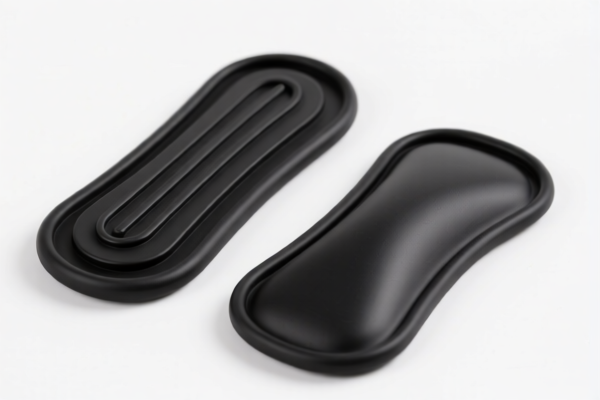
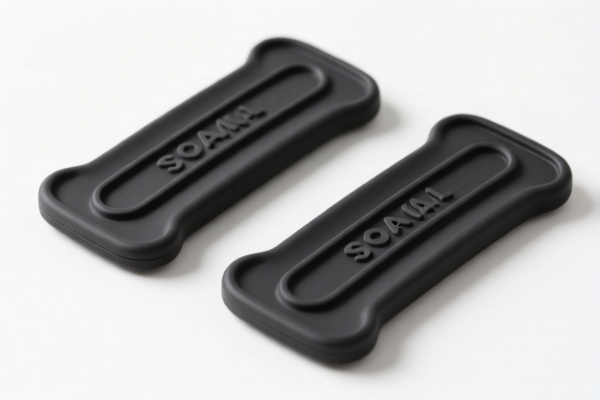
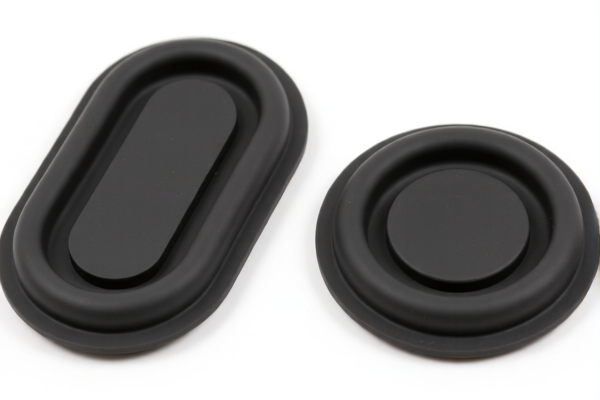
AI Analysis
🛡️ Wire Protection Rubber Conduit
🌐 HS Code Reference & Customs Clearance Guide | 2026 Latest Tariff Analysis | Professional Clearance Strategy
📌 I. Product Definition and Classification: Do You Really Know "Rubber Conduit"?
Wire Protection Rubber Conduit is a critical component in industrial, automotive, and electrical systems, designed to protect cables, wires, and hoses from abrasion, chemicals, and environmental damage. In international trade, it falls under Chapter 40 (Rubber and Articles Thereof), specifically within Heading 4016 (Other articles of vulcanized rubber other than hard rubber).
⚠️ Key Classification Distinction:
- The classification depends heavily on specific material composition (e.g., vulcanized vs. non-vulcanized) and functional form (e.g., conduit, sleeve, protective cover). - Customs authorities scrutinize whether the product is a "general-purpose rubber article" or has a "specific technical application" that might push it into other chapters (e.g., Chapter 85 for electrical parts if it functions as an insulator). However, for standard wire protection sleeves, 4016 is the primary category.
📦 II. HS Code Classification Details (2026 Latest Tariff Authoritative对照)
Based on the provided data, the product is classified under three specific subheadings within 4016.99 (Other rubber articles). Note that while the base HS code is similar, the 8-digit or 10-digit subheading determines the precise tariff treatment.
| HS Code | Product Summary | Key Characteristics | Tax Rate (Total) |
|---|---|---|---|
4016.99.03.00 |
Vulcanized rubber, shaped as conduit or protective sleeve; classified as "Other vulcanized rubber articles." | Material: Vulcanized Rubber Form: Conduit/Sleeve |
38.0% |
4016.99.10.00 |
Rubber material, used as conduit or protective part; classified as vulcanized rubber articles with no form conflict. | Material: Rubber (General/Vulcanized) Usage: Conduit/Protective Part |
20.8% |
4016.99.60.50 |
Vulcanized rubber article, no specific purpose conflict; classified under "Other categories." | Material: Vulcanized Rubber Purpose: General Article |
37.5% |
4016.99.03.00 |
Vulcanized rubber, shaped as protective cover; classified as container or covering nature in other articles. | Material: Vulcanized Rubber Form: Protective Cover |
38.0% |
4016.99.10.00 |
Rubber material, used as protective part; classified as vulcanized rubber article with no form conflict. | Material: Rubber Usage: Protective Part |
20.8% |
🔍 Critical Observation:
There is a significant tariff difference between4016.99.03.00/4016.99.60.50(~37-38%) and4016.99.10.00(~20.8%).
- Why the difference? The lower tax rate (20.8%) applies when the product is described broadly as "Rubber" (often implying standard vulcanized rubber for general protective parts) and specifically noted as "Conduit or Protective Part" without conflicting forms.
- The higher tax rate (38.0%) applies when the description emphasizes "Vulcanized Rubber" in specific forms like "Conduit or Protective Sleeve" or "Protective Cover" which may be viewed as more specialized or distinct "Other Articles."
💰 III. 2026 Latest Tariff Rate Breakdown (Including Surcharges & Policy Add-ons)
✅ Applicable Market: United States (US)
✅ Origin: China (CN)
✅ Effective Time: Includes imports from November 10, 2025 onwards
🎯 1. HS Code 4016.99.03.00 – Vulcanized Rubber Conduit/Sleeve
| Item | Details |
|---|---|
| Base Tariff | 3.0% |
| Section 301 Surcharge | +25.0% |
| Section 122 Tariff | +10.0% |
| Total Tax Rate | 38.0% |
| Tax Calculation | CIF Value × 38.0% |
| De Minimis Exemption | ❌ Not Eligible (High tax rate excludes small package exemption) |
| Legal Basis Path | USITC:4016.99.03.00 → Section 301 Footnote → Section 122 |
📌 Explanation:
- This classification attracts the highest combined rate among the options.
- The 38% rate is a heavy burden. Importers must ensure the product description strictly matches the "Conduit or Protective Sleeve" definition to avoid misclassification disputes.
🎯 2. HS Code 4016.99.10.00 – Rubber Conduit/Protective Part
| Item | Details |
|---|---|
| Base Tariff | 3.3% |
| Section 301 Surcharge | +7.5% |
| Section 122 Tariff | +10.0% |
| Total Tax Rate | 20.8% |
| Tax Calculation | CIF Value × 20.8% |
| De Minimis Exemption | ❌ Not Eligible |
| Legal Basis Path | USITC:4016.99.10.00 → Section 301 Footnote → Section 122 |
📌 Explanation:
- This is the most cost-effective classification if the product qualifies.
- The key is the description: "Rubber" (instead of specifically "Vulcanized" in the headline) and "Conduit or Protective Part."
- The Section 301 surcharge is lower (7.5% vs 25%), leading to a significantly lower total cost.
🎯 3. HS Code 4016.99.60.50 – Other Vulcanized Rubber Articles
| Item | Details |
|---|---|
| Base Tariff | 2.5% |
| Section 301 Surcharge | +25.0% |
| Section 122 Tariff | +10.0% |
| Total Tax Rate | 37.5% |
| Tax Calculation | CIF Value × 37.5% |
| De Minimis Exemption | ❌ Not Eligible |
| Legal Basis Path | USITC:4016.99.60.50 → Section 301 Footnote → Section 122 |
📌 Explanation:
- This is a "catch-all" for vulcanized rubber articles not specified elsewhere.
- It incurs the high 25% Section 301 surcharge, resulting in a 37.5% total rate.
- Use this only if the product does not fit the specific "Conduit" description of 4016.99.03.00 or the broader "Rubber" description of 4016.99.10.00.
🛠️ IV. Customs Clearance Practical Advice (Field Pitfall Guide)
✅ 1. Required Documentation Checklist (Non-negotiable)
| Document | Required? | Notes |
|---|---|---|
| ✅ Product Specification Sheet | ✔️ | Must detail: Material (e.g., EPDM, NBR, Silicone), Hardness (Shore A), Wall Thickness, Diameter. |
| ✅ Material Safety Data Sheet (MSDS) | ✔️ | Crucial for rubber products to confirm vulcanization status and chemical composition. |
| ✅ Product Photos (Labeled) | ✔️ | Show the conduit installed on wires, highlighting its protective function. |
| ✅ Commercial Invoice | ✔️ | Must clearly state "Wire Protection Rubber Conduit" or "Rubber Protective Sleeve." Avoid vague terms like "Rubber Hose" unless accurate. |
| ✅ Packing List | ✔️ | Include net/gross weight and dimensions. |
| ✅ Certificate of Origin (CO) | ✔️ | Essential for proving Chinese origin to apply correct tariff rates. |
✅ 2. Classification Strategy (Key Mnemonics)
🔥 "Vulcanized + Specific Form = High Tax; Rubber + General Use = Lower Tax!"
| Scenario | Recommended HS Code | Why? |
|---|---|---|
| Standard Rubber Conduit (General industrial use) | 4016.99.10.00 |
Broad description "Rubber" + "Conduit/Protective Part" triggers lower 7.5% Section 301 rate. |
| Specialized Vulcanized Sleeve (Heavy-duty, specific material) | 4016.99.03.00 |
Specific "Vulcanized" + "Sleeve" form triggers 25% Section 301 rate. |
| Unclassified Rubber Article | 4016.99.60.50 |
Fallback option, but high tax (37.5%). Avoid if possible. |
✅ 3. Special Handling Tips
| Situation | Advice |
|---|---|
| Material Ambiguity | If the rubber is vulcanized, use "Vulcanized Rubber" in description. If non-vulcanized, check Chapter 4000-4002 (possibly different duties). Most wire protection is vulcanized. |
| Composite Products | If the conduit has metal reinforcements or plastic liners, ensure the rubber is the essential character. If metal dominates, it may shift to Chapter 73 (Articles of Iron/Steel), altering HS code entirely. |
| Sample vs. Bulk | For bulk shipments, ensure the invoice description matches the sample tested by CBP. Discrepancies lead to audits. |
| Section 122 Impact | Remember that all these codes include a 10% Section 122 tariff. This is a recent/additional layer on top of Section 301. Plan cash flow accordingly. |
🌍 V. Global Market Comparison (2026 Latest)
| Country/Region | Recommended HS Code | Tariff (China Origin) | Certification | Notes |
|---|---|---|---|---|
| 🇺🇸 USA | 4016.99.10.00 |
20.8% | None specific | Lowest US duty among options. |
| 🇨🇳 China | 4016.99.10.00 |
~5-10% | CCC (if applicable) | Lower import duty for domestic processing. |
| 🇪🇺 EU | 4016.99.99 |
0-4.5% | REACH/RoHS | No Section 301/122. Standard MFN rates apply. |
| 🇯🇵 Japan | 4016.99.00 |
3.0-6.0% | JIS | No major surcharges. |
📌 Conclusion:
- The US market is the most complex due to Section 301 and Section 122 tariffs.
- Choosing4016.99.10.00can save ~17-18% in duties compared to4016.99.03.00.
- Ensure your product description aligns with the lower-tax classification if legally accurate.
📌 VI. Common Mistakes & Pitfalls (Lessons Learned)
❌ Mistake 1: Describing the product merely as "Rubber Tube"
👉 Result: CBP may reclassify to 4016.99.60.50 or 4016.99.03.00 based on technical analysis, leading to higher duties and potential penalties.
❌ Mistake 2: Ignoring the "Vulcanized" status
👉 Result: Misdeclaring as "Unvulcanized" to avoid higher rates is fraud. Rubber conduits are almost always vulcanized.
❌ Mistake 3: Not accounting for Section 122
👉 Result: Underestimating total landed cost. The 10% Section 122 tax is in addition to Section 301.
❌ Mistake 4: Using vague invoice terms like "Rubber Parts"
👉 Result: Customs detention for clarification. Be specific: "Vulcanized Rubber Wire Protection Conduit, Model XYZ."
✅ Correct Approach:
"Rubber Conduit for Wire Protection, Vulcanized, EPDM Material, 1/2 inch ID, 10 meters per roll, Model ABC"
🎯 VII. Conclusion: Precision in Classification, Savings in Cost!
🎯 Key Takeaways:
🔹 "HS Code
4016.99.10.00is your friend: Lower base rate, lower Section 301 surcharge. Aim for this if your product fits."
🔹 "Always include Section 122: Don't forget the extra 10% in the US."
🔹 "Describe accurately: Vague descriptions lead to costly reclassifications."
📌 Pro Tip:
If you are importing large volumes, consider applying for an Advance Ruling from US Customs and Border Protection (CBP) to lock in the 4016.99.10.00 classification, providing certainty for your supply chain.
📣 Immediate Action:
📞 Consult your customs broker with product samples and technical specs.
📝 Update your commercial invoice to reflect the precise HS Code and description.
🚀 Optimize your supply chain costs by choosing the most favorable legal classification!
✨ Professional Customs Clearance Starts with Accurate Classification!
💼 Every Percentage Point of Duty Counts!
Customer Reviews
About HS Code Classification
The Harmonized System (HS) is an internationally standardized nomenclature developed by the World Customs Organization (WCO) to classify traded products. Over 200 countries use the HS system as the basis for customs tariffs, trade statistics, and import/export regulations.
Each HS code follows a hierarchical structure:
- Chapter (2 digits) — Broad category of goods (e.g., Chapter 84: Machinery and Mechanical Appliances)
- Heading (4 digits) — More specific grouping within the chapter
- Subheading (6 digits) — Internationally standardized breakdown, used by all WCO member countries
- National subdivisions (8-10 digits) — Country-specific extensions for further classification, such as US HTSUS 10-digit codes
Correct HS code classification is essential for smooth customs clearance, accurate duty payment, and compliance with trade regulations. Misclassification can lead to customs delays, overpayment of duties, or penalties.
When importing from CN to US, the applicable tariff rates may include:
- Most-Favored-Nation (MFN) rate — The standard duty rate applied to WTO members
- General rate — Applied to countries without trade agreements
- Trade remedy duties — Additional tariffs such as Section 301 (anti-dumping), Section 232 (national security), or countervailing duties
The information provided on this page is for reference purposes only. For official classification, please consult with your local customs authority or a licensed customs broker.