Wire Rope
CN → US| HS Code | Tariff Rate | Origin | Destination | Doc |
|---|---|---|---|---|
| 7312103080 | 85.0% | CN | US | Official Doc |
| 7312109090 | 85.0% | CN | US | Official Doc |
| 8307106000 | 38.8% | CN | US | Official Doc |
| 8307103000 | 38.8% | CN | US | Official Doc |
| 5607909000 | 41.3% | CN | US | Official Doc |
Product Images
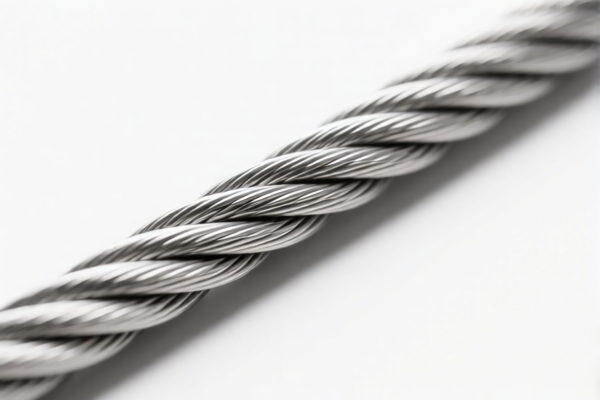
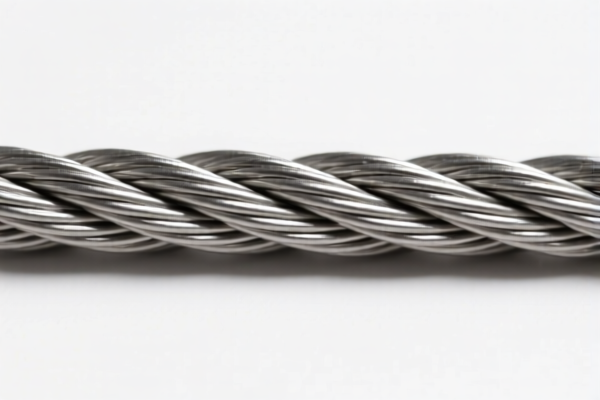
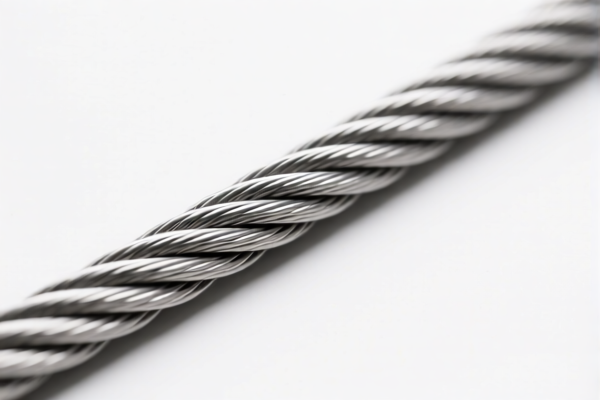

AI Analysis
🏗️ Wire Rope (Steel Wire Ropes)
🌐 HS Code Reference & Customs Clearance Guide | 2026 Latest Tariff Analysis | Professional Clearance Strategy
📌 I. Product Definition: What is "Wire Rope"?
Wire Rope is a type of rope made from strands of metal wire, typically steel. It is characterized by high tensile strength and flexibility. In international trade, it is primarily classified under Chapter 73 (Articles of Iron or Steel) or Chapter 83 (Miscellaneous Articles of Iron or Steel), depending on its specific form, construction, and intended use.
⚠️ Key Distinction:
- If it is a high-strength steel wire rope used for lifting, tensioning, or general industrial purposes → Often falls under Heading 73.12.
- If it is classified as a general "rope" or "cable" of steel for non-lifting specific applications (sometimes inferred under miscellaneous categories) → May fall under Heading 83.07.
- Critical Note: The provided data suggests two main classification paths for "High-Strength Steel Wire Rope," leading to significantly different tax rates.
📦 II. HS Code Classification Details (Based on Provided Data)
The provided data identifies four potential HS Codes. Two are grouped under Chapter 73 (Iron/Steel Articles) with higher taxes, and two under Chapter 83 (Miscellaneous) with lower taxes.
| HS Code | Product Description | Application/Logic | Key Characteristics |
|---|---|---|---|
7312.10.30.80 |
High-strength steel wire rope; matches fallback logic for other categories | Industrial lifting, construction, mining | Steel material, wire rope form. Classified as "Other" under 7312. |
7312.10.90.90 |
High-strength steel wire rope; matches success for ropes/cables | General steel wire ropes, cables | Steel material, rope/cable form. Standard classification under 7312. |
8307.10.60.00 |
High-strength steel wire rope; other category inference | General steel ropes, possibly non-specific use | Steel material, rope form. Classified under Miscellaneous. |
8307.10.30.00 |
High-strength steel wire rope; material & form match | Standard steel ropes, cables | Steel material, rope form. Standard classification under 8307. |
🔍 Critical Observation:
- The Chapter 73 codes (7312.10.30.80&7312.10.90.90) have a Total Tax of 85.0%.
- The Chapter 83 codes (8307.10.60.00&8307.10.30.00) have a Total Tax of 38.8%.
- Why the difference? Chapter 73 is specifically for "Articles of Iron or Steel" like wire ropes used for specific industrial purposes. Chapter 83 is for "Miscellaneous Articles," which may apply if the rope does not meet specific Chapter 73 criteria or is inferred differently. Classification error can lead to a massive tax discrepancy (46.2% difference!).
💰 III. 2026 Latest Tariff Rate Breakdown (Detailed Tax Clauses)
✅ Applicable Country: USA (US)
✅ Country of Origin: China (CN)
✅ Effective Date: Current trade policies (including Section 301 and IEEPA)
🎯 1. Chapter 73 Codes: 7312.10.30.80 & 7312.10.90.90
Tax Rate: 85.0%
| Item | Content |
|---|---|
| Base Duty | 0.0% (Ad Valorem) |
| Section 301 Additional Duty | 25.0% |
| IEEPA Additional Duty (Section 122/10% Steel/Aluminum/Copper) | 50.0% |
| Total Tax Rate | 85.0% |
| Tax Calculation | CIF Value × 85% |
| De Minimis Exemption | ❌ Not Applicable |
| Legal Basis Path | Section 301: 9903.88.01 → IEEPA: 9903.01.25 (Steel/Aluminum/Copper provisions) → USITC: 7312.10.xx.xx |
📌 Explanation:
- 25% Section 301: Standard additional tariff on Chinese goods under USITC Footnote 9903.88.01.
- 50% IEEPA (122 Clause): Specific additional tariff on steel, aluminum, and copper products imported under Section 232/IEEPA provisions.
- Total 85%: This is an extremely high tariff. It is crucial to verify if the product truly falls under Chapter 73 or if a Chapter 83 classification is more appropriate.
🎯 2. Chapter 83 Codes: 8307.10.60.00 & 8307.10.30.00
Tax Rate: 38.8%
| Item | Content |
|---|---|
| Base Duty | 3.8% (Ad Valorem) |
| Section 301 Additional Duty | 25.0% |
| IEEPA Additional Duty (122 Clause) | 10.0% |
| Total Tax Rate | 38.8% |
| Tax Calculation | CIF Value × 38.8% |
| De Minimis Exemption | ❌ Not Applicable |
| Legal Basis Path | Section 301: 9901.25 → IEEPA: 9903.01.24 (General IEEPA provisions, not steel-specific) → USITC: 8307.10.xx.xx |
📌 Explanation:
- 3.8% Base Duty: Standard Most Favored Nation (MFN) rate for miscellaneous articles of iron/steel.
- 25% Section 301: Standard additional tariff.
- 10% IEEPA: General additional tariff under IEEPA, not the 50% steel-specific surcharge.
- Total 38.8%: Significantly lower than Chapter 73. This classification suggests the rope is not treated as a standard industrial wire rope under Chapter 73 but rather as a miscellaneous steel rope.
🛠️ IV. Customs Clearance Practical Advice (Risk Avoidance Guide)
✅ 1. Documentation Checklist (Essential)
| Document | Must Provide | Description |
|---|---|---|
| ✅ Product Specification Sheet | ✔️ | Details: Diameter, construction (e.g., 6x19, 6x36), tensile strength, coating (galvanized, PVC), intended use. |
| ✅ Material Certificate | ✔️ | Proof of steel composition (e.g., high-carbon steel). |
| ✅ Product Photos | ✔️ | Clear images of the rope, coils, labels, and any branding. |
| ✅ Commercial Invoice | ✔️ | Clearly state "Steel Wire Rope," HS Code, and Country of Origin. |
| ✅ Packing List | ✔️ | Weight, dimensions, and number of coils/packages. |
| ✅ Statement of Use | ✔️ | Describe end-use (e.g., "for construction lifting," "for fencing," "for general lifting"). |
✅ 2. Classification Strategy (Key Decision Points)
| Scenario | Recommended HS Code | Reasoning |
|---|---|---|
| High-strength steel wire rope for lifting/cranes/mining | 7312.10.90.90 or 7312.10.30.80 |
Fits specific industrial wire rope definition. Expect 85% tax. |
| Steel wire rope for general purposes, fencing, or non-industrial use | 8307.10.30.00 or 8307.10.60.00 |
May be classified as miscellaneous. Expect 38.8% tax. |
| Unclear Use | Apply for Advance Ruling | Due to the massive tax difference (85% vs. 38.8%), get a binding ruling from CBP before shipping. |
🔥 "Don't Guess the Code, Verify the Use!"
- If you misclassify a high-strength lifting rope as a general miscellaneous rope, you risk seizure, penalties, and back taxes.
- If you over-classify (pay 85% when 38.8% is applicable), you lose profit.
- Recommendation: Consult a customs broker with the exact technical specs and intended use.
✅ 3. Special Considerations
| Situation | Advice |
|---|---|
| OEM/Custom Made | Provide detailed engineering drawings to CBP to support your classification argument. |
| Coated Wire Rope (e.g., PVC, Nylon) | Still classified under 7312 or 8307, but ensure the coating doesn't change the essential character to a different chapter (e.g., plastics). |
| Origin: Non-China | If manufactured in Vietnam, India, etc., Section 301 and IEEPA may not apply, drastically reducing taxes. |
🌍 V. Global Market Comparison (2026 Update)
| Country/Region | Recommended HS Code | Tariff (China Origin) | Notes |
|---|---|---|---|
| 🇺🇸 USA | 7312.10.90.90 / 8307.10.30.00 |
85% or 38.8% | High Risk. Verify classification carefully due to Section 301 & IEEPA. |
| 🇨🇳 China | 7312.10.90.00 |
~3-5% | Low tax, but irrelevant for US imports. |
| 🇪🇺 EU | 7312.10.00 |
~1.7% | No Section 301/IEEPA. Standard MFN rate. |
| 🇬🇧 UK | 7312.10.00 |
~1.7% | Post-Brexit, similar to EU rates. |
| 🇯🇵 Japan | 7312.10.00 |
~3.5% | No additional duties. |
📌 Conclusion:
- The US is the most expensive market for Chinese steel wire ropes due to layered tariffs.
- Classification is critical: A 46.2% tax difference exists between Chapter 73 and Chapter 83.
📌 VI. Common Errors & Pitfalls (Lessons Learned)
❌ Error 1: Assuming all steel ropes are 7312.10.90.90.
👉 Consequence: Paying 85% tax when 38.8% might be applicable if the rope is not for specific industrial lifting.
❌ Error 2: Ignoring the IEEPA 50% steel surcharge.
👉 Consequence: Underestimating costs by 50%, leading to severe cash flow issues.
❌ Error 3: Vague Product Description.
👉 Consequence: CBP may reclassify the goods, leading to delays, audits, and penalties.
✅ Correct Approach:
"High-Strength Steel Wire Rope, 6x19 Construction, Galvanized, for Industrial Lifting, Origin: China"
- This description clearly indicates a specific industrial product, supporting7312classification.
- For less specific ropes, use: "Steel Wire Rope, General Purpose, Origin: China" to support8307.
🎯 VII. Conclusion: Professional Declaration Saves Money!
🎯 Remember:
🔹 "Classify Right, Pay Less: 85% vs 38.8%!"
🔹 "IEEPA 50% Steel Surcharge is Real for Chapter 73!"
🔹 "Get an Advance Ruling for High-Value Shipments!"
📌 Pro Tip:
If your wire rope is not for high-strength industrial lifting but for general use (e.g., fencing, tying), argue for Chapter 83 to save nearly half the tax. However, ensure your technical documents support this distinction.
📣 Immediate Action:
📞 Contact a US Customs Broker with your product specs and intended use.
🚀 Avoid Surprise Tariffs: Declare Accurately, Ship Confidently!
✨ Professional Customs Clearance Starts with Accurate Classification!
💼 Your Profit Margin Depends on the 46.2% Difference!
Customer Reviews
About HS Code Classification
The Harmonized System (HS) is an internationally standardized nomenclature developed by the World Customs Organization (WCO) to classify traded products. Over 200 countries use the HS system as the basis for customs tariffs, trade statistics, and import/export regulations.
Each HS code follows a hierarchical structure:
- Chapter (2 digits) — Broad category of goods (e.g., Chapter 84: Machinery and Mechanical Appliances)
- Heading (4 digits) — More specific grouping within the chapter
- Subheading (6 digits) — Internationally standardized breakdown, used by all WCO member countries
- National subdivisions (8-10 digits) — Country-specific extensions for further classification, such as US HTSUS 10-digit codes
Correct HS code classification is essential for smooth customs clearance, accurate duty payment, and compliance with trade regulations. Misclassification can lead to customs delays, overpayment of duties, or penalties.
When importing from CN to US, the applicable tariff rates may include:
- Most-Favored-Nation (MFN) rate — The standard duty rate applied to WTO members
- General rate — Applied to countries without trade agreements
- Trade remedy duties — Additional tariffs such as Section 301 (anti-dumping), Section 232 (national security), or countervailing duties
The information provided on this page is for reference purposes only. For official classification, please consult with your local customs authority or a licensed customs broker.