Wire Sheath
CN → US| HS Code | Tariff Rate | Origin | Destination | Doc |
|---|---|---|---|---|
| 4016996050 | 37.5% | CN | US | Official Doc |
| 4016990300 | 38.0% | CN | US | Official Doc |
| 3921121950 | 40.3% | CN | US | Official Doc |
| 3917390020 | 38.1% | CN | US | Official Doc |
| 3917320010 | 38.1% | CN | US | Official Doc |
Product Images
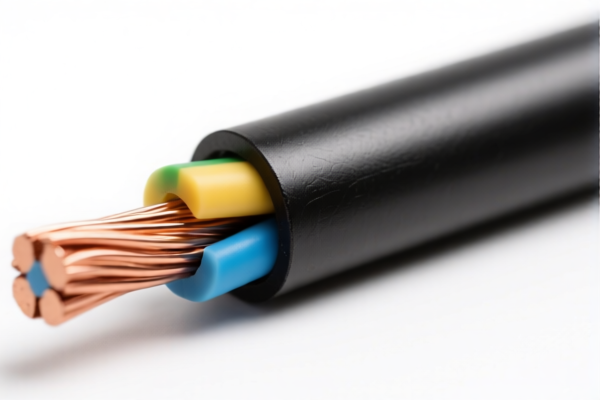
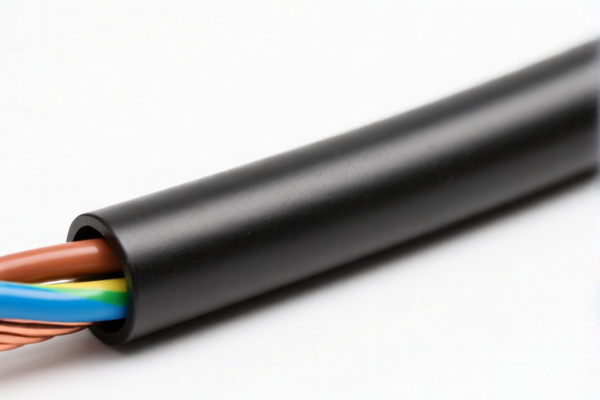
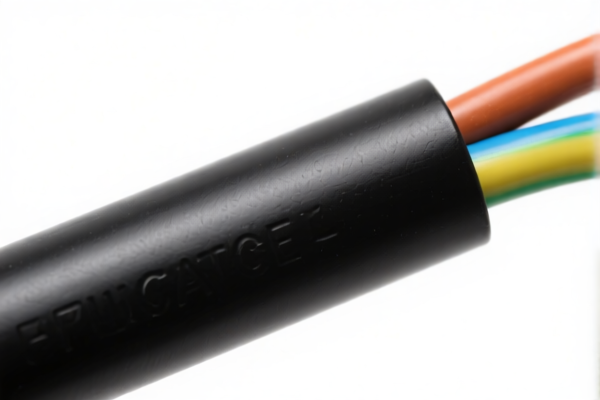
AI Analysis
🛡️ Wire Sheath / Cable Jacket (Cable Protection & Insulation)
🌐 HS Code Reference & Customs Clearance Guide | 2026 Latest Tariff Analysis | Professional-Level通关 Strategy
📌 I. Product Definition & Classification: Do You Really Understand "Wire Sheath"?
Wire Sheath (also known as Cable Jacket or Protective Sleeve) is a critical component in power transmission and signal processing. In international trade, its classification depends entirely on its material composition and physical form.
The data provided distinguishes between two main material categories: 1. Rubber Products (Sulfur-Cured): Classified under Chapter 40. 2. Plastic Products (PVC/Polyvinyl Chloride): Classified under Chapter 39.
⚠️ Key Distinction Point:
- Rubber Material: Must be classified under 4016. The specific sub-code depends on whether it is treated as a "general other article" or a "protective sleeve." - PVC Material: Must be classified under 3921 (if sheet/film/strip type) or 3917 (if tubular/hose type).
📦 II. HS Code Classification Details (2026 Latest Tariff Authority Comparison)
| HS Code | Product Description | Material & Form | Application Scenario |
|---|---|---|---|
4016.99.60.50 |
Rubber Cable Protection Sleeve | Sulfur-Cured Rubber; "Other Articles" | General rubber sleeves, non-standard shapes |
4016.99.03.00 |
Rubber Cable Protection Sleeve | Sulfur-Cured Rubber; "Protective Sleeves" | Standard protective sleeves for cables |
3921.12.19.50 |
PVC Wire & Cable Jacket | Polyvinyl Chloride (PVC); Sheets/Films/Strips | Flat PVC sheets, strips used for jacketing |
3917.39.00.20 |
PVC Wire & Cable Jacket | Polyvinyl Chloride (PVC); Tubular/Hose Accessories | PVC tubes, hoses, and flexible accessories |
3917.32.00.10 |
PVC Wire & Cable Jacket | Polyvinyl Chloride (PVC); Pipes/Sleeves | Rigid or semi-rigid PVC pipes/sleeves for cables |
🔍 Key Reminder:
- Rubber vs. Plastic: Do not mix Chapter 40 (Rubber) and Chapter 39 (Plastics). Incorrect material declaration leads to seizure. - Form Matters: For PVC, is it a flexible hose (3917) or a flat sheet/strip (3921)? This changes the HS code significantly.
💰 III. 2026 Latest Tariff Rate Breakdown (Including Additional Taxes & Policy Surcharges)
✅ Applicable Country: United States (US)
✅ Country of Origin: China (CN)
✅ Effective Date: From November 10, 2025 (including subsequent imports)
🎯 1. Rubber Sheaths (Chapter 40)
Item A: 4016.99.60.50 (Other Rubber Articles)
| Item | Content |
|---|---|
| Base Tariff | 2.5% (ad valorem) |
| Section 301 Additional Tariff | +25.0% |
| 122 Clause Tariff (IEEPA) | +10.0% |
| Total Tariff Rate | 37.5% |
| Tax Calculation | CIF Value × 37.5% |
| De Minimis Exemption | ❌ Not Applicable (Subject to strict scrutiny) |
| Legal Basis Path | USITC:4016.99.60.50 → FOOTNOTE:301 → IEEPA:122 |
📌 Explanation:
- This code falls under "Other articles of rubber." While the base rate is low (2.5%), the Section 301 and 122 clause tariffs stack up, resulting in a high effective rate of 37.5%. - Risk: If the product is clearly a "protective sleeve" but declared as "other article," customs may reclassify to4016.99.03.00(see below) or levy penalties for misclassification.
Item B: 4016.99.03.00 (Other Rubber Articles – Protective Sleeves)
| Item | Content |
|---|---|
| Base Tariff | 3.0% (ad valorem) |
| Section 301 Additional Tariff | +25.0% |
| 122 Clause Tariff (IEEPA) | +10.0% |
| Total Tariff Rate | 38.0% |
| Tax Calculation | CIF Value × 38.0% |
| De Minimis Exemption | ❌ Not Applicable |
| Legal Basis Path | USITC:4016.99.03.00 → FOOTNOTE:301 → IEEPA:122 |
📌 Note:
- This is the most accurate code for dedicated rubber cable sleeves. - Rate Difference: It is 0.5% higher than4016.99.60.50. However,4016.99.03.00is the specific description for "Protective Sleeves." Using60.50to save 0.5% is a high-risk strategy if the product is clearly a sleeve.
🎯 2. PVC Sheaths (Chapter 39)
Item C: 3921.12.19.50 (PVC Sheets/Films/Strips)
| Item | Content |
|---|---|
| Base Tariff | 5.3% (ad valorem) |
| Section 301 Additional Tariff | +25.0% |
| 122 Clause Tariff (IEEPA) | +10.0% |
| Total Tariff Rate | 40.3% |
| Tax Calculation | CIF Value × 40.3% |
| De Minimis Exemption | ❌ Not Applicable |
| Legal Basis Path | USITC:3921.12.19.50 → FOOTNOTE:301 → IEEPA:122 |
📌 Explanation:
- If your PVC sheath is supplied as flat sheets, strips, or wide film that will be processed into sleeves later, use this code. - Highest Base Rate: Among the PVC options, this has the highest base rate (5.3%), leading to the highest total rate (40.3%).
Item D: 3917.39.00.20 (PVC Tubes/Hoses – Other)
| Item | Content |
|---|---|
| Base Tariff | 3.1% (ad valorem) |
| Section 301 Additional Tariff | +25.0% |
| 122 Clause Tariff (IEEPA) | +10.0% |
| Total Tariff Rate | 38.1% |
| Tax Calculation | CIF Value × 38.1% |
| De Minimis Exemption | ❌ Not Applicable |
| Legal Basis Path | USITC:3917.39.00.20 → FOOTNOTE:301 → IEEPA:122 |
📌 Note:
- Use this for flexible PVC hoses, tubes, or accessories used for cable protection. - Rate: Lower than3921.12.19.50by 2.2%.
Item E: 3917.32.00.10 (PVC Pipes/Sleeves)
| Item | Content |
|---|---|
| Base Tariff | 3.1% (ad valorem) |
| Section 301 Additional Tariff | +25.0% |
| 122 Clause Tariff (IEEPA) | +10.0% |
| Total Tariff Rate | 38.1% |
| Tax Calculation | CIF Value × 38.1% |
| De Minimis Exemption | ❌ Not Applicable |
| Legal Basis Path | USITC:3917.32.00.10 → FOOTNOTE:301 → IEEPA:122 |
📌 Note:
- Typically used for rigid or semi-rigid PVC pipes/sleeves. - Rate: Same as3917.39.00.20(38.1%). Differentiate based on rigidity: Rigid →32, Flexible/Hose →39.
🛠️ IV. Customs Clearance Practical Advice (Avoid Pitfalls)
✅ 1. Preparation Checklist (Must-Haves)
| Document | Required | Description |
|---|---|---|
| ✅ Product Specification Sheet | ✔️ | Must state Material (Rubber vs. PVC), Hardness (Shore A for rubber), Thickness, and Diameter. |
| ✅ Photos (Labeled) | ✔️ | Clear images showing cross-section, labeling (e.g., "PVC Cable Sleeve"), and application. |
| ✅ Bill of Lading / Invoice | ✔️ | Description must match HS code logic (e.g., "PVC Tubular Sleeve" not just "Plastic Part"). |
| ✅ Certificate of Origin (CO) | ✔️ | To prove CN origin and apply specific tariff footnotes. |
| ✅ Material Safety Data Sheet (MSDS) | ✔️ | Especially for rubber compounds, to confirm sulfur-curing process. |
✅ 2. Declaration Tips (Key Mnemonic)
🔥 "Rubber vs. Plastic, Tube vs. Sheet, Declare Clearly, Tariff Safe!"
| Scenario | Correct HS Code | Incorrect Action | Consequence |
|---|---|---|---|
| Rubber Sleeve | 4016.99.03.00 (Best) |
Declare as 4016.99.60.50 |
Risk of penalty for misclassification; small rate diff (0.5%) |
| Flexible PVC Hose | 3917.39.00.20 |
Declare as 3921.12.19.50 |
Overpaying by 2.2% (40.3% vs 38.1%) |
| Rigid PVC Pipe | 3917.32.00.10 |
Declare as 3917.39.00.20 |
Minor risk, but 32 is more accurate for pipes |
| Flat PVC Strip | 3921.12.19.50 |
Declare as 3917.39.00.20 |
Underpaying by 2.2% → Audit Risk! |
✅ 3. Special Considerations
| Situation | Handling Advice |
|---|---|
| Composite Materials | If the sheath has a rubber core and PVC outer layer, classify based on the essential character (usually the outer material or the primary protective function). |
| Pre-Cut Sleeves | If sold as pre-cut lengths, still classify as "tubes/hoses" (3917 or 4016) if the function is sleeve protection. Do not declare as "parts of cables" unless part of a complete cable assembly. |
| 122 Clause Impact | Remember the +10% IEEPA tariff applies to all these codes for Chinese origin. This is a non-negotiable cost for US imports from China. |
🌍 V. Global Market Comparison (2026 Latest)
| Country/Region | Recommended HS Code (PVC Tubular) | Tariff Rate (China Origin) | Notes |
|---|---|---|---|
| 🇺🇸 USA | 3917.39.00.20 or 3917.32.00.10 |
38.1% (Base 3.1% + 301 25% + 122 10%) | High barrier due to Section 301 & 122 |
| 🇨🇳 China | 3917.39.00.20 |
0% - 5% | Varies by specific sub-code and FTA |
| 🇪🇺 EU | 3917.39 |
~4.5% | No Section 301 equivalent, but CE marking required |
| 🇲🇽 Mexico | 3917.39 |
0% (under USMCA if originating) | Check Rules of Origin carefully |
📌 Conclusion:
- USA is the most expensive market for wire sheaths due to the 38-40% total effective tariff. - Cost Optimization: If possible, consider supply chain diversification (e.g., Vietnam, Mexico) to mitigate IEEPA and Section 301 tariffs.
📌 VI. Common Mistakes & Pitfall Guide
❌ Mistake 1: Declaring a PVC Tubular Sleeve as a Rubber Article (4016).
👉 Consequence: Immediate rejection or reclassification + fines. Materials are chemically distinct.
❌ Mistake 2: Declaring a Flat PVC Strip as a Tube (3917) to save tax.
👉 Consequence: Customs audit reveals the product is not tubular. Back taxes + penalties (Underpayment by 2.2%).
❌ Mistake 3: Ignoring the 122 Clause (+10%).
👉 Consequence: Under-declaring total value. The 122 clause applies to all goods from China under IEEPA, regardless of HS code.
❌ Mistake 4: Using generic terms like "Cable Part" on the Invoice.
👉 Consequence: Customs will assign a generic code with potentially higher duties or require extensive documentation to prove the correct code.
✅ Correct Practice:
"Sulfur-Cured Rubber Protective Sleeve for Power Cables, Black, 20mm OD, HS 4016.99.03.00"
OR
"Flexible PVC Tubular Cable Sleeve, Flame Retardant, HS 3917.39.00.20"
🎯 VII. Conclusion: Professional Declaration for Cost Efficiency
🎯 Remember the Mantra:
🔹 "Material First, Form Second: Rubber=40, PVC=39.
🔹 Tube vs Sheet: 3917 vs 3921.
🔹 38-40% is the US Reality, Plan Accordingly!"
📌 Pro Tip:
If your supplier can provide PVC sheaths from Vietnam or Thailand, you may qualify for IEEPA Exemptions, potentially reducing the total tariff significantly.
Always request an Advance Ruling from CBP if the product form (e.g., semi-rigid vs. flexible) is ambiguous.
📣 Action Item:
📞 Contact your customs broker with product photos and material composition reports.
🚀 Secure your supply chain, optimize your HS codes, and protect your margins!
✨ Professional Clearance Starts with Accurate Classification!
💼 Every 1% of tariff saved is pure profit earned!
Customer Reviews
About HS Code Classification
The Harmonized System (HS) is an internationally standardized nomenclature developed by the World Customs Organization (WCO) to classify traded products. Over 200 countries use the HS system as the basis for customs tariffs, trade statistics, and import/export regulations.
Each HS code follows a hierarchical structure:
- Chapter (2 digits) — Broad category of goods (e.g., Chapter 84: Machinery and Mechanical Appliances)
- Heading (4 digits) — More specific grouping within the chapter
- Subheading (6 digits) — Internationally standardized breakdown, used by all WCO member countries
- National subdivisions (8-10 digits) — Country-specific extensions for further classification, such as US HTSUS 10-digit codes
Correct HS code classification is essential for smooth customs clearance, accurate duty payment, and compliance with trade regulations. Misclassification can lead to customs delays, overpayment of duties, or penalties.
When importing from CN to US, the applicable tariff rates may include:
- Most-Favored-Nation (MFN) rate — The standard duty rate applied to WTO members
- General rate — Applied to countries without trade agreements
- Trade remedy duties — Additional tariffs such as Section 301 (anti-dumping), Section 232 (national security), or countervailing duties
The information provided on this page is for reference purposes only. For official classification, please consult with your local customs authority or a licensed customs broker.