Wired Headphones
CN → US| HS Code | Tariff Rate | Origin | Destination | Doc |
|---|---|---|---|---|
| 8544429090 | 87.6% | CN | US | Official Doc |
| 8518302000 | 10.0% | CN | US | Official Doc |
| 8518301000 | 17.5% | CN | US | Official Doc |
| 8544422000 | 85.0% | CN | US | Official Doc |
| 8518302000 | 10.0% | CN | US | Official Doc |
Product Images
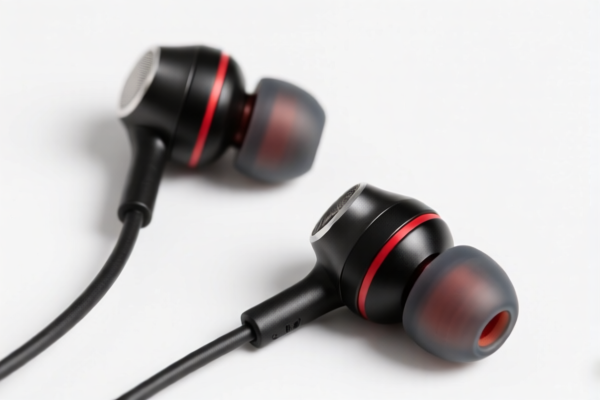
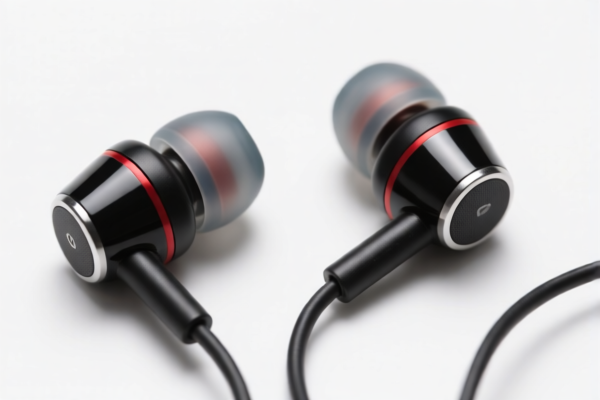
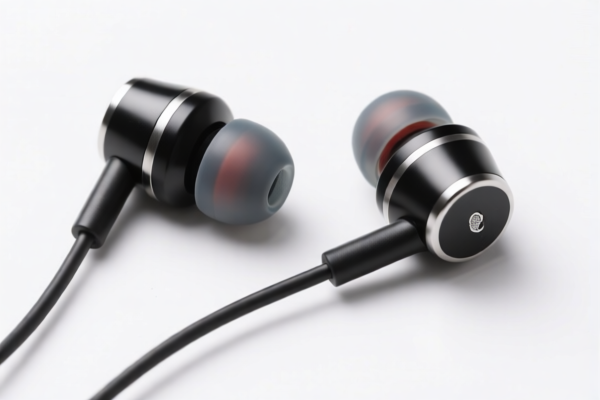

AI Analysis
🎧 Wired Headphones (Wired Earphones & Earbuds)
🌐 HS Code Reference & Customs Clearance Guide | 2026 Latest Tariff Analysis | Professional Strategy
📌 I. Product Definition & Classification: Do You Really Know "Wired Headphones"?
Wired headphones are audio output devices that transmit electrical signals via physical connectors (typically 3.5mm, 6.35mm, or USB) to a source device. In international trade, their classification is highly complex because customs authorities scrutinize the construction details (e.g., presence of connectors, material composition, and specific function) to determine the correct Heading.
They are generally split into two main conceptual categories: 1. Audio Equipment (Headphones/Earpieces): Classified under HS 8518, focusing on the function of sound reproduction. 2. Electrical Wires/Cables: Classified under HS 8544, focusing on the physical structure (conductors + insulation + connectors), especially if considered accessories or specific cable assemblies.
⚠️ Key Distinction Point:
- If classified as Headphones/Audio Equipment (HS 8518): Generally lower base duty, but subject to specific "Section 301" or "122" surcharges depending on the subheading.
- If classified as Wires/Cables with Connectors (HS 8544): Often triggers heavy additional tariffs due to material content (copper/aluminum) or specific trade remedy laws.
📦 II. HS Code Classification Details (2026 Latest Tariff Authority Comparison)
| HS Code | Product Description | Applicable Scenario | Tax Rate (Total) | Key Surcharge Details |
|---|---|---|---|---|
8544.42.90.90 |
Wired cables with connectors (Metal conductor + insulated sheath) | Cables where the primary characteristic is the wiring/conductor, often used for audio but classified as wire. | 87.6% | Base: 2.6% +25% Surcharge +10% Sec 122 +50% Steel/Al/Cu Surcharge |
8518.30.20.00 |
Wired or Wireless Headphones/Earpieces | Audio devices fitting the consumer electronics definition; No extra surcharges for this specific subheading. | 10.0% | Base: 0.0% +0% Surcharge +10% Sec 122 |
8518.30.10.00 |
Wired Headphones/Microphones (Telephone receivers category) | Headphones considered as "Telephone Receivers" or specific audio inputs/outputs. | 17.5% | Base: 0.0% +7.5% Surcharge +10% Sec 122 |
8544.42.20.00 |
Electrical conductors (Fallback category) | Cables used for telecom/audio that fall under a "catch-all" wire category. | 85.0% | Base: 0.0% +25% Surcharge +50% Steel/Al/Cu Surcharge |
8518.30.20.00 |
Wireless Headphones (Included for Context) | Included in data for comparison; form and function match headphone definitions. | 10.0% | Base: 0.0% +0% Surcharge +10% Sec 122 |
🔍 Key Reminder:
- HS 8518 codes are generally "Friendlier" to audio equipment, with total rates between 10%–17.5%. - HS 8544 codes are "Hostile" for wired audio cables in this dataset, with total rates soaring to 85%–87.6% due to Section 122 and Material Surcharges (50%). - Avoid Classifying Wired Earphones as "Wires" (8544) unless explicitly instructed, as the tariff penalty is massive.
💰 III. 2026 Latest Tariff Rate Details (Including Additional Taxes & Policy Surcharges)
✅ Applicable Country: United States (US)
✅ Origin: China (CN)
✅ Effective Time: 2025/2026 Period (Based on current trade restrictions)
🎯 1. 8518.30.20.00 —— Headphones/Earpieces (Best Case Scenario)
| Item | Details |
|---|---|
| Base Duty | 0.0% |
| Section 301 Surcharge | 0.0% |
| Section 122 Surcharge | +10% |
| Total Effective Rate | 10.0% |
| Calculation | CIF Value × 10% |
| De Minimis Exemption | ❌ Not Eligible (Subject to high-value scrutiny) |
| Legal Basis | USITC:8518.30.20.00 → IEEPA:9903.01.24 (Sec 122) |
📌 Explanation:
- This is the most cost-effective classification for wired/wireless earphones. - The 10% rate comes solely from the Section 122 surcharge (often applied to consumer electronics/audio gear). - No extra 25% or 50% tariffs apply here, making it the preferred HS Code for audio manufacturers.
🎯 2. 8518.30.10.00 —— Telephone Receivers / Audio Inputs
| Item | Details |
|---|---|
| Base Duty | 0.0% |
| Surcharge | +7.5% |
| Section 122 Surcharge | +10% |
| Total Effective Rate | 17.5% |
| Calculation | CIF Value × 17.5% |
| De Minimis Exemption | ❌ Not Eligible |
| Legal Basis | USITC:8518.30.10.00 → IEEPA:9903.01.24 |
📌 Note:
- This code is often used for headphones that double as microphones or are classified under "Telephone" equipment. - Slightly higher than8518.30.20.00due to the additional 7.5% surcharge.
🎯 3. 8544.42.90.90 —— Wires/Cables with Connectors (High Risk!)
| Item | Details |
|---|---|
| Base Duty | 2.6% |
| Section 301 Surcharge | +25.0% |
| Section 122 Surcharge | +10.0% |
| Steel/Al/Cu Surcharge | +50.0% |
| Total Effective Rate | 87.6% |
| Calculation | CIF Value × 87.6% |
| De Minimis Exemption | ❌ Strictly Denied |
| Legal Basis | USITC:8544.42.90.90 → IEEPA:9903.01.25 + Material Specific Tariffs |
📌 Critical Warning:
- If your wired headphones are classified as "Cables with Connectors" (HS 8544), you face a catastrophic 87.6% tax. - The 50% surcharge is triggered because the wires contain Copper/Aluminum (metals targeted by trade remedies). - Never classify standard consumer headphones under HS 8544 unless they are purely unconnected cables sold separately.
🎯 4. 8544.42.20.00 —— Electrical Conductors (Fallback)
| Item | Details |
|---|---|
| Base Duty | 0.0% |
| Surcharge | +25.0% |
| Section 122 Surcharge | +10.0% |
| Steel/Al/Cu Surcharge | +50.0% |
| Total Effective Rate | 85.0% |
| Calculation | CIF Value × 85.0% |
| De Minimis Exemption | ❌ Not Eligible |
📌 Note:
- Similar to the above, this is a "catch-all" for wires that attracts the full brunt of metal-related surcharges.
🛠️ IV. Customs Clearance Practical Advice (Battle-Tested Pitfall Guide)
✅ 1. Preparation Checklist (Non-Negotiable)
| Document | Required | Explanation |
|---|---|---|
| ✅ Product Specifications | ✔️ | Must detail: Connector type (3.5mm/USB), Impedance, Frequency Response, Cable Length. |
| ✅ High-Resolution Photos | ✔️ | Show the entire unit (Earbuds + Cable + Connector). Do not hide the connector! |
| ✅ Circuit Diagram | ✔️ | To prove it is an audio device (HS 8518) and not just a passive wire (HS 8544). |
| ✅ Commercial Invoice | ✔️ | Description must say "Wired Headphones" or "Earphones", NOT "Audio Cable". |
| ✅ Third-Party Test Report | ✔️ | FCC (for US), CE (for EU), RoHS. Proves it's electronic audio equipment. |
✅ 2. Declaration Tactics (Key Mantra)
🔥 "Audio Function First, Wire Structure Second!"
| Scenario | Correct Declaration | Wrong Action |
|---|---|---|
| Standard Wired Earphones | HS 8518.30.20.00 |
Declare as "USB Cable" or "Audio Wire" → 87.6% Tax |
| Headphones with Mic | HS 8518.30.10.00 or 8518.30.20.00 |
Declare as "Telephone Part" only → 17.5% Tax (Acceptable, but 8518.30.20 is cheaper) |
| Bare Earbuds (No Cable) | HS 8518.30.20.00 |
N/A |
| Cable Only (No Earpieces) | HS 8544.42.90.90 |
Try to hide connectors → Seizure Risk |
✅ 3. Special Handling Cases
| Situation | Handling Advice |
|---|---|
| OEM Custom Headphones | Provide design drawings showing the driver unit (speaker) inside the earpiece to justify HS 8518. |
| USB-C Digital Headphones | Still HS 8518.30.20.00. Do not declare as "USB Cable". The DAC chip inside makes it audio equipment. |
| Bundle: Headphones + Case + Cable | Declare as Set. Use the HS Code of the main component (Headphones: 8518.30.20.00). Do not split items. |
| Misclassification Audit | If Customs questions HS 8518, provide a technical explanation of the electro-acoustic conversion principle. |
🌍 V. Global Market Customs Comparison (2026 Latest)
| Country/Region | Recommended HS Code | Tariff Rate | Certification | Notes |
|---|---|---|---|---|
| 🇺🇸 USA | 8518.30.20.00 |
10% | FCC + RoHS | AVOID HS 8544 (87.6% tax). |
| 🇨🇳 China | 8518.30.20.00 |
~5-10% | CCC | Lower base duties, no Section 301. |
| 🇪🇺 EU | 8518.30.20.00 |
0% (if CE) | CE + RoHS | Generally low duty for audio gear. |
| 🇬🇧 UK | 8518.30.20.00 |
0% | UKCA | Post-Brexit rules align with EU for audio. |
| 🇨🇦 Canada | 8518.30.20.00 |
0% | IC (Industry Canada) | No major surcharges for audio. |
📌 Conclusion:
- The USA is the only market in this dataset with aggressive Section 122 and Metal Surcharges. - Correct Classification (HS 8518) saves you ~75% in taxes compared to misclassification (HS 8544).
📌 VI. Common Errors & Pitfall Guide (Lessons from Tears)
❌ Mistake 1: Declaring "Wired Headphones" as "Audio Cable" (HS 8544)
👉 Consequence: 87.6% Tax. You will pay nearly double the product value in tariffs.
❌ Mistake 2: Ignoring the Connector
👉 Consequence: If the connector is prominent, Customs may insist on HS 8544. Show the Earpiece in photos to prove it's an audio device.
❌ Mistake 3: Using "Part of Telephone" for Consumer Earphones
👉 Consequence: May trigger 17.5% instead of 10%. Unnecessary cost increase.
❌ Mistake 4: Bundle Splitting
👉 Consequence: Declaring the headphone as 8518 and the cable as 8544 separately can lead to reclassification of the entire set as wires, inviting audits and penalties.
✅ Correct Approach:
"Wired Stereo Headphones, 3.5mm Jack, with Noise Isolation Ear Tips, Model XYZ, FCC Certified"
HS Code:8518.30.20.00
🎯 VII. Conclusion: Professional Classification Saves Money!
🎯 Remember the Mantra:
🔹 "Headphones are Audio, Not Wire! (HS 8518)"
🔹 "8544 is a Trap! (87.6% Tax)"
🔹 "10% vs 87.6%: Choose Wisely!"
📌 Pro Tip:
If your wired headphones are digital (USB-C with DAC) or have Bluetooth hybrid modes, still classify as HS 8518.30.20.00. The presence of a connector does not make it a "wire" if it serves the function of an audio transducer.
📣 Immediate Action:
📞 Consult with a licensed customs broker.
📸 Prepare clear photos of the earpieces and driver units.
🚀 Ensure HS Code8518.30.20.00is declared to save 77% in tariffs.
✨ Professional Clearance, Starting with Accurate Classification!
💼 Every Dollar Saved in Duty is Pure Profit!
Customer Reviews
About HS Code Classification
The Harmonized System (HS) is an internationally standardized nomenclature developed by the World Customs Organization (WCO) to classify traded products. Over 200 countries use the HS system as the basis for customs tariffs, trade statistics, and import/export regulations.
Each HS code follows a hierarchical structure:
- Chapter (2 digits) — Broad category of goods (e.g., Chapter 84: Machinery and Mechanical Appliances)
- Heading (4 digits) — More specific grouping within the chapter
- Subheading (6 digits) — Internationally standardized breakdown, used by all WCO member countries
- National subdivisions (8-10 digits) — Country-specific extensions for further classification, such as US HTSUS 10-digit codes
Correct HS code classification is essential for smooth customs clearance, accurate duty payment, and compliance with trade regulations. Misclassification can lead to customs delays, overpayment of duties, or penalties.
When importing from CN to US, the applicable tariff rates may include:
- Most-Favored-Nation (MFN) rate — The standard duty rate applied to WTO members
- General rate — Applied to countries without trade agreements
- Trade remedy duties — Additional tariffs such as Section 301 (anti-dumping), Section 232 (national security), or countervailing duties
The information provided on this page is for reference purposes only. For official classification, please consult with your local customs authority or a licensed customs broker.