Wireless Chargers
CN → US| HS Code | Tariff Rate | Origin | Destination | Doc |
|---|---|---|---|---|
| 8504409580 | 35.0% | CN | US | Official Doc |
| 8504409540 | 35.0% | CN | US | Official Doc |
| 8543709860 | 37.6% | CN | US | Official Doc |
| 8504407007 | 35.0% | CN | US | Official Doc |
| 8504409520 | 35.0% | CN | US | Official Doc |
Product Images
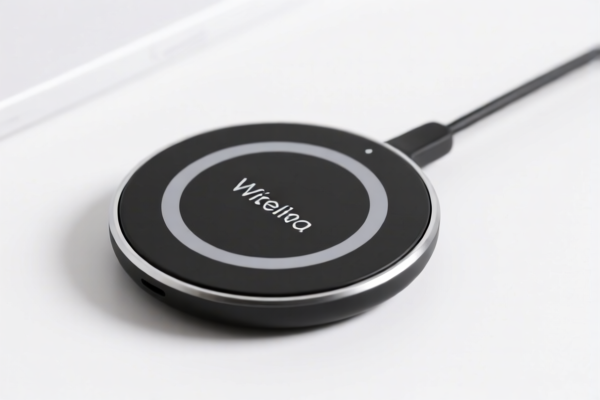
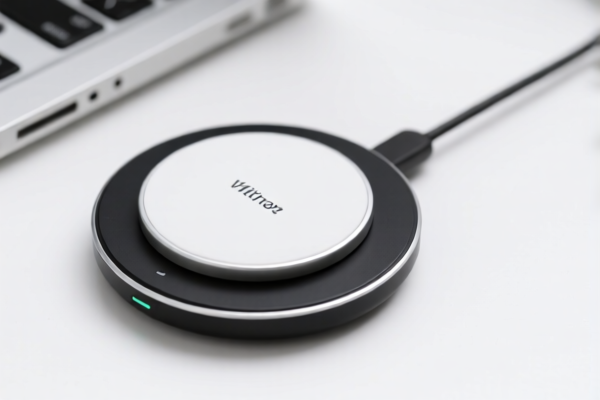
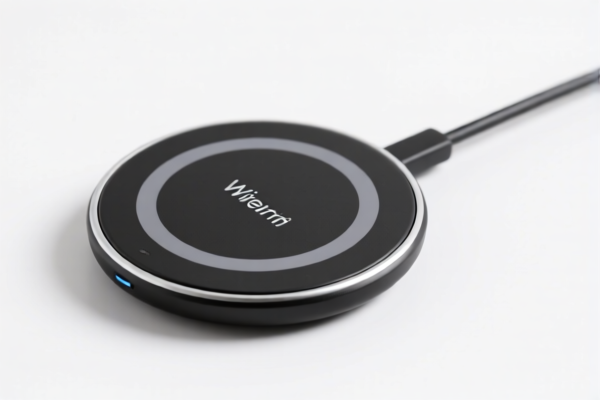
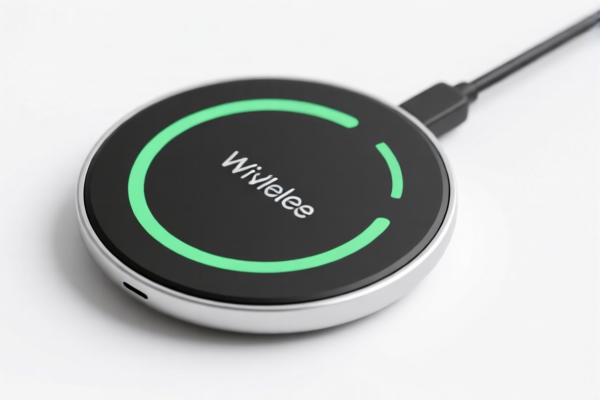
AI Analysis
📱 Wireless Chargers (Multi-Function & Portable Power Banks)
🌐 HS Code Reference & Customs Clearance Guide | 2026 Tariff Analysis | Strategic Classification for US Imports
📌 I. Product Definition & Core Distinction: What Exactly Are You Shipping?
Wireless chargers and portable power banks are complex electronic devices that bridge the gap between power sources and consumer electronics. In international trade, specifically under the Harmonized Tariff Schedule (HTS), the classification hinges on functionality, internal circuitry, and primary purpose.
There are two main categories often confused by importers: 1. Static Converters (Class 8504): Devices primarily designed to convert AC to DC, regulate voltage, or rectify power, even if they include wireless charging coils. 2. Machines/Instruments with Specific Functions (Class 8543): Devices with independent functional capabilities that do not fit the strict definition of simple converters.
⚠️ Critical Classification Distinction:
- If the device is primarily a power supply/rectifier with integrated wireless charging capability → Class 8504.
- If the device is an independent functional machine (e.g., multi-function station) that doesn't fit other specific electrical machine descriptions → Class 8543.
- Portable Power Banks are typically classified under Static Converters as they are essentially energy storage conversion units.
📦 II. HS Code Classification Details (2026 HTS Authority)
Based on the provided data, here are the four specific HS Codes relevant to Wireless Chargers and Portable Chargers, along with their tax implications.
| HS Code | Product Description | Functional Classification | Total Tax Rate (China Origin) | Tax Breakdown |
|---|---|---|---|---|
8504.40.95.80 |
Multi-Function Wireless Charger | Static Converter (Other) | 35.0% | Base: 0% Section 301: 25% Section 122: 10% |
8504.40.95.40 |
Multi-Function Wireless Charger | Static Converter (Power Supply/Rectifier) | 35.0% | Base: 0% Section 301: 25% Section 122: 10% |
8543.70.98.60 |
Multi-Function Wireless Charger | Independent Electrical Machine (Residual Class) | 37.6% | Base: 2.6% Section 301: 25% Section 122: 10% |
8504.40.70.07 |
Portable Charger | Static Converter (Other Power Conversion) | 35.0% | Base: 0% Section 301: 25% Section 122: 10% |
8504.40.95.20 |
Portable Charger | Static Converter (Rectifier/Power Supply) | 35.0% | Base: 0% Section 301: 25% Section 122: 10% |
🔍 Key Insight:
- Class 8504 codes generally carry a 35% total duty rate for Chinese goods.
- Class 8543 carries a slightly higher rate of 37.6% due to the 2.6% Base Duty (ad valorem) in addition to the punitive tariffs.
- Why the difference? Codes under 8504 are viewed as "converters" with 0% base duty, while 8543 is viewed as a "machine" with a 2.6% base duty.
💰 III. 2026 Tariff Rate Breakdown (Detailed Policy Analysis)
✅ Applicable Country: United States (US)
✅ Country of Origin: China (CN)
✅ Effective Period: Current enforcement (including Section 122 additions)
🎯 1. The "35%" Group (8504.40.95.80, 8504.40.95.40, 8504.40.70.07, 8504.40.95.20)
These codes represent the most common classification for wireless chargers and power banks.
| Component | Rate | Legal Basis & Explanation |
|---|---|---|
| Base Duty | 0.0% | Standard HTSUS general rate for these subheadings under Chapter 85. |
| Section 301 Duty | +25.0% | USITC Footnote 9903.88.01. Imposed on Chinese goods under Trade Act of 1974, Section 301. |
| Section 122 Duty | +10.0% | IEEPA Authority. Additional tariff imposed on Chinese imports (specifically targeting goods from the Belt and Road Initiative regions or general China sanctions). |
| TOTAL EFFECTIVE RATE | 35.0% | Sum: 0% + 25% + 10% = 35%. |
| De Minimis Exemption? | ❌ NO | These values exceed the $800 de minimis threshold. Full duties apply. |
📌 Explanation:
The 0% Base is crucial. If a product is misclassified into a category with a base duty (like 8543), the total cost jumps to 37.6%. Therefore, proving the device is a "Static Converter" (8504) is financially advantageous.
🎯 2. The "37.6%" Group (8543.70.98.60)
This code is used for "Multi-Function Wireless Chargers" classified as Independent Electrical Machines.
| Component | Rate | Legal Basis & Explanation |
|---|---|---|
| Base Duty | 2.6% | Standard HTSUS general rate for "Other Machines and Appliances" in Chapter 85. |
| Section 301 Duty | +25.0% | Same Section 301 surcharge as above. |
| Section 122 Duty | +10.0% | Same Section 122 surcharge as above. |
| TOTAL EFFECTIVE RATE | 37.6% | Sum: 2.6% + 25% + 10% = 37.6%. |
📌 Risk Alert:
Using8543.70.98.60increases your landed cost by 2.6% compared to the8504codes. This only happens if the customs officer determines the device is not primarily a power converter but a standalone machine with independent function that doesn't fit other specific headings.
🛠️ IV. Customs Clearance Practical Advice (Avoiding Pitfalls)
✅ 1. Documentation Checklist (Essential for Audit)
| Document | Required? | Purpose |
|---|---|---|
| Product Specification Sheet | ✅ Yes | Must clearly state input/output voltage, frequency, and power rating. Crucial for Class 8504 vs 8543 distinction. |
| Circuit Diagram/Block Diagram | ✅ Yes | Proves the device is primarily a "converter" (rectifier/transformer) to support Class 8504 classification. |
| Product Photos (Including Labels) | ✅ Yes | Must show铭牌 (Nameplate) with model number, manufacturer, and electrical specs. |
| Commercial Invoice | ✅ Yes | Must describe the product accurately (e.g., "Wireless Charging Station, Static Converter Type"). Avoid vague terms like "Gadget." |
| Packing List | ✅ Yes | Details contents to ensure no missing accessories trigger partial classification errors. |
| Certifications (FCC/UL/CE) | ✅ Yes | Required for electronic imports into the US. FCC ID must be visible. |
✅ 2. Classification Strategy & Naming Conventions
🔥 "Converter First, Machine Second: The 35% Rule"
| Scenario | Recommended HS Code | Reasoning |
|---|---|---|
| Standard Wireless Charger Pad | 8504.40.95.80 or .40 |
It is a static converter providing power to a device. |
| Portable Power Bank with Wireless Output | 8504.40.70.07 or .95.20 |
Functionally a rectifier/power supply unit storing and converting energy. |
| Complex Multi-Function Hub | 8543.70.98.60 |
Only if it has complex independent functions beyond power conversion (e.g., data processing, heating, cooling) that don't fit 8504. |
⚠️ Naming Tip:
- Do NOT simply write "Wireless Charger."
- DO write: "Wireless Charging Station, Static Power Converter, Model XYZ, 15W Output, FCC Certified."
- This explicitly guides the customs broker toward Class 8504, securing the lower 35% rate.
✅ 3. Special Considerations
| Situation | Advice |
|---|---|
| High Volume Imports | Apply for an Advance Ruling from U.S. Customs and Border Protection (CBP) to lock in the 8504 classification. |
| Mixed Shipments | If shipping both "Converters" and "Machines," declare them separately. Do not lump them under one code. |
| Section 122 Impact | Remember the 10% additional tariff applies to all Chinese goods under these codes. It is not optional. |
| Base Duty Negotiation | While Base Duty is fixed by HTS, accurate classification ensures you pay 0% base (via 8504) instead of 2.6% base (via 8543). |
🌍 V. Global Market Comparison (2026 Snapshot)
| Market | Typical HS Code | Base Duty | Additional Tariffs (China) | Total Est. Rate | Notes |
|---|---|---|---|---|---|
| 🇺🇸 USA | 8504.40.95.80 |
0% | 301 (25%) + 122 (10%) | 35.0% | High punitive tariffs. |
| 🇪🇺 EU | 8504.40.80 |
~3% | None (WTO MFN) | ~3% | No Section 301/122. |
| 🇨🇳 China | 8504.40.95 |
0-5% | None | ~0-5% | Low import duty for Chinese goods. |
| 🇬🇧 UK | 8504.40.80 |
~4% | None | ~4% | Post-Brexit MFN rates apply. |
📌 Conclusion:
The US market is the most expensive for Chinese wireless chargers due to the 30% combined punitive tariffs (25% + 10%) on top of base duties. Optimizing the HS Code to avoid base duty (choosing 8504 over 8543) saves a critical 2.6%.
📌 VI. Common Errors & Pitfalls (Lessons Learned)
❌ Error 1: Classifying a "Multi-Function Charger" as 8543.70.98.60 unnecessarily.
👉 Result: Paying 37.6% instead of 35%.
✅ Fix: Provide circuit diagrams proving the primary function is power conversion (static converter).
❌ Error 2: Omitting "Section 122" from cost calculations.
👉 Result: Underestimating landed cost by 10%, leading to margin erosion.
✅ Fix: Always add 10% to your cost model for Chinese electronics entering the US.
❌ Error 3: Vague product descriptions ("Charger").
👉 Result: Customs audit, delay, potential reclassification to higher duty codes.
✅ Fix: Use precise technical language: "Static Converter," "Rectifier," "Power Supply Unit."
🎯 VII. Conclusion: Strategic Classification for Profitability
🎯 Key Takeaway:
For Wireless Chargers and Portable Power Banks from China, Class 8504 is king. It offers a 0% base duty, resulting in a 35% total effective rate. Class 8543, while valid for some complex devices, adds a 2.6% base duty, pushing the total to 37.6%.
🔹 "Choose 8504 for Converters: Save 2.6%, Avoid Risk, Keep Margins Healthy."
🔹 "Always include Section 122 (10%) in your cost calculations for China-origin goods."
📌 Pro Tip:
If your product is exported from Vietnam, Malaysia, or Thailand, you may qualify for lower or zero Section 301/122 tariffs. However, ensure substantial transformation has occurred to avoid anti-circumvention penalties.
📣 Immediate Action Items:
📞 Consult a Customs Broker: Provide circuit diagrams to justify
8504classification.
📄 Request an Advance Ruling: From CBP to secure the 35% rate confidently.
📊 Update Cost Models: Include the full 35% (or 37.6%) duty burden in your pricing strategy.
✨ Precision in Classification, Profitability in Trade!
💼 Every percentage point counts in the US Market.
Customer Reviews
About HS Code Classification
The Harmonized System (HS) is an internationally standardized nomenclature developed by the World Customs Organization (WCO) to classify traded products. Over 200 countries use the HS system as the basis for customs tariffs, trade statistics, and import/export regulations.
Each HS code follows a hierarchical structure:
- Chapter (2 digits) — Broad category of goods (e.g., Chapter 84: Machinery and Mechanical Appliances)
- Heading (4 digits) — More specific grouping within the chapter
- Subheading (6 digits) — Internationally standardized breakdown, used by all WCO member countries
- National subdivisions (8-10 digits) — Country-specific extensions for further classification, such as US HTSUS 10-digit codes
Correct HS code classification is essential for smooth customs clearance, accurate duty payment, and compliance with trade regulations. Misclassification can lead to customs delays, overpayment of duties, or penalties.
When importing from CN to US, the applicable tariff rates may include:
- Most-Favored-Nation (MFN) rate — The standard duty rate applied to WTO members
- General rate — Applied to countries without trade agreements
- Trade remedy duties — Additional tariffs such as Section 301 (anti-dumping), Section 232 (national security), or countervailing duties
The information provided on this page is for reference purposes only. For official classification, please consult with your local customs authority or a licensed customs broker.