Wireless Curling Iron
CN → US| HS Code | Tariff Rate | Origin | Destination | Doc |
|---|---|---|---|---|
| 8516320040 | 13.9% | CN | US | Official Doc |
| 8516320020 | 13.9% | CN | US | Official Doc |
| 8543704500 | 37.6% | CN | US | Official Doc |
| 6704900000 | 17.5% | CN | US | Official Doc |
| 3926909989 | 22.8% | CN | US | Official Doc |
Product Images
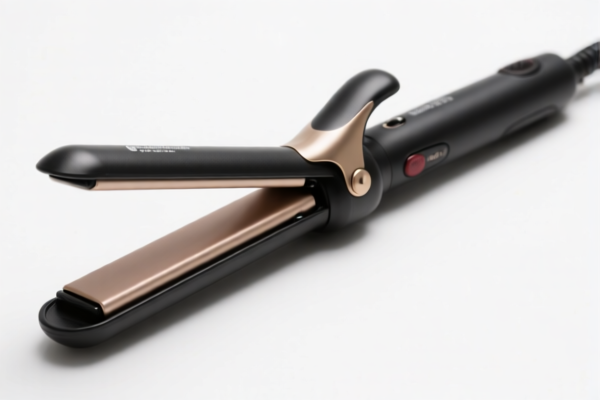
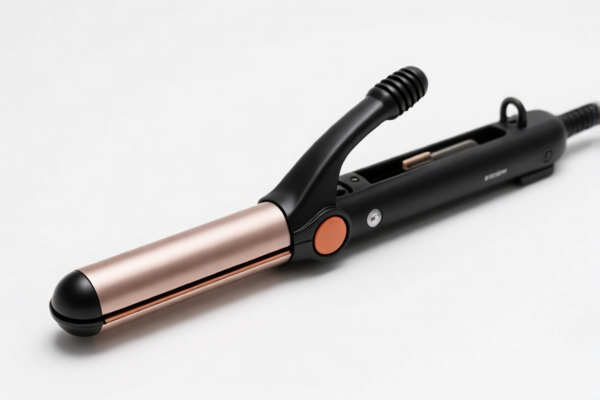


AI Analysis
🌟 Wireless Curling Iron (Portable Hair Styling Device)
🌐 HS Code Reference & Customs Clearance Guide | 2026 Latest Tariff Analysis | Pro-Grade Compliance Strategy
📌 I. Product Definition & Classification: What Exactly is a "Wireless Curling Iron"?
A Wireless Curling Iron is a portable, battery-powered (or cordless electric) hair styling device designed to automatically or manually curl hair strands without the need for a wall socket. In international trade, it falls under electrical hair styling appliances, but its classification depends heavily on functionality, power source, and construction.
⚠️ Critical Distinction:
- If it is a self-contained electric heating device with no other functions → Likely 8516.32.00.20/40 (Automatic Electric Curling Iron).
- If it has independent control logic beyond basic heating (e.g., AI, sensor-based auto-adjustment) → May fall under 8543.70.45.00 (Other Electrical Machines).
- If it is made of foam/plastic and used solely as a non-electric tool (e.g., cold foam rollers) → 6704.90.00.00 or 3926.90.99.89.
📦 II. HS Code Classification Matrix (2026 Latest Tariff Schedule)
| HS Code | Product Description | Key Attributes | Power Source |
|---|---|---|---|
8516.32.00.40 |
Automatic Electric Curling Iron | Heated barrel, auto-rotation, electronic control | Electric (AC/DC) |
8516.32.00.20 |
General Electric Curling Iron | Standard heating element, manual rotation | Electric (AC/DC) |
8543.70.45.00 |
Other Electric Heating Device | Independent function, smart logic, sensor control | Electric (AC/DC) |
6704.90.00.00 |
Foam Curling Rods | Non-electric, hair accessory tool | None |
3926.90.99.89 |
Plastic Curling Tools | Foam/plastic material, no heating function | None |
🔍 Important Note:
- Wireless does not automatically mean "non-electric". If it uses a battery-powered heating element, it is still classified as an electrical appliance (8516 or 8543).
- Only cold, non-heating foam/plastic curlers fall under 6704 or 3926.
💰 III. 2026 Latest Tariff Rate Breakdown (Including Surcharges & Policy Add-ons)
✅ Applicable Market: United States (US)
✅ Country of Origin: China (CN)
✅ Effective Date: November 10, 2025 onward (including future imports)
🎯 1. 8516.32.00.40 & 8516.32.00.20 – Automatic & Electric Curling Irons
| Item | Content |
|---|---|
| Base Tariff | 3.9% (ad valorem) |
| USITC Surcharge | 0.0% |
| 122 Section Tariff | +10% (China-specific) |
| Total Tariff | 13.9% |
| Tax Calculation | CIF Value × 13.9% |
| De Minimis Exemption | ❌ Not Applicable |
| Legal Path | 122 Section: 9903.88.01 → 8516.32.00.20/40 |
📌 Explanation:
- These codes cover all electric curling irons, including wireless/battery-powered ones, as long as they have a heating element.
- The 10% surcharge is applied under Section 122 of the U.S. Trade Act (China-specific).
- No USITC surcharge applies here, unlike display modules.
- Total effective rate: 13.9% — relatively manageable compared to electronics.
🎯 2. 8543.70.45.00 – Other Electric Heating Devices (Smart/Independent Function)
| Item | Content |
|---|---|
| Base Tariff | 2.6% |
| USITC Surcharge | +25% |
| 122 Section Tariff | +10% |
| Total Tariff | 37.6% |
| Tax Calculation | CIF Value × 37.6% |
| De Minimis Exemption | ❌ Not Applicable |
| Legal Path | IEEPA:9901.25 → USITC:8543.70.45.00 → FOOTNOTE:9903.88.01 |
📌 Warning:
- This higher rate applies if your device has advanced features like:
- AI temperature control
- Bluetooth app connectivity
- Self-diagnostic sensors
- Non-standard heating patterns
- Avoid this classification if possible — it increases duty by ~24%.
🎯 3. 6704.90.00.00 & 3926.90.99.89 – Foam/Plastic (Non-Electric) Curling Tools
| Item | Content |
|---|---|
| Base Tariff | 0.0% (6704) / 5.3% (3926) |
| USITC Surcharge | 7.5% |
| 122 Section Tariff | +10% |
| Total Tariff | 17.5% (6704) / 22.8% (3926) |
| Tax Calculation | CIF Value × Rate |
| De Minimis Exemption | ❌ Not Applicable |
📌 Note:
- Only applies to cold, non-heating curlers (e.g., foam rollers, plastic sticks).
- If your "wireless" device has a battery and heating element, do not use these codes — misclassification = audit risk.
🛠️ IV. Customs Clearance Practical Tips (Avoid Pitfalls)
✅ 1. Required Documentation Checklist
| Document | Mandatory | Purpose |
|---|---|---|
| Product Specification Sheet | ✔️ | Must state: "Battery-powered", "Heating Element", "Voltage", "Material" |
| Circuit Diagram (if smart) | ✔️ | Helps avoid 8543.70.45.00 classification |
| Photos (Label + Internal View) | ✔️ | Prove presence/absence of heating element |
| Test Report (UL, FCC, CE) | ✔️ | Required for electrical devices |
| Commercial Invoice | ✔️ | Must say "Wireless Electric Curling Iron" |
| Certificate of Origin (CO) | ✔️ | For potential tariff adjustments |
✅ 2. Declaration Best Practices
🔥 Golden Rule:
"Heating = Electric; No Heating = Accessory; Smart = High Risk"
| Scenario | Correct HS Code | Incorrect | Consequence |
|---|---|---|---|
| Wireless, battery-heated | 8516.32.00.20/40 |
3926.90.99.89 |
24% penalty + audit |
| Foam roller (no heat) | 6704.90.00.00 |
8516.32.00.20 |
Overpayment |
| Smart AI curler | 8543.70.45.00 |
8516.32.00.20 |
24% extra duty |
✅ 3. Special Cases
| Situation | Recommendation |
|---|---|
| OEM/Private Label | Provide client design docs to prove function |
| Battery-Powered + App Control | Likely 8543.70.45.00 → Consider simplifying features |
| Cold Foam Rollers | Clearly label "Non-Electric" on invoice |
| Kit with Heating Iron + Case | Declare as one item, not split |
🌍 V. Global Market Comparison (2026)
| Country | Recommended HS Code | Tariff | Certifications | Notes |
|---|---|---|---|---|
| 🇺🇸 USA | 8516.32.00.20/40 |
13.9% | FCC + UL | 37.6% if smart |
| 🇨🇳 China | 8516.32.00.20/40 |
3.9% | CCC + RoHS | No extra surcharge |
| 🇪🇺 EU | 8516.32.00.20/40 |
0% (if CE) | CE + RoHS | No surcharge |
| 🇦🇺 Australia | 8516.32.00.20/40 |
5% | RCM | No surcharge |
| 🇯🇵 Japan | 8516.32.00.20/40 |
0% | PSE | No surcharge |
📌 Conclusion:
- USA is the only major market adding significant tariffs on Chinese-made curling irons.
- Non-electric foam rollers are cheaper to import but not "wireless" in the true sense.
- Smart features = higher duty — simplify design if targeting US market.
📌 VI. Common Mistakes & How to Avoid Them
❌ Mistake 1: Calling a battery-heated iron a "plastic tool" to avoid tariff
👉 Result: 24% duty + customs seizure
❌ Mistake 2: Listing "Wireless Curling Iron" without specifying heating function
👉 Result: Delayed clearance, possible reclassification
❌ Mistake 3: Claiming "foam" material for an electric device
👉 Result: False declaration, fine + penalty
✅ Correct Declaration Example:
"Wireless Electric Curling Iron, Battery-Powered (Li-ion), Ceramic Barrel, Auto-Rotation, 110V–240V, FCC & UL Certified, Model XYZ"
🎯 VII. Final Takeaway: Smart Classification, Smart Savings!
🎯 Remember:
🔹 "Heat = Electric, No Heat = Accessory"
🔹 "Wireless ≠ Non-Electric"
🔹 "Smart Features = Higher Duty"🔹 "One mistake = 24% extra cost + audit risk"
📌 Pro Tip:
If your curling iron is made in Vietnam, Mexico, or Thailand, you may qualify for IEEPA exemptions — reducing duty to 0–5%.
📣 Take Action Now:
📞 Contact a licensed customs broker + Provide product specs + Request Advance Ruling
🚀 Ensure smooth clearance, lower costs, and faster market entry!
✨ Precision in Classification = Profit in Your Pocket!
💼 Every dollar saved starts with the right HS Code!
Customer Reviews
About HS Code Classification
The Harmonized System (HS) is an internationally standardized nomenclature developed by the World Customs Organization (WCO) to classify traded products. Over 200 countries use the HS system as the basis for customs tariffs, trade statistics, and import/export regulations.
Each HS code follows a hierarchical structure:
- Chapter (2 digits) — Broad category of goods (e.g., Chapter 84: Machinery and Mechanical Appliances)
- Heading (4 digits) — More specific grouping within the chapter
- Subheading (6 digits) — Internationally standardized breakdown, used by all WCO member countries
- National subdivisions (8-10 digits) — Country-specific extensions for further classification, such as US HTSUS 10-digit codes
Correct HS code classification is essential for smooth customs clearance, accurate duty payment, and compliance with trade regulations. Misclassification can lead to customs delays, overpayment of duties, or penalties.
When importing from CN to US, the applicable tariff rates may include:
- Most-Favored-Nation (MFN) rate — The standard duty rate applied to WTO members
- General rate — Applied to countries without trade agreements
- Trade remedy duties — Additional tariffs such as Section 301 (anti-dumping), Section 232 (national security), or countervailing duties
The information provided on this page is for reference purposes only. For official classification, please consult with your local customs authority or a licensed customs broker.