Wireless Doorbell
CN → US| HS Code | Tariff Rate | Origin | Destination | Doc |
|---|---|---|---|---|
| 8531809051 | 17.5% | CN | US | Official Doc |
| 8517690000 | 35.0% | CN | US | Official Doc |
| 8517180050 | 10.0% | CN | US | Official Doc |
| 8531801500 | 11.3% | CN | US | Official Doc |
| 8531809051 | 17.5% | CN | US | Official Doc |
Product Images
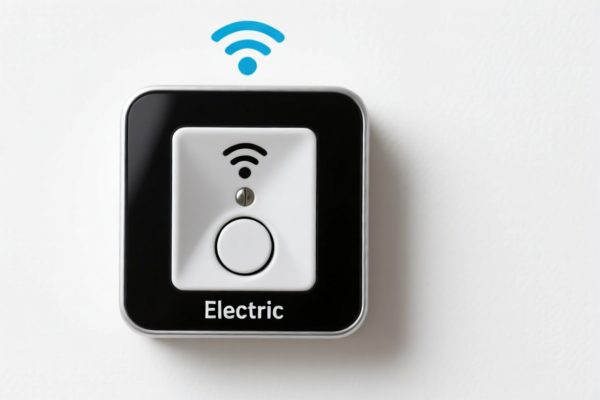
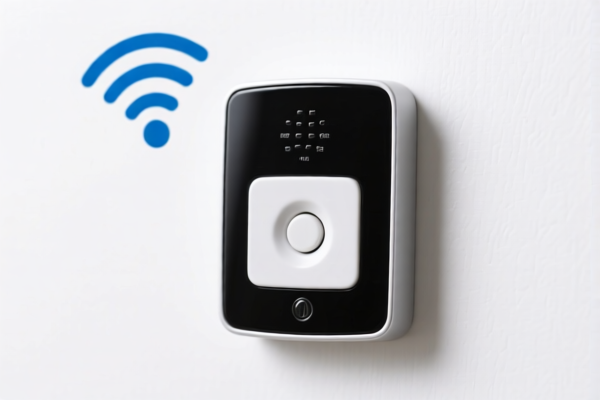
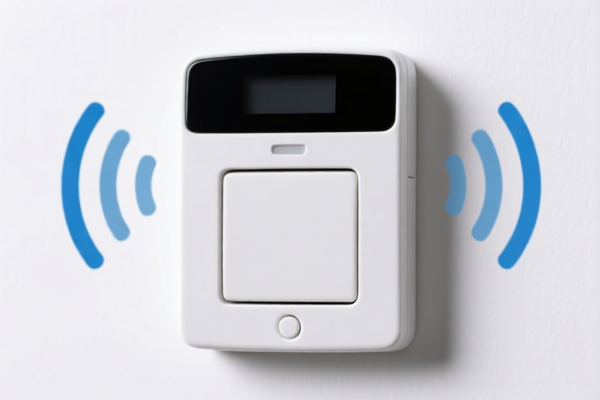
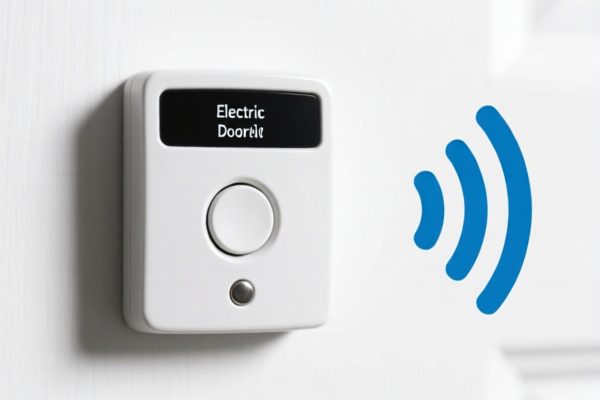
AI Analysis
🚪 Wireless Doorbell (Wireless Intercom & Signal Devices)
🌐 HS Code Reference & Clearance Guide | 2026 Latest Tariff Analysis | Professional Entry Strategies
📌 I. Product Definition & Classification: Do You Really Understand "Wireless Doorbells"?
The wireless doorbell is a household electronic accessory designed to transmit audio signals from a button (outside) to a receiver (inside) without physical wiring. In international trade, it does not have a single, rigid HS code. Its classification depends entirely on how it functions and what technology it uses.
It is generally categorized into two main logical paths: 1. Electro-acoustic Signal Devices: If it simply triggers a sound (ding-dong) based on a button press. 2. Wireless Communication Equipment: If it uses Wi-Fi, Zigbee, Bluetooth, or radio frequencies for complex data/signal transmission between devices.
⚠️ Key Distinction Point:
- If it is a simple "press button → make noise" system → Likely Chapter 8531 (Electrical sound or visual signaling apparatus).
- If it involves "data transmission," "Wi-Fi," or "networked reception" → Likely Chapter 8517 (Machines for the reception, conversion and transmission or regeneration of voice, images or other data, including repeaters and switching apparatus).
📦 II. HS Code Classification Details (2026 Authoritative Comparison)
Based on the provided data, here are the four distinct classifications for Wireless Doorbells:
| HS Code | Product Description | Applicable Scenario | Key Feature |
|---|---|---|---|
8531.80.90.51 |
Electro-acoustic signal apparatus (Other) | Simple wireless chimes that play a pre-recorded sound upon button press. | Signal Generation: Focuses on the "sound apparatus" aspect. |
8517.69.00.00 |
Wireless receiving apparatus for voice/signal transmission | Doorbells that transmit audio signals or simple control signals via RF/Wi-Fi. | Transmission: Focuses on the "wireless receiving device" aspect. |
8517.18.00.50 |
Wireless communication/network equipment | Smart doorbells connected to a home Wi-Fi network or app ecosystem. | Networking: Focuses on "Wireless Communication" capabilities. |
8531.80.15.00 |
Doorbells, gongs, etc. (Specific sub-category) | Traditional or specialized doorbell systems explicitly categorized as "Signal Equipment." | Specificity: Explicitly mentions "Doorbell/Gong" in the description. |
🔍 Critical Reminder:
-8531Codes are generally for devices whose primary function is signaling (making noise/light).
-8517Codes are for devices whose primary function is communication or signal transmission/reception.
- Misclassification between these chapters can lead to massive tariff discrepancies (from 10% to 35%).
💰 III. 2026 Latest Tariff Rate Breakdown (Including Surtaxes & Policy Add-ons)
✅ Applicable Country: United States (US)
✅ Origin: China (CN)
✅ Effective Date: Current Trade War Tariffs (Section 301 / IEEPA) apply.
🎯 1. 8531.80.90.51 —— Electro-acoustic Signal Apparatus (Other)
| Item | Content |
|---|---|
| Base Tariff | 0.0% |
| Section 301 Surcharge | +7.5% |
| IEEPA Surcharge (122 Clause) | +10.0% |
| Total Effective Rate | 17.5% |
| Tax Calculation | CIF Value × 17.5% |
| De Minimis Eligibility | ❌ No (Section 301 goods generally exempt from $800 de minimis relief if aggregated, though specific enforcement varies, high risk) |
| Legal Basis Path | USITC:8531.80.90.51 → Section 301: Footnote 1 → IEEPA: 122 Clause |
📌 Explanation:
- This classification assumes the doorbell is a simple "sound maker."
- The 7.5% Section 301 tariff applies to specific electro-acoustic goods.
- The 10% IEEPA is the standard surcharge on Chinese goods under current executive orders.
- Total: 17.5%. This is a moderate-high risk category.
🎯 2. 8517.69.00.00 —— Wireless Receiving Apparatus
| Item | Content |
|---|---|
| Base Tariff | 0.0% |
| Section 301 Surcharge | +25.0% |
| IEEPA Surcharge (122 Clause) | +10.0% |
| Total Effective Rate | 35.0% |
| Tax Calculation | CIF Value × 35.0% |
| De Minimis Eligibility | ❌ No |
| Legal Basis Path | USITC:8517.69.00.00 → Section 301: Footnote 9903.88 (Broad Tech Category) → IEEPA |
📌 Explanation:
- If CBP (Customs and Border Protection) views the doorbell as a "wireless communication receiver," it falls under List 4C or similar high-tariff tech categories.
- The 25% Section 301 is the standard rate for many wireless telecommunications equipment.
- Total: 35.0%. This is the highest risk classification. Avoid if possible unless technically necessary.
🎯 3. 8517.18.00.50 —— Wireless Communication/Network Equipment
| Item | Content |
|---|---|
| Base Tariff | 0.0% |
| Section 301 Surcharge | 0.0% |
| IEEPA Surcharge (122 Clause) | +10.0% |
| Total Effective Rate | 10.0% |
| Tax Calculation | CIF Value × 10.0% |
| De Minimis Eligibility | ❌ No (But lower base rate) |
| Legal Basis Path | USITC:8517.18.00.50 → Exclusion List (If applicable) → IEEPA: 10% |
📌 Explanation:
- ⚠️ CRITICAL NOTE: This code offers the lowest total tax (10%).
- However, it classifies the doorbell as "Wireless Communication Equipment" (e.g., Wi-Fi doorbells).
- Why is the surcharge 0%? This may reflect specific exclusions or sub-categories within Chapter 8517 that were negotiated or exempted from the full 25% Section 301, leaving only the IEEPA 10%.
- Strategy: If your product supports Wi-Fi/App control, this is the most cost-effective HS Code, provided you can justify the "Network Equipment" description.
🎯 4. 8531.80.15.00 —— Doorbells, Gongs, etc.
| Item | Content |
|---|---|
| Base Tariff | 1.3% |
| Section 301 Surcharge | 0.0% |
| IEEPA Surcharge (122 Clause) | +10.0% |
| Total Effective Rate | 11.3% |
| Tax Calculation | CIF Value × 11.3% |
| De Minimis Eligibility | ❌ No |
| Legal Basis Path | USITC:8531.80.15.00 → Specific Sub-heading → IEEPA |
📌 Explanation:
- This is a specific sub-category for doorbells.
- The Base Tariff is 1.3% (not 0%).
- Section 301 Surcharge is 0.0% (This is unusual and beneficial).
- Total: 11.3%.
- Strategy: This is the second best option if the device is a pure "signal apparatus" and not classified as general communication gear. It saves you the 7.5% Section 301 surcharge found in8531.80.90.51.
🛠️ IV. Clearance Practical Advice (Combat Pitfalls Guide)
✅ 1. Document Checklist (Non-negotiable)
| Document | Required | Purpose |
|---|---|---|
| ✅ Product Manual | ✔️ | Must explicitly state "Wireless," "Signal Transmission," or "Audio Chime." |
| ✅ Circuit Diagram | ✔️ | To prove if it contains a "modem/transceiver" (8517) or just a "buzzer" (8531). |
| ✅ Photos (Labeled) | ✔️ | Show buttons, receivers, antennas, and power sources. |
| ✅ FCC ID | ✔️ | Mandatory for any wireless device in the US. No FCC ID = Immediate Rejection. |
| ✅ Commercial Invoice | ✔️ | Crucial: Description must match HS Code logic (e.g., "Wi-Fi Smart Doorbell" vs. "RF Wireless Chime"). |
✅ 2. Declaration Tactics (Key Mnemonics)
🔥 "Tech Determines Tax, Description Dictates Code!"
| Scenario | Recommended HS Code | Why? |
|---|---|---|
| Wi-Fi/App Doorbell | 8517.18.00.50 |
Lowest tax (10%). Justify as "Network Device." |
| Simple RF Button/Chime | 8531.80.15.00 |
Low tax (11.3%). Justify as "Specific Signal Device." |
| Generic RF Transceiver | 8531.80.90.51 |
Moderate tax (17.5%). Default for "other signals." |
| Complex Audio Transmitter | 8517.69.00.00 |
AVOID if possible. Highest tax (35%). |
📌 Warning:
- Do NOT describe a Wi-Fi doorbell as a "Simple Chime" to avoid 8517 if it clearly has network capabilities. CBP checks FCC filings. If FCC ID shows Wi-Fi, but HS is 8531, you risk penalties.
- Do NOT describe a simple chime as "Network Equipment" if it lacks data processing. It may be rejected for inaccuracy.
✅ 3. Special Case Handling
| Case | Handling Advice |
|---|---|
| Kit vs. Single Unit | If sold as a Kit (Button + Receiver), declare as a set under the component that gives essential character (usually the receiver or the electronic module). |
| OEM/White Label | Ensure the description is generic enough (e.g., "Wireless Doorbell System") but accurate technically. |
| Battery Operated | Specify battery type. If Lithium, ensure IATA/UN38.3 documentation is ready for air freight. |
| Multiple Receivers | If one button triggers multiple bells, it is still one "system." Do not split into separate lines to avoid scrutiny. |
🌍 V. Global Market Comparison (2026 Update)
| Market | Recommended HS Code | Est. Total Tax (China Origin) | Key Requirement |
|---|---|---|---|
| 🇺🇸 USA | 8517.18.00.50 or 8531.80.15.00 |
10% - 11.3% (Best Cases) | FCC ID is mandatory. |
| 🇪🇺 EU | 8531.80.90 |
~2.5% - 3% | CE Mark, Low Voltage Directive. |
| 🇨🇳 China | 8531.80.90 or 8517.62 |
0% - 5% | CCC Certification (if applicable). |
| 🇬🇧 UK | 8531.80.90 |
~2.5% | UKCA Mark. |
📌 Conclusion:
- The US market is the most complex due to Section 301 and IEEPA tariffs.
- Choosing the right HS Code can save up to 25% in duties (17.5% vs 42.5% if misclassified as higher-tier tech).
- FCC Compliance is non-negotiable in the US.
📌 VI. Common Errors & Pitfalls (Blood & Tears Lessons)
❌ Error 1: Using 8517.69.00.00 for a simple $10 RF Doorbell
👉 Result: You pay 35% tax on a cheap item.
👉 Fix: Use 8531.80.15.00 (11.3%) if it doesn't do complex data transmission.
❌ Error 2: Misleading CBP by calling a Wi-Fi doorbell a "Signal Device" (8531)
👉 Result: Audit, potential fines for misdeclaration, as FCC ID proves network capability.
👉 Fix: Accurately declare as 8517.18.00.50 (10%) which is cheaper than 8517.69 (35%) and accurate for Wi-Fi.
❌ Error 3: Ignoring the IEEPA 10% Surcharge
👉 Result: Under-declaring taxes, leading to penalties and seizure.
👉 Fix: Always add the 10% IEEPA to the calculation for all Chinese-origin goods.
✅ Correct Declaration Example:
"Wireless Wi-Fi Doorbell System, Includes 1 Button Transmitter and 1 Chime Receiver, App Controlled, Model: WB-2026, FCC ID: ABC123WB2026"
HS Code:8517.18.00.50
Tax: 10%
🎯 VII. Conclusion: Precision Saves Profit!
🎯 Mnemonic:
🔹 "Wi-Fi is Network (8517), Simple Sound is Signal (8531)."
🔹 "8517.18 is Gold (10%), 8517.69 is Trap (35%)."
🔹 "8531.15 is Silver (11.3%), 8531.51 is Bronze (17.5%)."
📌 Pro Tip:
If your doorbell supports both Wi-Fi and simple RF modes, argue for the primary function or the one with the lower duty (8517.18.00.50) provided you have strong technical documentation showing network capabilities. Always consult a customs broker to file an Advance Ruling if the volume is high.
📣 Action Item:
📞 Verify FCC ID.
📞 Check if your device has "App/Network" features.
📞 Select8517.18.00.50for Wi-Fi models (10% tax) or8531.80.15.00for simple RF models (11.3% tax).
🚀 Avoid8517.69.00.00(35%) at all costs!
✨ Accurate Classification is the First Step to Profitable Export!
💼 Don't let 25% tariffs eat your margin!
Customer Reviews
About HS Code Classification
The Harmonized System (HS) is an internationally standardized nomenclature developed by the World Customs Organization (WCO) to classify traded products. Over 200 countries use the HS system as the basis for customs tariffs, trade statistics, and import/export regulations.
Each HS code follows a hierarchical structure:
- Chapter (2 digits) — Broad category of goods (e.g., Chapter 84: Machinery and Mechanical Appliances)
- Heading (4 digits) — More specific grouping within the chapter
- Subheading (6 digits) — Internationally standardized breakdown, used by all WCO member countries
- National subdivisions (8-10 digits) — Country-specific extensions for further classification, such as US HTSUS 10-digit codes
Correct HS code classification is essential for smooth customs clearance, accurate duty payment, and compliance with trade regulations. Misclassification can lead to customs delays, overpayment of duties, or penalties.
When importing from CN to US, the applicable tariff rates may include:
- Most-Favored-Nation (MFN) rate — The standard duty rate applied to WTO members
- General rate — Applied to countries without trade agreements
- Trade remedy duties — Additional tariffs such as Section 301 (anti-dumping), Section 232 (national security), or countervailing duties
The information provided on this page is for reference purposes only. For official classification, please consult with your local customs authority or a licensed customs broker.