Wireless Electric Nail File
CN → US| HS Code | Tariff Rate | Origin | Destination | Doc |
|---|---|---|---|---|
| 8214203000 | 14.0% | CN | US | Official Doc |
| 8214209000 | 14.1% | CN | US | Official Doc |
| 8543709810 | 37.6% | CN | US | Official Doc |
| 8543709820 | 37.6% | CN | US | Official Doc |
| 8516790000 | 12.7% | CN | US | Official Doc |
| 8516720000 | 15.3% | CN | US | Official Doc |
Product Images
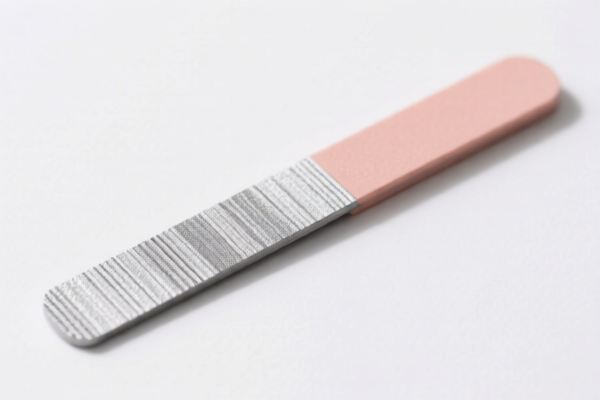
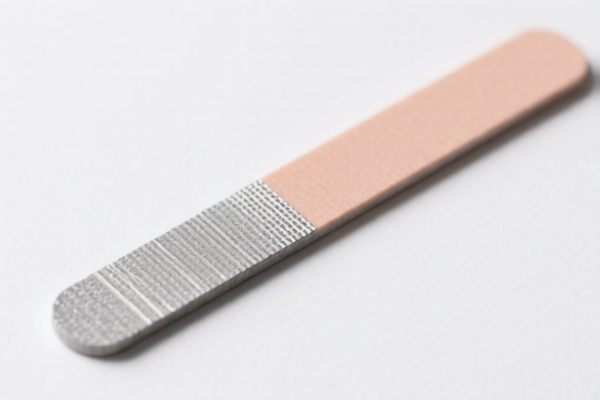
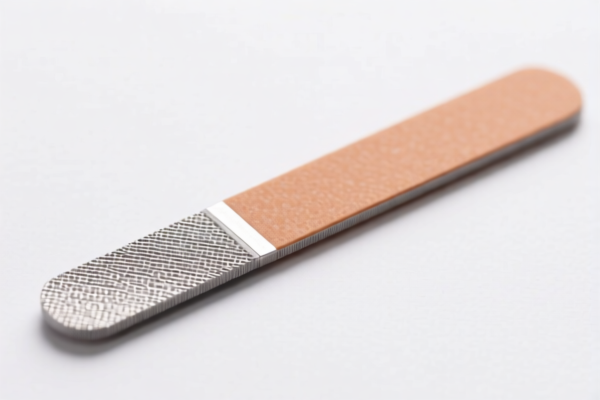
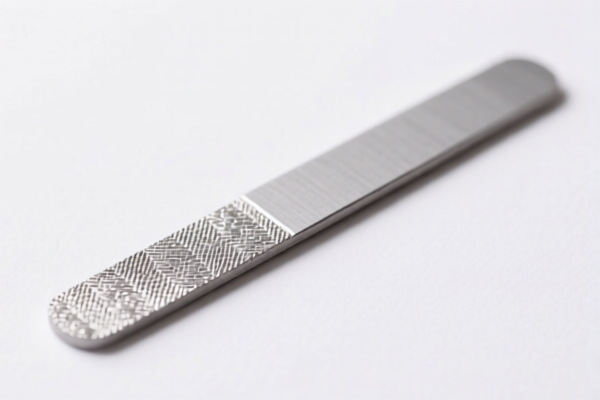
AI Analysis
💅 Wireless Electric Nail File (E-Files)
🌐 HS Code Reference & Customs Clearance Guide | 2026 Latest Tariff Analysis | Professional Compliance Strategy
📌 I. Product Definition: What is a "Wireless Electric Nail File"?
An Electric Nail File (often called an E-file, rotary file, or drill) is a hand-held power tool used for manicure and pedicure services. It uses rotating burrs or bits to shape, smooth, or remove nail enhancements (acrylics, gels, hard gels).
In international trade, the classification depends heavily on two factors: 1. Power Output: Is it under or over 100 Watts? 2. Function: Is it purely an electric tool, or is it part of a set?
⚠️ Critical Distinction:
- If it is a standalone electric motor-driven tool used for filing nails → It falls under Chapter 85 (Electrical Machinery).
- If it is a non-electric manual tool (e.g., a metal file, nipper, or pusher) → It falls under Chapter 82 (Base Metal Cutlery).
- If it is a Set containing multiple tools (including files, clippers, etc.) → It may fall under Chapter 82 (Manicure Sets).
Note: The data provided below strictly covers Electric Nail Files (Chapter 85) and Non-Electric Manicure Tools (Chapter 82) as per the input dataset.
📦 II. HS Code Classification Details (Based on Provided Data)
1. Low Power Electric Nail Files (< 100 Watts)
Most consumer-grade cordless/ wireless nail files operate with small motors that consume less than 100 watts.
| HS Code | Product Description | Key Feature | Power Rating |
|---|---|---|---|
| 8516.79.00.00 | Electric hand-held tools for working on nails, not elsewhere specified | Wireless/Cordless or Low Power | < 100 Watts |
🔍 Why this code?
- It is an "electric hand-held tool."
- It is "not elsewhere specified" (i.e., not a shaver or hair clipper).
- It is specifically for "working on nails."
- The power constraint (<100W) is the primary differentiator from professional salon equipment.
2. High Power Electric Nail Files (≥ 100 Watts)
Professional-grade electric files, often used in salons for heavy-duty acrylic removal, may have higher torque and power consumption.
| HS Code | Product Description | Key Feature | Power Rating |
|---|---|---|---|
| 8516.72.00.00 | Electric hand-held tools for working on nails, not elsewhere specified | High Power Professional Tool | ≥ 100 Watts |
🔍 Why this code?
- Same functional category as above, but the power supply is 100 watts or more.
- This typically applies to heavy-duty rotary motors used in professional spa settings.
3. Non-Electric Manicure/Pedicure Tools (For Comparison)
If your product is NOT electric (e.g., a stainless steel nail file, cuticle pusher, or clipper), it does NOT fall under Chapter 85. It falls under Chapter 82.
| HS Code | Product Description | Key Feature |
|---|---|---|
| 8214.20.30.00 | Cuticle/cornknives, cuticle pushers, nail files, nail cleaners, nail nippers/clippers | Manual/Non-Electric tools for manicure/pedicure |
| 8214.20.90.00 | Manicure and pedicure sets, and combinations thereof | Sets/Combos (e.g., a box containing files, clippers, tweezers) |
⚠️ Warning:
- Do NOT misclassify an electric nail file as8214.20.30.00. Even if it has a metal head, if it is motorized, it is 8516.
- Misclassification leads to significant duty differences and potential customs penalties.
💰 III. 2026 Latest Tariff Rates Detailed Explanation
✅ Applicable Country: United States (US)
✅ Origin: China (CN)
✅ Valid From: Current rates apply
🎯 1. 8516.79.00.00 – Electric Nail File (< 100W)
| Item | Content |
|---|---|
| Base Duty Rate | 2.7% (Ad Valorem) |
| Additional Duty (Section 301) | 0.0% |
| Total Duty Rate | 2.7% |
| Tax Calculation | CIF Value × 2.7% |
| De Minimis Eligibility | ✅ Yes (If shipped via postal/parcel under $800) |
| Legal Basis | HTSUS 8516.79.00.00 |
📌 Explanation:
- This is a low-duty category.
- No Section 301 tariffs are currently applied to this specific subheading for Chinese goods.
- Advantage: If shipped via USPS/UPS/FedEx under the $800 de minimis rule, it may enter duty-free (if IRS allows), but if formally entered, the duty is minimal (2.7%).
🎯 2. 8516.72.00.00 – Electric Nail File (≥ 100W)
| Item | Content |
|---|---|
| Base Duty Rate | 0.0% |
| Additional Duty (Section 301) | 0.0% |
| Total Duty Rate | 0.0% |
| Tax Calculation | CIF Value × 0% |
| De Minimis Eligibility | ✅ Yes (If shipped via postal/parcel under $800) |
| Legal Basis | HTSUS 8516.72.00.00 |
📌 Explanation:
- This is a duty-free category (0% total).
- Note: Even though the duty is 0%, ensure the product is truly ≥100W. If a high-power tool is misclassified as <100W, the duty difference is small (2.7%), but the misclassification risk remains.
🎯 3. 8214.20.30.00 – Manual Nail Files/Clippers
| Item | Content |
|---|---|
| Base Duty Rate | 4.0% |
| Additional Duty (Section 301) | 0.0% |
| Total Duty Rate | 4.0% |
| De Minimis Eligibility | ✅ Yes (Under $800) |
🎯 4. 8214.20.90.00 – Manicure Sets
| Item | Content |
|---|---|
| Base Duty Rate | 4.1% |
| Additional Duty (Section 301) | 0.0% |
| Total Duty Rate | 4.1% |
| De Minimis Eligibility | ✅ Yes (Under $800) |
🛠️ IV. Customs Clearance Practical Advice (Pro Tips)
✅ 1. Preparation Checklist (Must-Haves)
| Document | Required | Reason |
|---|---|---|
| Product Specifications | ✔️ | Must explicitly state Power Output (Watts). E.g., "Motor Power: 40W" or "Input: 100W". |
| Product Photos | ✔️ | Show the motor, plug, and any branding. Must look like a "tool," not just a metal file. |
| Commercial Invoice | ✔️ | Clearly describe as "Electric Nail File" or "Rotary Nail Drill". Avoid vague terms like "Beauty Tool." |
| Battery Declaration | ✔️ | Since it is "Wireless," it likely contains a Lithium-ion battery. Must comply with UN38.3 and MDL1/PI965/967/968 for shipping. |
| FCC Certification | ✔️ | Required for all wireless/electronic devices sold in the US. |
✅ 2. Declaration Tips (Key Mnemonics)
🔥 “Check the Watts, Declare the Power, Battery Safety First!”
| Scenario | Correct Declaration | Incorrect Declaration | Consequence |
|---|---|---|---|
| Wireless E-File (40W) | 8516.79.00.00 |
8214.20.30.00 |
Misclassification Risk: Customs may reject it if it sees a motor. |
| High-Power E-File (120W) | 8516.72.00.00 |
8516.79.00.00 |
Minor duty difference (0% vs 2.7%), but consistency matters. |
| Manual File + Nippers | 8214.20.30.00 |
8516.79.00.00 |
Major Error: No electricity involved. |
| Full Manicure Set (Boxed) | 8214.20.90.00 |
8214.20.30.00 |
Sets have a slightly higher duty (4.1% vs 4.0%). |
✅ 3. Special Cases & Pitfalls
| Case | Handling Advice |
|---|---|
| Wireless/Lithium Battery | CRITICAL: You MUST declare the battery type, voltage, and watt-hours. Ship via DHL/UPS/FedEx with proper lithium battery labels. Postal shipments may be rejected if batteries are not properly documented. |
| "Nail Drill" vs. "Nail File" | Use the term "Electric" or "Motorized" in the description. "Nail File" alone implies a manual emery board or metal file. |
| Combined Sets (Electric + Manual) | If you sell a box with an E-File AND manual clippers, the primary function determines the HS Code. If the E-File is the main product, classify as 8516. If it's a balanced set, consider 8214.20.90.00 (Set) but consult a broker. |
| FCC ID | Ensure the FCC ID is printed on the device or packaging. Customs and FCC both check this. |
🌍 V. Global Market Comparison (2026)
| Country/Region | Recommended HS Code | Duty Rate (China Origin) | Key Requirements |
|---|---|---|---|
| 🇺🇸 USA | 8516.79.00.00 (<100W)8516.72.00.00 (≥100W) |
2.7% or 0.0% | FCC, Lithium Battery Compliance, Section 301 (None for these codes) |
| 🇨🇳 China | 8516.79.00.00 |
~2-5% (Check Local) | CCC Certification (if applicable) |
| 🇪🇺 EU | 8516.79.00.00 |
~0-2% (Varies) | CE Marking, RoHS, WEEE, EPR |
| 🇬🇧 UK | 8516.79.00.00 |
~0-2% | UKCA Marking |
| 🇦🇺 Australia | 8516.79.00.00 |
~5% | RCM (Electrical Safety) |
📌 Conclusion:
- The US market is favorable for electric nail files due to low or zero duties.
- Battery shipping regulations are the biggest hurdle, not the duty rate.
- Manual tools (8214) have slightly higher duties (4-4.1%) but no battery issues.
📌 VI. Common Mistakes & How to Avoid Them
❌ Mistake 1: Describing an electric nail file as a "Metal Nail File"
👉 Result: Customs may classify it under 8214.20.30.00 (4% duty) or worse, flag it for inconsistency if it clearly has a motor.
✅ Fix: Always use "Electric," "Motorized," or "Rotary" in the description.
❌ Mistake 2: Ignoring Battery Declaration for Wireless Models
👉 Result: Package refused by carrier, delayed by customs, or fined for unsafe lithium batteries.
✅ Fix: Provide UN38.3 Test Summary and MSDS for batteries. Ensure proper labeling.
❌ Mistake 3: Misclassifying a "Set" as a Single Tool
👉 Result: If a box contains an E-File, clippers, and a file, and you declare only the E-File, you may be under-declaring the value of the non-Electric parts.
✅ Fix: If it’s a mixed set, consider declaring as a Manicure Set (8214.20.90.00) if the electric tool is minor, or declare the primary function accurately.
❌ Mistake 4: Assuming All Electric Beauty Tools Are the Same
👉 Result: Confusing "Nail Files" (8516) with "Hair Clippers" (8510) or "Shavers" (8510).
✅ Fix: "Nail Files" have a specific subheading. "Hair Clippers" do not. Use 8516.79 for nails, not 8510.
🎯 VII. Conclusion: Smart Classification for Maximum Profit
🎯 Key Takeaway:
🔹 Electric < 100W:
8516.79.00.00→ 2.7% Duty (Low Risk)
🔹 Electric ≥ 100W:8516.72.00.00→ 0.0% Duty (Zero Risk)
🔹 Manual Tools:8214.20.30.00→ 4.0% Duty
🔹 Sets:8214.20.90.00→ 4.1% Duty🔹 "Watts Matter, Battery is Key, Description is King!"
📌 Pro Tip:
For wireless models, ensure your supplier provides FCC ID and Battery Compliance Documents before shipping. This prevents 100% of electronic-related customs holds in the US.
📣 Immediate Action:
📞 Verify your product’s wattage!
📦 Prepare FCC and Battery Docs!
🚀 Declare accurately to avoid delays and maximize savings!
✨ Professional Clearance, Precision Classification, Higher Margins!
💼 Don’t let a wrong HS Code cost you 2.7% of your profit!
Customer Reviews
About HS Code Classification
The Harmonized System (HS) is an internationally standardized nomenclature developed by the World Customs Organization (WCO) to classify traded products. Over 200 countries use the HS system as the basis for customs tariffs, trade statistics, and import/export regulations.
Each HS code follows a hierarchical structure:
- Chapter (2 digits) — Broad category of goods (e.g., Chapter 84: Machinery and Mechanical Appliances)
- Heading (4 digits) — More specific grouping within the chapter
- Subheading (6 digits) — Internationally standardized breakdown, used by all WCO member countries
- National subdivisions (8-10 digits) — Country-specific extensions for further classification, such as US HTSUS 10-digit codes
Correct HS code classification is essential for smooth customs clearance, accurate duty payment, and compliance with trade regulations. Misclassification can lead to customs delays, overpayment of duties, or penalties.
When importing from CN to US, the applicable tariff rates may include:
- Most-Favored-Nation (MFN) rate — The standard duty rate applied to WTO members
- General rate — Applied to countries without trade agreements
- Trade remedy duties — Additional tariffs such as Section 301 (anti-dumping), Section 232 (national security), or countervailing duties
The information provided on this page is for reference purposes only. For official classification, please consult with your local customs authority or a licensed customs broker.