Wireless Keyboard and Mouse Set
CN → US| HS Code | Tariff Rate | Origin | Destination | Doc |
|---|---|---|---|---|
| 8471609050 | 35.0% | CN | US | Official Doc |
| 8473309100 | 35.0% | CN | US | Official Doc |
| 8471602000 | 10.0% | CN | US | Official Doc |
| 8517690000 | 35.0% | CN | US | Official Doc |
| 8543709860 | 37.6% | CN | US | Official Doc |
Product Images
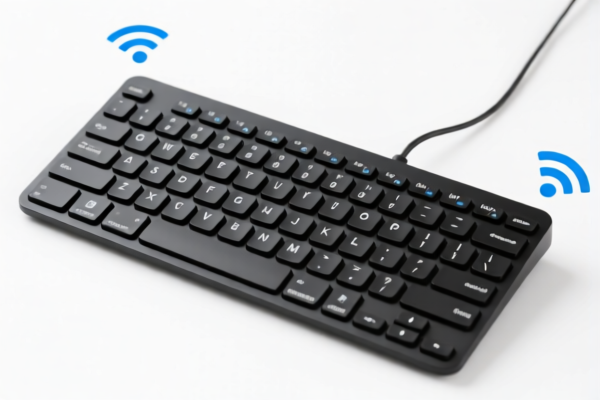
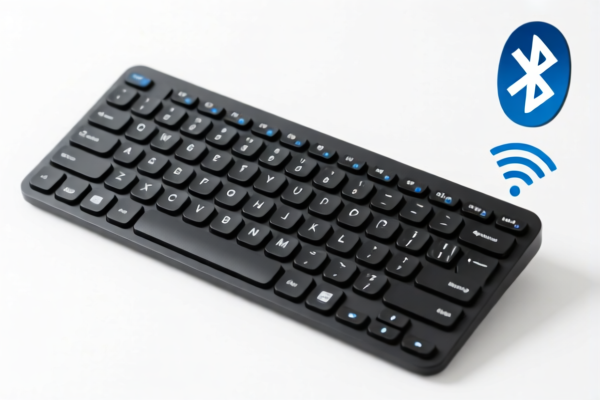
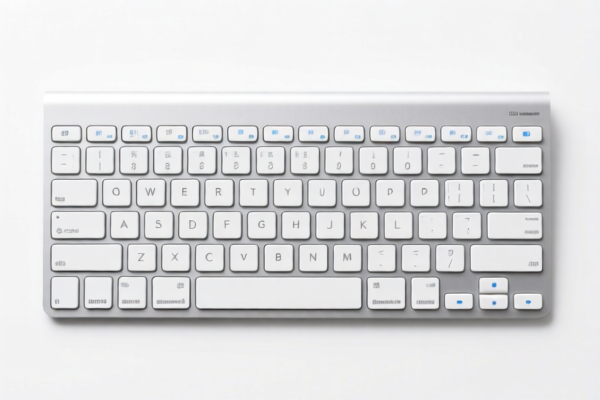

AI Analysis
🖱️ Wireless Keyboard and Mouse Set (Input Devices & Peripherals)
🌐 HS Code Reference & Customs Clearance Guide | 2026 Latest Tariff Analysis | Professional Strategy for Cross-Border E-Commerce
📌 I. Product Definition: Is It a "Component" or an "Input Device"?
A Wireless Keyboard and Mouse Set is a bundle of input peripherals used with automatic data processing machines (computers, laptops, tablets). In international trade, the classification depends heavily on whether the items are classified as specific input units (like keyboards) or parts/accessories, and how the "wireless" aspect interacts with data transmission classifications.
⚠️ Key Distinction Points:
- If classified as 8471.60.20.00 (Keyboard specific): The mouse is often viewed as an accessory, or the set is split. This yields the lowest base tariff but requires precise naming.
- If classified as 8473.30.91.00 (Parts/Accessories): The "Set" nature implies these are components of a larger ADP machine. This is a common fallback but carries a higher total tax burden.
- If classified as 8517.69.00.00 (Transmission Equipment): The "Wireless" aspect triggers this code, treating the dongles/receivers as data transmission devices. This is risky and often results in complex tax calculations.
- If split into 8543.70.98.60 (Mouse specific): The mouse is seen as a distinct electronic device with independent function, while the keyboard follows a different path. This is rarely used for a set but applies if sold separately.
📦 II. HS Code Classification Details (2026 Authoritative Comparison)
Based on the provided data, here are the five potential classifications for a Wireless Keyboard and Mouse Set, ranked by classification logic and tax impact.
| HS Code | Product Description | Classification Logic (Why?) | Total Tax Rate |
|---|---|---|---|
8471.60.20.00 |
Keyboards (Input Units) | Best Case for Keyboard. The set contains a keyboard, which perfectly fits "Keyboards" under ADP input units. "Wireless" is a functional description, not a classification changer. | 10.0% |
8471.60.90.50 |
Other Input/Output Units | Alternative for Sets. Since it's a "Set" including other interactive parts (mouse), it doesn't fit "Specialized" single-input codes. It falls under "Other" input devices. | 35.0% |
8473.30.91.00 |
Parts & Accessories (of ADP Machines) | Conservative Approach. The term "Set" implies a consumer package. The functions (keyboard/mouse) are parts/accessories of ADP machines (Chapter 84). No material conflict. | 35.0% |
8517.69.00.00 |
Data Transmission Equipment | Wireless Focus. Treats the wireless receiver/dongle as equipment for transmitting data. Fits "Transmission/Reception" description. Material check: No conflict. | 35.0% |
8543.70.98.60 |
Other Electrical Machines (Mouse Specific) | Component Specific. If the mouse is viewed as an independent electronic device (not just a part of a computer), it falls here. Includes material inference (Plastic/Metal). | 37.6% |
🔍 Critical Insight:
-8471.60.20.00is the "Golden Key" for the keyboard portion, offering the lowest rate (10%) because it is a specific input unit.
-8473.30.91.00is the safest "catch-all" for the set as a whole if you cannot split the line items, but it carries a high 35% rate.
-8517.69.00.00is a risky classification. While technically wireless devices transmit data, customs often prefer ADP classifications (8471) for peripherals. Misclassification here can lead to disputes.
💰 III. 2026 Latest Tariff Rate Breakdown (Detailed Tax Clauses)
✅ Applicable Country: United States (US)
✅ Origin: China (CN)
✅ Effective Time: 2025/2026 (Current Trade War Era)
🎯 1. 8471.60.20.00 — Keyboards (The Low-Cost Option)
| Item | Content |
|---|---|
| Base Duty | 0.0% |
| Section 301 Duty | 0.0% |
| IEEPA (122 Clause) Duty | +10% |
| Total Effective Rate | 10.0% |
| Tax Calculation | CIF Value × 10% |
| De Minimis Exemption | ❌ NO (Deny De Minimis) |
| Legal Path | IEEPA:9903.01.24 (10% clause for Chapter 84 items) |
📌 Explanation:
- This code benefits from 0% Section 301 tariffs because it is a specific "Input Unit" (Keyboard).
- However, it still bears the 10% IEEPA surcharge (often referred to as "122 Clause" or Section 301 Phase 1/2 depending on specific rulings).
- Result: This is the most cost-effective classification for the keyboard part of the set.
🎯 2. 8471.60.90.50 — Other Input/Output Units
| Item | Content |
|---|---|
| Base Duty | 0.0% |
| Section 301 Duty | +25.0% |
| IEEPA (122 Clause) Duty | +10% |
| Total Effective Rate | 35.0% |
| Tax Calculation | CIF Value × 35% |
| De Minimis Exemption | ❌ NO |
| Legal Path | IEEPA:9903.88.01 → USITC:8471.60.90.50 |
📌 Explanation:
- The "Other" category in Chapter 84 does not enjoy the exemption from the 25% Section 301 tariff that specific codes like "Keyboards" might.
- The 25% + 10% = 35% is a significant cost driver.
🎯 3. 8473.30.91.00 — Parts & Accessories of ADP Machines
| Item | Content |
|---|---|
| Base Duty | 0.0% |
| Section 301 Duty | +25.0% |
| IEEPA (122 Clause) Duty | +10% |
| Total Effective Rate | 35.0% |
| Tax Calculation | CIF Value × 35% |
| De Minimis Exemption | ❌ NO |
| Legal Path | IEEPA:9903.88.01 → USITC:8473.30.91.00 |
📌 Explanation:
- Many sellers prefer this code for "Sets" because it avoids the strict "Input Unit" definition.
- However, the tax burden is identical to the "Other Input" code (35%). It offers no financial advantage over8471.60.90.50.
🎯 4. 8517.69.00.00 — Data Transmission Equipment
| Item | Content |
|---|---|
| Base Duty | 0.0% |
| Section 301 Duty | +25.0% |
| IEEPA (122 Clause) Duty | +10% |
| Total Effective Rate | 35.0% |
| Tax Calculation | CIF Value × 35% |
| De Minimis Exemption | ❌ NO |
| Legal Path | IEEPA:9903.88.01 → USITC:8517.69.00.00 |
📌 Explanation:
- This classification focuses on the wireless receiver (dongle).
- While logically sound for the transmission aspect, it ignores the primary function of the keyboard/mouse (data input). Customs may challenge this if the set is clearly for computer input.
🎯 5. 8543.70.98.60 — Other Electrical Machines (Mouse Specific)
| Item | Content |
|---|---|
| Base Duty | 2.6% |
| Section 301 Duty | +25.0% |
| IEEPA (122 Clause) Duty | +10% |
| Total Effective Rate | 37.6% |
| Tax Calculation | CIF Value × 37.6% |
| De Minimis Exemption | ❌ NO |
| Legal Path | IEEPA:9903.88.01 → USITC:8543.70.98.60 |
📌 Explanation:
- This is the most expensive option.
- It includes a 2.6% base duty (unlike the 0% base for Chapter 84 codes).
- Recommended only if the mouse is sold separately and declared as an independent electronic device with specific functions not covered under ADP parts.
🛠️ IV. Customs Clearance Practical Advice (Avoiding Pitfalls)
✅ 1. Preparation Checklist (Non-Negotiable)
| Document | Required | Purpose |
|---|---|---|
| ✅ Product Specification Sheet | ✔️ | Must clearly state: "Wireless Keyboard & Mouse Set for PC/Laptop". |
| ✅ Photos (Labeled) | ✔️ | Show the USB receiver, the keyboard, the mouse, and any packaging. |
| ✅ Commercial Invoice | ✔️ | List items clearly. Do NOT just write "Electronics". Use "Wireless Computer Peripherals". |
| ✅ FCC ID/Report | ✔️ | Crucial for Wireless Items. The USB dongle is a radio transmitter. No FCC ID = Seizure. |
| ✅ Declaration of Separability | ✔️ | If claiming 8471.60.20.00 for the keyboard, explain how the set is packed/shipped. |
✅ 2. Declaration Strategy (The "Set" Problem)
🔥 Golden Rule: "Declare the Function, Not Just the Material!"
| Scenario | Recommended HS Code | Reasoning |
|---|---|---|
| You want the lowest tax | Split the Line Items | Declare Keyboard as 8471.60.20.00 (10%) and Mouse as 8473.30.91.00 or 8471.60.90.50 (35%). Note: Some customs brokers may reject splitting a single set. |
| You declare the whole Set | 8473.30.91.00 |
Safest "Set" classification. High tax (35%), but less likely to be rejected than 8517. |
| You emphasize Wireless | 8517.69.00.00 |
High Risk. Only use if you have strong FCC documentation and a clear argument that the primary value is in the transmission dongle. |
✅ 3. Critical Warnings (Red Flags)
| Risk | Consequence | Mitigation |
|---|---|---|
| No FCC ID | Detention/Seizure by CBP. Wireless devices MUST be FCC compliant. | Obtain FCC ID before shipment. |
| Misdeclaring "Set" as "Keyboard" | If the mouse is included but not declared, it may be seen as undervalued or misclassified. | Either include both in a higher-coded set (35%) or split them on the invoice. |
| Incorrect "Origin" Label | If marked "Made in China", IEEPA 10% applies. | Ensure origin labels are accurate. |
🌍 V. Global Market Comparison (2026)
| Market | Recommended Code | Est. Tax (China Origin) | Key Requirement |
|---|---|---|---|
| 🇺🇸 USA | 8471.60.20.00 (Keyboard part) / 8473.30.91.00 (Set) |
10% (Keyboard) / 35% (Set) | FCC ID is mandatory. De Minimis ($800) is NOT available for Chinese ADP parts under Section 301/IEEPA. |
| 🇪🇺 EU | 8471.60.20.00 |
0% (Standard) + VAT | CE Marking + RoHS compliance. |
| 🇨🇳 China | 8471.60.20.00 |
0% | CCC Certification (for wireless dongle). |
| 🇬🇧 UK | 8471.60.20.00 |
0% + VAT | UKCA Marking. |
📌 US Specific Note:
The De Minimis exemption ($800) is REMOVED for many electronic components from China under Section 301 and IEEPA rulings. Even if your set is under $800, you may still be liable for duties if classified under these specific HS codes. Always check current CBP rulings.
📌 VI. Common Mistakes & How to Avoid Them
❌ Mistake 1: Using "Wireless" as the only description.
👉 Result: Customs doesn't know if it's a mouse, keyboard, or speaker.
✅ Fix: Use "Wireless Keyboard and Mouse Set for Personal Computer".
❌ Mistake 2: Assuming "Wireless Dongle" = Free Shipping under De Minimis.
👉 Result: CBP applies Section 301 tariffs retroactively.
✅ Fix: Plan for the 10%-35% tax in your pricing model.
❌ Mistake 3: Omitting FCC ID on the Invoice.
👉 Result: Package held at port for weeks.
✅ Fix: Include FCC ID in the "Description" field on the Commercial Invoice.
🎯 VII. Conclusion: Professional Clearance Strategy
🎯 Final Recommendation:
For a Wireless Keyboard and Mouse Set entering the US:
- Best Tax Outcome: If you can split the line items on the invoice, declare the Keyboard as
8471.60.20.00(10%) and the Mouse separately (either as8471.60.90.50at 35% or try to argue for a lower rate if possible, though 35% is safe). - Safest Single-Line Declaration: Declare the entire set as
8473.30.91.00(35%). This is standard for "accessories" and avoids the complexity of splitting, but costs more. - Avoid:
8543.70.98.60(37.6%) unless necessary, and8517.69.00.00(35%) unless you are certain the transmission function is primary.
🔹 Pro Tip:
"FCC ID is King. HS Code is Queen. Together they rule Customs!"
Ensure your supplier provides the FCC ID for the wireless receiver. Without it, your goods will not clear US customs, regardless of the HS Code.
✨ Ready to Ship?
📦 Action Item: Create a Commercial Invoice that clearly lists:
1. "Wireless Keyboard, Model XYZ, FCC ID: ABC123" →8471.60.20.00
2. "Wireless Mouse, Model XYZ, FCC ID: ABC123" →8473.30.91.00🚀 Result: Optimized tax burden, smooth clearance, and happy customers!
💼 Professional Customs Broker Advice:
When in doubt, pay for a Pre-Ruling from US Customs. The cost of a ruling ($500-$1000) is far less than the cost of detained cargo and missed deadlines.
Customer Reviews
About HS Code Classification
The Harmonized System (HS) is an internationally standardized nomenclature developed by the World Customs Organization (WCO) to classify traded products. Over 200 countries use the HS system as the basis for customs tariffs, trade statistics, and import/export regulations.
Each HS code follows a hierarchical structure:
- Chapter (2 digits) — Broad category of goods (e.g., Chapter 84: Machinery and Mechanical Appliances)
- Heading (4 digits) — More specific grouping within the chapter
- Subheading (6 digits) — Internationally standardized breakdown, used by all WCO member countries
- National subdivisions (8-10 digits) — Country-specific extensions for further classification, such as US HTSUS 10-digit codes
Correct HS code classification is essential for smooth customs clearance, accurate duty payment, and compliance with trade regulations. Misclassification can lead to customs delays, overpayment of duties, or penalties.
When importing from CN to US, the applicable tariff rates may include:
- Most-Favored-Nation (MFN) rate — The standard duty rate applied to WTO members
- General rate — Applied to countries without trade agreements
- Trade remedy duties — Additional tariffs such as Section 301 (anti-dumping), Section 232 (national security), or countervailing duties
The information provided on this page is for reference purposes only. For official classification, please consult with your local customs authority or a licensed customs broker.