Wireless Module
CN → US| HS Code | Tariff Rate | Origin | Destination | Doc |
|---|---|---|---|---|
| 8542390010 | 60.0% | CN | US | Official Doc |
| 8542310070 | 60.0% | CN | US | Official Doc |
| 8517620020 | 35.0% | CN | US | Official Doc |
| 8517620090 | 35.0% | CN | US | Official Doc |
Product Images
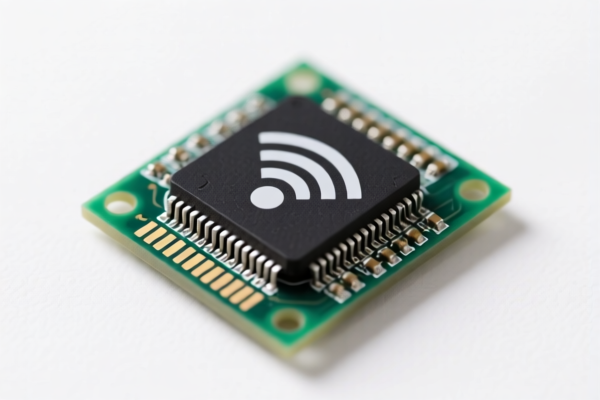
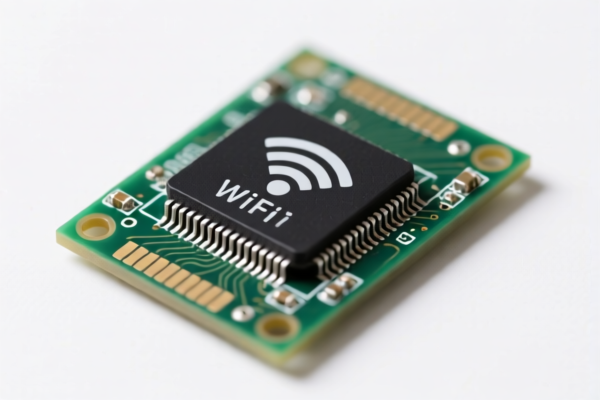
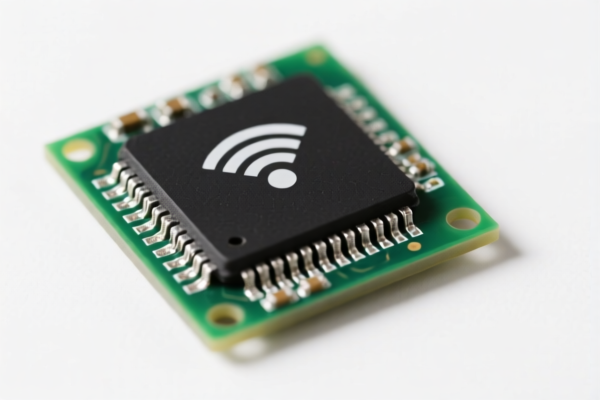
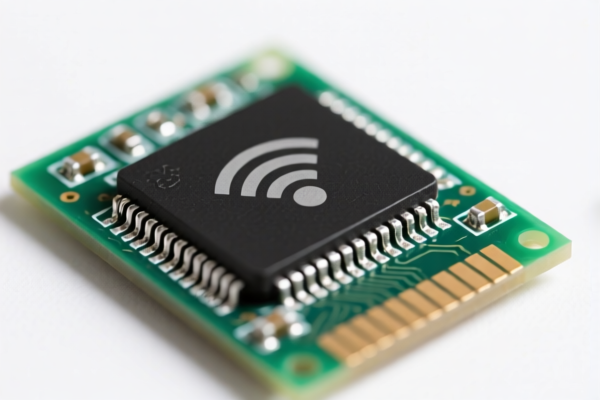
AI Analysis
📡 Wireless Modules & RF Transceivers: The Digital Nervous System
🌐 HS Code Reference & Customs Clearance Guide | 2026 Latest Tariff Analysis | Strategic Compliance Strategy
📌 Part I: Product Definition & Classification: Do You Really Understand "Wireless Modules"?
In the era of IoT, 5G, and AIoT, wireless modules are the core communication components of smart devices. In international trade, they are strictly classified based on functional integration and circuit complexity.
They are primarily divided into two distinct categories for tariff purposes:
1. RF Transceivers (Radio Frequency):
Components dedicated to transmitting or receiving radio frequency signals. These are often classified under Electronic Integrated Circuits (ICs) if they are standalone chips/modules focused on RF functions, or under Telecommunications Apparatus if they are complete units with switching/routing capabilities.
2. Communication Apparatus (Switching & Routing):
Devices that receive, convert, and transmit voice, images, or data, including switching and routing apparatus for wired or wireless networks (LAN/WAN).
⚠️ Key Distinction Point:
- If the device is primarily an RF Transceiver (handling radio signals) or a System-on-Chip (SoC) processor/controller → It falls under Heading 8542 (Electronic Integrated Circuits).
- If the device is a complete Switching and Routing Apparatus (handling data packets/network traffic) → It falls under Heading 8517 (Telephone Sets & Communication Apparatus).
📦 Part II: HS Code Classification Details (2026 Latest Tariff Authority Comparison)
| HS Code | Product Description | Application Scenario | Circuit Type |
|---|---|---|---|
8542.39.00.10 |
Other RF Transceivers | RF chips, wireless control modules, isolated RF components | ✅ Integrated Circuit (IC) |
8542.31.00.70 |
Processors/Controllers (SoCs) | System-on-Chip devices combining CPU, memory, and RF logic | ✅ Integrated Circuit (IC) |
8517.62.00.20 |
Switching and Routing Apparatus | Network switches, routers, gateway devices for data transmission | ✅ Communication Apparatus |
8517.62.00.90 |
Other Machines for Reception/Conversion/Transmission | Other communication devices not classified as switching/routing | ✅ Communication Apparatus |
🔍 Key Reminder:
- Standalone RF Chips/Modules (like Wi-Fi/Bluetooth chips without full network routing logic) are often classified as 8542.39.00.10 or 8542.31.00.70.
- Network Equipment (like routers, switches, gateways) is classified as 8517.62.xx.
- Do not mix: An RF transceiver module is NOT a router. A router is NOT an RF transceiver chip.
💰 Part III: 2026 Latest Tariff Rate Details (Including Surtaxes & Policy Add-ons)
✅ Applicable Country: United States (US)
✅ Country of Origin: China (CN)
✅ Effective Time: Current rates apply (Subject to 301 Tariffs and IEEPA Measures)
🎯 1. 8542.39.00.10 —— Other RF Transceivers
| Item | Content |
|---|---|
| Base Duty Rate | 0.0% (Ad Valorem) |
| Section 301 Surtax | +50.0% |
| IEEPA Surtax | Included in the 50% total (Current unified surtax structure for ICs) |
| Total Tax Rate | 50.0% |
| Tax Calculation | CIF Value × 50% |
| De Minimis Exemption | ❌ Not Eligible (Deny De Minimis for HTS 8542.39.00.10 from China) |
| Legal Basis Path | USITC:8542.39.00.10 → Section 301 Footnote |
📌 Explanation:
- Electronic Integrated Circuits (ICs), including RF transceivers, are subject to a 50% additional duty from China.
- This is a high-cost item. Importers must budget for a 50% tariff on top of the CIF value.
- No De Minimis exemption: Even small shipments (under $800) may be subject to duty if specifically excluded by USTR.
🎯 2. 8542.31.00.70 —— Processors and Controllers (SoCs)
| Item | Content |
|---|---|
| Base Duty Rate | 0.0% (Ad Valorem) |
| Section 301 Surtax | +50.0% |
| IEEPA Surtax | Included in the 50% total |
| Total Tax Rate | 50.0% |
| Tax Calculation | CIF Value × 50% |
| De Minimis Exemption | ❌ Not Eligible |
| Legal Basis Path | USITC:8542.31.00.70 → Section 301 Footnote |
📌 Note:
- System-on-Chip (SoC) devices, which integrate processors, controllers, and sometimes RF logic, fall under this code.
- Same 50% total tax rate as other RF transceivers.
- Critical for IoT devices using embedded Wi-Fi/Bluetooth SoCs.
🎯 3. 8517.62.00.20 —— Switching and Routing Apparatus
| Item | Content |
|---|---|
| Base Duty Rate | 0.0% (Ad Valorem) |
| Section 301 Surtax | +25.0% |
| IEEPA Surtax | Included in the 25% total |
| Total Tax Rate | 25.0% |
| Tax Calculation | CIF Value × 25% |
| De Minimis Exemption | ❌ Not Eligible |
| Legal Basis Path | USITC:8517.62.00.20 → Section 301 Footnote |
📌 Explanation:
- Network switches and routers are classified under 8517.62.
- They face a 25% surtax, which is half the rate of ICs/RF transceivers.
- This is a significant cost difference. Ensure correct classification: Router = 25%, RF Chip = 50%.
🎯 4. 8517.62.00.90 —— Other Transmission/Reception Apparatus
| Item | Content |
|---|---|
| Base Duty Rate | 0.0% (Ad Valorem) |
| Section 301 Surtax | +25.0% |
| IEEPA Surtax | Included in the 25% total |
| Total Tax Rate | 25.0% |
| Tax Calculation | CIF Value × 25% |
| De Minimis Exemption | ❌ Not Eligible |
| Legal Basis Path | USITC:8517.62.00.90 → Section 301 Footnote |
📌 Note:
- Other communication devices (not switching/routing) also face 25% surtax.
- Examples: Certain types of modems or specialized wireless communication devices that do not perform switching/routing functions.
🛠️ Part IV: Customs Clearance Practical Advice (Battle-Tested Pitfall Avoidance Guide)
✅ 1. Preparation Checklist (Missing Items Will Cause Delays)
| Document | Mandatory | Description |
|---|---|---|
| ✅ Product Specification Sheet | ✔️ | Must detail RF frequency, data rate, interface type (UART, SPI, USB), and power supply. |
| ✅ Circuit Diagram / Block Diagram | ✔️ | Crucial: To prove whether it is an IC/SoC (8542) or a Communication Apparatus (8517). |
| ✅ Product Photos (Including Label) | ✔️ | Show model number, FCC ID (if applicable), and input/output connectors. |
| ✅ Technical Data Sheet | ✔️ | Confirm if the device includes switching/routing logic (for 8517) or is just an RF front-end (for 8542). |
| ✅ Commercial Invoice | ✔️ | Must accurately describe the item (e.g., "RF Transceiver Module" vs. "Wireless Router"). |
| ✅ FCC ID / Certification | ✔️ | Required for wireless devices in the US. |
✅ 2. Declaration Strategy (Key Mnemonics)
🔥 “Chip is IC, Router is Net; 50% for Chip, 25% for Net!”
| Scenario | Correct HS Code | Wrong Practice | Consequence |
|---|---|---|---|
| Standalone Wi-Fi/Bluetooth Chip/Module | 8542.39.00.10 or 8542.31.00.70 |
Misdeclare as "Router" | Underpayment: Customs will reassess + penalty (25% → 50%) |
| Standalone RF Transceiver IC | 8542.39.00.10 |
Misdeclare as "Part of Machine" | Risk: If not clearly a part, may be treated as complete article |
| Router / Switch / Gateway | 8517.62.00.20 |
Misdeclare as "RF Chip" | Overpayment: Pay 50% instead of 25% |
| Modem / Wireless Terminal | 8517.62.00.90 |
Misdeclare as "RF Chip" | Risk: Misclassification penalties |
📌 Critical Logic:
- If the device has IP routing capabilities (assigns IPs, routes packets) → 8517 (25%).
- If the device is a radio frequency component (transmits/receives RF signals) without full IP routing logic → 8542 (50%).
- SoCs that combine CPU + Memory + RF logic → 8542.31.00.70 (50%).
✅ 3. Special Cases Handling
| Scenario | Handling Advice |
|---|---|
| Wi-Fi/Bluetooth Module embedded in a device | If shipped as a separate module, classify as 8542.39.00.10 (50%). If integrated into a larger machine, it may be classified under the machine's HS code. |
| 5G Modem Module | Often classified as 8542.39.00.10 (RF Transceiver) or 8517.62.00.90 depending on functionality. Check if it includes baseband processing + RF. |
| IoT Sensor with Wireless Transmission | If the sensor itself is the primary function, and wireless is secondary, it might not be a "communication apparatus." However, if it's a wireless sensor module, it may fall under 8542. |
| OEM Custom Wireless Module | Provide detailed schematics to customs broker. Avoid vague terms like "Wireless Device." Use precise technical terms. |
🌍 Part V: Global Market Clearance Comparison (2026 Latest)
| Country/Region | Recommended HS Code | Tariff (China Origin) | Certification Requirement | Remarks |
|---|---|---|---|---|
| 🇺🇸 United States | 8542.39.00.10 / 8517.62.00.20 |
50% (IC/RF) or 25% (Network) | FCC ID + RoHS | High tariff environment. Classification is critical. |
| 🇨🇳 China | 8542.39.00.10 / 8517.62.00.20 |
0% - 5% | CCC + RoHS | Low tariff, easy entry. |
| 🇪🇺 European Union | 8542.39.00 / 8517.62.00 |
0% (Most WCO tariffs) | CE + RED (Radio Equipment Directive) | No surtax, but strict RED compliance. |
| 🇯🇵 Japan | 8542.39.00 / 8517.62.00 |
0% - 3% | GITEC / TELEC | Low tariff, high technical scrutiny. |
| 🇬🇧 United Kingdom | 8542.39.00 / 8517.62.00 |
0% - 5% | UKCA | Post-Brexit rules apply. |
📌 Conclusion:
- US Market: 50% tariff on RF/ICs and 25% on Network Devices. This is a major cost driver.
- EU/Asia/Japan: No surtaxes, but strict regulatory compliance (FCC/CE/RED).
- Strategy: For US exports, consider supply chain diversification (Vietnam, Mexico, Thailand) to avoid 301 tariffs if possible, or optimize product design to shift classification if legally justifiable.
📌 Part VI: Common Mistakes & Pitfall Guide (Lessons Learned)
❌ Mistake 1: Calling a Wi-Fi Chip a "Router"
👉 Consequence: You pay 25% instead of 50%? No! Customs will audit, find it’s an IC, and charge 50% + penalties + back taxes.
👉 Correct: Classify as 8542.39.00.10.
❌ Mistake 2: Calling a Router an "RF Transceiver"
👉 Consequence: You pay 50% instead of 25%. Overpayment!
👉 Correct: Classify as 8517.62.00.20.
❌ Mistake 3: Ignoring SoC (System-on-Chip) complexity
👉 Consequence: If you have a chip that includes CPU + RF, it’s still an IC (8542), not a complete machine.
👉 Correct: Use 8542.31.00.70.
❌ Mistake 4: Vague Description on Invoice
👉 Consequence: "Wireless Module" is too vague. Customs will classify based on their best guess, often the highest tariff or demand more info.
👉 Correct: "Wi-Fi 6 RF Transceiver Module, 2.4GHz/5GHz, UART Interface, Model XYZ"
✅ Best Practice Declaration:
"Electronic Integrated Circuit: RF Transceiver Module, Model ABC, FCC ID: XYZ123, 2.4GHz, UART Interface"
OR
"Network Switching Apparatus: Wireless Router, Model DEF, IEEE 802.11ax, 5 Ports, FCC ID: XYZ456"
🎯 Part VII: Conclusion: Precision in Classification, Profit in Clearance
🎯 Remember the Mnemonic:
🔹 "Chip is 50, Router is 25; Don't Mix, or You'll Cry!"
🔹 "SoC is IC, Router is Net; 50% vs 25%, Know the Set!"
🔹 "HS Code is Life, Misclassification is Death!"
📌 Pro Tip:
If your wireless module is designed for IoT devices and is sold as a component (not a finished product), it is likely 8542.39.00.10 (50%).
If it is a complete end-user device (like a smart home hub), it might be 8517.62.00.90 (25%).
Consult a customs broker with technical schematics to confirm classification BEFORE shipping.
📣 Immediate Action:
📞 Contact a licensed customs broker
📂 Provide Circuit Diagrams + FCC IDs
🚀 Get a Pre-Ruling (if possible) to lock in the HS Code.
✨ Professional Clearance Starts with Accurate Classification!
💼 Your Bottom Line Depends on This 25% Difference!
Customer Reviews
About HS Code Classification
The Harmonized System (HS) is an internationally standardized nomenclature developed by the World Customs Organization (WCO) to classify traded products. Over 200 countries use the HS system as the basis for customs tariffs, trade statistics, and import/export regulations.
Each HS code follows a hierarchical structure:
- Chapter (2 digits) — Broad category of goods (e.g., Chapter 84: Machinery and Mechanical Appliances)
- Heading (4 digits) — More specific grouping within the chapter
- Subheading (6 digits) — Internationally standardized breakdown, used by all WCO member countries
- National subdivisions (8-10 digits) — Country-specific extensions for further classification, such as US HTSUS 10-digit codes
Correct HS code classification is essential for smooth customs clearance, accurate duty payment, and compliance with trade regulations. Misclassification can lead to customs delays, overpayment of duties, or penalties.
When importing from CN to US, the applicable tariff rates may include:
- Most-Favored-Nation (MFN) rate — The standard duty rate applied to WTO members
- General rate — Applied to countries without trade agreements
- Trade remedy duties — Additional tariffs such as Section 301 (anti-dumping), Section 232 (national security), or countervailing duties
The information provided on this page is for reference purposes only. For official classification, please consult with your local customs authority or a licensed customs broker.