Wireless Portable Curling Iron
CN → US| HS Code | Tariff Rate | Origin | Destination | Doc |
|---|---|---|---|---|
| 8516320020 | 13.9% | CN | US | Official Doc |
| 8516402000 | 10.0% | CN | US | Official Doc |
| 8516320020 | 13.9% | CN | US | Official Doc |
| 8516320040 | 13.9% | CN | US | Official Doc |
| 8516320020 | 13.9% | CN | US | Official Doc |
Product Images
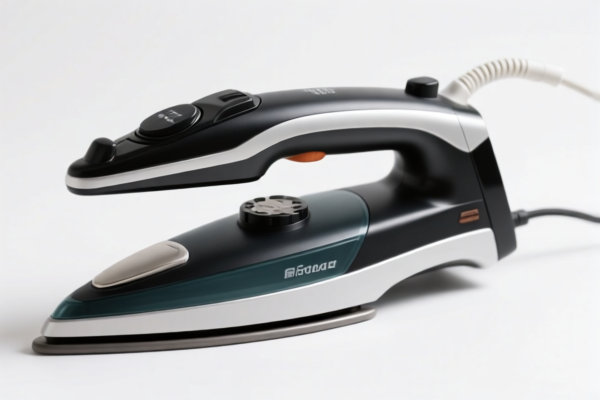
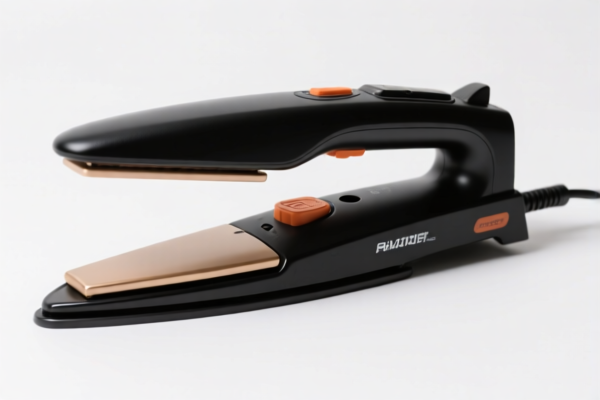
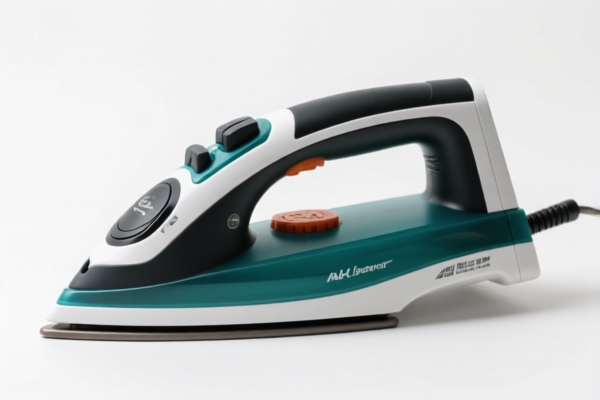
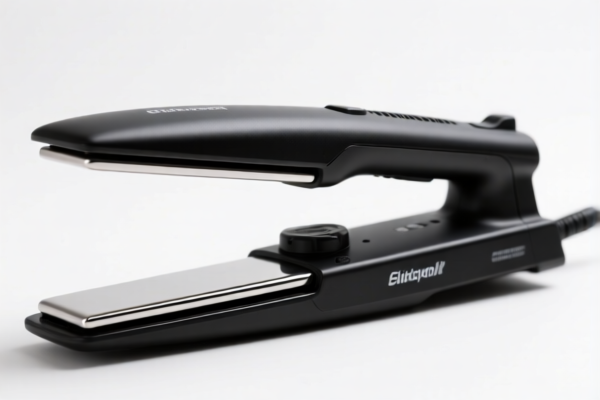
AI Analysis
🌟 Wireless Portable Curling Iron (The Ultimate Beauty Tech)
🌐 HS Code Reference & Customs Clearance Guide | 2026 Latest Tariff Analysis | Professional Clearance Strategy
📌 I. Product Definition & Classification: Do You Really Know a "Wireless Curling Iron"?
A Wireless Portable Curling Iron is a modern electrical hair styling appliance designed for curling (curlers) or permanent waving (perm devices). Its key features include: - Function: Hair styling via heat (electric). - Form Factor: Portable/Travel-friendly, often battery-operated or cordless. - Classification Logic: It falls under Chapter 85 (Electrical machinery and equipment) because it operates electrically. Specifically, it is an electrical hair-treatment appliance.
⚠️ Key Distinction:
- If it is strictly for curling/perming → It belongs to 8516.32 (Electrical hair-dressing appliances, such as hair dryers, curlers, and permanent waving appliances).
- If it were a flat iron/straightener only, it might also fall under 8516.32, but the specific subheading may vary based on national tariff schedules. For curling irons, 8516.32 is the primary category.
📦 II. HS Code Classification Details (2026 Latest Tariff Authority Comparison)
Based on the provided data, there are two primary HS Codes identified, with one being the most accurate.
| HS Code | Product Description | Application Scenario | Tax Rate (Total) |
|---|---|---|---|
8516.32.00.20 |
Electrical hair-dressing appliances: Curlers (Hair Curlers) | Standard electric curling irons, automatic curlers, wireless portable curlers | 13.9% |
8516.32.00.40 |
Electrical hair-dressing appliances: Other | Broad category for other hair treatment devices if no specific subheading fits | 13.9% |
8516.40.20.00 |
Electrical appliances for heating: Portable/Travel type | If classified broadly as a "portable heater" due to battery/wireless nature (less precise for hair tools) | 10.0% |
🔍 Key Note:
-8516.32.00.20is the most accurate code because it specifically matches "Curlers" (卷发器).
-8516.40.20.00is a fallback if the customs authority considers the "wireless/portable" aspect more significant than the specific hair-styling function, but this is less common for dedicated curling irons.
- Do NOT use generic "hair dryer" codes (e.g., 8516.31) as curling irons have different heating element structures.
💰 III. 2026 Latest Tariff Rate Breakdown (Including Surtaxes & Policy Add-ons)
✅ Applicable Country: United States (US)
✅ Origin: China (CN)
✅ Effective Date: From November 10, 2025 (including subsequent imports)
🎯 1. 8516.32.00.20 —— Electrical Hair Curlers (Most Accurate)
| Item | Content |
|---|---|
| Base Tariff | 3.9% (Ad valorem) |
| USITC Surtax (Section 301) | +0.0% (No additional 25% Section 301 tax for this specific subheading in the provided data) |
| IEEPA Surtax (Section 122) | +10% (Targeted China/ Hong Kong products, effective Nov 10, 2025) |
| Total Tariff Rate | 13.9% |
| Tax Calculation | CIF Value × 13.9% |
| De Minimis Eligibility | ❌ Not Eligible (High-value beauty tech usually exceeds $800 threshold; if < $800, may still face scrutiny due to IEEPA) |
| Legal Basis Path | IEEPA:9903.01.24 → USITC:8516.32.00.20 → FOOTNOTE:122 |
📌 Explanation:
- The Base Rate is 3.9%.
- The IEEPA 10% is a critical add-on for Chinese-origin beauty devices.
- Total: 13.9%. This is significantly lower than electronics like displays (45%), making it a more viable import category.
🎯 2. 8516.40.20.00 —— Portable Electric Heaters (Alternative Classification)
| Item | Content |
|---|---|
| Base Tariff | 0.0% |
| USITC Surtax (Section 301) | +0.0% |
| IEEPA Surtax (Section 122) | +10% |
| Total Tariff Rate | 10.0% |
| Tax Calculation | CIF Value × 10.0% |
| De Minimis Eligibility | ❌ Not Eligible (Subject to same IEEPA rules) |
| Legal Basis Path | IEEPA:9903.01.24 → USITC:8516.40.20.00 → FOOTNOTE:122 |
📌 Note:
- This code applies if customs classifies the device as a "portable heater" rather than a specialized hair tool.
- Savings: 3.9% less than the precise curling iron code. However, misclassification risk is high if the product is clearly marketed as a "curling iron."
- Risk: If declared as8516.40but inspected as a curling iron, customs may demand back payments + penalties.
🛠️ IV. Customs Clearance Practical Advice (Battle-Tested Pitfall Guide)
✅ 1. Required Documentation Checklist (Non-negotiable)
| Document | Must Provide | Explanation |
|---|---|---|
| ✅ Product Spec Sheet | ✔️ | Must state: "Wireless," "Portable," "Heating Element Type," "Voltage," "Capacity (mAh)" |
| ✅ Product Photos | ✔️ | Clear images of the device, no cords (to prove wireless), and label with HS code/model |
| ✅ Commercial Invoice | ✔️ | Description: "Electric Hair Curler, Wireless, Portable, Model XYZ" |
| ✅ Battery Compliance | ✔️ | UN38.3 Test Report, MSDS (Material Safety Data Sheet) for Lithium Battery (critical for air/sea freight) |
| ✅ Certifications | ✔️ | UL, ETL, or FCC (for wireless models with electronics) |
| ✅ Origin Certificate | ✔️ | To prove CN origin (triggers IEEPA 10%) |
✅ 2. Declaration Strategy (Key Mantra)
🔥 "Be Specific, Be Wireless, Be Legal!"
| Scenario | Correct Declaration | Wrong Declaration |
|---|---|---|
| Wireless Curling Iron | 8516.32.00.20 - "Electric Hair Curler, Wireless" |
"Beauty Device" → Vague, risk of reclassification |
| With Lithium Battery | Declare Battery Separately in shipping docs | Hide battery → Seizure/Fine |
| Travel Kit | Declare as Unit (Curler + Case) | Split into "Case" + "Iron" → Complex valuation |
| Flat Iron vs. Curler | Clearly state "Curling Barrel" | Call it "Hair Straightener" → Misclassification |
✅ 3. Special Cases Handling
| Case | Handling Advice |
|---|---|
| Lithium Battery Import | Must comply with IATA/IMDG regulations. Provide UN38.3 and MSDS. Sea freight is cheaper but slower. Air freight requires stricter packaging. |
| OEM Private Label | Ensure the label matches the invoice. Avoid using competitor’s brand names. |
| "Multi-Function" Device | If it also straightens, declare as "Hair Styler (Curler/Straightener)" and use 8516.32.00.20 as it covers both curling and perming functions under the same heading. |
| Low-Value Shipment (< $800) | May still face IEEPA 10% if deemed subject to Section 122. Do not assume de minimis exemption applies to Chinese-origin goods under these specific surtaxes. |
🌍 V. Global Market Comparison (2026 Latest)
| Country/Region | Recommended HS Code | Tariff (CN Origin) | Certification | Notes |
|---|---|---|---|---|
| 🇺🇸 USA | 8516.32.00.20 |
13.9% | FCC, UL | IEEPA 10% applies. High scrutiny on lithium batteries. |
| 🇪🇺 EU | 8516.32 |
0% - 2% | CE, RoHS, VDE | No Section 122 tax. CE mark mandatory. |
| 🇬🇧 UK | 8516.32 |
0% - 2% | UKCA | Post-Brexit rules apply. UKCA mark required. |
| 🇨🇦 Canada | 8516.32 |
0% | IC (Innovation Canada) | No IEEPA surtax. Competitive. |
| 🇦🇺 Australia | 8516.32 |
5% | RCM, GEMS | Registration may be required for electrical goods. |
📌 Conclusion:
- USA has the highest tariff (13.9%) due to IEEPA, but still manageable.
- EU/UK are tariff-friendly but have strict safety certifications (CE/UKCA).
- Battery compliance is the #1 logistical hurdle globally for wireless devices.
📌 VI. Common Errors & Pitfalls (Lessons Learned)
❌ Error 1: Declaring as "Beauty Instrument" (Generic)
👉 Result: Customs assigns random HS code, delays shipment, may apply higher default tariff.
👉 Fix: Use 8516.32.00.20 specifically.
❌ Error 2: Ignoring Battery Regulations
👉 Result: Carrier rejects shipment, customs seizes goods for unsafe lithium battery packaging.
👉 Fix: Provide UN38.3 + MSDS. Package per IATA PI 965/967.
❌ Error 3: Misclassifying as "Hair Dryer" (8516.31)
👉 Result: Incorrect tariff assessment, potential audit trail.
👉 Fix: Curling irons have different heating elements (barrel vs. airflow). Use 8516.32.
❌ Error 4: Under-Valuing to Avoid IEEPA 10%
👉 Result: Customs audit, fines, blacklisting.
👉 Fix: Declare true CIF value. IEEPA is mandatory for CN origin.
✅ Correct Declaration Example:
"ELECTRIC HAIR CURLER, WIRELESS, PORTABLE, LITHIUM BATTERY POWERED, MODEL XYZ, FCC CERTIFIED, ORIGIN: CHINA"
🎯 VII. Conclusion: Professional Declaration, Save Time, Reduce Cost!
🎯 Remember the Mantra:
🔹 "Curling Iron = 8516.32.00.20"
🔹 "Wireless = Battery Docs + UN38.3"
🔹 "CN Origin = 13.9% Total Tax (3.9% Base + 10% IEEPA)"
📌 Pro Tip:
- If you are shipping small quantities for personal use (< $800), check if Section 122 IEEPA still applies (it often does for CN goods).
- For bulk commercial imports, negotiate FOB terms to separate shipping costs from product value, optimizing CIF calculation.
- Pre-clearance: Consider applying for an Advance Ruling if you have high-volume shipments, to lock in the 13.9% rate and avoid disputes.
📣 Take Action Now:
📞 Contact a licensed customs broker + Provide Battery Compliance Docs + Use Precise HS Code
🚀 Ensure your Wireless Curling Iron clears customs smoothly, efficiently, and profitably!
✨ Professional Clearance Starts with Accurate Classification!
💼 Every Percent of Tariff Saved is Profit Gained!
Customer Reviews
About HS Code Classification
The Harmonized System (HS) is an internationally standardized nomenclature developed by the World Customs Organization (WCO) to classify traded products. Over 200 countries use the HS system as the basis for customs tariffs, trade statistics, and import/export regulations.
Each HS code follows a hierarchical structure:
- Chapter (2 digits) — Broad category of goods (e.g., Chapter 84: Machinery and Mechanical Appliances)
- Heading (4 digits) — More specific grouping within the chapter
- Subheading (6 digits) — Internationally standardized breakdown, used by all WCO member countries
- National subdivisions (8-10 digits) — Country-specific extensions for further classification, such as US HTSUS 10-digit codes
Correct HS code classification is essential for smooth customs clearance, accurate duty payment, and compliance with trade regulations. Misclassification can lead to customs delays, overpayment of duties, or penalties.
When importing from CN to US, the applicable tariff rates may include:
- Most-Favored-Nation (MFN) rate — The standard duty rate applied to WTO members
- General rate — Applied to countries without trade agreements
- Trade remedy duties — Additional tariffs such as Section 301 (anti-dumping), Section 232 (national security), or countervailing duties
The information provided on this page is for reference purposes only. For official classification, please consult with your local customs authority or a licensed customs broker.