Wok Support Ring
CN → US| HS Code | Tariff Rate | Origin | Destination | Doc |
|---|---|---|---|---|
| 7323999080 | 88.4% | CN | US | Official Doc |
| 7323915040 | 15.3% | CN | US | Official Doc |
| 7615109100 | 70.6% | CN | US | Official Doc |
| 7615107180 | 63.1% | CN | US | Official Doc |
Product Images
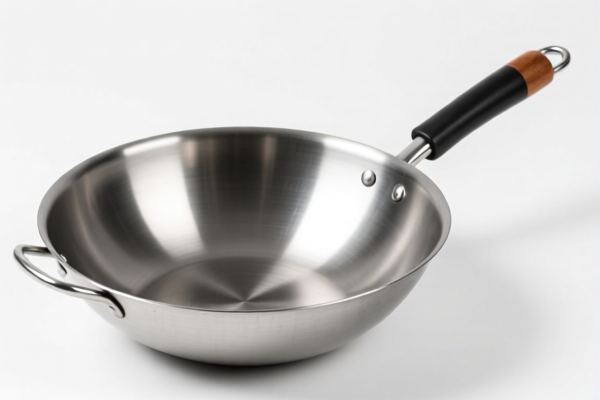
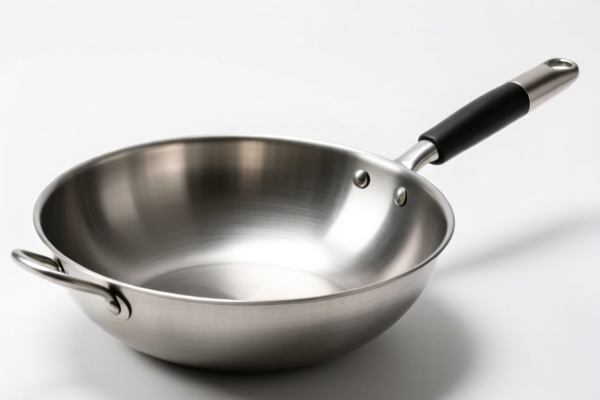
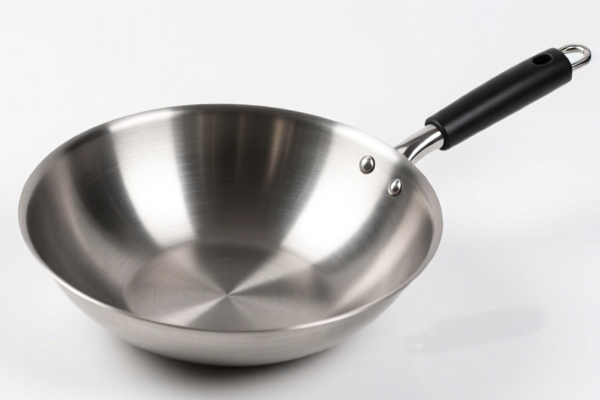
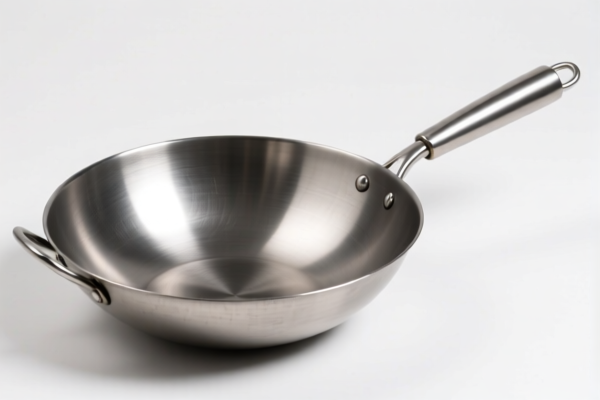
AI Analysis
🍳 Wok Support Ring (Wok Stand/Stabilizer)
🌐 HS Code Reference & Customs Clearance Guide | 2026 Latest Tariff Analysis | Professional Clearance Strategy
📌 I. Product Definition & Classification: What Exactly is a "Wok Support Ring"?
A Wok Support Ring is a kitchen accessory designed to stabilize round-bottomed woks on flat-top stoves or electric burners. It typically consists of a metal ring with legs or a stand. In international trade, these items are categorized based on their material composition and functional end-use. They are generally classified under Chapter 73 (Articles of Iron or Steel) or Chapter 76 (Articles of Aluminum), specifically within the heading for "Table, kitchen or other household articles."
⚠️ Key Distinction:
- If made of Iron or Steel (including stainless steel) → Classified under HS 7323.
- If made of Aluminum → Classified under HS 7615.
- The presence of enameling, glazing, or non-stick coatings can significantly alter the sub-heading and tariff rate.
📦 II. HS Code Classification Details (Based on Provided Data)
| HS Code | Product Description | Material | Key Characteristics | Typical Use Case |
|---|---|---|---|---|
7323.99.90.80 |
Other household articles of iron or steel; Other; Not coated/plated with precious metal | Iron/Steel | Uncoated, basic steel construction | Basic steel wok stands, unpainted metal rings |
7323.91.50.40 |
Other household articles of iron or steel; Of cast iron, not enameled | Cast Iron | Heavy-duty, cast material, no enamel | Heavy cast-iron wok stabilizers |
7615.10.91.00 |
Other household articles of aluminum; Other: Other | Aluminum | General aluminum construction | Lightweight aluminum wok supports |
7615.10.71.80 |
Other household articles of aluminum; Cooking and kitchen ware; Not enameled/glazed/non-stick | Aluminum | Specific kitchen ware, untreated surface | Aluminum wok rings without non-stick coating |
🔍 Critical Note:
- The classification hinges entirely on material (Iron/Steel vs. Aluminum) and finish (Enamled/Non-stick vs. Raw).
- Most standard "Wok Support Rings" are made of Steel or Aluminum. If your product is stainless steel, it falls under 7323. If it is bare aluminum, it falls under 7615.
💰 III. 2026 Latest Tariff Rate Breakdown (Including Surcharge Policies)
✅ Applicable Country: USA (US)
✅ Origin: China (CN)
✅ Effective Time: Current rates apply (Subject to Section 301 & IEEPA tariffs)
🎯 1. 7323.99.90.80 —— Iron/Steel Articles (Other, Not Coated)
| Item | Details |
|---|---|
| Base Duty Rate | 3.4% |
| Surcharge Tariff (Section 301) | +25.0% (Standard) + 50% (Steel/Aluminum/Copper Additional Surcharge) |
| Total Tariff Rate | 78.4% |
| Tax Calculation | CIF Value × 78.4% |
| De Minimis Exemption | ❌ Not Applicable (High duty rates exclude small parcel exemptions in many contexts) |
| Legal Basis | Base Tariff 7323 + Section 301 (25%) + Steel/Aluminum Surcharge (50%) |
📌 Explanation:
- This category faces the highest effective tariff among the options.
- The "50% steel/aluminum surcharge" is a critical additional cost on top of the standard 301 tariff.
- Total Cost Impact: Nearly 80% of the product value is tax. This makes steel wok rings extremely expensive to import.
🎯 2. 7323.91.50.40 —— Cast Iron Articles (Not Enameled)
| Item | Details |
|---|---|
| Base Duty Rate | 5.3% |
| Surcharge Tariff | 0.0% (No additional 301 or steel surcharge listed in data) |
| Total Tariff Rate | 5.3% |
| Tax Calculation | CIF Value × 5.3% |
| De Minimis Exemption | Likely Applicable (Low rate may qualify for Section 321 if value < $800) |
| Legal Basis | Base Tariff 7323.91 |
📌 Note:
- If the wok support is made of cast iron and is not enameled, the tariff drops dramatically to 5.3%.
- This is a highly favorable classification if your product is cast iron.
- Caution: Ensure the product is indeed "Cast Iron" and not just "Steel." Steel is subject to the 50% surcharge; Cast Iron may not be, depending on specific customs interpretations of the "Steel/Aluminum" surcharge scope.
🎯 3. 7615.10.91.00 —— Aluminum Articles (Other)
| Item | Details |
|---|---|
| Base Duty Rate | 3.1% |
| Surcharge Tariff | +7.5% + 50% (Steel/Aluminum/Copper Additional Surcharge) |
| Total Tariff Rate | 60.6% |
| Tax Calculation | CIF Value × 60.6% |
| De Minimis Exemption | ❌ Not Applicable |
| Legal Basis | Base Tariff 7615 + Section 301 (7.5%) + Steel/Aluminum Surcharge (50%) |
📌 Explanation:
- Aluminum products also face the 50% surcharge.
- The base rate is lower than steel (3.1% vs 3.4%), but the total is still high at 60.6%.
- This is significantly cheaper than steel (78.4%) but still prohibitive for low-margin goods.
🎯 4. 7615.10.71.80 —— Aluminum Cooking Ware (Not Enamel/Non-stick)
| Item | Details |
|---|---|
| Base Duty Rate | 3.1% |
| Surcharge Tariff | 0.0% (No additional 301 listed in data) + 50% (Steel/Aluminum/Copper Additional Surcharge) |
| Total Tariff Rate | 53.1% |
| Tax Calculation | CIF Value × 53.1% |
| De Minimis Exemption | ❌ Not Applicable |
| Legal Basis | Base Tariff 7615.71 + Steel/Aluminum Surcharge (50%) |
📌 Note:
- If classified as "Cooking and Kitchen Ware" specifically (rather than "Other"), the base 301 tariff might be 0% (depending on interpretation of "cooking ware" vs "household articles"), but the 50% aluminum surcharge still applies.
- Total 53.1% is the lowest among the aluminum options and significantly lower than the steel option (78.4%).
- Strategy: If your product is aluminum, try to justify classification under 7615.10.71.80 as "Cooking Ware" to avoid the 7.5% base 301, keeping only the 50% surcharge.
🛠️ IV. Customs Clearance Practical Advice (Avoiding Pitfalls)
✅ 1. Documentation Checklist (Essential for Clearance)
| Document | Required? | Purpose |
|---|---|---|
| ✅ Product Specifications | ✔️ | Must clearly state material (e.g., "100% Cast Iron" vs "Stainless Steel 304") |
| ✅ Material Certificate | ✔️ | Critical to prove "Cast Iron" status for lower tariff (5.3%) |
| ✅ Product Photos | ✔️ | Show structure: legs, ring shape, any coating (or lack thereof) |
| ✅ Commercial Invoice | ✔️ | Describe as "Wok Support Stand" or "Wok Stabilizer," specify material |
| ✅ Packing List | ✔️ | Standard shipment details |
✅ 2. Classification Strategy (Key Tips)
🔥 "Material is King, Finish is Queen!"
| Scenario | Recommended HS Code | Estimated Tax | Why? |
|---|---|---|---|
| Steel/Wrought Iron Wok Stand | 7323.99.90.80 |
78.4% | Highest tax. Avoid if possible. |
| Cast Iron Wok Stand (Uncoated) | 7323.91.50.40 |
5.3% | Best Option for Steel-family. Must be cast, not welded steel. |
| Aluminum Wok Stand (General) | 7615.10.91.00 |
60.6% | High tax due to 50% surcharge. |
| Aluminum Wok Stand (Cooking Ware) | 7615.10.71.80 |
53.1% | Best Option for Aluminum. Justify as "Cooking Ware" to avoid base 301. |
📌 Critical Warning:
- Do NOT misclassify Steel as Cast Iron. Customs will inspect and penalize.
- Do NOT claim "Non-stick" if it is not. If it has a non-stick coating, it may fall out of7615.10.71.80and into a different, potentially higher-tariff category not listed here.
- The 50% Steel/Aluminum Surcharge is applied to most iron/steel and aluminum articles. However, some specific sub-headings may have different treatment. Verify with your customs broker.
✅ 3. Special Considerations
| Situation | Advice |
|---|---|
| Coated/Enamelled Products | If the wok stand is enamel-coated, it may not fit 7323.91.50.40 (not enameled). It would likely fall under 7323.99.90.80 (78.4%). Check if enamel coating is allowed for lower tax codes. |
| Stainless Steel | Treated as "Iron or Steel" under Chapter 73. Likely 7323.99.90.80 (78.4%). |
| Packaging | Ensure the product is not declared as "Cookware" if it's purely a "Stand." However, 7615 covers "Kitchen Ware" including stands. Be consistent. |
🌍 V. Global Market Comparison (2026)
| Market | Likely HS Code | Approx. Tariff (China Origin) | Notes |
|---|---|---|---|
| 🇺🇸 USA | 7323.99.90.80 / 7323.91.50.40 |
5.3% - 78.4% | Heavy Section 301 & Aluminum/Steel Surcharge. |
| 🇨🇳 China | 7323.99.90 |
~10-13% | No surcharge. Standard import duty. |
| 🇪🇺 EU | 7323.99 |
~2.7-6.5% | No Section 301. Standard MFN rate. |
| 🇬🇧 UK | 7323.99 |
~6.5% | Post-Brexit tariff structure. |
📌 Conclusion:
- The USA is the most challenging market due to the 50% surcharge on Steel/Aluminum.
- Cast Iron (5.3%) is the sweet spot for steel-family products.
- Aluminum (53.1%) is better than Steel (78.4%) but still high.
📌 VI. Common Mistakes & Pitfalls (Lessons Learned)
❌ Mistake 1: Declaring a Stainless Steel wok stand as Cast Iron.
👉 Consequence: Customs inspection reveals steel → Re-classification to 7323.99.90.80 → Back taxes of ~73% + penalties.
❌ Mistake 2: Ignoring the 50% Surcharge on Aluminum.
👉 Consequence: Underestimating landed cost. A $10 product becomes $15.31 in taxes. Profit margin destroyed.
❌ Mistake 3: Failing to specify "Not Enameled" for Cast Iron.
👉 Consequence: If the product is slightly coated, it may not qualify for 7323.91.50.40 and may be taxed at 78.4%. Be precise in description.
✅ Correct Declaration Example:
"Kitchen Accessory: Wok Support Ring, Material: Cast Iron, Finish: Uncoated/Black Painted (Not Enameled), Model: WR-2026, Origin: China"
🎯 VII. Conclusion: Strategic Sourcing for Tariff Optimization
🎯 Key Takeaway:
🔹 Cast Iron Wins: If you can source Uncoated Cast Iron Wok Supports, use HS 7323.91.50.40 (5.3% tax).
🔹 Aluminum is Second Best: Use HS 7615.10.71.80 (53.1% tax) if cast iron is not feasible.
🔹 Avoid General Steel: HS 7323.99.90.80 (78.4%) is a profit killer. Avoid if possible.
📌 Action Item:
- Verify Material: Ensure your supplier can provide a Material Test Report proving "Cast Iron" if you target the 5.3% rate.
- Consult Broker: Confirm with your US customs broker that "Wok Support" qualifies for the "Cast Iron" sub-heading and not the general "Other" category.
- Calculate Landed Cost: Include the 50% Surcharge in your pricing model for Steel/Aluminum products.
✨ Smart Classification, Smarter Profits!
💼 Don't let tariffs eat your margin. Choose the right HS Code.
Customer Reviews
About HS Code Classification
The Harmonized System (HS) is an internationally standardized nomenclature developed by the World Customs Organization (WCO) to classify traded products. Over 200 countries use the HS system as the basis for customs tariffs, trade statistics, and import/export regulations.
Each HS code follows a hierarchical structure:
- Chapter (2 digits) — Broad category of goods (e.g., Chapter 84: Machinery and Mechanical Appliances)
- Heading (4 digits) — More specific grouping within the chapter
- Subheading (6 digits) — Internationally standardized breakdown, used by all WCO member countries
- National subdivisions (8-10 digits) — Country-specific extensions for further classification, such as US HTSUS 10-digit codes
Correct HS code classification is essential for smooth customs clearance, accurate duty payment, and compliance with trade regulations. Misclassification can lead to customs delays, overpayment of duties, or penalties.
When importing from CN to US, the applicable tariff rates may include:
- Most-Favored-Nation (MFN) rate — The standard duty rate applied to WTO members
- General rate — Applied to countries without trade agreements
- Trade remedy duties — Additional tariffs such as Section 301 (anti-dumping), Section 232 (national security), or countervailing duties
The information provided on this page is for reference purposes only. For official classification, please consult with your local customs authority or a licensed customs broker.