Women Cotton Bra
CN → US| HS Code | Tariff Rate | Origin | Destination | Doc |
|---|---|---|---|---|
| 6212105020 | 34.4% | CN | US | Official Doc |
| 6212109020 | 34.4% | CN | US | Official Doc |
| 6117809540 | 32.1% | CN | US | Official Doc |
| 3926909989 | 22.8% | CN | US | Official Doc |
| 6212105020 | 34.4% | CN | US | Official Doc |
Product Images
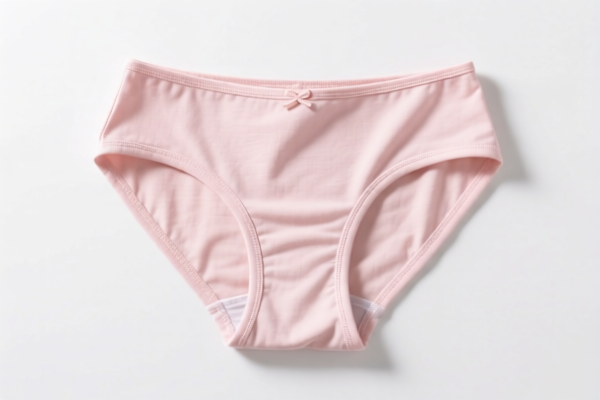
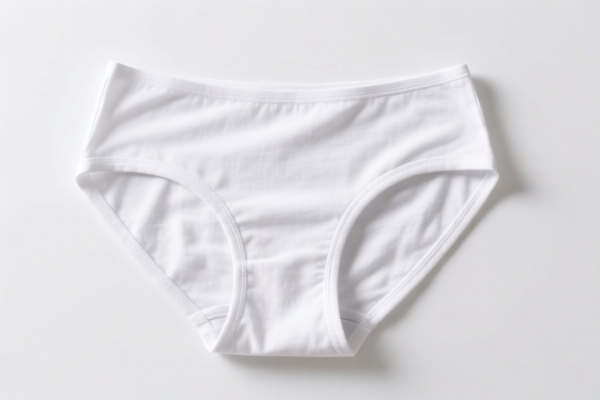
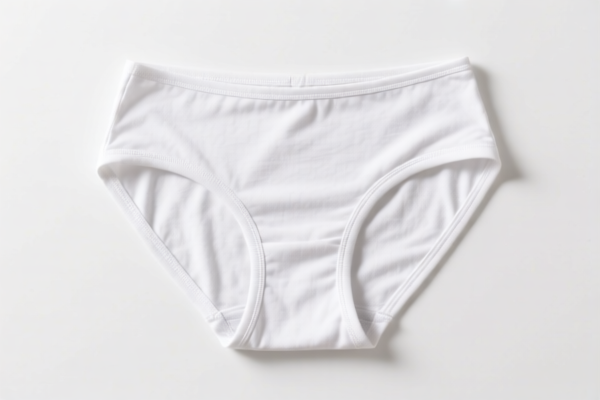
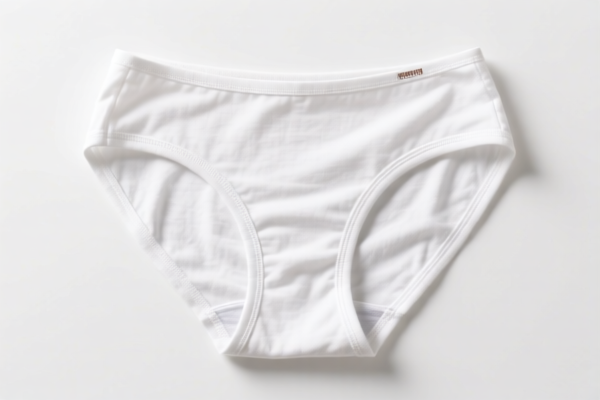
AI Analysis
👙 Women’s Cotton Bra (Women's Underwear/Bras)
🌐 HS Code Reference & Customs Clearance Guide | 2026 Latest Tariff Analysis | Strategic Clearance Strategy
📌 I. Product Definition & Classification: Do You Truly Understand "Cotton Bras"?
A women's cotton bra is a fundamental intimate apparel item, typically defined by its primary material composition (cotton or cotton-blend) and its specific function as undergarments. In international trade, classification is not just about the name "Bra," but critically depends on knitted vs. woven fabric and material content.
⚠️ Key Distinction:
- If the bra is made of knitted fabric (elastic, stretchy) → Generally falls under Chapter 61 (Articles of Apparel and Clothing Accessories, Knitted or Crocheted).
- If the bra is made of woven fabric (structured, less stretch) → Generally falls under Chapter 62 (Articles of Apparel and Clothing Accessories, Not Knitted or Crocheted).
- Critical Note: The prompt data contains items labeled "Chemical Fiber" (Synthetic) with specific HS codes. For "Cotton Bras," users must be extremely cautious. If the product is 100% cotton, some codes in the reference data (like6212or6117for synthetic) may be incorrect unless the "Cotton" description is a generalization for "Underwear" and the actual shipment contains synthetic blends. However, based on the provided<DATA>, we will analyze the specific HS codes listed, noting the discrepancy between "Cotton" in the user prompt and "Chemical Fiber/Synthetic" in the data descriptions. If the product is truly 100% Cotton, Chapter 61 or 62 codes for cotton may apply, but the data provided focuses on Synthetic/Chemical Fiber classifications. We will proceed with the provided data's logic.
📦 II. HS Code Classification Details (Based on Provided Data)
| HS Code | Product Description (From Data) | Applicable Scenario | Material Conflict Check |
|---|---|---|---|
6212.10.50.20 |
Women's bras, material possibly synthetic fibers; product form matches classification | Woven synthetic bras; generic fallback if details like lace are missing | ⚠️ Conflict: Data says "Synthetic," User says "Cotton." If 100% Cotton, this might be wrong. If blended, check % composition. |
6212.10.90.20 |
Chemical fiber women's bras, explicitly includes chemical fiber material and bra usage | Woven synthetic bras; precise match for chemical fiber content | ⚠️ Conflict: Only valid if the bra contains chemical fibers. 100% Cotton bras should not use this. |
6117.80.95.40 |
Chemical fiber women's bras, categorized as accessories made of man-made fibers | Knitted synthetic bras; matches material and functional attributes | ⚠️ Conflict: Only for Knitted Synthetic. If Cotton Knitted, this is incorrect. |
3926.90.99.89 |
Chemical fiber women's bras, categorized as other products made of plastic and other materials | Non-textile interpretations (e.g., underwire cups, plastic parts); no material conflict if non-textile dominant | ⚠️ High Risk: Bras are textiles. Using Chapter 39 is risky unless it's a specific non-textile accessory. Generally incorrect for standard fabric bras. |
🔍 Critical Reminder:
- The provided data explicitly mentions "Chemical Fiber" (Synthetic) in the summaries.
- If your product is truly 100% Cotton, you must verify if Chapter 61 (Knitted) or Chapter 62 (Woven) has specific subheadings for Cotton (e.g.,6108.11for knitted cotton women's briefs/panties or bras if listed, or6212.10if woven cotton).
- Using Synthetic HS codes for Cotton products can lead to customs detention, reclassification, and penalties.
- The data provided seems to reflect a scenario where "Cotton" might be a misnomer or the system is defaulting to synthetic codes. Please verify the actual fabric content.
💰 III. 2026 Latest Tariff Rate Details (Including Surtaxes & Policy Surcharges)
✅ Applicable Country: United States (US)
✅ Country of Origin: China (CN)
✅ Effective Date: From November 10, 2025 (and subsequent imports)
🎯 1. 6212.10.50.20 & 6212.10.90.20 — Woven Synthetic/Chemical Fiber Bras
| Item | Content |
|---|---|
| Basic Tariff | 16.9% (Ad Valorem) |
| Section 301 Surtax | +7.5% (From USITC Footnote related to Section 301) |
| Section 122 Surtax | +10% (Specific provision for certain textiles/apparel) |
| Total Tariff Rate | 34.4% |
| Tax Calculation | CIF Value × 34.4% |
| De Minimis Exemption Available? | ❌ No (deny_de_minimis likely applies to Section 301/122 goods) |
| Legal Basis Path | USITC:6212.10.50.20 → Section 301: 7.5% → Section 122: 10% |
📌 Explanation:
- "Basic Tariff 16.9%": Standard MFN rate for woven bras under HS 6212.10.
- "Section 301 Surtax 7.5%": Additional tariff imposed on Chinese goods under Section 301 of the Trade Act.
- "Section 122 Surtax 10%": Additional tariff under Section 122 of the Trade Act of 1974 (often used for balance of payments or specific import surges).
- Total 34.4%: This is a high tariff burden. Importers must calculate costs carefully.
🎯 2. 6117.80.95.40 — Knitted Synthetic/Chemical Fiber Bras
| Item | Content |
|---|---|
| Basic Tariff | 14.6% (Ad Valorem) |
| Section 301 Surtax | +7.5% |
| Section 122 Surtax | +10% |
| Total Tariff Rate | 32.1% |
| Tax Calculation | CIF Value × 32.1% |
| De Minimis Exemption Available? | ❌ No |
| Legal Basis Path | USITC:6117.80.95.40 → Section 301: 7.5% → Section 122: 10% |
📌 Note:
- Knitted bras (6117) have a slightly lower basic tariff (14.6%) than woven bras (16.9%).
- However, the surtaxes remain the same, resulting in a 32.1% total rate.
- Still a significant cost.
🎯 3. 3926.90.99.89 — Plastic/Non-Textile Components (Misclassification Risk)
| Item | Content |
|---|---|
| Basic Tariff | 5.3% (Ad Valorem) |
| Section 301 Surtax | +7.5% |
| Section 122 Surtax | +10% |
| Total Tariff Rate | 22.8% |
| Tax Calculation | CIF Value × 22.8% |
| De Minimis Exemption Available? | ❌ No |
| Legal Basis Path | USITC:3926.90.99.89 → Section 301: 7.5% → Section 122: 10% |
📌 Warning:
- Using Chapter 39 for a bra is highly risky and likely incorrect for a standard textile product.
- If customs determines the item is a textile, they will reclassify it to Chapter 61/62, add back taxes, and impose penalties.
- Do not use this code unless the item is purely plastic/rubber parts (e.g., underwire covers not considered part of the garment).
🛠️ IV. Customs Clearance Practical Advice (Battle-Tested Pitfall Avoidance)
✅ 1. Document Checklist (Indispensable)
| Document | Must Provide | Description |
|---|---|---|
| ✅ Product Specification Sheet | ✔️ | Must clearly state Fabric Composition (e.g., 100% Cotton, 95% Cotton/5% Spandex). Critical for correct Chapter selection. |
| ✅ Material Test Report | ✔️ | Third-party lab report confirming fiber content (Cotton vs. Synthetic). |
| ✅ Product Photos | ✔️ | Clear images of the bra, labels, and tags showing material composition. |
| ✅ Commercial Invoice | ✔️ | Must accurately describe the item as "Women's Cotton Bra" and list the correct HS Code. |
| ✅ Packing List | ✔️ | Detailed breakdown of items, weights, and dimensions. |
| ✅ Origin Certificate | ✔️ | If claiming any preferential rates (unlikely for China to US under current tariffs). |
✅ 2. Declaration Tips (Key Mantra)
🔥 "Fabric Determines Chapter, Cotton vs. Synth, Check the Label, Avoid the Trap!"
| Situation | Correct Declaration | Wrong Practice |
|---|---|---|
| 100% Cotton Bra (Knitted) | Should ideally be under 6108 or 6117 (if applicable for cotton) | Use Synthetic codes (6117.80...) → Misclassification |
| 100% Cotton Bra (Woven) | Should ideally be under 6208 or 6212 (if applicable for cotton) | Use Synthetic codes (6212.10...) → Misclassification |
| Synthetic Blend Bra | Use 6212.10.50.20 or 6117.80.95.40 as per data |
Declare as Cotton → Penalty |
| Bra with Plastic Underwire | Still declare as Textile (61xx/62xx) |
Declare as Plastic (39xx) → High Risk of Rejection |
✅ 3. Special Handling
| Situation | Handling Advice |
|---|---|
| OEM/Private Label | Provide brand authorization or manufacturing contract to prove origin and value. |
| Mixed Materials (Cotton/Synthetic) | Declare based on the major fiber by weight. If >50% cotton, prioritize cotton codes. |
| "Cotton" in Name but Synthetic in Fact | Do not lie. Customs labs can test. Fines for fraud are severe. |
| De Minimis (Section 321) | Not applicable for these HS codes from China due to Section 301/122 surtaxes. Shipments over $800 will be taxed. |
🌍 V. Global Market Clearance Comparison (2026 Latest)
| Country/Region | Recommended HS Code (If Cotton) | Tariff (China Origin) | Certification Required | Notes |
|---|---|---|---|---|
| 🇺🇸 USA | 6108.11 (Knitted Cotton) or 6208.11 (Woven Cotton) |
Varies (Base + 301 + 122) | No special cert. | Data provided uses Synthetic codes. Verify Cotton eligibility. |
| 🇨🇳 China | 6108.11 or 6208.11 |
5-10% | CCC (if applicable) | Lower tariffs than US. |
| 🇪🇺 EU | 6108.11 or 6208.11 |
0-12% | CE (if protective gear), otherwise standard | No Section 301/122 equivalent. |
| 🇬🇧 UK | 6108.11 or 6208.11 |
0-12% | UKCA (if applicable) | Post-Brexit rules. |
| 🇦🇺 Australia | 6108.11 or 6208.11 |
5% | RCMA | Standard rates. |
📌 Conclusion:
- The USA imposes the highest effective tariffs due to Section 301 and Section 122 surtaxes.
- Material Misclassification (using Synthetic codes for Cotton) is a major red flag.
- For 100% Cotton Bras, consult a customs broker to find the specific Cotton HS codes under Chapter 61 or 62, as the provided data focuses on Synthetic fibers.
📌 VI. Common Mistakes & Pitfalls (Blood-Led Lessons)
❌ Mistake 1: Using Synthetic HS codes (6212.10.90.20) for a 100% Cotton Bra
👉 Consequence: Customs may flag for misclassification. If discovered, back taxes + penalties.
👉 Fix: Verify fabric content. If Cotton, use Cotton-specific subheadings.
❌ Mistake 2: Declaring a Bra as "Plastic Product" (3926.90.99.89) to avoid textile tariffs
👉 Consequence: High risk of audit and seizure. Brakes are textiles.
👉 Fix: Always declare as Textile/Underwear.
❌ Mistake 3: Ignoring Section 122 Tariff
👉 Consequence: Underpaying duties. The 10% Section 122 surtax is mandatory for these codes from China.
👉 Fix: Include 10% in cost calculations.
❌ Mistake 4: Vague Description ("Underwear")
👉 Consequence: Customs may classify at the highest duty rate.
👉 Fix: Use specific description: "Women's Woven Knit Cotton Bra, Model XYZ, 100% Cotton."
✅ Correct Practice:
"Women's Cotton Bra, Knitted, 100% Cotton, Size M, for Retail, HS Code: [Verify Cotton Code], Landed Cost Includes 32-34% Tariff."
🎯 VII. Conclusion: Professional Declaration, Save Time, Reduce Costs!
🎯 Remember the Mantra:
🔹 "Cotton vs. Synth, Check the Label First!"
🔹 "Section 301 & 122, Add 17.5% to Base Rate!"
🔹 "Misclassification is Expensive, Be Precise!"
📌 Pro Tip:
If your product is 100% Cotton, the HS codes in the provided data (6212.10.50.20, 6117.80.95.40) might be misleading because they specify "Chemical Fiber."
Action Step:
1. Confirm the exact fabric composition.
2. If it is Cotton, search for HS Code for Cotton Bras under Chapter 61/62.
3. If it is Synthetic, use the provided codes (6212 or 6117) and budget for 32-34% total tax.
4. Contact a licensed customs broker for a Pre-Ruling if unsure.
📣 Take Action Now:
📞 Engage a Customs Broker + Provide Material Report + Verify Cotton vs. Synthetic
🚀 Ensure Smooth Clearance, Avoid Penalties, Maximize Profit!
✨ Professional Clearance, Starts with Accurate Classification!
💼 Every Penny of Cost, Deserves Accurate Calculation!
Customer Reviews
About HS Code Classification
The Harmonized System (HS) is an internationally standardized nomenclature developed by the World Customs Organization (WCO) to classify traded products. Over 200 countries use the HS system as the basis for customs tariffs, trade statistics, and import/export regulations.
Each HS code follows a hierarchical structure:
- Chapter (2 digits) — Broad category of goods (e.g., Chapter 84: Machinery and Mechanical Appliances)
- Heading (4 digits) — More specific grouping within the chapter
- Subheading (6 digits) — Internationally standardized breakdown, used by all WCO member countries
- National subdivisions (8-10 digits) — Country-specific extensions for further classification, such as US HTSUS 10-digit codes
Correct HS code classification is essential for smooth customs clearance, accurate duty payment, and compliance with trade regulations. Misclassification can lead to customs delays, overpayment of duties, or penalties.
When importing from CN to US, the applicable tariff rates may include:
- Most-Favored-Nation (MFN) rate — The standard duty rate applied to WTO members
- General rate — Applied to countries without trade agreements
- Trade remedy duties — Additional tariffs such as Section 301 (anti-dumping), Section 232 (national security), or countervailing duties
The information provided on this page is for reference purposes only. For official classification, please consult with your local customs authority or a licensed customs broker.