Women Rain Poncho
CN → US| HS Code | Tariff Rate | Origin | Destination | Doc |
|---|---|---|---|---|
| 6210500300 | 13.8% | CN | US | Official Doc |
| 6210507500 | 20.8% | CN | US | Official Doc |
| 3926206000 | 35.0% | CN | US | Official Doc |
| 3926909950 | 22.8% | CN | US | Official Doc |
Product Images

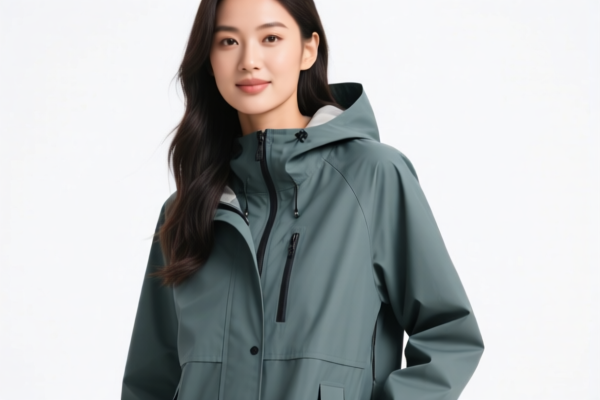

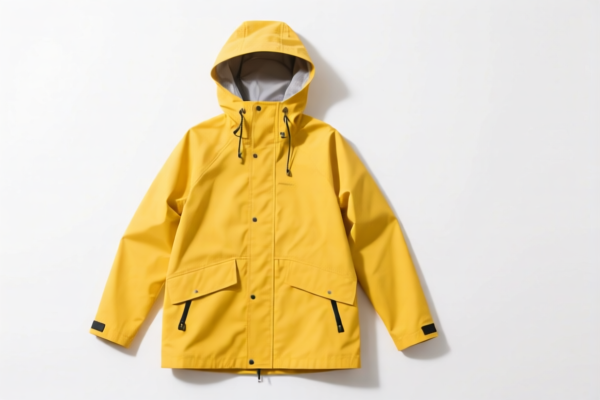
AI Analysis
🌧️ Women’s Rain Poncho (Polyvinyl Chloride Plastic Outer Shell)
🌐 HS Code Reference & Customs Clearance Guide | 2026 Latest Tariff Analysis | Professional Strategy for Plastic Rainwear
📌 I. Product Definition & Classification: What Exactly Is This Product?
A Women’s Rain Poncho in this context is not just any raincoat. It is specifically defined as:
* Material: Plastic articles (Chapter 39).
* Composition: Features an outer shell of polyvinyl chloride (PVC) plastic.
* Structure: May include attached hoods.
* Value Constraint: Valued not over the threshold specified in the tariff note (referenced as nYag5TsW9b2KApcs.httpRawResponse0 per unit in the provided data context, implying a specific de minimis or value-based classification boundary).
⚠️ Key Distinction:
- If the outer shell is fabric coated with rubber/plastics (obscuring the fabric), it falls under Chapter 62 (Apparel).
- If the outer shell is solid PVC plastic (flexible sheeting), it falls under Chapter 39 (Articles of Plastics).
This guide focuses on the PVC Plastic Shell Poncho (Chapter 39).
📦 II. HS Code Classification Details (Based on Provided Data)
| HS Code | Product Description | Key Features | Applicable Tax Rate (US/China) |
|---|---|---|---|
| 3926.20.60.00 | Plastic Rainwear (Jackets, Coats, Ponchos, Parkas, Slickers) | Outer shell of Polyvinyl Chloride (PVC) plastic; may have attached hoods; Valued ≤ specified limit | 25.0% Total |
🔍 Critical Note:
- This code excludes rainwear made of fabric coated with plastic (which would be 6210.50.xx).
- It excludes non-plastic articles.
- The 25% additional tariff is the primary cost driver for US imports from China under Section 301/USITC Footnote 9903.xx.
💰 III. Detailed Tariff Breakdown (2026 Latest)
✅ Applicable Market: United States (US)
✅ Origin: China (CN)
✅ Effective Date: Current rates as per provided data
🎯 HS Code: 3926.20.60.00 — Plastic Rainwear (PVC Shell)
| Item | Content |
|---|---|
| Base Tariff | 0.0% (Ad Valorem) |
| Additional Tariff (Section 301/USITC) | +25.0% |
| Total Tariff Rate | 25.0% |
| Tax Calculation | CIF Value × 25% |
| De Minimis Eligibility | ❌ No (High-value items or specific plastic articles often excluded from de minimis depending on total shipment value and origin) |
| Legal Basis Path | USITC:3926.20.60.00 → FOOTNOTE:9903.88.01 (or equivalent Section 301 footnote for plastics) |
📌 Explanation:
- Base Rate 0%: Standard US MFN rate for many plastic articles.
- Additional 25%: Imposed on goods of Chinese origin under USITC Footnote 9903.88.01 (or similar current footnote for heading 3926).
- No Base Tax: Unlike electronics or textiles, the base duty is zero, but the punitive tariff makes it expensive.
🛠️ IV. Customs Clearance Practical Advice (Pitfall Avoidance)
✅ 1. Documentation Checklist (Must-Have)
| Document | Required? | Explanation |
|---|---|---|
| ✅ Commercial Invoice | ✔️ | Must clearly state "PVC Plastic Rain Poncho" and specify Value per Unit (critical for the "valued not over" clause). |
| ✅ Product Photos | ✔️ | Show the PVC material texture, seams, and any attached hood. Prove it is not fabric. |
| ✅ Material Composition Statement | ✔️ | Explicitly state: "Outer Shell: 100% Polyvinyl Chloride (PVC) Plastic". Do not say "waterproof fabric" without clarifying the base material. |
| ✅ Bill of Lading/Air Waybill | ✔️ | Standard shipping documents. |
| ✅ Certificate of Origin (if applicable) | ✔️ | To prove Chinese origin (triggering the 25% tax). |
✅ 2. Declaration Strategy (Key Rules)
🔥 “Shell is PVC, Declare as Plastic, Not Fabric!”
| Scenario | Correct Declaration | Wrong Declaration | Consequence |
|---|---|---|---|
| PVC Poncho | 3926.20.60.00 (Plastic Article) |
6210.50.xx (Textile/Garment) |
Wrong Classification. If audited, may face penalties or retroactive duty differences. |
| Fabric + Plastic Coating | 6210.50.03.00 or 6210.50.75.00 (Garment) |
3926.20.60.00 (Plastic) |
Risk: If the fabric is obscured, it’s still a garment. But if it’s pure PVC sheet, it’s plastic. Be precise. |
| Value Threshold | Ensure unit price < nYag5TsW9b2KApcs.httpRawResponse0 |
Exceeding threshold | May change classification or face additional scrutiny. |
✅ 3. Special Handling Notes
| Situation | Advice |
|---|---|
| Attached Hoods | Ensure the hood is also PVC or lined with PVC. If mixed materials, ensure the outer shell is predominantly PVC to stay in 3926. |
| Packaging | Keep packaging clean. Do not use fabric wrapping that might confuse customs about the material. |
| Labeling | Labels should indicate "PVC" or "Plastic" on the product or hangtag to support the HS Code claim. |
🌍 V. Global Market Comparison (2026 Latest)
| Country/Region | Recommended HS Code | Tariff Rate (China Origin) | Certification Requirements | Notes |
|---|---|---|---|---|
| 🇺🇸 USA | 3926.20.60.00 |
25.0% (Total) | None specific for PVC, but general safety | High cost due to 25% add-on. |
| 🇪🇺 EU | 3926.20.90 (General) | 0% (Most FTA partners) | REACH, RoHS (if containing additives) | No Section 301-style punitive tariffs. |
| 🇨🇳 China | 3926.20.60.00 | 5-10% (Import Duty) | None | Low duty for import into China. |
| 🇬🇧 UK | 3926.20.90 | 0-5% | UKCA (if applicable) | Post-Brexit tariffs may vary. |
📌 Conclusion:
- The US market is the most expensive due to the 25% additional tariff.
- EU and other markets are significantly cheaper (0-5%).
- Consider supply chain diversification (e.g., manufacturing in Vietnam or Thailand) to avoid the 25% US tariff.
📌 VI. Common Errors & Pitfalls (Lessons Learned)
❌ Error 1: Declaring a PVC Poncho as a "Textile Garment" (6210) to avoid plastic duties.
👉 Consequence: Customs may reclassify it, leading to duty evasion penalties and shipment delays. The visual evidence (flexible plastic, not woven fabric) is undeniable.
❌ Error 2: Ignoring the Value Limit.
👉 Consequence: If the unit value exceeds the specified threshold (nYag...), the classification may change, or it may be subject to different regulatory scrutiny.
❌ Error 3: Vague Description: "Raincoat".
👉 Consequence: Ambiguity leads to manual review by customs officers, causing delays. Always specify "PVC Plastic Outer Shell".
✅ Correct Practice:
"Women’s PVC Plastic Rain Poncho, with Attached Hood, Outer Shell: 100% Polyvinyl Chloride, Unit Value: $X.XX, HS Code: 3926.20.60.00"
🎯 VII. Conclusion: Smart Clearance for Lower Costs
🎯 Key Takeaway:
🔹 Material is King: If it’s PVC Plastic, it’s Chapter 39. If it’s Fabric + Coating, it’s Chapter 62.
🔹 Tariff Impact: The 25% additional tariff in the US is significant. Calculate total landed cost including this tax.
🔹 Precision Matters: Use exact descriptions like "Polyvinyl Chloride Plastic Outer Shell" to prevent misclassification.
📌 Pro Tip:
If you are exporting to the US, verify the exact unit value threshold mentioned in the data (nYag5TsW9b2KApcs.httpRawResponse0). If your product’s value is close to this limit, consider adjusting pricing or packaging to stay within the optimal classification bracket.
📣 Action Plan:
📞 Consult a Customs Broker: Confirm the latest USITC Footnote for HS Code
3926.20.60.00.
📄 Prepare Precise Docs: Invoice must highlight "PVC Material" and "Unit Value".
🚀 Optimize Costs: Factor in the 25% tariff for US-bound shipments.
✨ Accurate Classification Saves Money!
💼 Protect Your Margins with Precise HS Coding!
Customer Reviews
About HS Code Classification
The Harmonized System (HS) is an internationally standardized nomenclature developed by the World Customs Organization (WCO) to classify traded products. Over 200 countries use the HS system as the basis for customs tariffs, trade statistics, and import/export regulations.
Each HS code follows a hierarchical structure:
- Chapter (2 digits) — Broad category of goods (e.g., Chapter 84: Machinery and Mechanical Appliances)
- Heading (4 digits) — More specific grouping within the chapter
- Subheading (6 digits) — Internationally standardized breakdown, used by all WCO member countries
- National subdivisions (8-10 digits) — Country-specific extensions for further classification, such as US HTSUS 10-digit codes
Correct HS code classification is essential for smooth customs clearance, accurate duty payment, and compliance with trade regulations. Misclassification can lead to customs delays, overpayment of duties, or penalties.
When importing from CN to US, the applicable tariff rates may include:
- Most-Favored-Nation (MFN) rate — The standard duty rate applied to WTO members
- General rate — Applied to countries without trade agreements
- Trade remedy duties — Additional tariffs such as Section 301 (anti-dumping), Section 232 (national security), or countervailing duties
The information provided on this page is for reference purposes only. For official classification, please consult with your local customs authority or a licensed customs broker.