Wood Carving Tool Set
CN → US| HS Code | Tariff Rate | Origin | Destination | Doc |
|---|---|---|---|---|
| 8201906000 | 35.0% | CN | US | Official Doc |
| 8201406080 | 41.2% | CN | US | Official Doc |
| 8205906000 | 0.0% | CN | US | Official Doc |
| 8205595560 | 40.3% | CN | US | Official Doc |
| 8206000000 | 0.0% | CN | US | Official Doc |
Product Images
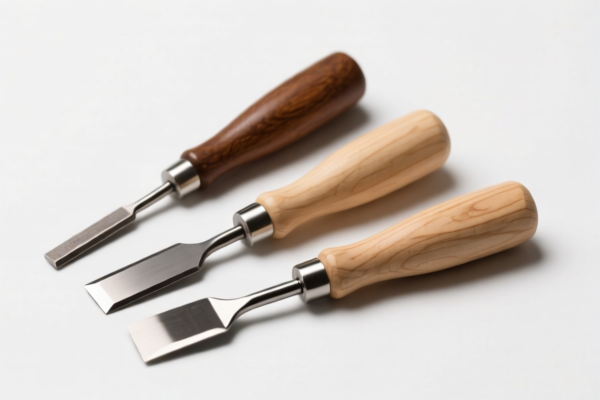
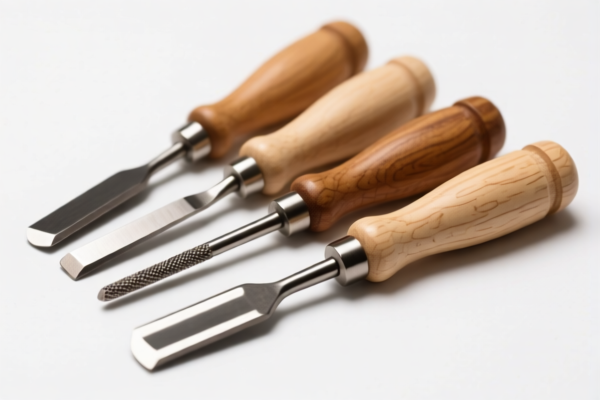
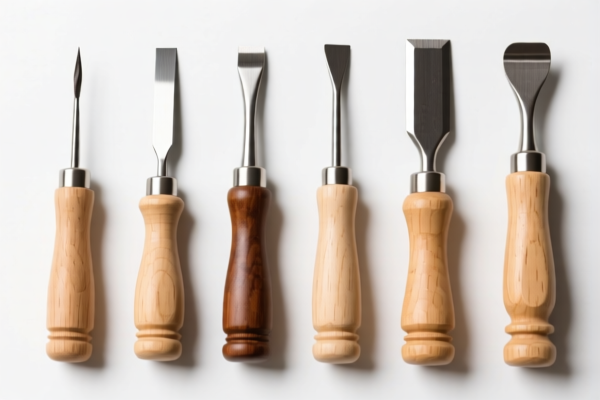
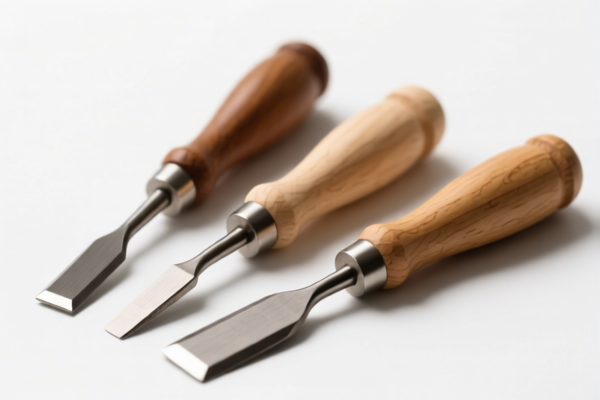
AI Analysis
🔨 Wood Carving Tool Set (Ice Carving Tools / Hand Tools)
🌐 HS Code Reference & Clearance Guide | 2026 Latest Tariff Analysis | Professional Compliance Strategy
📌 I. Product Definition & Classification: What Exactly Are "Wood/Ice Carving Tools"?
Wood carving tool sets (often marketed as or functionally similar to Ice Carving Tools) are specialized hand instruments used for sculpting, shaping, and detailing hard materials like wood, ice, or soft stone. In international trade, these items generally fall under Chapter 82 (Tools, Implements, Cutlery... of Base Metal).
The classification depends heavily on specificity of use, set composition, and material inference. Since the input data provides five potential HS Codes, we must analyze why each applies based on the logical constraints of customs valuation and classification rules.
⚠️ Key Distinction Point:
- Are they general-purpose hand tools (e.g., chisels, gouges) classified by material?
- Are they part of a retail set containing multiple tool types?
- Is the primary function agricultural/forestry-related (Chapter 82.01) or general hand tool (Chapter 82.05/82.06)?
📦 II. HS Code Classification Details (Based on Provided Data)
| HS Code | Product Description / Logic | Applicable Scenario | Key Classification Basis |
|---|---|---|---|
8201.90.60.00 |
Other Agricultural/Horticultural/Lumbering Hand Tools (Not specified elsewhere) | Tools used for general shaping/cutting where material is inferred as base metal | Usage Logic: "Wood/Ice carving" aligns with "lumbering/hand tool" nature; Material assumed as base metal. |
8201.40.60.80 |
Other Cutting Hand Tools (Agricultural/Horticultural) | Tools specifically categorized under "cutting/chiseling" implements | Usage Logic: Fits "cutting tools" category; Metal blade inferred for durability. |
8205.90.60.00 |
Other Hand Tools (Not elsewhere specified) | General hand tools made of iron/steel that don't fit specific agricultural categories | Usage Logic: "Catch-all" for hand tools; Infers iron/steel construction; Not strictly "edge" restricted. |
8205.59.55.60 |
Other Sets of Hand Tools | A set containing two or more different hand tools, packaged for retail | Usage Logic: Recognizes the "Set" aspect; Inferential material (Iron/Steel); General hand tool category. |
8206.00.00.00 |
Hand Tools Not Elsewhere Specified (Specifically: Sets) | Retail Sets of tools made of base metal | Usage Logic: Specifically defines "sets of tools" for retail sale; "Ice carving" use doesn't exclude it from being a "tool set". |
🔍 Critical Note:
- Sets vs. Individual Tools: If the product is sold as a box/set, customs often prefer8205or8206over individual tool codes (8201), unless one tool dominates the set's value/nature.
- Material Inference: Since the input data states "material inferred as base metal (steel/iron)," all these codes rely on that assumption. If tools were plastic-coated or had specific non-metal components, classification might shift to Chapter 82.16 or 82.05 exceptions.
💰 III. 2026 Latest Tariff Rate Breakdown (Including Additional Duties)
✅ Applicable Country: United States (US)
✅ Origin: China (CN)
✅ Effective Date: November 10, 2025 (and onwards)
All five HS Codes listed in the data are subject to Section 301 (Trump Tariffs) and IEEPA (National Emergency) surcharges.
🎯 1. 8201.90.60.00 & 8205.90.60.00 & 8201.40.60.80 & 8205.59.55.60
| Item | Content |
|---|---|
| Basic Duty (MFN) | 0% – 6.2% (Varies by specific subheading logic in data) |
| Section 301 Surcharge (25%) | +25% (USITC Footnote / Section 301 List 3/4) |
| IEEPA Surcharge (10%) | +10% (National Emergency Tariff on Chinese Goods) |
| Total Duty Rate | 35.0% – 41.2% |
| Calculation Basis | CIF Value × Total Rate |
| De Minimis Exemption | ❌ NOT ELIGIBLE |
| Legal Path | USITC:8201.90.60.00 → SECTION_301:301 → IEEPA:9903.01.25 |
📌 Explanation:
- The 25% tariff is the standard Section 301 penalty on most Chinese industrial goods.
- The 10% IEEPA tariff is an additional layer applied to Chinese-origin goods under national emergency powers.
- Base rates vary:
-8201.90.60.00: Base 0% + 25% + 10% = 35%
-8201.40.60.80: Base 6.2% + 25% + 10% = 41.2%
-8205.59.55.60: Base 5.3% + 25% + 10% = 40.3%
🎯 2. 8205.90.60.00 & 8206.00.00.00 (Set-Specific Logic)
| Item | Content |
|---|---|
| Basic Duty | Variable ("The rate of duty applicable to that article in the set subject to...") |
| Section 301 Surcharge | +25% |
| IEEPA Surcharge | +10% |
| Total Duty Rate | Base Rate + 35% |
| Legal Path | GRI 3(b) / Section 8206 → SECTION_301 → IEEPA |
📌 Explanation:
- For Sets (8205or8206), customs often applies the "Materiality Rule" or "Essential Character" rule.
- The base duty is whatever the most significant tool in the set would have.
- However, the 25% + 10% = 35% surcharge is fixed on the total value.
- Warning: If the set contains a mix of high-duty and low-duty items, the base rate can fluctuate, making the 35% fixed surcharge the predictable cost driver.
🛠️ IV. Clearance Practical Advice (Avoiding Pitfalls)
✅ 1. Documentation Checklist (Non-Negotiable)
| Document | Required? | Notes |
|---|---|---|
| ✅ Product Photos | ✔️ | Clear images of the tools, handles, and packaging (to prove it's a "Set"). |
| ✅ Material Declaration | ✔️ | Explicitly state: "Blades made of High-Carbon Steel, Handle made of Wood/Plastic." Customs needs to confirm "Base Metal" for Ch 82. |
| ✅ Detailed Invoice | ✔️ | List each tool individually if it's a set. Do not just write "Tool Set." Write: "Steel Chisel, Steel Gouge, Wood Handle, Set of 5." |
| ✅ Country of Origin Certificate | ✔️ | Must state China to confirm applicability of 301/IEEPA duties. |
| ✅ Usage Description | ✔️ | "Hand tools for sculpting wood/ice. Not for agricultural harvesting." (To avoid wrong classification to 8201). |
✅ 2. Classification Strategy (The "Set" Dilemma)
| Scenario | Recommended HS Code | Why? |
|---|---|---|
| Sold as a Boxed Set | 8205.59.55.60 or 8206.00.00.00 |
Both explicitly cover "Sets." 8206 is often safer for "mixed" sets; 8205 is safer for "general hand tool" sets. |
| Sold as Individual Tools | 8201.90.60.00 or 8205.90.60.00 |
Classify by specific type. If it's a chisel, use 8201. If it's a general scraper, use 8205. |
| Set with Plastic Parts | 8205.90.60.00 |
If metal is only the "working part," and handle is plastic, 8205 is the most robust "catch-all" for metal-bladed hand tools. |
🔥 Golden Rule:
"If it's a set, declare it as a set! Don't split it!"
Splitting a set into individual tools (e.g., declaring 5 chisels separately) can lead to audits and penalties for misdeclaration.
✅ 3. Special Considerations
| Issue | Advice |
|---|---|
| Origin Marking | Ensure tools are marked "Made in China." Missing origin marks can lead to refusal of entry. |
| Steel Content | If the tools are stainless steel, confirm if they fall under 73 (Articles of Steel) or 82 (Tools). Usually, hand tools are 82 regardless. |
| Commercial vs. Personal | These are commercial goods. De Minimis ($800) does NOT apply for duty calculation, but if the shipment value is <$800 and from a non-China origin, it might be exempt. Since this is China, duties apply regardless of value. |
🌍 V. Global Market Comparison (2026)
| Country/Region | Recommended HS Code | Base Duty | Additional US Duties | Total Est. Duty |
|---|---|---|---|---|
| 🇺🇸 USA | 8201.90.60.00 / 8205.90.60.00 |
0% – 6.2% | +25% (301) +10% (IEEPA) | 35% – 41.2% |
| 🇨🇳 China | 8205.59.55.60 |
5.3% | None | 5.3% |
| 🇪🇺 EU | 8205.59.55.60 |
6.5% | None (unless anti-dumping) | 6.5% |
| 🇬🇧 UK | 8205.59.55.60 |
6.5% | None | 6.5% |
| 🇨🇦 Canada | 8201.90.60.00 |
5% | None (CUSMA eligible) | 5% |
📌 Conclusion:
- The US market is the most expensive due to the 35%+ surcharge.
- EU/UK/Canada are significantly cheaper.
- Strategy: Consider transshipping through a neutral country (e.g., Vietnam, Malaysia) only if the transformation is substantial (Rule of Origin change). Simply repacking in a third country will not avoid US tariffs.
📌 VI. Common Errors & Pitfalls
❌ Error 1: Classifying Ice Carving Tools as "Plastic Tools" (Chapter 39)
👉 Result: Wrong classification. Blades are metal.
✅ Fix: Declare as Base Metal Tools (Chapter 82).
❌ Error 2: Ignoring the "Set" Nature
👉 Result: If declared as individual tools, customs may force you to pay duty on each, or penalize for misrepresentation of the retail unit.
✅ Fix: Declare as a Set under 8205 or 8206.
❌ Error 3: Assuming De Minimis Applies
👉 Result: Ships under $800 are still liable for duties if from China.
✅ Fix: Prepare duty payments in advance.
🎯 VII. Conclusion: Professional Declaration, Cost Control!
🎯 Key Takeaway:
"China-made Wood/Ice Carving Tools face a 35–41% total tariff in the US. Classification as a 'Set' (8205/8206) is often the most accurate and compliant approach. Ensure origin is clearly marked to avoid delays."
📌 Pro Tip:
For high-value shipments, consider applying for an Advance Ruling from CBP. This locks in the HS Code and duty rate, preventing surprise audits or retroactive duty demands.
📣 Immediate Action:
- Confirm Material: Is the blade steel? (Yes → Ch 82).
- Confirm Packaging: Is it a set? (Yes → Ch 8205/8206).
- Prepare Docs: Invoice, Photos, Origin Cert.
- Calculate Cost: CIF × 35–41% = Duty Payable.
✨ Accurate Classification Saves Money!
💼 Every percentage point of duty matters in cross-border trade.
Customer Reviews
About HS Code Classification
The Harmonized System (HS) is an internationally standardized nomenclature developed by the World Customs Organization (WCO) to classify traded products. Over 200 countries use the HS system as the basis for customs tariffs, trade statistics, and import/export regulations.
Each HS code follows a hierarchical structure:
- Chapter (2 digits) — Broad category of goods (e.g., Chapter 84: Machinery and Mechanical Appliances)
- Heading (4 digits) — More specific grouping within the chapter
- Subheading (6 digits) — Internationally standardized breakdown, used by all WCO member countries
- National subdivisions (8-10 digits) — Country-specific extensions for further classification, such as US HTSUS 10-digit codes
Correct HS code classification is essential for smooth customs clearance, accurate duty payment, and compliance with trade regulations. Misclassification can lead to customs delays, overpayment of duties, or penalties.
When importing from CN to US, the applicable tariff rates may include:
- Most-Favored-Nation (MFN) rate — The standard duty rate applied to WTO members
- General rate — Applied to countries without trade agreements
- Trade remedy duties — Additional tariffs such as Section 301 (anti-dumping), Section 232 (national security), or countervailing duties
The information provided on this page is for reference purposes only. For official classification, please consult with your local customs authority or a licensed customs broker.