Wood Chipper
CN → US| HS Code | Tariff Rate | Origin | Destination | Doc |
|---|---|---|---|---|
| 8431499015 | 85.0% | CN | US | Official Doc |
| 8479820080 | 35.0% | CN | US | Official Doc |
| 8479909560 | 35.0% | CN | US | Official Doc |
| 8479820080 | 35.0% | CN | US | Official Doc |
| 8479820080 | 35.0% | CN | US | Official Doc |
Product Images
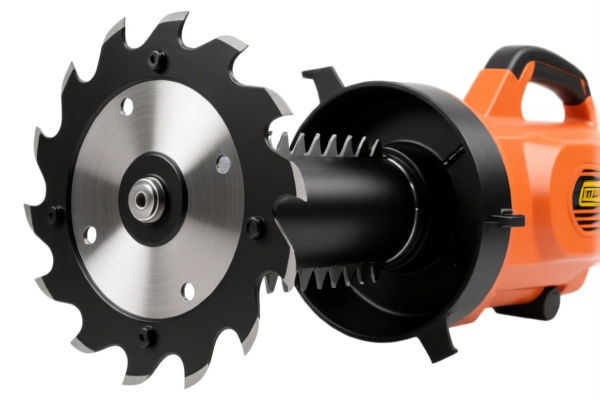
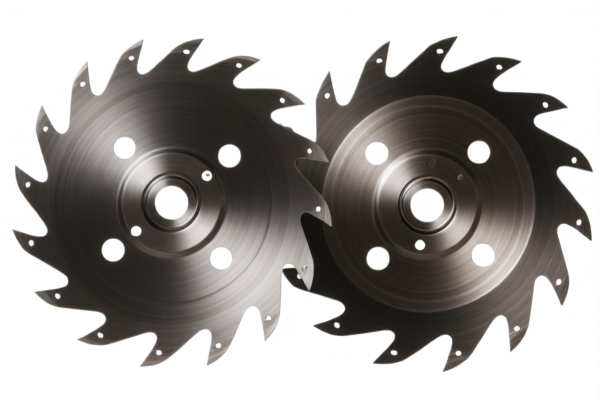
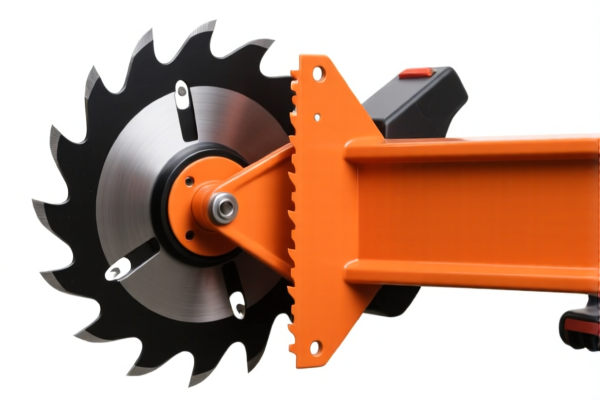
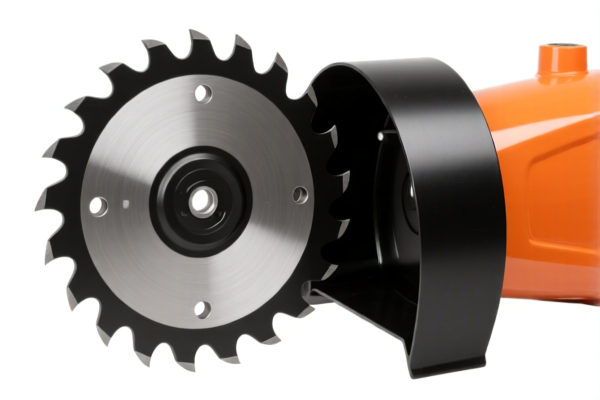
AI Analysis
🪓 Wood Chipper Classification & Customs Clearance Guide | 2026 HS Code Analysis & Tax Breakdown
🌐 HS Code Reference & Clearance Guide | Professional-Grade Classification Strategy for Wood Chippers
📌 1. Product Definition & Functional Analysis: What is a Wood Chipper?
A Wood Chipper is a mechanical device designed to reduce raw wood material into smaller chips or fragments through physical force (cutting, crushing, or tearing). In international trade, its classification depends on whether it is viewed as: * A general mechanical appliance with crushing/shredding functions; * A specialized attachment for metalworking (if interpreted as a tearing/removal tool); * A machine having individual functions not elsewhere specified.
⚠️ Key Classification Conflict:
- If viewed as a metal-processing attachment → High tariff risk (85%);
- If viewed as a general shredding/crushing machine → Moderate tariff risk (35%);
- If viewed as a wood-processing machine → Moderate tariff risk (35%).
📦 2. HS Code Classification Details (Based on Provided Data)
Below are the three potential HS Code classifications for "Wood Chipper" based on the provided dataset, along with their corresponding tax details.
| HS Code | Summary from Data | Application Scenario | Total Tax Rate |
|---|---|---|---|
8431.49.90.15 |
Classified as a mechanical processing equipment; core function aligns with tearing/removal mechanical attachments; inferred as metal material. | Misclassification Risk: Treating a wood chipper as a metalworking accessory. | 85.0% ⚠️ |
8479.82.00.80 |
Classified as equipment that uses mechanical force to physically crush/shred wood; fits the catch-all category for crushing purposes. | Standard Classification: General-purpose wood crushing/shredding machine. | 35.0% ✅ |
8479.90.95.60 |
Classified as a machine for processing wood; fits the category for machinery for treating wood or cork. | Alternative Classification: Specialized wood-processing machinery. | 35.0% ✅ |
🔍 Critical Note:
- The classification8479.82.00.80is the most common and logical fit for a standard wood chipper, as it directly addresses the crushing/shredding function.
- The classification8431.49.90.15is high-risk due to its 85% total tax rate, resulting from misinterpreting the machine as a metal-processing attachment.
- The classification8479.90.95.60is a valid alternative if the machine is specifically marketed as a wood-processing specialist rather than a general shredder.
💰 3. 2026 Latest Tariff Rate Breakdown (Including Surtaxes)
✅ Applicable Country: United States (US)
✅ Origin: China (CN)
✅ Effective Time: Current trade regulations
🎯 1. 8431.49.90.15 —— Misclassified as Metal Processing Attachment
| Item | Detail |
|---|---|
| Base Tariff | 0.0% |
| Section 301 Surcharge | +25.0% |
| Section 122 Surcharge (Steel/Aluminum/Copper) | +50.0% |
| Total Tax Rate | 85.0% 🚨 |
| Tax Calculation | CIF Value × 85% |
| De Minimis Exemption | ❌ Not Eligible |
| Legal Basis | Base Tariff + Section 301 + Section 122 (Steel/Aluminum/Copper) |
📌 Explanation:
- This classification applies if the customs authority interprets the wood chipper as a metal-working attachment (e.g., tearing/rooting tool).
- The 50% Section 122 surcharge is triggered because it is deemed a steel/aluminum/copper product.
- Total 85% is extremely high and should be avoided through proper product description and documentation.
🎯 2. 8479.82.00.80 —— General Crushing/Shredding Machine
| Item | Detail |
|---|---|
| Base Tariff | 0.0% |
| Section 301 Surcharge | +25.0% |
| Section 122 Surcharge | +10.0% |
| Total Tax Rate | 35.0% ✅ |
| Tax Calculation | CIF Value × 35% |
| De Minimis Exemption | ❌ Not Eligible |
| Legal Basis | Base Tariff + Section 301 + Section 122 |
📌 Explanation:
- This is the recommended classification for most wood chippers.
- The 10% Section 122 surcharge applies (possibly due to partial metal components, but not fully classified as steel/aluminum/copper goods).
- Total 35% is manageable and standard for general machinery.
🎯 3. 8479.90.95.60 —— Specialized Wood Processing Machine
| Item | Detail |
|---|---|
| Base Tariff | 0.0% |
| Section 301 Surcharge | +25.0% |
| Section 122 Surcharge | +10.0% |
| Total Tax Rate | 35.0% ✅ |
| Tax Calculation | CIF Value × 35% |
| De Minimis Exemption | ❌ Not Eligible |
| Legal Basis | Base Tariff + Section 301 + Section 122 |
📌 Explanation:
- This classification is suitable if the product is explicitly marketed as wood-processing machinery.
- Same tax rate as8479.82.00.80, but may require additional proof of specialized wood treatment function.
🛠️ 4. Customs Clearance Practical Advice (Avoiding Pitfalls)
✅ 1. Required Documentation Checklist
| Document | Must Provide | Notes |
|---|---|---|
| Product Specification Sheet | ✔️ | Must detail crushing/shredding mechanism, power source, capacity |
| Product Photos | ✔️ | Clear images showing wood input/output, blades, housing |
| Commercial Invoice | ✔️ | Must explicitly state "Wood Chipper for Shredding/Wood Processing" |
| Origin Certificate | ✔️ | Required for preferential tariff claims (if applicable) |
| Packing List | ✔️ | Include all parts, blades, and accessories |
✅ 2. Declaration Tips (Key Rules)
🔥 Rule: "Describe Function, Not Material Alone"
| Scenario | Correct Declaration | Incorrect Declaration |
|---|---|---|
| Standard Wood Chipper | 8479.82.00.80 - "Wood Chipper for Shredding" |
"Metal Tearing Tool" → 8431.49.90.15 (85% tax) |
| Machine with Wooden Housing | Still 8479.82.00.80 |
Do not declare as "Wood Product" → 0% (wrong!) |
| Industrial Wood Shredder | 8479.90.95.60 if specialized |
Avoid general "Machine" without function description |
📌 Note:
- Do NOT describe the product as a "Metal Processing Attachment" unless it is exclusively used for metal.
- Emphasize the wood-processing/shredding function in all documentation.
- If the machine has metal blades, do not let this trigger the Section 122 steel/aluminum surcharge for the entire product. Clarify that the primary function is wood processing.
✅ 3. Special Cases
| Case | Handling Advice |
|---|---|
| Hydraulic Wood Chipper | Declare as 8479.82.00.80 with hydraulic system details |
| Electric vs. Diesel | Same HS Code, but specify power source in specs |
| Portable vs. Industrial | Both fall under 8479.82.00.80 or 8479.90.95.60 depending on scale |
| Used/Refurbished | Same HS Code, but may require additional inspection |
🌍 5. Global Market Comparison (2026)
| Country/Region | Recommended HS Code | Tariff | Certification | Notes |
|---|---|---|---|---|
| 🇺🇸 USA | 8479.82.00.80 |
35% | None required | Avoid 8431.49.90.15 (85%) |
| 🇨🇳 China | 8479.82.00.80 |
5% | CCC (if applicable) | No surtax |
| 🇪🇺 EU | 8479.82.00.80 |
0-5% | CE + RoHS | No surtax |
| 🇬🇧 UK | 8479.82.00.80 |
0-5% | UKCA | No surtax |
| 🇦🇺 Australia | 8479.82.00.80 |
5% | RCM | No surtax |
📌 Conclusion:
- USA is the only market with high surtaxes for Chinese-origin wood chippers.
- Correct classification is critical to avoid the 85% tax rate.
- For other markets, tariffs are low or zero.
📌 6. Common Mistakes & Pitfalls
❌ Mistake 1: Declaring as "Metal Tearing Tool"
👉 Result: 85% tax due to Section 122 steel/aluminum surcharge.
👉 Fix: Declare as "Wood Chipper/Shredder".
❌ Mistake 2: Using vague terms like "Machine" or "Equipment"
👉 Result: Customs may misclassify → 85% tax.
👉 Fix: Use specific terms: "Wood Chipper for Shredding Wood".
❌ Mistake 3: Ignoring Section 301 Surcharge
👉 Result: Underestimating total cost.
👉 Fix: Always include +25% in cost calculation.
✅ Correct Declaration Example:
"Wood Chipper, Model XYZ, Electric, 5HP, Shredding Wood Branches up to 6 Inches Diameter, Made in China, HS Code: 8479.82.00.80"
🎯 7. Conclusion: Precise Classification Saves Cost!
🎯 Remember:
🔹 "Function over Material" – A wood chipper is not a metal tool.
🔹 "Specify 'Shredding' or 'Chipper'" – Avoid generic terms.
🔹 "Avoid 85% Tax" – Do not misclassify as metal processing equipment.
📌 Pro Tip:
If your product is manufactured in Vietnam, Mexico, or Thailand, you may qualify for IEEPA Exemptions, reducing taxes to 0-5%.
Consider applying for an Advance Ruling to confirm the correct HS Code before shipment.
📣 Take Action Now:
📞 Contact a licensed customs broker + Provide product photos + Apply for HS Code Pre-ruling
🚀 Ensure smooth clearance, lower costs, and faster delivery!
✨ Professional Classification Starts with Accurate Description!
💼 Every dollar saved counts!
Customer Reviews
About HS Code Classification
The Harmonized System (HS) is an internationally standardized nomenclature developed by the World Customs Organization (WCO) to classify traded products. Over 200 countries use the HS system as the basis for customs tariffs, trade statistics, and import/export regulations.
Each HS code follows a hierarchical structure:
- Chapter (2 digits) — Broad category of goods (e.g., Chapter 84: Machinery and Mechanical Appliances)
- Heading (4 digits) — More specific grouping within the chapter
- Subheading (6 digits) — Internationally standardized breakdown, used by all WCO member countries
- National subdivisions (8-10 digits) — Country-specific extensions for further classification, such as US HTSUS 10-digit codes
Correct HS code classification is essential for smooth customs clearance, accurate duty payment, and compliance with trade regulations. Misclassification can lead to customs delays, overpayment of duties, or penalties.
When importing from CN to US, the applicable tariff rates may include:
- Most-Favored-Nation (MFN) rate — The standard duty rate applied to WTO members
- General rate — Applied to countries without trade agreements
- Trade remedy duties — Additional tariffs such as Section 301 (anti-dumping), Section 232 (national security), or countervailing duties
The information provided on this page is for reference purposes only. For official classification, please consult with your local customs authority or a licensed customs broker.