Wood Chips and Particles
CN → US| HS Code | Tariff Rate | Origin | Destination | Doc |
|---|---|---|---|---|
| 4405000000 | 38.2% | CN | US | Official Doc |
| 4401310000 | 35.0% | CN | US | Official Doc |
| 4401394210 | 35.0% | CN | US | Official Doc |
| 4401310000 | 35.0% | CN | US | Official Doc |
| 4401394210 | 35.0% | CN | US | Official Doc |
Product Images
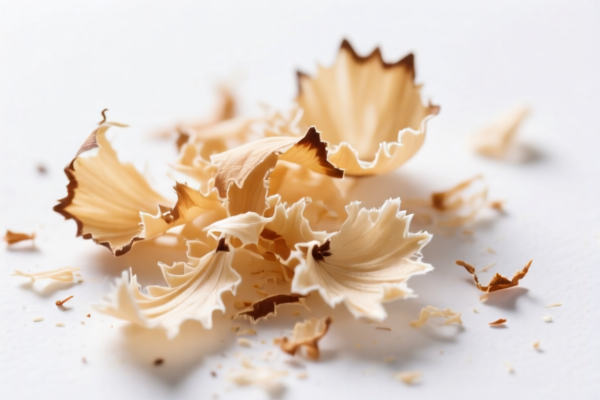


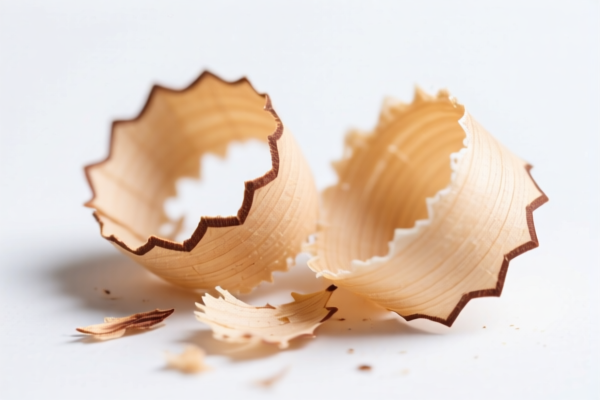
AI Analysis
🌲 Wood Chips and Particles – HS Code & Tariff Guide 2026 | Full Customs Clearance Breakdown
🌐 HS Code Reference & Customs Clearance Strategy | 2026 Updated Tariff Rules | Expert-Level Import Planning
📌 One Product, Multiple Codes — Why This Matters for Your Bottom Line!
Wood chips and particles — seemingly simple biomass materials — are not all treated equally under U.S. customs law. Depending on material source, physical form, and classification logic, they can fall under different HS Codes, each with drastically different tariffs.
⚠️ Critical Insight:
- Wood屑 (wood dust/wood shavings) → May be classified as wood powder/wood fiber → 38.2% total tax
- Wood chips & particles from wood waste → Often fall under 4401.31.00.00 / 4401.39.42.10 → 35.0% total tax
- Misclassification = 3%+ tax penalty, delays, or even seizure!
📦 II. HS Code Classification Breakdown (2026 Official Tariff Table)
| HS Code | Product Description | Material Origin | Physical Form | Key Classification Logic |
|---|---|---|---|---|
4405.00.00.00 |
Wood chips and particles, made from wood, in granular form, meeting "wood powder/wood fiber" definition | Pure wood | Granular (particle) | Treated as wood powder/fiber — subject to highest tariff |
4401.31.00.00 |
Wood chips and particles, made from wood chips, granular form | Wood chips | Granular (particle) | Classified under wood waste, not raw wood — no base duty |
4401.39.42.10 |
Wood chips and particles, from wood waste, used as fuel or biomass | Wood waste | Granular (particle) | Fuels & biomass category — no base duty |
4401.31.00.00 |
Wood Chips and Particles (English) | Wood chips | Granular | Same as above — waste-based classification |
4401.39.42.10 |
Wood Chips and Particles (English) | Wood waste | Granular | Fuel wood / wood particles — same tax treatment |
🔍 Why the Difference?
-4405.00.00.00applies when the material is processed to resemble wood powder/fiber — even if made from wood chips.
-4401.31.00.00and4401.39.42.10apply when the material is clearly derived from wood waste and intended for fuel/biomass use — exempt from base duty.
💰 III. 2026 Tariff Breakdown – Full Tax Clause Explanation (U.S. Customs)
✅ Applicable Country: United States (US)
✅ Origin: China (CN)
✅ Effective Date: November 10, 2025 (including subsequent imports)
🎯 1. 4405.00.00.00 — Wood Chips & Particles (Treated as Wood Powder/Fiber)
| Item | Detail |
|---|---|
| Base Duty | 3.2% (ad valorem) |
| Section 301 (USITC) Additional Duty | +25.0% (from USITC Footnote 9903.88.01) |
| Section 122 (IEEPA) Emergency Duty | +10.0% (applies to goods from China/HK, per IEEPA:9903.01.25) |
| Total Effective Duty | 38.2% |
| Tax Calculation | CIF Value × 38.2% |
| De Minimis Exemption? | ❌ No (denied under IEEPA) |
| Legal Basis Path | IEEPA:9903.01.25 → IEEPA:9903.01.24 → USITC:4405.00.00.00 → FOOTNOTE:9903.88.01 |
📌 Explanation:
- This code applies when the product is processed to resemble wood powder or fiber, even if it started as chips.
- "Wood powder/wood fiber" is defined in HTSUS Section 4405 as finely ground wood material — not just any particle.
- If your product passes this definition, you’re hit with 38.2% — the highest rate.
🎯 2. 4401.31.00.00 & 4401.39.42.10 — Wood Chips & Particles from Wood Waste (Fuel Use)
| Item | Detail |
|---|---|
| Base Duty | 0.0% (ad valorem) |
| Section 301 (USITC) Additional Duty | +25.0% |
| Section 122 (IEEPA) Emergency Duty | +10.0% |
| Total Effective Duty | 35.0% |
| Tax Calculation | CIF Value × 35.0% |
| De Minimis Exemption? | ❌ No (IEEPA applies) |
| Legal Basis Path | IEEPA:9903.01.25 → IEEPA:9903.01.24 → USITC:4401.31.00.00 / 4401.39.42.10 → FOOTNOTE:9903.88.01 |
📌 Explanation:
- These codes apply only if the material is clearly derived from wood waste (e.g., sawdust, trimmings, offcuts).
- "Wood waste" is defined in HTSUS 4401.31.00.00 as residues from wood processing.
- If your product qualifies, you save 3.2% in base duty — but still pay 35% total due to 25% + 10% add-ons.
🛠️ IV. Customs Clearance Best Practices (Pro Tips to Avoid Penalties)
✅ 1. Document Checklist (Must-Have)
| Document | Required? | Why It Matters |
|---|---|---|
| ✅ Product Specification Sheet | ✔️ | Shows particle size, moisture, origin, processing method |
| ✅ Raw Material Source Proof | ✔️ | Demonstrates it’s wood waste, not virgin wood |
| ✅ Processing Flow Diagram | ✔️ | Proves it’s not processed into powder/fiber |
| ✅ Lab Test Report (Moisture, Ash, Particle Size) | ✔️ | Validates classification |
| ✅ Commercial Invoice | ✔️ | Must state: "Wood Chips & Particles, from Wood Waste, for Biomass Fuel" |
| ✅ Certificate of Origin (CO) | ✔️ | Needed for IEEPA/USITC compliance |
| ✅ Packing List | ✔️ | Shows total weight, packaging, and no mixed materials |
✅ 2. 申报技巧 (Key Rules to Remember)
🔥 "Waste not, want not — if it’s waste, claim it!"
| Scenario | Correct HS Code | Wrong Code | Risk |
|---|---|---|---|
| Made from sawdust/trimmings, granular | 4401.31.00.00 or 4401.39.42.10 |
4405.00.00.00 |
+3.2% base duty lost |
| Finely ground to resemble wood powder | 4405.00.00.00 |
4401.31.00.00 |
+3.2% base duty + 3% penalty |
| Mixed with bark, dirt, or non-wood | Reject — not eligible for any code | Claim any code | Seizure risk |
| Used as fuel/biomass | 4401.39.42.10 |
4405.00.00.00 |
3.2% tax loss |
✅ 3. Special Cases & How to Handle Them
| Situation | Recommended Action |
|---|---|
| Particles < 1mm | Likely 4405.00.00.00 — high risk |
| Particles 1–5mm | Can be 4401.31.00.00 if from waste |
| Particles > 5mm | May be exempt from 122 clause — verify |
| Biomass pellet blend | Must declare wood content % — if >50%, use 4401.39.42.10 |
| From non-China origin (Vietnam, Thailand, Mexico) | Can apply for IEEPA exemption — 0% additional duty |
🌍 V. Global Market Tariff Comparison (2026)
| Country | Recommended HS Code | Base Duty | Additional Taxes | Notes |
|---|---|---|---|---|
| 🇺🇸 USA | 4401.31.00.00 / 4401.39.42.10 |
0.0% | +25% +10% = 35.0% | No de minimis |
| 🇨🇳 China | 4401.39.42.10 |
0% | None | No extra tariffs |
| 🇪🇺 EU | 4401.39.42.10 |
0% | None | No 301/IEEPA |
| 🇦🇺 Australia | 4401.39.42.10 |
0% | None | No additional duties |
| 🇯🇵 Japan | 4401.39.42.10 |
0% | None | No 301/IEEPA |
📌 Takeaway:
- Only the U.S. imposes 35%+ on wood particles.
- China, EU, Australia, Japan treat biomass wood chips favorably.
📌 VI. Common Mistakes & How to Avoid Them (Real-World Risks)
❌ Mistake 1: Claiming 4401.31.00.00 for finely ground particles
👉 Result: Customs reclassifies to 4405.00.00.00 → +3.2% base duty + 3% penalty → Total loss: 6.2%
❌ Mistake 2: Not proving wood waste origin
👉 Result: Denied exemption → 35% instead of 38.2% → But still high!
❌ Mistake 3: Using vague description like “wood particles”
👉 Result: Customs assumes powder/fiber → 38.2% tax
✅ Correct Description:
“Wood Chips and Particles, from Wood Waste (Sawdust & Trim, 1–5 mm), for Biomass Fuel, Not Processed into Wood Powder”
🎯 VII. Final Verdict: How to Win the Tax Game
🔹 If your product is from wood waste and not finely ground → Use
4401.31.00.00or4401.39.42.10→ 35.0%
🔹 If it’s finely ground to resemble powder → Use4405.00.00.00→ 38.2%
🔹 If from Vietnam/Mexico/Thailand → Apply for IEEPA exemption → 0% extra duty!
📣 Call to Action: Secure Your Shipment Before It Arrives
📞 Contact a U.S. Customs Broker + Submit Product Photos + Request HS Code Pre-Ruling
🚀 Avoid delays, penalties, or seizures — get your classification locked in advance!
✨ Pro Tip:
“Wood waste” is your friend. “Wood powder” is your enemy.
Prove the source, prove the form, and save thousands in tariffs.
💼 Your cargo’s fate is decided by a single HS Code.
🎯 Get it right — or pay the price.
🔐 Precise classification = Smooth clearance = Profit protection.
✅ Ready to clear? Let’s get your wood chips across the border — legally, safely, and affordably!
Customer Reviews
About HS Code Classification
The Harmonized System (HS) is an internationally standardized nomenclature developed by the World Customs Organization (WCO) to classify traded products. Over 200 countries use the HS system as the basis for customs tariffs, trade statistics, and import/export regulations.
Each HS code follows a hierarchical structure:
- Chapter (2 digits) — Broad category of goods (e.g., Chapter 84: Machinery and Mechanical Appliances)
- Heading (4 digits) — More specific grouping within the chapter
- Subheading (6 digits) — Internationally standardized breakdown, used by all WCO member countries
- National subdivisions (8-10 digits) — Country-specific extensions for further classification, such as US HTSUS 10-digit codes
Correct HS code classification is essential for smooth customs clearance, accurate duty payment, and compliance with trade regulations. Misclassification can lead to customs delays, overpayment of duties, or penalties.
When importing from CN to US, the applicable tariff rates may include:
- Most-Favored-Nation (MFN) rate — The standard duty rate applied to WTO members
- General rate — Applied to countries without trade agreements
- Trade remedy duties — Additional tariffs such as Section 301 (anti-dumping), Section 232 (national security), or countervailing duties
The information provided on this page is for reference purposes only. For official classification, please consult with your local customs authority or a licensed customs broker.