Wood Fence Rail Material
CN → US| HS Code | Tariff Rate | Origin | Destination | Doc |
|---|---|---|---|---|
| 4418999195 | 38.2% | CN | US | Official Doc |
| 4418919195 | 38.2% | CN | US | Official Doc |
Product Images
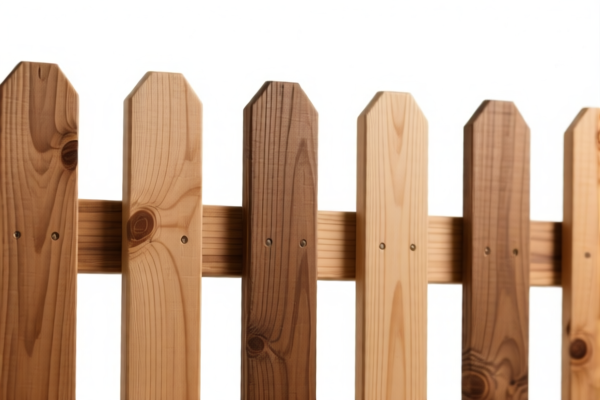
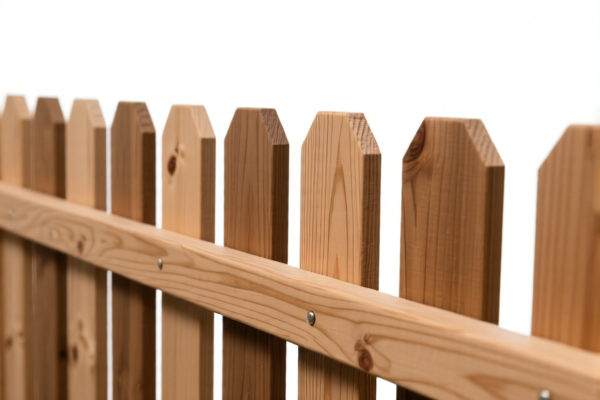
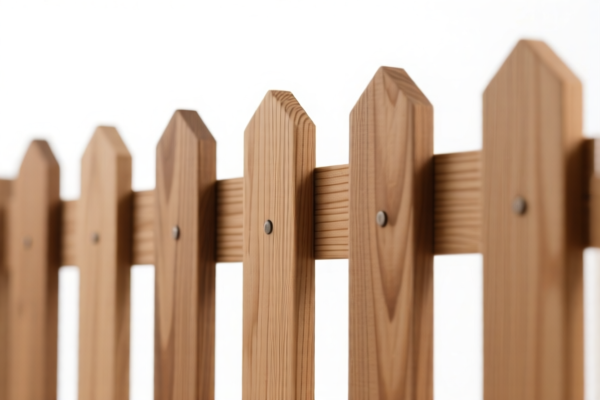
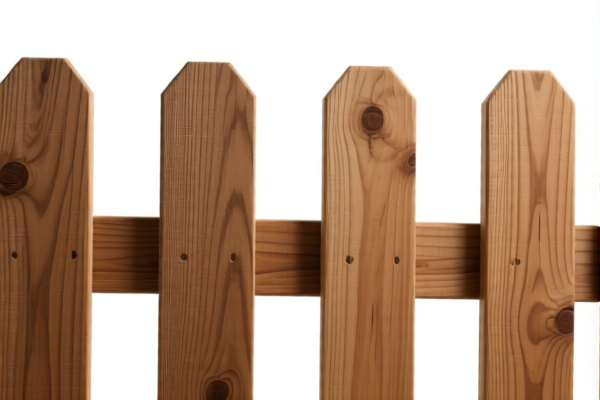
AI Analysis
🪵 Wood Fence Rail Material (Builders' Joinery)
🌐 HS Code Reference & Customs Clearance Guide | 2024/2026 Latest Tariff Analysis | Professional Entry Strategy
📌 Part 1: Product Definition & Classification: Do You Really Understand "Wood Fence Rails"?
Wood fence rail material falls under the broad category of "Builders' joinery and carpentry of wood." In international trade, the specific HS Code depends heavily on the material composition (Solid Wood vs. Bamboo) and the form (Finished assembled panels vs. Simple rails/other).
1. Solid Wood Rails (Standard):
Typically made from pine, cedar, redwood, or pressure-treated lumber. These are classified as "Other" builders' joinery if they are not flooring or shingles.
2. Bamboo Rails (Alternative):
Increasingly popular due to sustainability. These are classified distinctly under "Of bamboo."
⚠️ Key Distinction Point:
- If made of Solid Wood (non-bamboo) → Look at 4418.99.91.95
- If made of Bamboo → Look at 4418.91.91.95
- Crucial Note: Both codes listed in the target data carry a 28.2% total tax rate for US imports from China, but the classification path differs.
📦 Part 2: HS Code Classification Details (Based on Provided Data)
| HS Code | Product Description | Material | Application Scenario |
|---|---|---|---|
4418.99.91.95 |
Builders' joinery and carpentry of wood; Other; Other; Other; Other | Solid Wood (e.g., Pine, Cedar, Oak) | Standard wooden fence rails, balusters, unfinished or finished wood components for fencing. |
4418.91.91.95 |
Builders' joinery and carpentry of wood; Other; Of bamboo; Other; Other | Bamboo | Bamboo fence rails, woven bamboo fencing panels, sustainable eco-friendly fencing materials. |
🔍 Important Reminder:
- Both codes fall under Chapter 44: Wood and Articles of Wood.
- They are classified as "Other" builders' joinery, meaning they are not cellular wood panels, assembled flooring, or shingles.
- Do not confuse with raw timber (4407), which has different duties and restrictions.
💰 Part 3: 2024/2026 Latest Tariff Rate Breakdown (With Surcharge)
✅ Applicable Country: United States (US)
✅ Origin: China (CN)
✅ Status: Active (Subject to Section 301 Duties)
🎯 1. 4418.99.91.95 – Solid Wood Fence Rails
| Item | Detail |
|---|---|
| Base Duty Rate | 3.2% (Ad Valorem) |
| Section 301 Surcharge | +25.0% |
| Total Effective Tax Rate | 28.2% |
| Tax Calculation | CIF Value × 28.2% |
| De Minimis Exemption | ❌ Not Eligible (Value exceeds $800 threshold for personal use; commercial shipments pay full duty) |
| Legal Basis Path | HTSUS: 4418.99.91.95 → USITC Footnote 9903.88.01 (Section 301) |
📌 Explanation:
- The 3.2% is the standard Most Favored Nation (MFN) base duty for "Other" wood joinery.
- The 25% is the additional tariff imposed under Section 301 of the Trade Act of 1974 against Chinese goods.
- Total Cost Impact: For every $10,000 of fence material, you will pay $2,820 in duties.
🎯 2. 4418.91.91.95 – Bamboo Fence Rails
| Item | Detail |
|---|---|
| Base Duty Rate | 3.2% (Ad Valorem) |
| Section 301 Surcharge | +25.0% |
| Total Effective Tax Rate | 28.2% |
| Tax Calculation | CIF Value × 28.2% |
| De Minimis Exemption | ❌ Not Eligible |
| Legal Basis Path | HTSUS: 4418.91.91.95 → USITC Footnote 9903.88.01 (Section 301) |
📌 Note:
- Despite being "Of bamboo," the duty structure is identical to solid wood in this specific subheading.
- Ensure product descriptions explicitly state "Bamboo" to avoid misclassification penalties.
🛠️ Part 4: Customs Clearance Practical Advice (Pitfall Avoidance Guide)
✅ 1. Preparation Checklist (No Exceptions)
| Document | Mandatory? | Details |
|---|---|---|
| ✅ Commercial Invoice | ✔️ | Must list "Wood Fence Rails" or "Bamboo Fence Rails" clearly. Include HS Code. |
| ✅ Packing List | ✔️ | Detail gross/net weight, dimensions, and number of packages. |
| ✅ Product Specifications | ✔️ | Describe material (e.g., "Pressure-Treated Pine" or "Moso Bamboo"), treatment type (e.g., "UV Coated"), and dimensions. |
| ✅ Fumigation Certificate | ✔️ | CRITICAL for solid wood. Must show ISPM 15 compliance to prevent pest rejection. |
| ✅ Phytosanitary Certificate | ✔️ | Often required for raw or semi-processed wood to prove freedom from pathogens. |
| ✅ Bill of Lading / Air Waybill | ✔️ | Proof of shipment. |
✅ 2. Declaration Tips (Key Mantra)
🔥 "Material Matters: Wood vs. Bamboo, Treatment is Key, Fumigation Saves the Day!"
| Scenario | Correct Declaration | Wrong Practice |
|---|---|---|
| Solid Wood Rails | Use 4418.99.91.95 + ISPM 15 Label Photo |
Claiming "Wood" without specifying species or treatment |
| Bamboo Rails | Use 4418.91.91.95 |
Mislabeling as "Wood" to avoid bamboo-specific queries (risky) |
| Untreated Wood | Declare "Unfinished, Requires Fumigation" | Hiding treatment status → Seizure risk |
| Pre-Assembled Panels | Declare as "Assembled Flooring/Panel" if applicable | Misclassifying simple rails as complex assemblies |
✅ 3. Special Case Handling
| Situation | Handling Advice |
|---|---|
| Composite Wood | If wood is mixed with plastic (WPC), it may fall under Chapter 39 (Plastics), not 44. Check composition! |
| Treated Wood | Must declare chemical treatment (e.g., ACQ, CCA). Some treatments may require additional EPA documentation. |
| Bamboo Sourcing | Ensure bamboo is certified sustainable if marketing as "Eco-Friendly," though not required for customs. |
| High-Value Imports | Consider Advance Ruling from CBP if the product is a new design to ensure correct HS Code assignment. |
🌍 Part 5: Global Market Clearance Comparison (2024/2026)
| Country/Region | Recommended HS Code | Base Duty | Section 301 / Surcharge | Total Duty (China Origin) | Key Requirement |
|---|---|---|---|---|---|
| 🇺🇸 USA | 4418.99.91.95 (Wood)4418.91.91.95 (Bamboo) |
3.2% | +25% | 28.2% | ISPM 15 Fumigation Certificate |
| 🇨🇳 China (Import) | 4418.99 / 4418.91 |
~5-10% | 0% | ~5-10% | CQC Certification (if applicable) |
| 🇪🇺 EU | 4418.99 / 4418.91 |
0% (Often) | 0% | 0% | EUDR (Deforestation Regulation) Compliance Soon |
| 🇬🇧 UK | 4418.99 / 4418.91 |
0% | 0% | 0% | Post-Brexit UK Trade Terms Apply |
📌 Conclusion:
- USA is the most expensive market due to the 25% Section 301 tariff.
- EU/UK may have lower duties but are introducing strict Deforestation Regulations (EUDR) requiring proof of sustainable sourcing.
- Fumigation is non-negotiable for wood entering the US.
📌 Part 6: Common Errors & Pitfall Guide (Blood & Tears Lessons)
❌ Error 1: Forgetting ISPM 15 Fumigation for Solid Wood
👉 Consequence: Cargo held at port, fined, or rejected/destroyed. Total loss risk!
❌ Error 2: Misclassifying Bamboo as "Wood"
👉 Consequence: CBP may reclassify and issue a protest. While duties are similar, incorrect documentation delays clearance.
❌ Error 3: Not Declaring Chemical Treatment
👉 Consequence: If the wood is pressure-treated, failure to declare may lead to environmental compliance issues or reclassification under hazardous materials.
❌ Error 4: Assuming "De Minimis" Applies
👉 Consequence: Wood products are often scrutinized. Even small shipments may face inspection delays if not properly documented.
✅ Correct Practice:
"Wood Fence Rails, Pressure-Treated Pine, ISPM 15 Certified, Length: 8ft, Qty: 500 pcs, Model: FR-800"
🎯 Part 7: Conclusion: Precision in Classification, Cost Efficiency in Clearing!
🎯 Remember the Mantra:
🔹 "Wood vs. Bamboo, Check the Code!"
🔹 "3.2% Base, 25% US Tariff, 28.2% Total is the Truth!"
🔹 "Fumigate Wood, Avoid Rejection, Protect Your Shipments!"
📌 Pro Tip:
- If you are importing Bamboo, highlight its sustainability in marketing materials, but ensure customs documentation strictly separates it from solid wood (4418.91 vs 4418.99).
- For Wood, always attach the ISPM 15 stamp on physical goods and include a scan in the electronic customs declaration.
📣 Immediate Action:
📞 Contact your freight forwarder to confirm ISPM 15 compliance.
📄 Prepare Commercial Invoice with clear material description and HS Code.
🚀 Ensure smooth clearance by being proactive about wood treatment documentation.
✨ Professional Clearance Starts with Accurate Classification!
💼 Every Percentage Point of Duty Counts!
Customer Reviews
About HS Code Classification
The Harmonized System (HS) is an internationally standardized nomenclature developed by the World Customs Organization (WCO) to classify traded products. Over 200 countries use the HS system as the basis for customs tariffs, trade statistics, and import/export regulations.
Each HS code follows a hierarchical structure:
- Chapter (2 digits) — Broad category of goods (e.g., Chapter 84: Machinery and Mechanical Appliances)
- Heading (4 digits) — More specific grouping within the chapter
- Subheading (6 digits) — Internationally standardized breakdown, used by all WCO member countries
- National subdivisions (8-10 digits) — Country-specific extensions for further classification, such as US HTSUS 10-digit codes
Correct HS code classification is essential for smooth customs clearance, accurate duty payment, and compliance with trade regulations. Misclassification can lead to customs delays, overpayment of duties, or penalties.
When importing from CN to US, the applicable tariff rates may include:
- Most-Favored-Nation (MFN) rate — The standard duty rate applied to WTO members
- General rate — Applied to countries without trade agreements
- Trade remedy duties — Additional tariffs such as Section 301 (anti-dumping), Section 232 (national security), or countervailing duties
The information provided on this page is for reference purposes only. For official classification, please consult with your local customs authority or a licensed customs broker.