Wood Fences
CN → US| HS Code | Tariff Rate | Origin | Destination | Doc |
|---|---|---|---|---|
| 4421917020 | 35.0% | CN | US | Official Doc |
| 4421997020 | 35.0% | CN | US | Official Doc |
| 3926909940 | 22.8% | CN | US | Official Doc |
| 7314390000 | 85.0% | CN | US | Official Doc |
| 7314311000 | 85.0% | CN | US | Official Doc |
Product Images
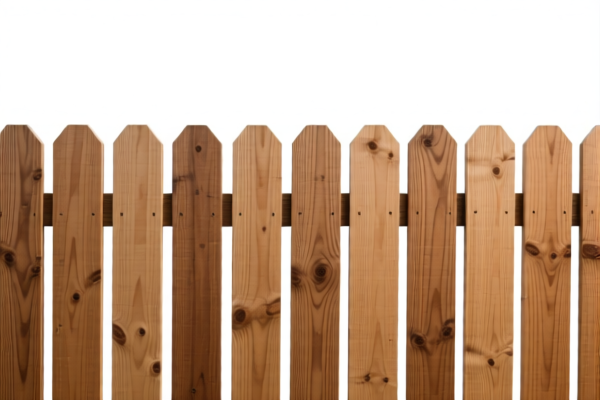
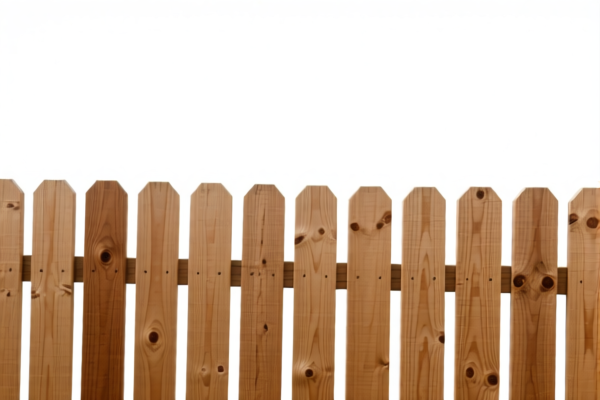
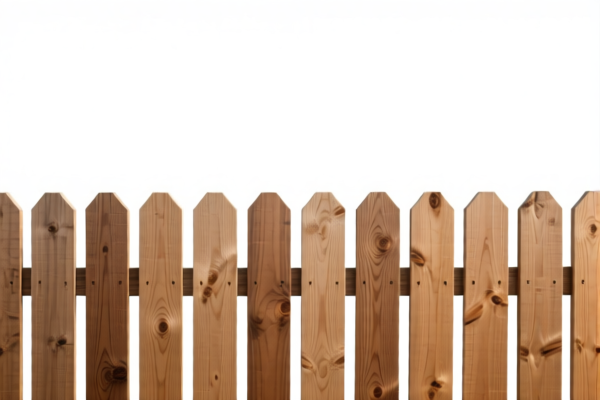

AI Analysis
🏡 Wood Fences (Wooden Fencing Systems)
🌐 HS Code Reference & Customs Clearance Guide | 2026 Latest Tariff Analysis | Professional Compliance Strategy
📌 I. Product Definition & Classification: Do You Really Know "Wood Fences"?
A "Wood Fence" is a boundary structure primarily used for residential, commercial, or agricultural property demarcation. In international trade, the classification of wooden fences is highly sensitive to material composition and structural form. Because the input "Wood Fences" implies wood but often lacks specific details on whether it is bamboo, other plant fibers, or solid timber, customs authorities require precise material identification.
The classification logic follows these key distinctions:
- Bamboo Fences: If the fence is made of processed bamboo strips or poles → Chapter 44 (4421.91.70.20).
- Timber/Wood Fences: If the fence is made of solid wood posts, rails, or panels → Chapter 44 (4421.99.70.20).
- Metal Fences (Steel/Iron): Even if labeled "wood-style," if the material is metal → Chapter 73 (7314.39.00.00 / 7314.31.10.00).
- Plastic/Vinyl Fences: If made of PVC or similar polymers → Chapter 39 (3926.90.99.40).
⚠️ Critical Distinction Point:
- "Bamboo" vs. "Wood": Both fall under Chapter 44 but have different subheadings. Bamboo is often categorized separately due to its specific processing methods.
- Material Confirmation is Key: Customs will reject vague declarations. You must specify "Bamboo," "Timber," "Steel," or "PVC."
- "Fence" vs. "Picket/Fence Section": Structural elements like posts and rails are often grouped under "Fence Parts."
📦 II. HS Code Classification Details (2026 Latest Tariff Authority Comparison)
| HS Code | Product Description | Material Assumption | Application Scenario | Key Differentiator |
|---|---|---|---|---|
4421.91.70.20 |
Fence Posts, Rails, and Pickets | Bamboo (Inferred) | Bamboo fencing systems, garden barriers | Material is bamboo, not timber. |
4421.99.70.20 |
Fence Sections and Parts | Wood/Timber (Inferred) | Solid wood picket fences, privacy screens | Material is wood, not bamboo or metal. |
3926.90.99.40 |
Other Plastic Articles | Plastic/PVC | Vinyl fences, composite fencing with plastic core | No wood/bamboo content; polymer-based. |
7314.39.00.00 |
Fences, Wire Mesh, Grids | Steel/Iron (Inferred) | Metal mesh fences, wire fencing, steel palisade | Material is metal; shape is grid/mesh. |
7314.31.10.00 |
Fences, Wire Mesh, Grids | Steel/Iron (Inferred) | Heavy-duty steel fencing, welded wire mesh | Specific subcategory for certain steel grid structures. |
🔍 Important Reminder:
- The input "Wood Fences" strongly suggests Chapter 44. However, without explicit material confirmation, customs may flag the shipment for inspection.
- If the fence is metal painted brown to look like wood, it MUST be classified under Chapter 73 (Metal), not Chapter 44. Misdeclaration can lead to severe penalties.
- Bamboo is distinct from Wood in HS Code terms. Ensure your supplier specifies the material.
💰 III. 2026 Latest Tariff Rate Breakdown (Including Additional Duties & Policy Surcharges)
✅ Applicable Country: United States (US)
✅ Country of Origin: China (CN) (Note: Tariffs vary significantly based on origin. This analysis assumes China-origin goods subject to Section 301 and IEEPA tariffs, as per the provided data context.)
✅ Effective Time: Post-2025 (Including Section 122 and IEEPA surcharges)
🎯 1. 4421.91.70.20 – Bamboo Fence Posts/Rails (Chapter 44, Section 301)
| Item | Content |
|---|---|
| Base Tariff | 0.0% (ad valorem) |
| Section 301 Additional Tariff | +25.0% |
| IEEPA / Section 122 Surcharge | +10.0% |
| Total Effective Rate | 35.0% |
| Tax Calculation | CIF Value × 35% |
| De Minimis Exemption | ❌ Not Applicable (Deny de minimis for high-value goods subject to these tariffs) |
| Legal Basis | USITC:4421.91.70.20 → Section 301: 25% → IEEPA: 10% |
📌 Explanation:
- Bamboo products are often classified under Chapter 44.
- They are subject to Section 301 tariffs (25%) due to US-China trade tensions.
- Additional 10% surcharge applies under IEEPA/Section 122 provisions for certain Chinese imports.
- Total 35% is a significant cost factor.
🎯 2. 4421.99.70.20 – Wood Fence Sections (Chapter 44, Section 301)
| Item | Content |
|---|---|
| Base Tariff | 0.0% |
| Section 301 Additional Tariff | +25.0% |
| IEEPA / Section 122 Surcharge | +10.0% |
| Total Effective Rate | 35.0% |
| Tax Calculation | CIF Value × 35% |
| De Minimis Exemption | ❌ Not Applicable |
| Legal Basis | USITC:4421.99.70.20 → Section 301: 25% → IEEPA: 10% |
📌 Note:
- Wood fences (solid timber) fall under the same high-tariff bracket as bamboo fences in this context.
- Even if labeled "Eco-Friendly Wood," if it's from China, these surcharges apply.
🎯 3. 3926.90.99.40 – Plastic/Vinyl Fences (Chapter 39)
| Item | Content |
|---|---|
| Base Tariff | 5.3% |
| Section 301 Additional Tariff | +7.5% |
| IEEPA / Section 122 Surcharge | +10.0% |
| Total Effective Rate | 22.8% |
| Tax Calculation | CIF Value × 22.8% |
| De Minimis Exemption | ❌ Not Applicable |
| Legal Basis | USITC:3926.90.99.40 → Section 301: 7.5% → IEEPA: 10% |
📌 Observation:
- Plastic fences have a lower total tariff (22.8%) compared to wood/bamboo (35.0%).
- Base tariff is higher (5.3%), but Section 301 surcharge is lower.
- Consider this if material flexibility exists in your supply chain.
🎯 4. 7314.39.00.00 – Metal Fences (Steel/Iron) (Chapter 73)
| Item | Content |
|---|---|
| Base Tariff | 0.0% |
| Section 301 Additional Tariff | +25.0% |
| Section 232 / Steel & Aluminum Tariff | +50.0% (Note: Data indicates 50% for steel/aluminum) |
| IEEPA / Section 122 Surcharge | +10.0% |
| Total Effective Rate | 85.0% |
| Tax Calculation | CIF Value × 85.0% |
| De Minimis Exemption | ❌ Not Applicable |
| Legal Basis | USITC:7314.39.00.00 → Section 301: 25% → Section 232: 50% → IEEPA: 10% |
📌 Critical Warning:
- Metal fences are subject to the HIGHEST tariffs.
- Section 232 Tariffs (50%) apply to steel and aluminum products.
- Total 85% makes metal fencing from China extremely costly.
- Do NOT misdeclare metal fences as wood to avoid this. Customs X-ray scans easily detect metal density.
🎯 5. 7314.31.10.00 – Specific Metal Grid Fences
| Item | Content |
|---|---|
| Base Tariff | 0.0% |
| Section 301 Additional Tariff | +25.0% |
| Section 232 / Steel & Aluminum Tariff | +50.0% |
| IEEPA / Section 122 Surcharge | +10.0% |
| Total Effective Rate | 85.0% |
| Tax Calculation | CIF Value × 85.0% |
| De Minimis Exemption | ❌ Not Applicable |
📌 Note:
- Same high tariff structure as above.
- Applies to specific steel wire mesh or grid structures.
🛠️ IV. Customs Clearance Practical Advice (Battle-Tested Pitfall Avoidance)
✅ 1. Documentation Checklist (Non-Negotiable)
| Document | Required | Explanation |
|---|---|---|
| ✅ Product Specifications | ✔️ | Must explicitly state material: "100% Bamboo," "Solid Oak Wood," "PVC Vinyl," or "Steel." |
| ✅ Material Certificate | ✔️ | From supplier confirming composition. Critical for Chapter 44 vs. Chapter 73 distinction. |
| ✅ Product Photos (Clear) | ✔️ | Show joints, fasteners, and overall structure to prove it's a fence, not raw timber. |
| ✅ Commercial Invoice | ✔️ | HS Code must match the material. Do not use generic "Fence Parts." |
| ✅ Packing List | ✔️ | Detail weight and dimensions. Heavy metal fences may incur different freight class. |
| ✅ Third-Party Test Reports | ✔️ | For wooden fences: Fumigation Certificate (ISPM 15) is often required. |
✅ 2. Declaration Tips (Key Mnemonic)
🔥 “Material First, Structure Second. Don’t Hide Metal as Wood!”
| Scenario | Correct Declaration | Wrong Action |
|---|---|---|
| Bamboo Fence | 4421.91.70.20 – "Bamboo Fence Sections" |
Declare as "Wood Fences" → Risk of classification error. |
| Solid Wood Fence | 4421.99.70.20 – "Wood Fence Panels" |
Declare as "Plastic" → Fraud alert. |
| Steel Fence (Brown Coated) | 7314.39.00.00 – "Steel Fence Mesh" |
Declare as "Wood" → 85% tariff avoided? No, penalty added! |
| Vinyl Fence | 3926.90.99.40 – "PVC Fence Panels" |
Declare as "Wood" → Material mismatch. |
✅ 3. Special Case Handling
| Scenario | Handling Advice |
|---|---|
| Composite Materials | If fence is wood-plastic composite (WPC), classify under Chapter 39 (Plastics) or Chapter 44 depending on predominant material. Check with customs broker. |
| ISPM 15 for Wood | Mandatory: Wooden fences from China must be heat-treated and marked with the ISPM 15 stamp to enter the US. Without it, shipment will be rejected or destroyed. |
| Section 232 Steel | If any part is steel (e.g., metal posts in a wooden fence), the entire shipment may be scrutinized. Ensure clear separation in declaration. |
| Bamboo vs. Wood | Clearly distinguish. Bamboo is cheaper to classify in some contexts, but wood is more common. Verify with supplier. |
🌍 V. Global Market Clearance Comparison (2026 Latest)
| Country/Region | Recommended HS Code | Tariff (China Origin) | Certification Requirement | Remarks |
|---|---|---|---|---|
| 🇺🇸 USA | 4421.99.70.20 (Wood) |
35% | ISPM 15 (Wood) | High tariffs due to Section 301 & IEEPA. |
| 🇺🇸 USA | 7314.39.00.00 (Steel) |
85% | None | Extremely high cost. Avoid if possible. |
| 🇪🇺 EU | 4421.99.00 |
Varies (0-5%) | None | No Section 301. More favorable. |
| 🇨🇦 Canada | 4421.99.00 |
Varies (0-5%) | None | CUSMA benefits may apply if origin is North America. |
| 🇬🇧 UK | 4421.99.00 |
Varies (0-5%) | None | Post-Brexit tariffs may differ from EU. |
📌 Conclusion:
- USA is the most challenging market due to additive tariffs (Section 301, IEEPA, Section 232).
- Wood/Bamboo (35%) is significantly cheaper than Metal (85%).
- Compliance with ISPM 15 is non-negotiable for wood products.
📌 VI. Common Errors & Pitfalls (Lessons Learned)
❌ Error 1: Declaring "Wood Fences" but shipping metal posts.
👉 Consequence: Customs detects metal via X-ray → 85% tariff applied retroactively + fines.
❌ Error 2: Forgetting ISPM 15 marking on wooden fences.
👉 Consequence: Shipment held at port → Storage fees + re-export or destruction.
❌ Error 3: Mislabeling Bamboo as Wood.
👉 Consequence: Classification dispute → Delay in clearance + potential re-classification to higher tax bracket.
❌ Error 4: Assuming "Plastic Fences" are exempt from surcharges.
👉 Consequence: Still subject to IEEPA 10% and Section 301 7.5% → 22.8% total.
✅ Correct Approach:
"Wooden Fence Panels, Solid Pine, ISPM 15 Certified, Model WFP-2026, for Residential Use"
(Specify material, certification, and model number clearly.)
🎯 VII. Conclusion: Precision in Classification, Savings in Tariffs
🎯 Remember This Mantra:
🔹 "Wood is 35%, Metal is 85%, Plastic is 23%. ISPM 15 is Mandatory for Wood!"
🔹 "Don't Hide Metal as Wood. Don't Hide Wood as Plastic. Truth in Declaration Saves Money!"
📌 Pro Tip:
If your fences are made from non-Chinese materials (e.g., wood from Europe, plastic from Vietnam), you may qualify for lower or zero tariffs under trade agreements.
Always request a Certificate of Origin and consult with a licensed customs broker to apply for Section 301 Exclusions if applicable.
📣 Immediate Action Required:
📞 Verify Material Composition with Supplier.
📦 Ensure ISPM 15 Marking on All Wood Products.
📄 Apply for HS Code Pre-Ruling if unsure.
🚀 Clearance Success = Accurate Declaration + Proper Documentation + Strategic Tariff Planning.
✨ Professional Customs Clearance Starts with Accurate HS Codes!
💼 Every Percent of Tariff Saved is Pure Profit!
Customer Reviews
About HS Code Classification
The Harmonized System (HS) is an internationally standardized nomenclature developed by the World Customs Organization (WCO) to classify traded products. Over 200 countries use the HS system as the basis for customs tariffs, trade statistics, and import/export regulations.
Each HS code follows a hierarchical structure:
- Chapter (2 digits) — Broad category of goods (e.g., Chapter 84: Machinery and Mechanical Appliances)
- Heading (4 digits) — More specific grouping within the chapter
- Subheading (6 digits) — Internationally standardized breakdown, used by all WCO member countries
- National subdivisions (8-10 digits) — Country-specific extensions for further classification, such as US HTSUS 10-digit codes
Correct HS code classification is essential for smooth customs clearance, accurate duty payment, and compliance with trade regulations. Misclassification can lead to customs delays, overpayment of duties, or penalties.
When importing from CN to US, the applicable tariff rates may include:
- Most-Favored-Nation (MFN) rate — The standard duty rate applied to WTO members
- General rate — Applied to countries without trade agreements
- Trade remedy duties — Additional tariffs such as Section 301 (anti-dumping), Section 232 (national security), or countervailing duties
The information provided on this page is for reference purposes only. For official classification, please consult with your local customs authority or a licensed customs broker.