Wood Flower Pots
CN → USProduct Images
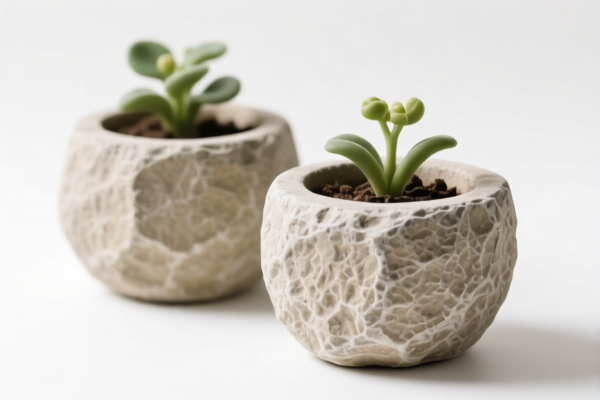
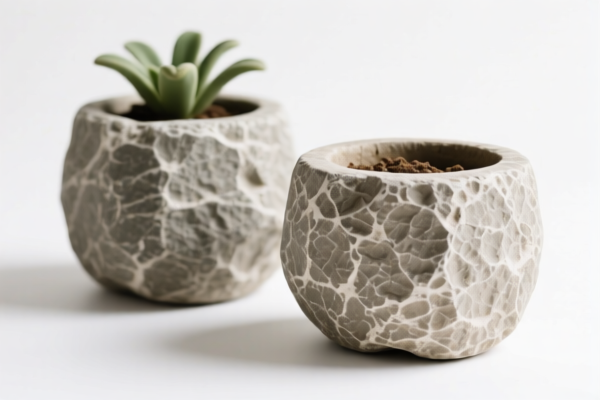
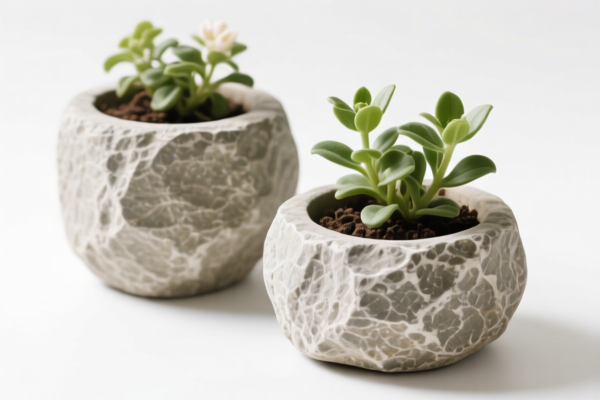

AI Analysis
🌸 Wooden Flower Pots (Wooden Planters)
🌐 HS Code Reference & Customs Clearance Guide | 2026 Latest Tariff Analysis | Professional Import Strategy
📌 I. Product Definition & Classification: Are You Sure You Know "Wooden Flower Pots"?
Wooden flower pots are gardening containers made primarily from wood, designed to hold soil and plants. In international trade, they are classified based on their material composition, manufacturing process, and primary function. Unlike plastic or ceramic pots, wooden ones fall under Chapter 46 (Basketweaving) or Chapter 44 (Wood and Wood Products), depending on specific construction details.
Key Distinctions: * Solid Wood Planters: Made from solid timber, planks, or logs. These are classified under Chapter 44. * Woven/Wicker/Bamboo Planters: Made from strips of wood, bamboo, rattan, or other plaiting materials. These are classified under Chapter 46. * Composite/Engineered Wood: If made from chipboard or MDF with a veneer, they may still fall under Chapter 44 but require careful substantiation.
⚠️ Critical Classification Point:
- If the pot is woven (e.g., willow, rattan, bamboo strips) → Chapter 46
- If the pot is assembled from solid wood/planks → Chapter 44
- If it includes a plastic liner or coating, it usually remains classified by the primary structural material (wood).
📦 II. HS Code Classification Details (2026 Latest Tariff Authority Comparison)
| HS Code | Product Description | Application Scenario | Material Type |
|---|---|---|---|
4602.19.00.00 |
Basketweaving materials and products (e.g., wicker, rattan, bamboo) | Woven bamboo/palm leaf pots, decorative woven planters | ✅ Woven/Plaited |
4415.20.00.00 |
Crate, boxes, cases, and similar packings of wood | Simple wooden crates used as planters, or industrial-style wooden boxes | ✅ Solid Wood/Crate |
4421.99.90.90 |
Other articles of wood (not elsewhere specified) | Custom-designed wooden planters, carved wooden pots, garden furniture pots | ✅ Solid Wood/Articulated |
3926.90.99.90 |
Other articles of plastic | ❌ Excluded – Only if the pot is plastic with wood veneer (but classified as plastic) | ❌ Plastic |
6307.90.98.90 |
Other made-up textile articles | ❌ Excluded – Fabric liners or felt pots (not wood) | ❌ Fabric |
🔍 Key Reminder:
- Woven pots (bamboo, willow, rattan) must go to 4602.19.00.00.
- Solid wood planters (constructed from planks, blocks, or sheets) typically fall under 4421.99.90.90 if they are finished goods for home/garden use.
- Crate-style planters (simple box construction) may fall under 4415.20.00.00, but this is less common for decorative home use.
- Do not misclassify solid wood pots as "plastic" if they have a veneer; the primary material dictates the chapter.
💰 III. 2026 Latest Tariff Rate Details (Including Surcharges & Policy Add-ons)
✅ Applicable Country: United States (US)
✅ Origin: China (CN)
✅ Effective Date: November 10, 2025 (and subsequent imports)
🎯 1. 4602.19.00.00 —— Woven Planters (Bamboo/Rattan/Willow)
| Item | Content |
|---|---|
| Base Tariff | 0% (ad valorem) |
| USITC Surcharge | +10% (Note: Check Footnote for specific exemptions; often 10% for woven goods from China) |
| IEEPA Surcharge | +10% (for China/HK products, effective Nov 10, 2025) |
| Total Tariff | 20% |
| Tax Calculation | CIF Value × 20% |
| De Minimis Eligibility | ❌ No (deny_de_minimis) |
| Legal Pathway | IEEPA:9903.01.24 → USITC:4602.19.00.00 → FOOTNOTE:9903.88.01 |
📌 Explanation:
- Woven products from China are subject to a 10% USITC surcharge (often reduced from 25% for certain woven goods, but confirm current 2026 status).
- IEEPA adds another 10%.
- Total: 20%. This is moderate compared to electronics but still significant for low-margin goods.
🎯 2. 4421.99.90.90 —— Other Wood Articles (Solid Wood Planters)
| Item | Content |
|---|---|
| Base Tariff | 5.3% (Standard MFN) |
| USITC Surcharge | +25% (Section 301 Tariff) |
| IEEPA Surcharge | +10% (China/HK specific) |
| Total Tariff | 40.3% |
| Tax Calculation | CIF Value × 40.3% |
| De Minimis Eligibility | ❌ No (deny_de_minimis) |
| Legal Pathway | IEEPA:9903.01.25 → IEEPA:9903.01.24 → USITC:4421.99.90.90 → FOOTNOTE:9903.88.01 |
📌 Explanation:
- Solid wood articles are heavily taxed under Section 301.
- Base 5.3% + 25% (301) + 10% (IEEPA) = 40.3%.
- High tariff risk! This makes solid wood planters expensive to import from China to the US.
🛠️ IV. Customs Clearance Practical Advice (Pitfall Avoidance Guide)
✅ 1. Documentation Checklist (Missing Docs = Delays)
| Document | Required | Notes |
|---|---|---|
| ✅ Product Specifications | ✔️ | Material type (solid wood vs. woven), dimensions, treatment (painted/stained) |
| ✅ Material Composition Statement | ✔️ | Clarify if bamboo, willow, oak, pine, etc. |
| ✅ Processing Method Description | ✔️ | "Woven," "Assembled," "Turned," "Carved" |
| ✅ Photos of Product & Packaging | ✔️ | Show construction method clearly |
| ✅ Commercial Invoice | ✔️ | Must state "Wooden Flower Pot" or "Woven Planter" accurately |
| ✅ Phytosanitary Certificate | ✔️ | CRITICAL for wood products to prevent pest issues |
| ✅ ISPM 15 Mark (if palletized) | ✔️ | If shipped on wooden pallets, they must be heat-treated and marked |
✅ 2. Declaration Tips (Key Mantra)
🔥 "Woven is 46, Wood is 44, Treatment Matters, Pests Must Pass!"
| Scenario | Correct Declaration | Wrong Practice |
|---|---|---|
| Woven bamboo pot | 4602.19.00.00 |
Misdeclare as 4421.99.90.90 → Higher tax + audit |
| Solid wood planter | 4421.99.90.90 |
Misdeclare as "Plastic" → Fraud penalty |
| Pot with plastic liner | Same as above | Do not declare as "Plastic" if wood is structural |
| Bare wood (no finish) | 4421.99.90.90 |
Still same code, but note "Unfinished" for phytosanitary |
| Decorative wooden bowl used as planter | 4421.99.90.90 |
Declare by function: "Planter" not "Bowl" if intended for plants |
✅ 3. Special Cases
| Scenario | Handling Advice |
|---|---|
| Treated Wood | Declare if treated with preservatives/paint. May require additional safety data sheets (SDS). |
| Raw Unfinished Wood | Strict Phytosanitary Controls. Must be heat-treated (HT) or fumigated (MB) and certified. |
| Mixed Materials | If wood frame with fabric liner, classify as wood if wood is essential. |
| Gift Sets | If part of a gift box, declare separately to avoid complex classification of the set. |
🌍 V. Global Market Clearance Comparison (2026 Latest)
| Country/Region | Recommended HS Code | Tariff | Certification | Notes |
|---|---|---|---|---|
| 🇺🇸 USA | 4602.19.00.00 / 4421.99.90.90 |
20% / 40.3% | Phytosanitary Cert | High tariffs on wood; strict pest rules |
| 🇨🇳 China | 4602.19.00.00 / 4421.99.90.90 |
5-10% | CCC (if applicable) | Low tariffs for home use |
| 🇪🇺 EU | 4602.19.00.00 / 4421.99.90.90 |
0-4% | FSC/PEFC (Voluntary) | No major surcharges; focus on sustainability |
| 🇬🇧 UK | 4602.19.00.00 / 4421.99.90.90 |
0-5% | UKCA (if applicable) | Post-Brexit rules apply |
| 🇦🇺 Australia | 4602.19.00.00 / 4421.99.90.90 |
5% | Biosecurity Check | Strict biosecurity for wood |
📌 Conclusion:
- USA has the highest tariffs for wooden planters from China (up to 40.3%).
- EU and UK are more tariff-friendly, but emphasize sustainability certifications (FSC).
- Biosecurity is a global concern for wood products; always have phytosanitary certificates.
📌 VI. Common Mistakes & Pitfall Guide (Lessons Learned)
❌ Mistake 1: Declaring woven bamboo pots as "Plastic" to avoid wood tariffs
👉 Consequence: Customs audit, fines, and potential seizure for false declaration.
❌ Mistake 2: Shipping untreated wood without Phytosanitary Certificate
👉 Consequence: Rejected entry, destruction of goods, or return shipment.
❌ Mistake 3: Using "Wooden Pot" as a generic description without specifying material
👉 Consequence: Customs may classify under highest duty rate or request additional documentation.
❌ Mistake 4: Ignoring ISPM 15 for wooden packaging
👉 Consequence: Pallets may be destroyed, delaying cargo release.
✅ Correct Practice:
"Woven Bamboo Flower Pot, Decorative, Handmade, Untreated, For Home Use, HS Code 4602.19.00.00"
or
"Solid Pine Wood Planter Box, Painted, 12-inch, For Indoor/Outdoor Use, HS Code 4421.99.90.90"
🎯 VII. Conclusion: Professional Declaration, Save Time & Money!
🎯 Remember the Mantra:
🔹 "Woven is 46, Wood is 44, Tariff Risk is High, Biosecurity is Key!"
🔹 "HS Code Determines Duty, Tariff Difference is Huge, Declare Accurately to Save Cash!"
📌 Tips:
- If your wooden planters are made in Vietnam, Thailand, or Indonesia, check for IEEPA exemptions or lower Section 301 rates.
- Consider FSC Certification for EU/UK markets to enhance marketability.
- Always obtain Phytosanitary Certificates for wood products shipped to the US, EU, Australia, etc.
📣 Immediate Action:
📞 Contact a professional customs broker + Provide product photos + Apply for HS Code Pre-Ruling
🚀 Ensure your wooden planters clear customs smoothly, avoid biosecurity issues, and maximize profits!
✨ Professional clearance starts with accurate classification!
💼 Every penny of tariff cost deserves precise calculation!
Customer Reviews
About HS Code Classification
The Harmonized System (HS) is an internationally standardized nomenclature developed by the World Customs Organization (WCO) to classify traded products. Over 200 countries use the HS system as the basis for customs tariffs, trade statistics, and import/export regulations.
Each HS code follows a hierarchical structure:
- Chapter (2 digits) — Broad category of goods (e.g., Chapter 84: Machinery and Mechanical Appliances)
- Heading (4 digits) — More specific grouping within the chapter
- Subheading (6 digits) — Internationally standardized breakdown, used by all WCO member countries
- National subdivisions (8-10 digits) — Country-specific extensions for further classification, such as US HTSUS 10-digit codes
Correct HS code classification is essential for smooth customs clearance, accurate duty payment, and compliance with trade regulations. Misclassification can lead to customs delays, overpayment of duties, or penalties.
When importing from CN to US, the applicable tariff rates may include:
- Most-Favored-Nation (MFN) rate — The standard duty rate applied to WTO members
- General rate — Applied to countries without trade agreements
- Trade remedy duties — Additional tariffs such as Section 301 (anti-dumping), Section 232 (national security), or countervailing duties
The information provided on this page is for reference purposes only. For official classification, please consult with your local customs authority or a licensed customs broker.