Wood Logs
CN → US| HS Code | Tariff Rate | Origin | Destination | Doc |
|---|---|---|---|---|
| 4401110000 | 35.0% | CN | US | Official Doc |
| 4403990195 | 35.0% | CN | US | Official Doc |
| 4401120000 | 35.0% | CN | US | Official Doc |
| 4407110043 | 35.0% | CN | US | Official Doc |
| 4403210130 | 35.0% | CN | US | Official Doc |
Product Images
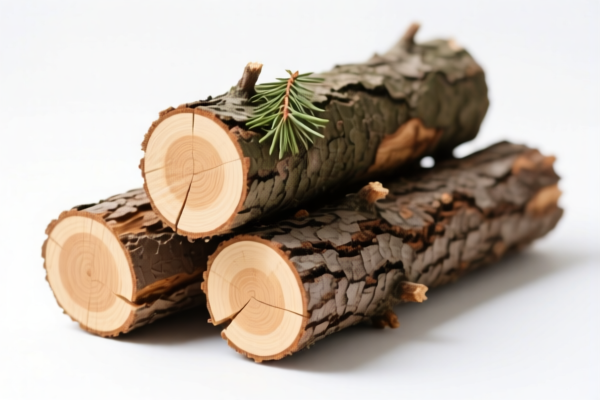
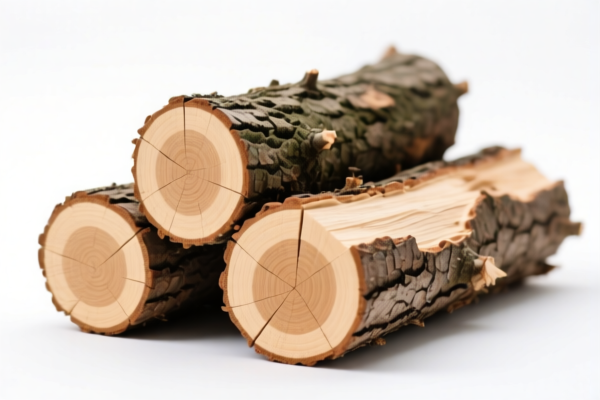
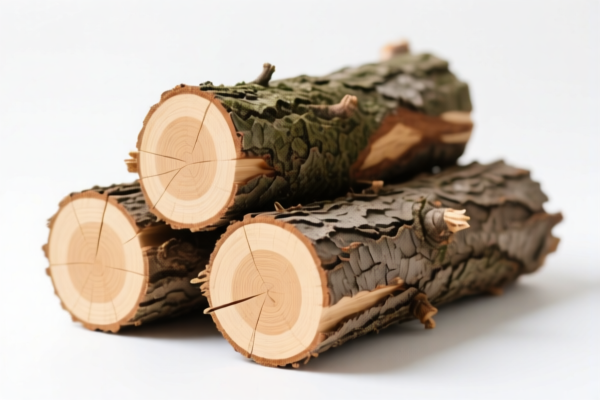
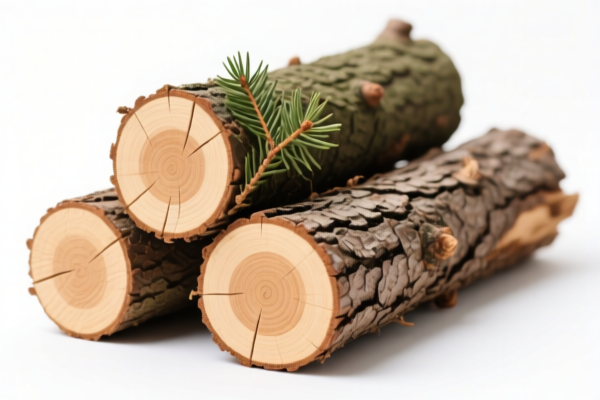
AI Analysis
🪵 Wood Logs (Raw Timber & Fuel Wood)
🌐 HS Code Reference & Customs Clearance Guide | 2026 Latest Tariff Analysis | Professional Entry Strategy
📌 I. Product Definition & Classification: Do You Really Understand "Wood Logs"?
Wood logs, in the context of international trade, generally refer to timber in its primary raw form. They are broadly categorized into two functional types based on their intended use and processing state:
- Fuel Wood (Fuel Logs): Logs primarily intended for burning as fuel. They may be unprocessed or roughly squared.
- Industrial/Processing Timber (Rough Sawn/Other): Logs intended for further processing (sawing, veneering, etc.) or classified under residual categories for other types of wood.
⚠️ Key Distinction Point:
- If the logs are explicitly designated or naturally suited for burning/fuel, they typically fall under 4401.1x.
- If the logs are for industrial use (sawing, plywood) or fall into a "catch-all" category for specific wood species not explicitly listed elsewhere, they may fall under 4403.99 or 4407.1x.
- Critical Note: All provided HS codes in the dataset carry a 35.0% Total Tax Rate for imports from China to the US, due to significant additional tariffs.
📦 II. HS Code Classification Details (2026 Latest Tariff Authority Match)
| HS Code | Product Description | Application Scenario | Tax Classification Logic |
|---|---|---|---|
4401.11.00.00 |
Fuel wood, whether or not chopped, chipped or crushed; in the form of logs | Primary Fuel Logs: Logs classified directly as fuel wood (e.g., pine logs for heating) | ✅ Fuel Wood Form: Direct match to "primary form" for fuel |
4403.99.01.95 |
Other wood, wholly or partly treated, coated, etc.; other wood (catch-all for unspecific species) | Rough Sawn/Other Logs: Used for other types of wood where specific species codes don't apply; acts as a "residual" or "other" category | ✅ Residual/Catch-all: For logs that fit general "raw wood" attributes but don't fit specific species lines |
4401.12.00.00 |
Fuel wood, whether or not chopped, chipped or crushed; in the form of logs | Non-Pine or Mixed Fuel Logs: Inferred as non-coniferous or mixed fuel wood based on summary | ✅ Fuel Wood Inference: Deduced from "fuel wood morphology" description |
4407.11.00.43 |
Wood sawn or chipped lengthwise, sliced or peeled, veneer sheets, etc.; of coniferous species | Industrial Raw Material: Logs viewed strictly as raw timber material without conflict; often used for coniferous (pine/spruce) industrial logs | ✅ Raw Material Definition: Focuses on "wood material" definition for industrial processing |
4403.21.01.30 |
Wood treated, coated, or impregnated; other wood; of coniferous species | Coniferous Raw Logs: Logs inferred to be of woody material, specifically coniferous, without conflicts | ✅ Coniferous Wood: Inferred from "log and wood morphology" and woody material attributes |
🔍 重点提醒 (Key Reminders):
- All 5 HS Codes listed above share the exact same tax structure: A total tariff of 35.0%.
- 4401 Series: Focuses on Fuel Wood. If your logs are strictly for burning,4401.11or4401.12are most accurate.
- 4403/4407 Series: Focus on Processing Timber. If logs are for sawmills or veneer, these apply.4403.99.01.95is the "catch-all" for unspecified woods.
- Do not split shipments: Sending logs as "fuel" vs "processing material" separately to reduce tax is high-risk; the material nature determines the code.
💰 III. 2026 Latest Tariff Rate Breakdown (Including Surcharges & Policy Add-ons)
✅ Applicable Country: United States (US)
✅ Country of Origin: China (CN)
✅ Effective Time: Current rates apply (Section 301 & IEEPA measures)
🎯 Common Tax Structure for ALL Listed HS Codes (4401.11.00.00, 4403.99.01.95, 4401.12.00.00, 4407.11.00.43, 4403.21.01.30)
| Item | Content |
|---|---|
| Base MFN Tariff | 0.0% (Most Favored Nation rate is often 0% for raw timber) |
| Section 301 Additional Tariff | +25.0% (Imposed on many Chinese wood products under US Trade Law) |
| Section 122 / IEEPA Additional Tariff | +10.0% (Specific surcharge applied to these categories, often linked to broader China trade actions) |
| Total Tax Rate | 35.0% |
| Tax Calculation | CIF Value (Cost, Insurance, Freight) × 35% |
| De Minimis Exemption | ❌ Not Applicable (Deny De Minimis) |
| Legal Authority Path | Base: HTSUS 44xx → Sec 301: Footnote 9903.xx → Add-on: Section 122/IEEPA |
📌 Explanation:
- "Base Tariff 0.0%": Raw wood logs often enter duty-free under normal trade relations.
- "Section 301 Tariff 25%": This is the major penalty added by the US under Trade Act Section 301 against China.
- "Section 122 Tariff 10%": An additional surcharge applied to specific goods, contributing to the total 35%.
- Total 35%: This is a high cost barrier. Importers must calculate this into the landed cost.
- No De Minimis: Small shipments do NOT qualify for the $800 exemption. Every shipment is taxed.
🛠️ IV. Customs Clearance Practical Advice (Battle-Tested Pitfall Guide)
✅ 1. Required Documentation Checklist (Must-Haves)
| Document | Must Provide | Description |
|---|---|---|
| ✅ Commercial Invoice | ✔️ | Clearly state "Wood Logs", species, quantity, weight, and CIF value. |
| ✅ Packing List | ✔️ | Detail pallets, crates, and total net/gross weight. |
| ✅ Phytosanitary Certificate | ✔️ | Critical! Issued by the country of origin's plant protection agency. Must confirm wood is pest-free (ISPM 15 standard). |
| ✅ Fumigation Certificate | ✔️ | If the wood is not heat-treated (HT) or marked with ISPM 15 stamp, fumigation proof is required. |
| ✅ Species Declaration | ✔️ | Specific scientific name (e.g., Pinus sylvestris) helps customs verify the correct HS sub-category. |
| ✅ Bill of Lading / Air Waybill | ✔️ | Standard shipping documents. |
✅ 2. Declaration Tips (Key Mnemonics)
🔥 "Species Clear, Pest Free, Code Exact, Tax 35%! "
| Situation | Correct Declaration | Incorrect Practice |
|---|---|---|
| Logs for Fuel | HS 4401.11.00.00 or 4401.12.00.00 |
Declare as "Lumber" → Risk of misclassification penalty |
| Logs for Sawmills | HS 4403.99.01.95 or 4407.11.00.43 |
Declare as "Fuel" → Incorrect use, potential audit |
| Uncertain Species | HS 4403.99.01.95 (Catch-all) |
Guessing specific species → Delay for lab testing |
| Heat-Treated Pallets in Cargo | Must show ISPM 15 Mark | No mark → Quarantine/Fumigation at port cost |
✅ 3. Special Handling Cases
| Situation | Handling Advice |
|---|---|
| Green vs. Dry Logs | Specify moisture content. "Green" logs may have stricter phytosanitary controls. |
| Bark On vs. Bark Off | Bark often harbors pests. "Bark on" logs require stricter fumigation or heat treatment. |
| OEM/Custom Loads | Provide end-use declaration (e.g., "For residential heating" vs "For industrial veneer"). |
| Wood Waste/Shavings | If mixed with logs, declare separately. Waste may have different rules. |
🌍 V. Global Market Comparison (2026 Latest)
| Country/Region | Recommended HS Code | Tariff (China Origin) | Certification Requirement | Remarks |
|---|---|---|---|---|
| 🇺🇸 USA | 4401.11.00.00 / 4403.99.01.95 |
35.0% | Phytosanitary + ISPM 15 | Highest cost due to 301 + 122 tariffs |
| 🇨🇳 China | 4401.00.00.00 |
~0-5% | None for import | Domestic trade low tax |
| 🇪🇺 EU | 4401.10.00 |
~0-5% | Fumigation Certificate | Strict EU timber regulations (EUTR) |
| 🇦🇺 Australia | 4401.10.00 |
~0-5% | MIA (Min. Import Requirements) | Very strict biosecurity |
| 🇯🇵 Japan | 4401.10.00 |
~0-5% | Heat Treatment Proof | Strict pest control |
📌 Conclusion:
- The US is the most expensive market for Chinese wood logs due to the 35% blended tariff.
- Phytosanitary compliance is non-negotiable. Failure to provide ISPM 15 markings or fumigation certificates leads to rejection or destruction of cargo.
📌 VI. Common Errors & Pitfall Guide (Lessons Learned)
❌ Error 1: Declaring "Fuel Wood" but shipping "Industrial Timber"
👉 Consequence: Customs audit, fines, and possible seizure for misdeclaration.
👉 Solution: Match the HS code exactly to the primary intended use.
❌ Error 2: Forgetting the Phytosanitary Certificate
👉 Consequence: Cargo held at port, fumigated at importer's expense ($5,000+), or returned.
👉 Solution: Ensure exporter provides valid, English-language Phytosanitary Certificate before shipping.
❌ Error 3: Assuming "De Minimis" ($800) applies
👉 Consequence: Underpayment of duties, leading to penalties upon inspection.
👉 Solution: All wood imports from China are taxed, regardless of value.
❌ Error 4: Incorrectly identifying Species
👉 Consequence: Delay in clearance for species verification (lab tests take weeks).
👉 Solution: Provide scientific names and clear photos of wood grain/bark.
✅ Correct Practice:
"Wood Logs, Pine Species (Pinus sylvestris), Heat Treated (ISPM 15 Marked), For Industrial Processing, CIF New York Port, HS 4403.99.01.95"
🎯 VII. Conclusion: Precision Classification Saves Costs!
🎯 Remember the Mnemonic:
🔹 "Fuel vs. Factory, Code Matches Use; 35% Tax is Real, No De Minimis Abuse!"
🔹 "Phytosanitary is Key, Bark on Needs Treatment; Misclassification Hurts, Get It Right from Start!"
📌 Pro Tip:
If your wood logs are sourced from Vietnam, Malaysia, or Thailand, you may avoid the 25% Section 301 tariff, potentially reducing the total rate to 10% (or even 0% base + 10% depending on specific origin rules).
Recommendation:
📞 Consult a Licensed Customs Broker
📄 Request Pre-Ruling (Advance Ruling) from US CBP if volume is high
🚀 Ensure ISPM 15 Marking is Visible on Every Pallet/Crate
✨ Professional Clearance Starts with Accurate Classification!
💼 Your Profit Margin Depends on Precision, Not Guesswork!
Customer Reviews
About HS Code Classification
The Harmonized System (HS) is an internationally standardized nomenclature developed by the World Customs Organization (WCO) to classify traded products. Over 200 countries use the HS system as the basis for customs tariffs, trade statistics, and import/export regulations.
Each HS code follows a hierarchical structure:
- Chapter (2 digits) — Broad category of goods (e.g., Chapter 84: Machinery and Mechanical Appliances)
- Heading (4 digits) — More specific grouping within the chapter
- Subheading (6 digits) — Internationally standardized breakdown, used by all WCO member countries
- National subdivisions (8-10 digits) — Country-specific extensions for further classification, such as US HTSUS 10-digit codes
Correct HS code classification is essential for smooth customs clearance, accurate duty payment, and compliance with trade regulations. Misclassification can lead to customs delays, overpayment of duties, or penalties.
When importing from CN to US, the applicable tariff rates may include:
- Most-Favored-Nation (MFN) rate — The standard duty rate applied to WTO members
- General rate — Applied to countries without trade agreements
- Trade remedy duties — Additional tariffs such as Section 301 (anti-dumping), Section 232 (national security), or countervailing duties
The information provided on this page is for reference purposes only. For official classification, please consult with your local customs authority or a licensed customs broker.