Wood Pellet Fuel
CN → US| HS Code | Tariff Rate | Origin | Destination | Doc |
|---|---|---|---|---|
| 4401210000 | 35.0% | CN | US | Official Doc |
| 4401220000 | 35.0% | CN | US | Official Doc |
| 4403220108 | 35.0% | CN | US | Official Doc |
| 4403240104 | 35.0% | CN | US | Official Doc |
| 4401310000 | 35.0% | CN | US | Official Doc |
Product Images
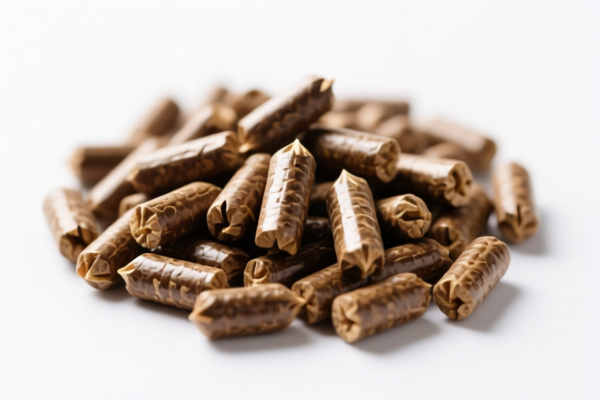
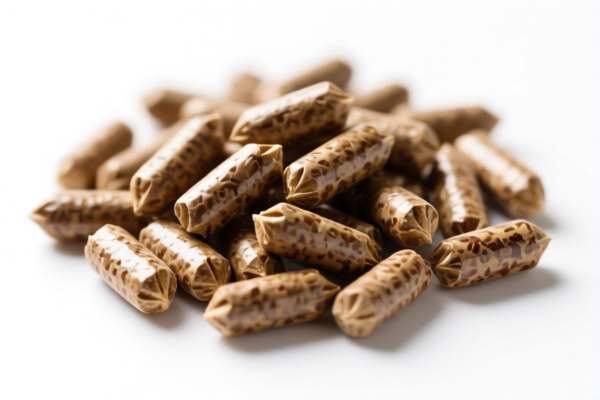
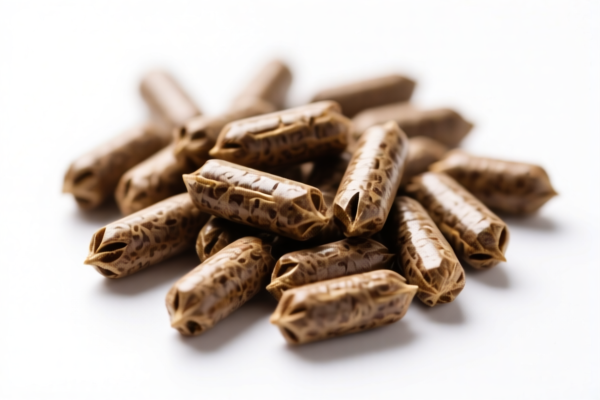

AI Analysis
🔥 Wood Pellet Fuel (Biomass Energy Source)
🌐 HS Code Reference & Customs Clearance Guide | 2026 Latest Tariff Analysis | Strategic Logistics Strategy
📌 I. Product Definition & Classification: Do You Really Understand "Wood Pellets"?
Wood Pellet Fuel, a high-density, low-moisture biomass energy product, is widely used in residential heating, industrial boilers, and power generation. In international trade, it is primarily classified under Chapter 44 (Wood and articles of wood; wood charcoal).
The classification hinges on two critical factors:
1. Form: Is it pellets (4401.31), chips (4401.21), slices (4401.22), or raw logs/bark (4403)?
2. Species: Is it coniferous (pine, spruce, fir) or non-coniferous (hardwood)?
⚠️ Key Distinction Point:
- If it is processed into uniform cylindrical pellets → Classify under 4401.31.00.00.
- If it is chipped wood (small, irregular pieces) → Classify under 4401.21.00.00 (for conifers).
- If it is wood slices (thin, flat cuts) → Classify under 4401.22.00.00.
- If it is raw/primary wood (logs, bark, sawdust not yet shaped into fuel-specific forms) → Classify under 4403.22.01.08 or 4403.24.01.04 (for other coniferous wood).
📦 II. HS Code Classification Details (2026 Latest Tariff Authority Comparison)
| HS Code | Product Description | Application Scenario | Form/State |
|---|---|---|---|
4401.21.00.00 |
Wood, in chips or particles (coniferous) | Industrial boiler fuel, biomass energy pellets/chips | ✅ Chipped/Granular |
4401.22.00.00 |
Wood, in chips or particles (non-coniferous) | General wood fuel, sawdust, light wood chips | ✅ Chipped/Flat |
4401.31.00.00 |
Wood, in pellets or briquettes | Standard wood pellet fuel for heating/stoves | ✅ Pelletized |
4403.22.01.08 |
Wood treated with paint, varnish, etc. (coniferous) | Raw coniferous wood, pine, spruce (primary form) | ❌ Raw/Log |
4403.24.01.04 |
Other wood, treated/impregnated (coniferous) | Pulpwood, raw coniferous原料 | ❌ Raw/Log |
🔍 Key Reminder:
- "Pellets" are distinct from "Chips". Pellets are compressed, uniform, and have higher energy density. Chips are irregular and less processed.
- Coniferous vs. Non-coniferous: Most wood pellets are made from coniferous wood (pine, spruce) due to higher resin content and burn efficiency. Ensure species declaration matches the physical sample.
- Raw Wood vs. Fuel Wood: If the wood is merely cut into logs or bark but not processed into chips/pellets, it falls under Chapter 44.03, not 4401.
💰 III. 2026 Latest Tariff Rate Breakdown (Including Additional Taxes & Policy Surcharges)
✅ Applicable Country: United States (US)
✅ Country of Origin: China (CN)
✅ Effective Date: November 10, 2025 (including subsequent imports)
🎯 1. 4401.21.00.00 – Wood, in chips or particles (coniferous)
| Item | Content |
|---|---|
| Base Tariff | 0% (ad valorem) |
| USITC Additional Tax | +25% (Under USITC Footnote 9903.88.01 / Section 301) |
| IEEPA Additional Tax | +10% (For Chinese/Hong Kong products, effective Nov 10, 2025) |
| Total Tax Rate | 35.0% |
| Tax Calculation | CIF Value × 35% |
| De Minimis Exemption | ❌ Not Eligible (deny_de_minimis) |
| Legal Basis Path | IEEPA:9903.01.25 → IEEPA:9903.01.24 → USITC:4401.21.00.00 → FOOTNOTE:9903.88.01 |
📌 Explanation:
- The 25% USITC tax is from Section 301 of the U.S. Trade Act, targeting Chinese wood products.
- The 10% IEEPA tax is the new surcharge under the International Emergency Economic Powers Act, effective Nov 2025.
- Total 35%, which is significant. Pre-calculation is essential.
🎯 2. 4401.22.00.00 – Wood, in chips or particles (non-coniferous)
| Item | Content |
|---|---|
| Base Tariff | 0% |
| USITC Additional Tax | +25% |
| IEEPA Additional Tax | +10% |
| Total Tax Rate | 35.0% |
| Tax Calculation | CIF × 35% |
| De Minimis Exemption | ❌ Not Eligible |
| Legal Basis Path | IEEPA:9901.25 → IEEPA:9903.01.24 → USITC:4401.22.00.00 → FOOTNOTE:9903.88.01 |
📌 Note:
- Same rate as coniferous chips. Non-coniferous wood (hardwood) is less common for pellets but still subject to same tariffs.
- Ensure "Non-coniferous" is accurately declared; misclassification can lead to audits.
🎯 3. 4401.31.00.00 – Wood, in pellets or briquettes
| Item | Content |
|---|---|
| Base Tariff | 0% |
| USITC Additional Tax | +25% |
| IEEPA Additional Tax | +10% |
| Total Tax Rate | 35.0% |
| Tax Calculation | CIF × 35% |
| De Minimis Exemption | ❌ Not Eligible |
| Legal Basis Path | IEEPA:9903.01.25 → IEEPA:9903.01.24 → USITC:4401.31.00.00 → FOOTNOTE:9903.88.01 |
📌 Critical:
- This is the most common HS code for commercial wood pellets.
- Must declare as "Pellets" with moisture content <10% and diameter 6–8mm.
- If declared as "Chips" but actually pellets, risk of penalty for misdeclaration.
🎯 4. 4403.22.01.08 – Coniferous wood, treated (e.g., pine, spruce)
| Item | Content |
|---|---|
| Base Tariff | 0% |
| USITC Additional Tax | +25% |
| IEEPA Additional Tax | +10% |
| Total Tax Rate | 35.0% |
| Tax Calculation | CIF × 35% |
| De Minimis Exemption | ❌ Not Eligible |
| Legal Basis Path | IEEPA:9903.01.25 → IEEPA:9903.01.24 → USITC:4403.22.01.08 → FOOTNOTE:9903.88.01 |
📌 Note:
- Applies to raw or lightly treated coniferous wood (e.g., logs, bark, sawn timber) not yet processed into chips/pellets.
- If used as fuel, ensure it’s not misclassified as "chips" if it’s still in log form.
🎯 5. 4403.24.01.04 – Other coniferous wood, treated/impregnated
| Item | Content |
|---|---|
| Base Tariff | 0% |
| USITC Additional Tax | +25% |
| IEEPA Additional Tax | +10% |
| Total Tax Rate | 35.0% |
| Tax Calculation | CIF × 35% |
| De Minimis Exemption | ❌ Not Eligible |
| Legal Basis Path | IEEPA:9901.25 → IEEPA:9903.01.24 → USITC:4403.24.01.04 → FOOTNOTE:9903.88.01 |
📌 Note:
- Covers other coniferous wood products (e.g., pulpwood, raw timber) not specifically classified elsewhere in 4403.22.
- Often used as a fallback for raw wood with unclear treatment status.
🛠️ IV. Customs Clearance Practical Advice (Real-World Pitfall Guide)
✅ 1. Required Documentation Checklist (Mandatory)
| Document | Required | Explanation |
|---|---|---|
| ✅ Product Specification Sheet | ✔️ | Includes moisture content (<10%), diameter (6-8mm), density, ash content. |
| ✅ Commercial Invoice | ✔️ | Clearly state "Wood Pellet Fuel" or "Wood Chips," specify species (e.g., Pine, Spruce). |
| ✅ Packing List | ✔️ | Detail weight, volume, and packaging type (bags, bulk). |
| ✅ Certificate of Origin (CO) | ✔️ | If originating from Vietnam/Thailand, may qualify for lower tariffs. |
| ✅ Phytosanitary Certificate | ✔️ | Required by USDA APHIS to prevent pests. Must be issued by country of origin. |
| ✅ ISPM 15 Mark (if wood packaging) | ✔️ | For pallets/crates, must be heat-treated/fumigated and marked. |
| ✅ Bill of Lading/Air Waybill | ✔️ | Must match invoice and packing list details. |
✅ 2. Declaration Tips (Key Mnemonics)
🔥 "Shape Defines HS, Species Defines Duty, Docs Clear the Way!"
| Situation | Correct Declaration | Wrong Practice |
|---|---|---|
| Uniform cylindrical pellets | 4401.31.00.00 |
Misdeclare as "Chips" (4401.21) → Audit risk |
| Irregular wood chips | 4401.21.00.00 (Coniferous) or 4401.22.00.00 (Non-coniferous) |
Misdeclare as "Pellets" → Penalty for false classification |
| Raw logs/bark | 4403.22.01.08 or 4403.24.01.04 |
Misdeclare as "Chips" → Heavy penalties |
| Mixed wood types | Declare dominant species or split shipment | Vague description "Wood Fuel" → Customs seizure |
✅ 3. Special Case Handling
| Situation | Handling Advice |
|---|---|
| OEM Custom Pellets | Provide client order + design specs. Avoid "generic" descriptions. |
| Pellets for Export to Non-US Markets | Check local tariffs (e.g., EU, Japan have lower rates). |
| Wood Packaging in Shipment | Ensure ISPM 15 compliance. Non-compliant packaging → Delays/Quarantine. |
| High Moisture Content (>10%) | May be rejected or reclassified. Ensure strict quality control. |
🌍 V. Global Customs Clearance Comparison (2026 Latest)
| Country/Region | Recommended HS Code | Tariff | Certification Requirement | Notes |
|---|---|---|---|---|
| 🇺🇸 USA | 4401.31.00.00 |
35% (CN origin) | Phytosanitary + ISPM 15 | Highest duty among major markets |
| 🇨🇳 China | 4401.31.00.00 |
5% | None | Low import tariff for fuel wood |
| 🇪🇺 EU | 4401.31.00.00 |
0-5% (if certified sustainable) | FSC/PEFC Certification | Preferential rates for sustainable wood |
| 🇦🇺 Australia | 4401.31.00.00 |
5% | Biosecurity Clearance | Strict quarantine rules |
| 🇯🇵 Japan | 4401.31.00.00 |
0% | None | Free trade agreement benefits may apply |
📌 Conclusion:
- USA is the most challenging market due to 35% combined tariffs.
- EU and Japan offer more favorable conditions if sustainability certifications (FSC/PEFC) are provided.
- Origin Matters: Wood from Vietnam/Thailand may avoid US tariffs via FTAs, but must prove substantial transformation.
📌 VI. Common Mistakes & Pitfall Guide (Lessons Learned)
❌ Mistake 1: Declaring "Wood Chips" when product is "Pellets"
👉 Consequence: Customs may audit for misclassification → Fines + Delay
❌ Mistake 2: Missing Phytosanitary Certificate
👉 Consequence: Quarantine or Return by USDA APHIS
❌ Mistake 3: Vague Description "Wood Fuel"
👉 Consequence: Customs cannot determine HS code → Hold for Inspection
❌ Mistake 4: Ignoring ISPM 15 for Wood Packaging
👉 Consequence: Pest Risk Alert → Entire shipment delayed
✅ Correct Practice:
"Wood Pellets, Coniferous (Pine), Diameter 6mm, Moisture <10%, Ash Content <1%, Bagged, Batch No. XYZ, Phytosanitary Cert #12345"
🎯 VII. Conclusion: Professional Declaration, Smooth Clearance, Cost Efficiency!
🎯 Remember the Mantra:
🔹 "Shape Defines HS, Species Defines Duty, Docs Clear the Way!"
🔹 "HS Code Determines Tax, 35% in USA, Declare Accurately, Save Thousands!"
📌 Pro Tip:
If your wood pellets originate from Vietnam, Thailand, or Malaysia, you may qualify for preferential tariffs under USMCA or ASEAN FTAs.
Apply for Advance Ruling (Pre-classification) to avoid clearance risks.
📣 Immediate Action:
📞 Contact a licensed customs broker + Provide Product Specs + Apply for HS Code Advance Ruling
🚀 Ensure your wood pellet fuel clears customs smoothly, efficiently, and profitably!
✨ Professional clearance starts with accurate classification!
💼 Every dollar saved is a dollar earned!
Customer Reviews
About HS Code Classification
The Harmonized System (HS) is an internationally standardized nomenclature developed by the World Customs Organization (WCO) to classify traded products. Over 200 countries use the HS system as the basis for customs tariffs, trade statistics, and import/export regulations.
Each HS code follows a hierarchical structure:
- Chapter (2 digits) — Broad category of goods (e.g., Chapter 84: Machinery and Mechanical Appliances)
- Heading (4 digits) — More specific grouping within the chapter
- Subheading (6 digits) — Internationally standardized breakdown, used by all WCO member countries
- National subdivisions (8-10 digits) — Country-specific extensions for further classification, such as US HTSUS 10-digit codes
Correct HS code classification is essential for smooth customs clearance, accurate duty payment, and compliance with trade regulations. Misclassification can lead to customs delays, overpayment of duties, or penalties.
When importing from CN to US, the applicable tariff rates may include:
- Most-Favored-Nation (MFN) rate — The standard duty rate applied to WTO members
- General rate — Applied to countries without trade agreements
- Trade remedy duties — Additional tariffs such as Section 301 (anti-dumping), Section 232 (national security), or countervailing duties
The information provided on this page is for reference purposes only. For official classification, please consult with your local customs authority or a licensed customs broker.