Wood Pellet Fuel (Eco friendly)
CN → US| HS Code | Tariff Rate | Origin | Destination | Doc |
|---|---|---|---|---|
| 4401310000 | 35.0% | CN | US | Official Doc |
| 2701190050 | 35.0% | CN | US | Official Doc |
| 4401320000 | 35.0% | CN | US | Official Doc |
| 4402200000 | 35.0% | CN | US | Official Doc |
| 4402900100 | 35.0% | CN | US | Official Doc |
Product Images
AI Analysis
🔥 Wood Pellet Fuel (Eco-friendly) – The Green Energy Choice
🌐 HS Code Reference & Customs Clearance Guide | 2026 Latest Tariff Analysis | Professional Strategy for Biomass Energy
📌 I. Product Definition & Classification: What Exactly Are You Shipping?
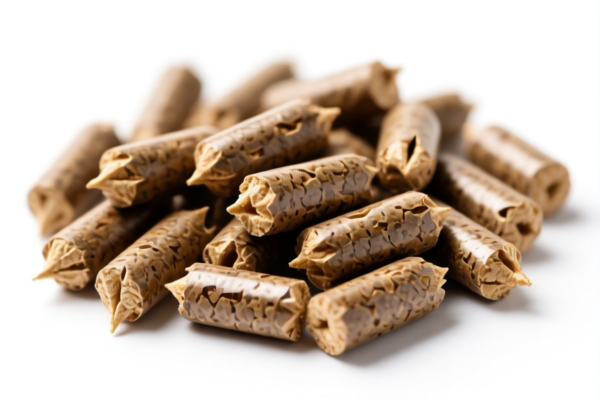
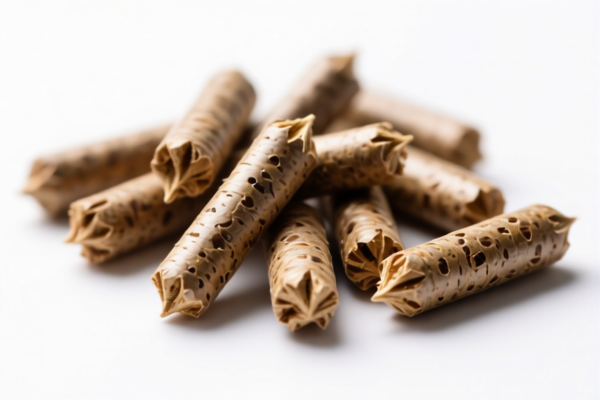
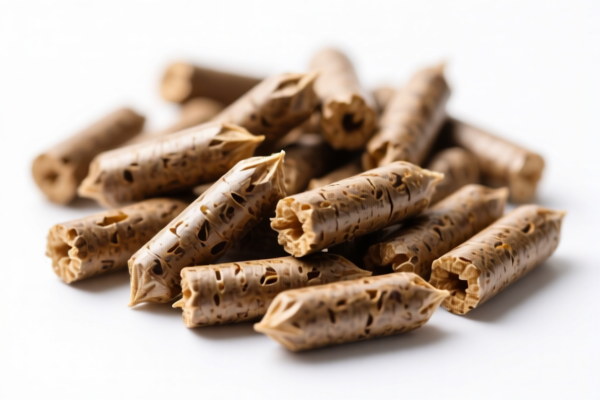
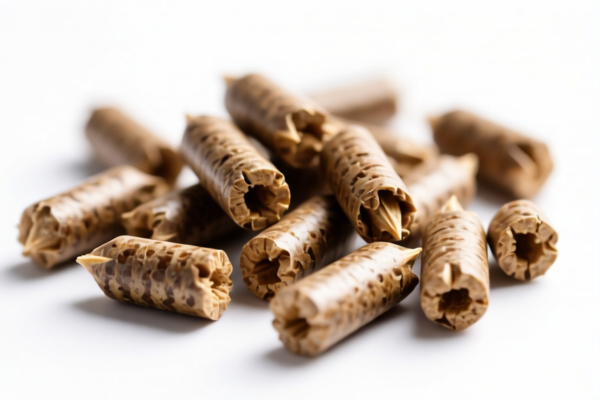
Wood Pellets are a refined, high-density biomass fuel made from compressed sawdust, wood shavings, and other wood residues. They are marketed as an "eco-friendly" alternative to coal and firewood due their lower sulfur content, higher efficiency, and carbon neutrality potential.
In international trade, classification depends strictly on the raw material and the processing method. While "eco-friendly" is a marketing term, customs only cares about the physical composition:
- Agglomerated Wood Waste: Sawdust and wood scraps compressed into logs, briquettes, or pellets. This falls under Chapter 44.
- Distinct from Coal: Even if they look like coal briquettes, if they are made from wood, they are NOT Chapter 27 (Coal).
⚠️ Critical Distinction:
- If made from wood waste/sawdust → Chapter 44 (Wood Products)
- If made from coal dust → Chapter 27 (Mineral Fuels)
- Note: Misclassifying wood pellets as coal can lead to severe penalties or rejection, as tax rules differ.
📦 II. HS Code Classification Details (2026 Latest Tariff Authority)
Based on the provided data, here are the specific HS Codes for Wood Pellet Fuel. All listed items attract a 25.0% Total Tax due to the combination of Base Tariff (0.0%) and Additional Tariff (25.0%).
| HS Code | Product Description | Specific Type | Raw Material Basis |
|---|---|---|---|
4401.31.00.00 |
Sawdust and wood waste and scrap, agglomerated in logs, briquettes, pellets or similar forms | Wood Pellets | Wood residues/sawdust |
4401.32.00.00 |
Sawdust and wood waste and scrap, agglomerated in logs, briquettes, pellets or similar forms | Wood Briquettes | Wood residues/sawdust |
🔍 Key Reminder:
-4401.31.00.00is the standard code for Pellets (small, uniform cylinders).
-4401.32.00.00is for Briquettes (larger, often ovoid or rectangular blocks).
- Ensure your commercial invoice explicitly states "Wood Pellets" to avoid confusion with "Wood Briquettes" or "Charcoal" (which has different codes:4402.90.01.00or4402.20.00.00, also taxed at 25%).
💰 III. 2026 Latest Tariff Rate Breakdown (Including Surcharges & Policy Add-ons)
✅ Applicable Jurisdiction: United States (US)
✅ Origin: China (CN) [Assumed based on typical high-surcharge context in examples]
✅ Effective Date: 2025/2026 Current Regulations
🎯 1. 4401.31.00.00 —— Wood Pellets (Agglomerated Wood Waste)
| Item | Content |
|---|---|
| Base Tariff | 0.0% (Ad Valorem) |
| Additional Tariff (Section 301) | +25.0% |
| Total Tax Rate | 25.0% |
| Tax Calculation | CIF Value × 25% |
| De Minimis Exemption | ❌ Not Applicable (Value typically exceeds $800 threshold for bulk fuel, and biomass fuels often face stricter scrutiny) |
| Legal Basis Path | USITC:4401.31.00.00 → Section 301 Tariff |
📌 Explanation:
- The 0% base tariff reflects the US policy to encourage import of renewable energy fuels.
- The +25% additional tariff applies to most wood products of Chinese origin under current trade measures.
- Total Cost Impact: For every $10,000 shipment, you pay $2,500 in duties.
🎯 2. 4401.32.00.00 —— Wood Briquettes
| Item | Content |
|---|---|
| Base Tariff | 0.0% |
| Additional Tariff (Section 301) | +25.0% |
| Total Tax Rate | 25.0% |
| Tax Calculation | CIF Value × 25% |
| De Minimis Exemption | ❌ Not Applicable |
📌 Note: Same tax treatment as pellets. Classification depends on physical form (Pellet vs. Briquette).
🎯 Other Related Biomass Codes (Same Tax Rate)
| HS Code | Description | Note |
|---|---|---|
4402.90.01.00 |
Wood Charcoal (including shell or nut charcoal), whether or not agglomerated: Other | If your product is charred/combusted, it’s Charcoal, not Pellet. |
4402.20.00.00 |
Wood Charcoal: Of shell or nut | e.g., Coconut shell charcoal. |
⚠️ Warning: Do not declare "Eco-friendly" in the HS description line. Use technical descriptions like "100% Natural Wood Pellets, No Binders, Diameter 6mm."
🛠️ IV. Customs Clearance Practical Advice (Battle-Tested Pitfall Guide)
✅ 1. Document Checklist (Non-Negotiable)
| Document | Required? | Description |
|---|---|---|
| ✅ Commercial Invoice | ✔️ | Must specify: "Wood Pellets," HS Code 4401.31.00.00, Country of Origin, Net/Gross Weight. |
| ✅ Packing List | ✔️ | Detailed breakdown of pallets, bags, and total quantity (kg/lbs). |
| ✅ Certificate of Origin (CO) | ✔️ | Essential to prove origin. If non-China, may avoid the 25% surcharge. |
| ✅ Phytosanitary Certificate | ✔️ | CRITICAL. Wood products require proof of pest-free treatment (e.g., ISPM 15 compliance). |
| ✅ Bill of Lading (B/L) | ✔️ | Ensure commodity description matches Invoice exactly. |
✅ 2. Declaration Tips (Key Mantras)
🔥 "Precise Description, Phytosanitary Proof, No 'Coal' Confusion!"
| Scenario | Correct Declaration | Wrong Action |
|---|---|---|
| Standard Wood Pellets | 4401.31.00.00 - Wood Pellets |
Mislabeling as "Briquettes" (4401.32) → Minor risk, but inconsistent |
| Pellets with Binders | Still 4401.31.00.00 (if <10% mineral additives) |
Declare as "Chemical Fuel" → Wrong Chapter |
| Coal Briquettes | 2701.20.00.00 |
Declaring as Wood Pellets → Fraud/Smuggling Risk |
| Unprocessed Firewood | 4401.10.00.00 |
Declaring as Pellets → Phytosanitary Rejection |
✅ 3. Special Situation Handling
| Situation | Handling Advice |
|---|---|
| High Moisture Content | Ensure moisture <10-15% for quality. High moisture may trigger inspection for fungal growth. |
| Mixed Packaging | If shipping in 15kg bags on pallets, specify "Bags on Pallets" in B/L. |
| Origin Non-China (e.g., Canada/EU) | The 25% additional tariff does NOT apply. Tariff may be 0%. Always provide CO! |
| Phytosanitary Issues | If detected with pests (borers, termites), shipment will be destroyed or re-exported at your cost. Pre-treatment is mandatory. |
🌍 V. Global Market Comparison (2026 Latest)
| Country/Region | Recommended HS Code | Tariff (China Origin) | Certification | Notes |
|---|---|---|---|---|
| 🇺🇸 USA | 4401.31.00.00 |
25.0% | ISPM 15 | Strict phytosanitary checks. |
| 🇬🇧 UK | 4401.31.00.00 |
Varies (Post-Brexit) | UKCA | Check current UK Tariff Schedule. |
| 🇪🇺 EU | 4401.31.00.00 |
0% (if FSC/PEFC certified) | ENplus | High demand for certified eco-pellets. |
| 🇯🇵 Japan | 4401.31.00.00 |
Varies | JIS Standard | Strict quality control on ash content. |
| 🇨🇳 China | 4401.31.00.00 |
0% | GB/T Standard | Major importer; low entry barrier. |
📌 Conclusion:
- USA imposes a 25% surcharge on Chinese wood pellets.
- EU offers 0% tariff but demands strict sustainability certification (FSC/PEFC).
- Phytosanitary health is the #1 clearance risk globally, not tariffs.
📌 VI. Common Errors & Pitfall Guide (Lessons Learned)
❌ Mistake 1: Declaring "Eco-Friendly Fuel" without specifying "Wood"
👉 Consequence: Customs may classify under ambiguous codes → Delays & Inspections.
❌ Mistake 2: Missing Phytosanitary Certificate
👉 Consequence: Shipment Denied Entry or Destroyed. Wood is a high-risk category for pests.
❌ Mistake 3: Confusing Pellets (4401.31) with Briquettes (4401.32)
👉 Consequence: While tax is same (25%), inconsistency in documents leads to Audits.
❌ Mistake 4: Ignoring Origin Marking
👉 Consequence: If not clearly marked "Made in China," you may lose preference benefits or face origin fraud investigations.
✅ Correct Approach:
"Wood Pellets, 6mm Diameter, 15kg Bags, No Additives, ISPM 15 Heat Treated, HS Code 4401.31.00.00"
🎯 VII. Conclusion: Professional Declaration Saves Money!
🎯 Remember the Mantra:
🔹 "Wood vs. Coal is Life or Death for Classification."
🔹 "Phytosanitary Cert is Your Ticket to Clear."
🔹 "25% Tax on China, 0% on EU/Canada (Check CO!)."
📌 Pro Tip:
If you are sourcing from Canada, Russia, or Vietnam, verify if they qualify for 0% additional tariffs. A small change in origin can save you 25% of your cargo value!
📣 Immediate Action:
📞 Verify Phytosanitary Treatment Before Loading.
📄 Ensure CO is Valid for Current Year.
📝 Declare "Wood Pellets" precisely, not just "Fuel."
🚀 Clear Customs Fast, Avoid Destruction, Maximize Profit!
✨ Professional Clearance Starts with Accurate Classification!
💼 Every Byte of Data Matters in Biomass Trade!
Customer Reviews
About HS Code Classification
The Harmonized System (HS) is an internationally standardized nomenclature developed by the World Customs Organization (WCO) to classify traded products. Over 200 countries use the HS system as the basis for customs tariffs, trade statistics, and import/export regulations.
Each HS code follows a hierarchical structure:
- Chapter (2 digits) — Broad category of goods (e.g., Chapter 84: Machinery and Mechanical Appliances)
- Heading (4 digits) — More specific grouping within the chapter
- Subheading (6 digits) — Internationally standardized breakdown, used by all WCO member countries
- National subdivisions (8-10 digits) — Country-specific extensions for further classification, such as US HTSUS 10-digit codes
Correct HS code classification is essential for smooth customs clearance, accurate duty payment, and compliance with trade regulations. Misclassification can lead to customs delays, overpayment of duties, or penalties.
When importing from CN to US, the applicable tariff rates may include:
- Most-Favored-Nation (MFN) rate — The standard duty rate applied to WTO members
- General rate — Applied to countries without trade agreements
- Trade remedy duties — Additional tariffs such as Section 301 (anti-dumping), Section 232 (national security), or countervailing duties
The information provided on this page is for reference purposes only. For official classification, please consult with your local customs authority or a licensed customs broker.