Wood Pellet Fuel Eco friendly Energy saving Block
CN → US| HS Code | Tariff Rate | Origin | Destination | Doc |
|---|---|---|---|---|
| 4401310000 | 35.0% | CN | US | Official Doc |
| 4401320000 | 35.0% | CN | US | Official Doc |
Product Images
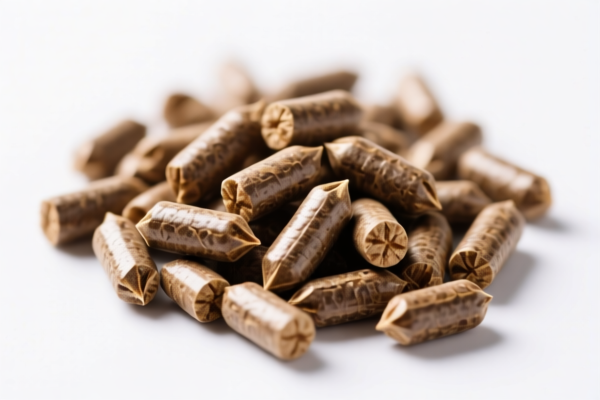
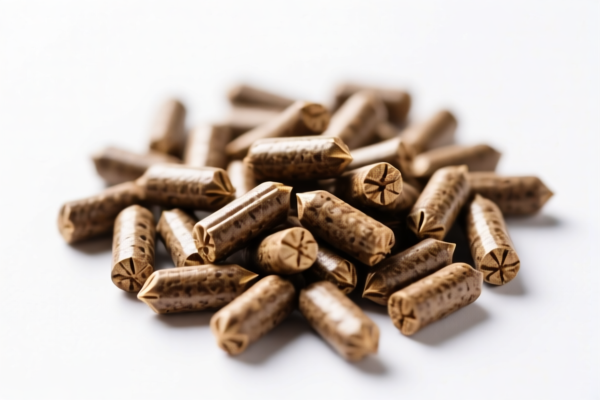
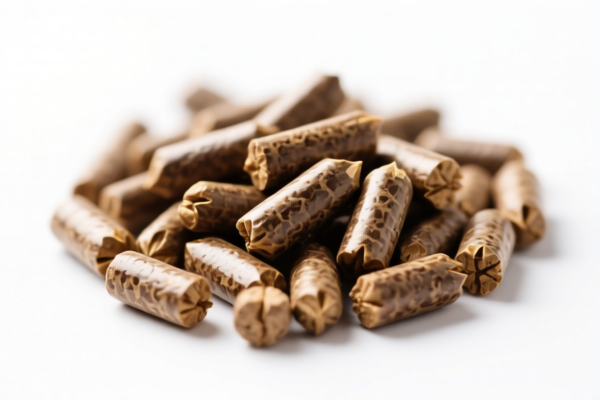
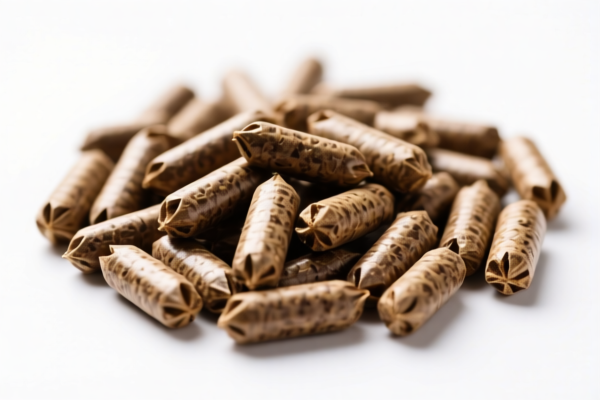
AI Analysis
🔥 Wood Pellet Fuel: Eco-Friendly Energy Saving Block
🌐 HS Code Reference & Customs Clearance Guide | 2026 Latest Tariff Analysis | Professional Clearance Strategy
📌 1. Product Definition & Classification: Do You Really Understand "Wood Pellets"?
Wood pellets are a type of biomass fuel made from compressed sawdust, wood shavings, or other wood residues. They are cylindrical, uniform in size, and designed for efficient combustion in residential stoves, boilers, or industrial plants.
In international trade, they fall under Chapter 44 (Wood and articles of wood), specifically as agglomerated wood waste and scrap.
⚠️ Key Distinction:
- Wood Pellets: Cylindrical, small diameter (typically 6-8mm), made from compressed wood dust/residue → HS Code 4401.31.00.00
- Wood Briquettes: Larger, rectangular or irregular blocks, often made from compressed wood chips or waste → HS Code 4401.32.00.00
- Loose Sawdust/Wood Waste: Not agglomerated → HS Code 4401.21/4401.22 (Different tax treatment)
📦 2. HS Code Classification Details (2026 Latest Tariff Authority Comparison)
| HS Code | Product Description | Key Features | Agglomeration Status |
|---|---|---|---|
4401.31.00.00 |
Wood Pellets | Cylindrical, small diameter, high density, uniform size | ✅ Yes (Pellets) |
4401.32.00.00 |
Wood Briquettes | Rectangular, larger size, irregular shapes, lower density | ✅ Yes (Briquettes) |
🔍 Important Note:
- Both pellets and briquettes are considered "agglomerated wood waste and scrap".
- The key difference is the form: "Pellets" are small and cylindrical; "Briquettes" are larger and often rectangular.
- If your product is loose sawdust (not compressed), it does NOT belong to these codes.
💰 3. 2026 Latest Tariff Rate Details (Including Surtaxes & Policy Additions)
✅ Applicable Country: United States (US)
✅ Country of Origin: China (CN)
✅ Effective Date: November 10, 2025 (and subsequent imports)
🎯 1. 4401.31.00.00 —— Wood Pellets
| Item | Content |
|---|---|
| Base Tariff | 0.0% (ad valorem) |
| USITC Surtax | +25% (under Section 301 of the U.S. Trade Act) |
| Total Tax Rate | 25.0% |
| Tax Calculation | CIF Value × 25% |
| De Minimis Exemption Available? | ❌ No (Not eligible for de minimis) |
| Legal Basis Path | USITC:4401.31.00.00 → FOOTNOTE:301.01.03 |
📌 Explanation:
- Base Tariff: 0% — Wood pellets are considered low-value biomass fuels with no base duty.
- Surtax: 25% — This is the Section 301 tariff applied to specific Chinese-origin goods, including wood products.
- Total Tax: 25% — This is a significant cost that must be factored into pricing.
- De Minimis: Since the value per shipment exceeds the $800 de minimis threshold (and even if below, Section 301 may still apply depending on enforcement), no exemption is available.
🎯 2. 4401.32.00.00 —— Wood Briquettes
| Item | Content |
|---|---|
| Base Tariff | 0.0% (ad valorem) |
| USITC Surtax | +25% (under Section 301 of the U.S. Trade Act) |
| Total Tax Rate | 25.0% |
| Tax Calculation | CIF Value × 25% |
| De Minimis Exemption Available? | ❌ No (Not eligible for de minimis) |
| Legal Basis Path | USITC:4401.32.00.00 → FOOTNOTE:301.01.03 |
📌 Note:
- Same tax treatment as wood pellets.
- Whether it’s pellets or briquettes, the 25% surtax applies.
- Ensure your commercial invoice clearly specifies "Wood Pellets" or "Wood Briquettes" to avoid misclassification.
🛠️ 4. Customs Clearance Practical Advice (Battle-Tested Pitfall Avoidance Guide)
✅ 1. Required Documentation Checklist (No Exceptions)
| Document | Mandatory | Notes |
|---|---|---|
| ✅ Commercial Invoice | ✔️ | Must clearly state: "Wood Pellets" or "Wood Briquettes", HS Code, Country of Origin (China) |
| ✅ Packing List | ✔️ | Detail weight, dimensions, and packaging type (bags, pallets) |
| ✅ Bill of Lading/Air Waybill | ✔️ | Standard shipping documents |
| ✅ Certificate of Origin (CO) | ✔️ | Proves Chinese origin for surtax calculation |
| ✅ Product Specification Sheet | ✔️ | Include: material type (sawdust, wood waste), diameter, moisture content, density |
| ✅ ISPM 15 Phytosanitary Certificate | ✔️ | Critical! Wood products require treatment to prevent pest invasion |
| ✅ Safety Data Sheet (SDS) | ✔️ | Optional but recommended for handling instructions |
✅ 2. Declaration Tips (Key Mantra)
🔥 "Specify Form, Declare Origin, Treat for Pests, Pay 25%!"
| Scenario | Correct Declaration | Wrong Practice |
|---|---|---|
| Wood Pellets | 4401.31.00.00 "Wood Pellets" |
Mislabel as "Briquettes" → Risk of penalty |
| Wood Briquettes | 4401.32.00.00 "Wood Briquettes" |
Mislabel as "Pellets" → Minor risk, but consistency matters |
| Loose Sawdust | 4401.21.00.00 "Sawdust" |
Mislabel as "Pellets" → Major misclassification |
| Imported from Vietnam | Still 4401.31.00.00 |
May be eligible for 0% surtax if not Chinese origin |
✅ 3. Special Cases Handling
| Case | Recommendation |
|---|---|
| Non-Chinese Origin (e.g., Canada, Brazil) | Still HS 4401.31.00.00, but 0% surtax applies → Save 25%! |
| Mixed Packaging (Pellets + Briquettes) | Declare separately or choose the predominant form |
| High Moisture Content | Ensure moisture < 10% to meet quality standards; otherwise, risk rejection |
| Small Shipment (< $800) | Even if under de minimis, Section 301 surtax may still apply for Chinese goods |
🌍 5. Global Market Clearance Comparison (2026 Latest)
| Country/Region | Recommended HS Code | Tariff Rate | Certification | Notes |
|---|---|---|---|---|
| 🇺🇸 United States | 4401.31.00.00 (Pellets) |
25% (Chinese origin) | ISPM 15, USDA APHIS | High tariff; consider non-Chinese origin |
| 🇺🇸 United States | 4401.32.00.00 (Briquettes) |
25% (Chinese origin) | ISPM 15, USDA APHIS | Same as pellets |
| 🇪🇺 European Union | 4401.31.00.00 |
0% – 2.5% | ENplus, FSC/PEFC | Lower tariffs; sustainability certs required |
| 🇨🇳 China | 4401.31.00.00 |
0% – 5% | GB/T Standard | Low tariff; domestic production dominates |
| 🇬🇧 United Kingdom | 4401.31.00.00 |
0% | UKCA, FSC | Post-Brexit rules apply |
| 🇦🇺 Australia | 4401.31.00.00 |
5% | ISPM 15, DAFF | Phytosanitary strictness |
📌 Conclusion:
- The U.S. imposes a 25% surtax on Chinese-origin wood pellets/briquettes.
- The EU, UK, and Australia have lower or zero tariffs, but require sustainability certifications (FSC/PEFC) and phytosanitary compliance.
- Non-Chinese origin (e.g., Canada, Brazil, Europe) is highly advantageous for U.S. imports due to 0% surtax.
📌 6. Common Errors & Pitfall Avoidance (Lessons Learned the Hard Way)
❌ Error 1: Declaring "Wood Pellets" as "Sawdust" (4401.21.00.00)
👉 Consequence: Misclassification → Penalties + Back Taxes
❌ Error 2: Forgetting ISPM 15 Phytosanitary Certificate
👉 Consequence: Shipment rejected or destroyed by USDA APHIS
❌ Error 3: Not specifying Country of Origin clearly
👉 Consequence: 25% surtax applied erroneously to non-Chinese goods
❌ Error 4: Mixing Pellets and Briquettes in one shipment without clear declaration
👉 Consequence: Customs delays + Potential fines
✅ Correct Approach:
"Wood Pellets, 6-8mm Diameter, Moisture Content <10%, Bagged on Pallets, HS Code 4401.31.00.00, Origin: China, ISPM 15 Treated"
🎯 7. Conclusion: Precise Declaration, Cost Optimization, Efficient Clearance!
🎯 Remember the Mantra:
🔹 "Specify Form, Declare Origin, Treat for Pests, Pay 25%!"
🔹 "HS Code 4401.31 for Pellets, 4401.32 for Briquettes, 25% Surtax for China, 0% for Others!"
📌 Pro Tip:
If your wood pellets are originally from Canada, Brazil, or Europe, you can avoid the 25% U.S. surtax entirely.
Consider supply chain diversification to reduce costs.
📣 Immediate Action:
📞 Contact a licensed customs broker + Provide ISPM 15 Certificate + Apply for HS Code Pre-Ruling
🚀 Ensure your wood pellets clear customs smoothly, comply with regulations, and maximize profitability!
✨ Professional clearance starts with accurate classification!
💼 Every dollar saved counts!
Customer Reviews
About HS Code Classification
The Harmonized System (HS) is an internationally standardized nomenclature developed by the World Customs Organization (WCO) to classify traded products. Over 200 countries use the HS system as the basis for customs tariffs, trade statistics, and import/export regulations.
Each HS code follows a hierarchical structure:
- Chapter (2 digits) — Broad category of goods (e.g., Chapter 84: Machinery and Mechanical Appliances)
- Heading (4 digits) — More specific grouping within the chapter
- Subheading (6 digits) — Internationally standardized breakdown, used by all WCO member countries
- National subdivisions (8-10 digits) — Country-specific extensions for further classification, such as US HTSUS 10-digit codes
Correct HS code classification is essential for smooth customs clearance, accurate duty payment, and compliance with trade regulations. Misclassification can lead to customs delays, overpayment of duties, or penalties.
When importing from CN to US, the applicable tariff rates may include:
- Most-Favored-Nation (MFN) rate — The standard duty rate applied to WTO members
- General rate — Applied to countries without trade agreements
- Trade remedy duties — Additional tariffs such as Section 301 (anti-dumping), Section 232 (national security), or countervailing duties
The information provided on this page is for reference purposes only. For official classification, please consult with your local customs authority or a licensed customs broker.