Wood Pellet Stove
CN → US| HS Code | Tariff Rate | Origin | Destination | Doc |
|---|---|---|---|---|
| 8419815040 | 17.5% | CN | US | Official Doc |
| 8419815080 | 17.5% | CN | US | Official Doc |
| 8417800000 | 38.9% | CN | US | Official Doc |
| 8417900000 | 38.9% | CN | US | Official Doc |
Product Images
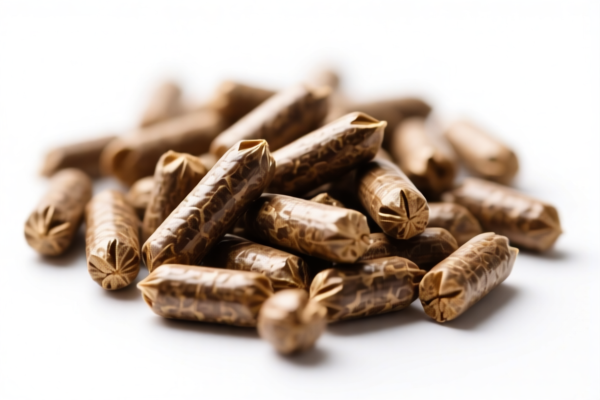
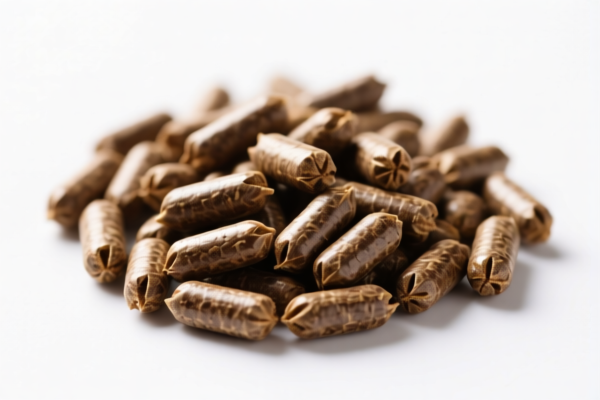
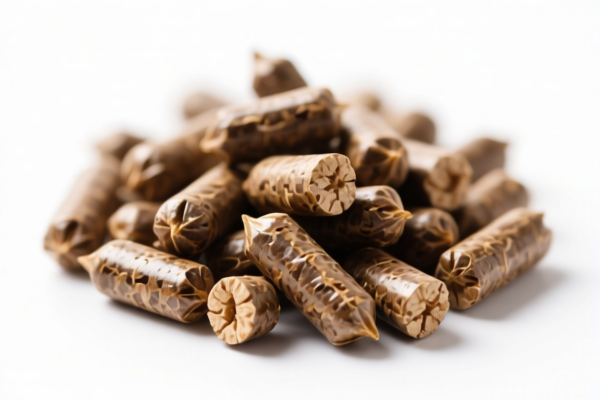

AI Analysis
🔥 Wood Pellet Stove (Biomass Heating Equipment)
🌐 HS Code Reference & Customs Clearance Guide | 2026 Latest Tariff Analysis | Professional Customs Strategy
📌 I. Product Definition & Classification: Do You Really Understand the "Wood Pellet Stove"?
A Wood Pellet Stove is a heating appliance designed to burn compressed wood pellets (biomass fuel) to generate heat for residential or commercial spaces. In international trade, classification depends heavily on its primary function (cooking vs. heating), construction material (metal vs. ceramic/stone), and power source (electric vs. non-electric).
⚠️ Critical Distinction:
- If the stove is primarily for cooking/food preparation and meets the specific form description under Heading 8419 → HS 8419.81.50.x0
- If the stove is primarily for heating and is non-electric industrial/lab equipment → HS 8417.80.00.00 / 8417.90.00.00
- Do not classify based solely on the word "Wood" or "Stove" without analyzing the end-use.
📦 II. HS Code Classification Details (2026 Latest Tariff Authority Comparison)
| HS Code | Product Description | Applicable Scenario | Key Classification Criteria |
|---|---|---|---|
8419.81.50.40 |
Cooking/Stove apparatus using solid fuel (Wood Pellets) | Residential kitchen stoves, camp stoves for cooking | ✅ Primary Use: Cooking/Heating for food prep. Matches 8419 description for "cooking/heating stoves." |
8419.81.50.80 |
Other cooking/stove apparatus using solid fuel | General-purpose solid-fuel stoves for cooking | ✅ Primary Use: Cooking. "Stove" terminology aligns with 8419.81 definition for "cooking stoves, ranges, and ovens." |
8417.80.00.00 |
Non-electric heat treatment apparatus (Other than for cooking) | Industrial heating, laboratory furnaces, standalone heating units | ✅ Primary Use: Heating (non-cooking). Matches "Non-electric industrial/lab furnaces." Wood fuel does not conflict. |
8417.90.00.00 |
Parts of non-electric heat treatment apparatus | Components of industrial furnaces (less likely for whole unit) | ⚠️ Note: Often used for parts, but sometimes applied to complete non-electric heating units if classified under 8417. Matches "Furnaces/Ovens" for industrial/lab use. |
🔍 Key Insight:
- 8419 is for Cooking/Kitchen stoves.
- 8417 is for Industrial/Lab/Heating furnaces.
- Misclassification Risk: Calling a heating stove a "cooking stove" to avoid higher tariffs (or vice versa) can lead to customs disputes.
💰 III. 2026 Latest Tariff Rate Breakdown (Including Surcharges & Policy Add-ons)
✅ Applicable Country: USA (US)
✅ Origin: China (CN)
✅ Effective Date: November 10, 2025 (and subsequent imports)
🎯 1. 8419.81.50.40 & 8419.81.50.80 —— Cooking Stoves (Wood Pellet)
| Item | Content |
|---|---|
| Base Tariff | 0.0% (ad valorem) |
| Section 301 Surcharge | +7.5% (USITC Footnote) |
| IEEPA Surcharge | +10% (Targeting China/HK products, effective Nov 10, 2025) |
| Total Tariff Rate | 17.5% |
| Tax Calculation | CIF Value × 17.5% |
| De Minimis Eligibility | ❌ Not Eligible (deny_de_minimis) |
| Legal Basis Path | IEEPA:9903.01.25 → IEEPA:9903.01.24 → USITC:8419.81.50.40/80 → FOOTNOTE:301 |
📌 Explanation:
- Base 0%: Cooking appliances often have low base duties.
- Section 301 (7.5%): Applies to many Chinese manufactured goods.
- IEEPA (10%): New surcharge on Chinese-origin goods under international emergency powers.
- Total 17.5%: Significantly lower than industrial furnaces, making 8419 a more favorable classification if the product qualifies as a cooking stove.
🎯 2. 8417.80.00.00 & 8417.90.00.00 —— Non-Electric Heating Furnaces/Stoves
| Item | Content |
|---|---|
| Base Tariff | 3.9% (ad valorem) |
| Section 301 Surcharge | +25.0% (USITC Footnote) |
| IEEPA Surcharge | +10% (Targeting China/HK products, effective Nov 10, 2025) |
| Total Tariff Rate | 38.9% |
| Tax Calculation | CIF Value × 38.9% |
| De Minimis Eligibility | ❌ Not Eligible (deny_de_minimis) |
| Legal Basis Path | IEEPA:9903.01.25 → IEEPA:9903.01.24 → USITC:8417.80.00.00 / 90.00 → FOOTNOTE:301 |
📌 Explanation:
- Base 3.9%: Industrial machinery typically has a moderate base duty.
- Section 301 (25%): High rate applies to broader industrial categories.
- IEEPA (10%): Adds to the total.
- Total 38.9%: Much higher than cooking stoves. Misclassifying a heating stove as 8419 to save taxes is risky if customs proves it’s for heating only.
🛠️ IV. Customs Clearance Practical Advice (Battle-Tested Pitfall Avoidance)
✅ 1. Required Documentation Checklist (No Exceptions)
| Document | Required | Notes |
|---|---|---|
| ✅ Product Specification Sheet | ✔️ | Must clearly state Primary Use (Cooking vs. Heating). Include BTU output, fuel type (Pellet), dimensions. |
| ✅ Operating Manual | ✔️ | Proves intended use. If manual mentions "kitchen," it supports 8419. If "space heating," it supports 8417. |
| ✅ Product Photos (with Nameplate) | ✔️ | Show brand, model, input voltage (if any), fuel hopper size. |
| ✅ Third-Party Test Reports | ✔️ | EPA, CARB, CE, UL (if electrical components present). Essential for proof of safety and classification. |
| ✅ Commercial Invoice | ✔️ | Must accurately describe the item. Avoid vague terms like "Wood Heater" if it’s a stove. |
| ✅ Certificate of Origin (CO) | ✔️ | Crucial for applying correct country-specific surcharges. |
| ✅ Packing List | ✔️ | Detail all components. Do not split stove and hopper if they are sold as one unit. |
✅ 2. Declaration Strategy (Key Mnemonic)
🔥 "Use Defines Code, Fuel Doesn't Matter Alone!"
| Scenario | Correct HS Code | Wrong Way | Result |
|---|---|---|---|
| Stove for Cooking (Kitchen) | 8419.81.50.40 |
Declare as "Heater" → 8417 | Overpay 21.4% (38.9% vs 17.5%) |
| Stove for Space Heating (Living Room/Industrial) | 8417.80.00.00 |
Declare as "Cooking Stove" → 8419 | Underpay, High Audit Risk, Penalties |
| Oven/Toaster (Electric) | Different Code (8516) | Use 8419 (Non-Electric) | Classification Error |
| Fireplace Insert | Check 8417 vs 73 | Vague "Wood Burner" | Customs Hold |
📌 Key Takeaway:
- If the product is designed for kitchen cooking, use 8419 (17.5%).
- If it is designed for space heating (residential or industrial), use 8417 (38.9%).
- Do not rely on the word "Pellet" to determine the code. Focus on function.
✅ 3. Special Case Handling
| Situation | Handling Advice |
|---|---|
| Dual-Use Stove (Can cook & heat) | Provide evidence of primary design. If marketed for kitchens, use 8419. If marketed for heating, use 8417. |
| OEM Custom Pellet Stove | Provide customer PO and design specs. Ensure marketing materials align with declared HS Code. |
| Pellet Stove with Electric Ignition | Still likely 8419 or 8417 if the primary heating element is non-electric (burning pellets). Minor electrical components don’t change the core classification. |
| Ceramic vs. Metal Construction | Ceramic stoves may sometimes fall under 7321 or 6912, but if functional as a stove, 8419/8417 still dominate. Check exact composition. |
🌍 V. Global Market Customs Comparison (2026 Latest)
| Country/Region | Recommended HS Code | Tariff Rate | Certification | Notes |
|---|---|---|---|---|
| 🇺🇸 USA | 8419.81.50.40 (Cooking) |
17.5% (CN Origin) | EPA, CARB | 8417 is 38.9%. Huge difference! |
| 🇨🇳 China | 8419.81.00.00 |
10% | CCC (if electric parts) | Domestic tariff differs. |
| 🇪🇺 EU | 8419.81.00 |
0% (Most FTA) | CE, ErP, Woodstove Directive | Low duty, but strict environmental standards. |
| 🇬🇧 UK | 8419.81.00 |
0% | UKCA | Post-Brexit standards apply. |
| 🇨🇦 Canada | 8419.81.00 |
0% (CUSMA) | CSA, EPA | Preferential rates if from Mexico/US. |
📌 Conclusion:
- USA is the most critical market due to the 17.5% vs 38.9% split.
- EU/UK have low base tariffs but strict emissions standards (EPA/CE).
- Always confirm primary use to avoid massive tariff discrepancies in the US.
📌 VI. Common Mistakes & Pitfalls (Lessons Learned)
❌ Mistake 1: Classifying a heating stove as a cooking stove to save taxes.
👉 Consequence: Customs audit reveals intent to heat → Back taxes (21.4% diff) + Penalties + Delays.
❌ Mistake 2: Using "Wood Heater" as the product name for 8419.
👉 Consequence: Customs may reclassify to 8417 due to conflicting terminology → Unexpected 38.9% tax.
❌ Mistake 3: Ignoring EPA/Carb emissions certification for the US market.
👉 Consequence: Detention at border, even if HS Code is correct. Environmental compliance is mandatory.
❌ Mistake 4: Assuming "Non-Electric" means no electronics.
👉 Consequence: Many pellet stoves have electric blowers/igniters. If misdeclared as purely mechanical, it may trigger additional scrutiny, but HS Code remains 8419/8417 based on heating method.
✅ Correct Declaration Example:
"Wood Pellet Burning Stove, Residential Cooking Use, Non-Electric Primary Heat Source, Model ABC, EPA Certified, CIF USD 1,000"
HS Code:8419.81.50.40
Total Duty: 17.5%
🎯 VII. Conclusion: Precise Classification Saves Money & Time!
🎯 Remember the Mnemonic:
🔹 "Cooking = 17.5%, Heating = 38.9%!"
🔹 "Use Defines Code, Not Just Fuel Type!"
🔹 "Wrong Code = Double Tax + Audit Risk!"
📌 Pro Tip:
If your product is a pellet stove for space heating (8417), consider supply chain diversification (e.g., Vietnam, Mexico) to mitigate the 38.9% US tariff, as IEEPA surcharges apply to China-origin goods.
For cooking stoves (8419), the 17.5% rate is more manageable, but ensure EPA/CARB compliance is rock-solid.
📣 Immediate Action:
📞 Contact a Licensed Customs Broker
📄 Provide Product Manual & Marketing Materials
🚀 Apply for Advance Ruling if High Volume
✈️ Ensure EPA/CARB Certification for US Market
✨ Professional Customs Clearance Starts with Accurate Classification!
💼 Every Percentage Point of Tariff Matters!
Customer Reviews
About HS Code Classification
The Harmonized System (HS) is an internationally standardized nomenclature developed by the World Customs Organization (WCO) to classify traded products. Over 200 countries use the HS system as the basis for customs tariffs, trade statistics, and import/export regulations.
Each HS code follows a hierarchical structure:
- Chapter (2 digits) — Broad category of goods (e.g., Chapter 84: Machinery and Mechanical Appliances)
- Heading (4 digits) — More specific grouping within the chapter
- Subheading (6 digits) — Internationally standardized breakdown, used by all WCO member countries
- National subdivisions (8-10 digits) — Country-specific extensions for further classification, such as US HTSUS 10-digit codes
Correct HS code classification is essential for smooth customs clearance, accurate duty payment, and compliance with trade regulations. Misclassification can lead to customs delays, overpayment of duties, or penalties.
When importing from CN to US, the applicable tariff rates may include:
- Most-Favored-Nation (MFN) rate — The standard duty rate applied to WTO members
- General rate — Applied to countries without trade agreements
- Trade remedy duties — Additional tariffs such as Section 301 (anti-dumping), Section 232 (national security), or countervailing duties
The information provided on this page is for reference purposes only. For official classification, please consult with your local customs authority or a licensed customs broker.