Wood Pellets
CN → US| HS Code | Tariff Rate | Origin | Destination | Doc |
|---|---|---|---|---|
| 4401394210 | 35.0% | CN | US | Official Doc |
| 4401310000 | 35.0% | CN | US | Official Doc |
| 4405000000 | 38.2% | CN | US | Official Doc |
| 4405000000 | 38.2% | CN | US | Official Doc |
| 4401310000 | 35.0% | CN | US | Official Doc |
Product Images
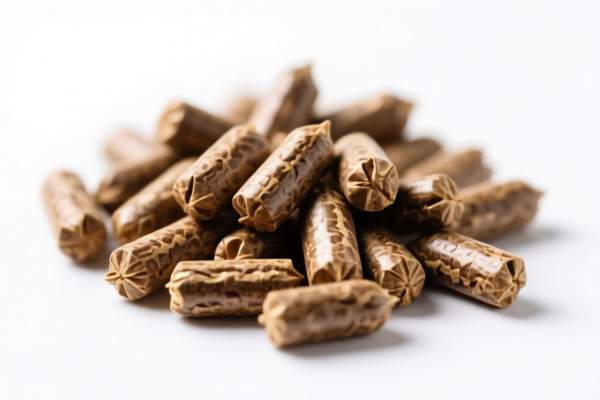
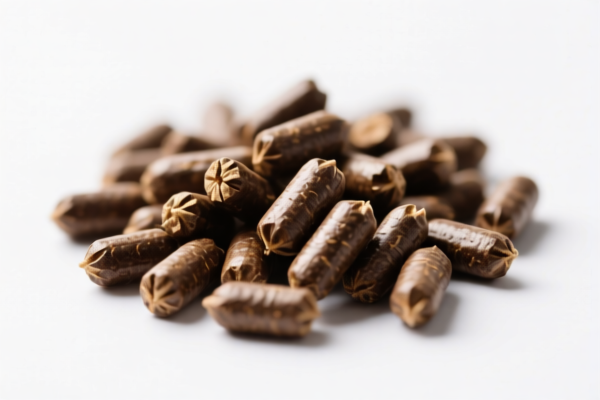
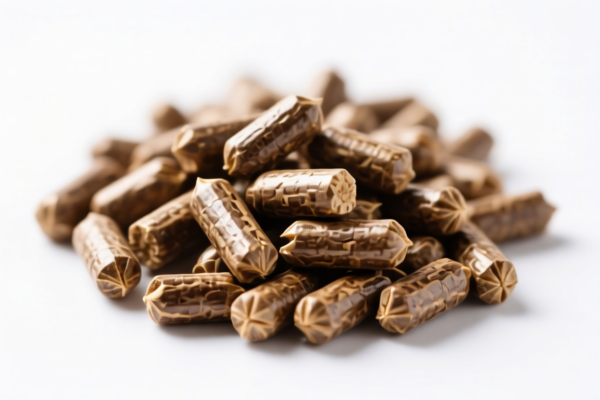
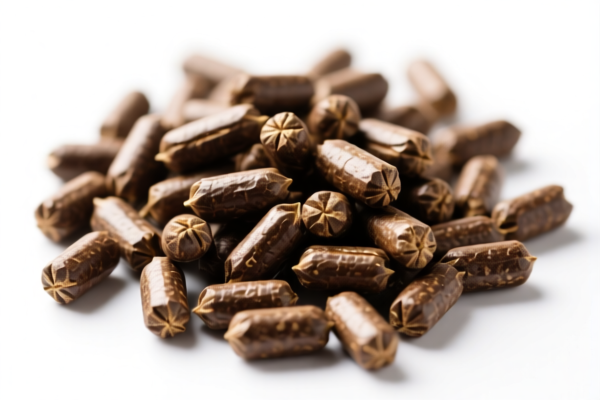
AI Analysis
🌲 Wood Pellets (Biomass Fuel & Wood Waste)
🌐 HS Code Reference & Customs Clearance Guide | 2026 Latest Tariff Analysis | Professional通关 Strategy
📌 I. Product Definition & Classification: Do You Really Know "Wood Pellets"?
Wood pellets are compressed biomass fuel or wood by-products, typically made from sawdust, wood chips, or other wood waste. In international trade, the classification depends heavily on the material origin (recycled waste vs. virgin wood) and the physical form (granules/pellets vs. powder).
⚠️ Key Distinction:
- If made strictly from wood waste/residue (sawdust, shavings) without binding agents or distinct wood fiber structure preservation → Often classified under 4401.31 or 4401.39.
- If made from processed wood fibers (wood flour, fibrous material) → Classified under 4405.00.
📦 II. HS Code Classification Details (2026 Latest Tariff Authority Comparison)
| HS Code | Product Description | Application Scenario | Material/Form Characteristic |
|---|---|---|---|
4401.31.00.00 |
Wood pellets, made of wood waste or wood residue | Biomass fuel, industrial heating | ✅ Granular, from waste/residue |
4405.00.00.00 |
Wood powder, wood flour, fibrous material or granules | Biomass fuel, specialized wood products | ✅ Fibrous/Flour-based Granules |
4401.39.42.10 |
Other wood in chips, particles or similar forms; solid fuel | Fuel wood, pellets, biomass energy | ✅ Wood waste form, defined as solid fuel |
🔍 Important Reminder:
-4401.31.00.00and4401.39.42.10generally apply to pellets made from wood waste/residue with 0% base tariff.
-4405.00.00.00applies to pellets made from wood flour/fibrous material with a 3.2% base tariff.
- Misclassification between "wood waste" and "wood flour" can lead to significant tax discrepancies.
💰 III. 2026 Latest Tariff Rate Breakdown (Including Surtaxes & Policy Add-ons)
✅ Applicable Country: United States (US)
✅ Country of Origin: China (CN)
✅ Effective Time: 2025 November 10 onwards (including subsequent imports)
🎯 1. 4401.31.00.00 —— Wood Pellets (Made of Wood Waste/Residue)
| Item | Content |
|---|---|
| Base Tariff | 0.0% (ad valorem) |
| Section 301 Surtax | +25.0% |
| Section 122 Surtax | +10.0% |
| Total Tax Rate | 35.0% |
| Tax Calculation | CIF Value × 35.0% |
| De Minimis Eligibility | ❌ Not Eligible (deny_de_minimis) |
| Legal Basis Path | Base: 0% → Section 301: 25% → Section 122: 10% |
📌 Explanation:
- The 25% surtax comes from Section 301 of the Trade Act (targeting Chinese goods);
- The 10% surtax is the Section 122 tariff (National Security/Trade balance measures);
- Total 35% is the effective rate for this category. Base tariff is zero, so the burden falls entirely on surtaxes.
🎯 2. 4405.00.00.00 —— Wood Powder/Flour Pellets
| Item | Content |
|---|---|
| Base Tariff | 3.2% |
| Section 301 Surtax | +25.0% |
| Section 122 Surtax | +10.0% |
| Total Tax Rate | 38.2% |
| Tax Calculation | CIF Value × 38.2% |
| De Minimis Eligibility | ❌ Not Eligible |
| Legal Basis Path | Base: 3.2% → Section 301: 25% → Section 122: 10% |
📌 Note:
- This category has a 3.2% base tariff because it is classified as "wood powder/wood flour," not pure wood waste;
- Even though the material is granular, the raw material form dictates the base rate;
- Total rate is 38.2%, which is 3.2% higher than4401.31.00.00.
🎯 3. 4401.39.42.10 —— Other Wood Particles (Fuel Wood/Pellets)
| Item | Content |
|---|---|
| Base Tariff | 0.0% |
| Section 301 Surtax | +25.0% |
| Section 122 Surtax | +10.0% |
| Total Tax Rate | 35.0% |
| Tax Calculation | CIF Value × 35.0% |
| De Minimis Eligibility | ❌ Not Eligible |
| Legal Basis Path | Base: 0% → Section 301: 25% → Section 122: 10% |
📌 Explanation:
- This HS code captures "other forms of wood in chips or particles" that meet the definition of solid fuel;
- Like4401.31, it benefits from a 0% base tariff;
- Total rate is 35.0%.
🛠️ IV. Customs Clearance Practical Advice (Battle-tested Pitfall Guide)
✅ 1. Required Documentation Checklist (Missing Any = Delay)
| Document | Required | Explanation |
|---|---|---|
| ✅ Product Specification Sheet | ✔️ | Must specify raw material (sawdust vs. wood flour), binding agents, and moisture content. |
| ✅ Material Composition Analysis | ✔️ | Critical to distinguish between "wood waste" (4401) and "wood flour" (4405). |
| ✅ Commercial Invoice | ✔️ | Must clearly state "Wood Pellets" and origin (China). |
| ✅ Packing List | ✔️ | Show net weight and gross weight; ensure consistency with invoice. |
| ✅ Certificate of Origin (CO) | ✔️ | For US import, confirm CN origin to apply correct surtaxes. |
| ✅ Safety Data Sheet (SDS) | ✔️ | Often required for biomass fuels to confirm non-hazardous nature. |
✅ 2. Declaration Tips (Key Mantra)
🔥 "Know the Raw Material! Waste is 0%, Flour is 3.2%!"
| Scenario | Correct Declaration | Wrong Action |
|---|---|---|
| Pellets from sawdust/chips (waste) | 4401.31.00.00 or 4401.39.42.10 |
❌ Declare as 4405 → Pay extra 3.2% base tax |
| Pellets from wood flour/fibers | 4405.00.00.00 |
❌ Declare as 4401 → Risk penalty + back taxes |
| Mixed biomass (wood + other) | Must disclose fully | ❌ Hide non-wood components → Customs seizure |
| Small sample shipments | Still subject to full duty | ❌ Assume de minimis applies |
✅ 3. Special Cases Handling
| Case | Handling Advice |
|---|---|
| OEM Custom Pellets | Provide client specs + raw material source proof to justify 0% base tariff. |
| Pellets with Binders | If binders are >5%, customs may reclassify. Disclose additives. |
| Biomass vs. Fuel | If used for energy, emphasize "solid fuel" definition for 4401.39. |
| Quality Disputes | Provide lab test results showing low moisture/ash content to avoid quality-related delays. |
🌍 V. Global Market Comparison (2026 Latest)
| Country/Region | Recommended HS Code | Tariff (China Origin) | Certification | Note |
|---|---|---|---|---|
| 🇺🇸 USA | 4401.31.00.00 / 4405.00.00.00 |
35.0% or 38.2% | No special certs | High surtaxes apply |
| 🇨🇳 China | 4401.31.00.00 |
0-5% | GB Standard | No surtaxes |
| 🇪🇺 EU | 4401.31.00 |
0% (if sustainable) | ENplus, FSC | Strict sustainability rules |
| 🇬🇧 UK | 4401.31.00 |
0-5% | UKCA | Post-Brexit rules apply |
| 🇯🇵 Japan | 4401.31.00 |
0-1.5% | JAS | Quality standards strict |
📌 Conclusion:
- The US imposes the highest effective tariff (35-38.2%) due to Section 301 and 122;
- EU/UK/Japan have lower or zero base tariffs but strict sustainability/quality certifications;
- China origin is the key risk factor for US imports.
📌 VI. Common Mistakes & Pitfalls (Blood & Tears Lessons)
❌ Mistake 1: Declaring all wood pellets as 4401.31 regardless of raw material
👉 Consequence: If actual material is wood flour, customs assesses 3.2% base tax + penalties → Back taxes + fines!
❌ Mistake 2: Assuming small shipments avoid tariffs
👉 Consequence: No de minimis exemption for these HS codes → Full 35-38.2% charged!
❌ Mistake 3: Vague description "Biomass" without specifying "Wood"
👉 Consequence: Customs delays for classification review → Storage fees + missed deadlines
❌ Mistake 4: Ignoring Section 122
👉 Consequence: Underpaying by 10% → Penalty + interest
✅ Correct Approach:
"Wood Pellets, made from 100% pine sawdust, no binders, moisture content <10%, for industrial heating, HS Code 4401.31.00.00"
🎯 VII. Conclusion: Precise Classification Saves Money!
🎯 Remember the Mantra:
🔹 "Waste is 0% Base, Flour is 3.2% Base!"
🔹 "US Surtax is 35-38%, No Exemptions!"
🔹 "Declare Material Right, Avoid Penalties!"
📌 Pro Tip:
If your wood pellets are originally sourced from Vietnam, Malaysia, or Thailand, you may qualify for reduced or no Section 301/122 surtaxes.
→ Recommendation: Apply for Pre-Ruling (Advance Ruling) from US CBP before shipment.
📣 Immediate Action:
📞 Contact a licensed customs broker + Provide raw material analysis report + Apply for HS Code pre-ruling
🚀 Ensure your wood pellets clear customs smoothly, avoid costly delays, and protect your profit margins!
✨ Professional Clearance Starts with Accurate Classification!
💼 Every percentage point matters in tariff optimization!
Customer Reviews
About HS Code Classification
The Harmonized System (HS) is an internationally standardized nomenclature developed by the World Customs Organization (WCO) to classify traded products. Over 200 countries use the HS system as the basis for customs tariffs, trade statistics, and import/export regulations.
Each HS code follows a hierarchical structure:
- Chapter (2 digits) — Broad category of goods (e.g., Chapter 84: Machinery and Mechanical Appliances)
- Heading (4 digits) — More specific grouping within the chapter
- Subheading (6 digits) — Internationally standardized breakdown, used by all WCO member countries
- National subdivisions (8-10 digits) — Country-specific extensions for further classification, such as US HTSUS 10-digit codes
Correct HS code classification is essential for smooth customs clearance, accurate duty payment, and compliance with trade regulations. Misclassification can lead to customs delays, overpayment of duties, or penalties.
When importing from CN to US, the applicable tariff rates may include:
- Most-Favored-Nation (MFN) rate — The standard duty rate applied to WTO members
- General rate — Applied to countries without trade agreements
- Trade remedy duties — Additional tariffs such as Section 301 (anti-dumping), Section 232 (national security), or countervailing duties
The information provided on this page is for reference purposes only. For official classification, please consult with your local customs authority or a licensed customs broker.