Wood Plane
CN → US| HS Code | Tariff Rate | Origin | Destination | Doc |
|---|---|---|---|---|
| 8465920034 | 38.0% | CN | US | Official Doc |
| 8465920037 | 38.0% | CN | US | Official Doc |
| 8201906000 | 35.0% | CN | US | Official Doc |
| 8201406080 | 41.2% | CN | US | Official Doc |
| 8205306000 | 40.0% | CN | US | Official Doc |
Product Images
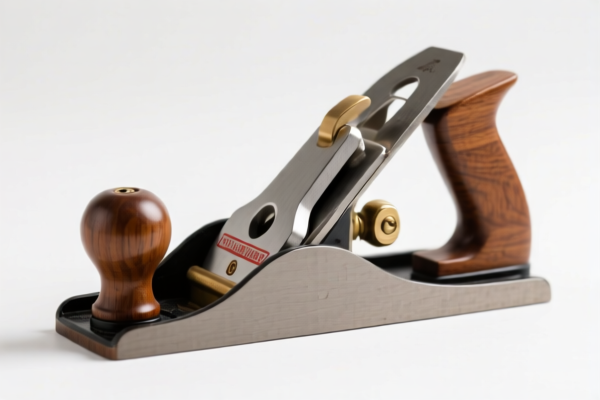
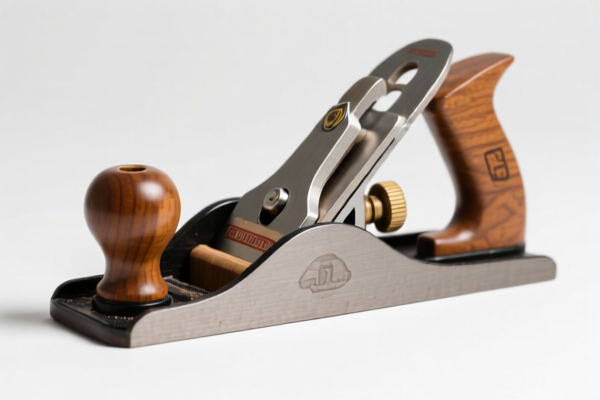
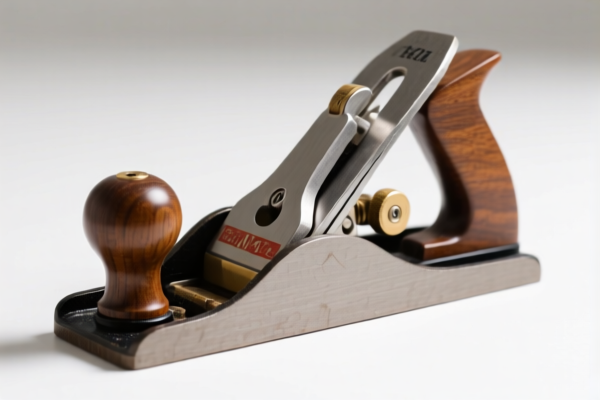
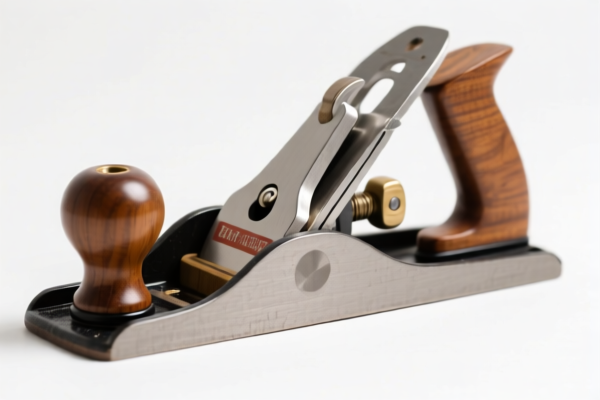
AI Analysis
🪵 Wood Planer & Hand Plane (Woodworking Machinery & Hand Tools)
🌐 HS Code Reference & Customs Clearance Guide | 2026 Latest Tariff Analysis | Professional Clearance Strategy for US Imports
📌 I. Product Definition & Classification: Do You Know the Difference Between a "Machine" and a "Tool"?
In international trade, "Wood Planers" are strictly divided into two categories based on their operation method and mechanism. Misclassification here leads to significant duty differences and clearance risks.
1. Mechanical/Planing Machines (Machinery): - Powered planers (electric, pneumatic, or engine-driven). - Used in factories or professional workshops. - Classified under Chapter 84 (Machinery and Mechanical Appliances).
2. Hand Planes (Hand Tools): - Manually operated wood shavers/planes. - Used by carpenters or DIY enthusiasts. - Classified under Chapter 82 (Tools, Implements, Cutlery, etc.).
⚠️ Key Distinction:
- If the product requires external power (electric/pneumatic) and has a motor/blade assembly for automated planing → Chapter 84.
- If it is hand-held, manually pushed, and relies on human force → Chapter 82.
📦 II. HS Code Classification Details (2026 Latest Tariff Authority对照)
Based on the provided data, here are the correct HS codes for different types of wood planers:
| HS Code | Product Description | Application Scenario | Classification Basis |
|---|---|---|---|
8465.92.00.34 |
Woodworking Planing Machine (Surface Planer) | Industrial/Workshop planers; conforming to classification requirements for usage and form | ✅ Machinery (Powered) |
8465.92.00.37 |
Woodworking Planer | General woodworking planers; form is a "planer" and usage is for wood | ✅ Machinery (Powered) |
8201.90.60.00 |
Hand Plane | Classified under "Other hand tools of a kind used in wood-working" or similar subheadings | ✅ Hand Tool |
8201.40.60.80 |
Hand Plane (Chisel/Cutting Type) | Classified under "Chisels and gouges" or other manual cutting tools for wood | ✅ Hand Tool |
8205.30.60.00 |
Hand Plane (Shaving Type) | Specifically classified as "Planes" under hand tools for wood processing | ✅ Hand Tool |
🔍 Critical Note:
- 8465 series refers to machines. Even if small, if it's electrically powered, it goes here.
- 8201/8205 series refers to hand tools. These are manual implements.
- Do not mix them up! Declaring a hand plane as a machine (or vice versa) will cause customs delays or penalties.
💰 III. 2026 Latest Tariff Rate Breakdown (Including Surcharge & Policy Add-ons)
✅ Applicable Country: United States (US)
✅ Origin: China (CN)
✅ Effective Time: Includes imports after November 10, 2025 (subject to current trade policies)
🎯 1. 8465.92.00.34 & 8465.92.00.37 —— Woodworking Planing Machines (Powered)
| Item | Content |
|---|---|
| Base Duty Rate | 3.0% |
| Section 301 Surcharge | +25.0% |
| Section 122 Tariff | +10.0% |
| Total Tax Rate | 38.0% |
| Tax Calculation | CIF Value × 38% |
| De Minimis Eligibility | ❌ No (Deny de minimis for Section 301 goods) |
| Legal Basis Path | USITC:8465.92.00.34 → SECTION_301:Footnote → SECTION_122 |
📌 Explanation:
- These are powered woodworking machines.
- They are subject to the standard 301 surcharge of 25% due to their origin from China.
- Additionally, a 10% surcharge under Section 122 (often related to specific trade enforcement or national security measures) applies.
- Total Effective Duty: 38%. This is a high-cost item for importers.
🎯 2. 8201.90.60.00 —— Hand Plane (Other Woodworking Hand Tools)
| Item | Content |
|---|---|
| Base Duty Rate | 0.0% |
| Section 301 Surcharge | +25.0% |
| Section 122 Tariff | +10.0% |
| Total Tax Rate | 35.0% |
| Tax Calculation | CIF Value × 35% |
| De Minimis Eligibility | ❌ No |
| Legal Basis Path | USITC:8201.90.60.00 → SECTION_301 → SECTION_122 |
📌 Explanation:
- While the base duty is 0%, the 301 surcharge (25%) and Section 122 (10%) still apply to Chinese-origin goods.
- Total Effective Duty: 35%.
- Slightly lower than machinery, but still significant.
🎯 3. 8201.40.60.80 —— Hand Plane (Chisel/Cutting Category)
| Item | Content |
|---|---|
| Base Duty Rate | 6.2% |
| Section 301 Surcharge | +25.0% |
| Section 122 Tariff | +10.0% |
| Total Tax Rate | 41.2% |
| Tax Calculation | CIF Value × 41.2% |
| De Minimis Eligibility | ❌ No |
| Legal Basis Path | USITC:8201.40.60.80 → SECTION_301 → SECTION_122 |
📌 Explanation:
- This code falls under "Chisels and gouges" or similar manual cutting tools.
- It has a higher base duty (6.2%) compared to other hand planes.
- Total Effective Duty: 41.2% — the highest among all wood planer categories in this dataset.
🎯 4. 8205.30.60.00 —— Hand Plane (Shaving Type)
| Item | Content |
|---|---|
| Base Duty Rate | 5.0% |
| Section 301 Surcharge | +25.0% |
| Section 122 Tariff | +10.0% |
| Total Tax Rate | 40.0% |
| Tax Calculation | CIF Value × 40% |
| De Minimis Eligibility | ❌ No |
| Legal Basis Path | USITC:8205.30.60.00 → SECTION_301 → SECTION_122 |
📌 Explanation:
- This code is for "Planes" specifically classified under hand tools.
- Total Effective Duty: 40%.
- Slightly higher than8201.90.60.00due to the 5% base duty.
🛠️ IV. Customs Clearance Practical Advice (Battle-Tested Pitfall Guide)
✅ 1. Preparation Checklist (Missing Items = Delays)
| Document | Required | Description |
|---|---|---|
| ✅ Product Specification Sheet | ✔️ | Must clearly state: Manual vs. Powered, Power Source (Volts/HP), Dimensions, Weight. |
| ✅ Product Photos | ✔️ | Clear images showing the entire tool, including handles, blades, and any motor/electrical components. |
| ✅ Commercial Invoice | ✔️ | Must match the HS Code. Describe as "Hand Plane" or "Planing Machine" accurately. |
| ✅ Packing List | ✔️ | Detail the quantity, net/gross weight, and package dimensions. |
| ✅ Origin Certificate | ✔️ | Proves Chinese origin (triggers 301 & 122 tariffs). |
✅ 2. Declaration Tips (Key Mnemonics)
🔥 “Powered goes to 84, Hand to 82, Name it right, pay the rate!”
| Scenario | Correct Declaration | Common Mistake |
|---|---|---|
| Electric Planer | 8465.92.00.34/37 |
Misdeclaring as "Hand Plane" → Audit & Penalty |
| Manual Hand Plane | 8201.90.60.00 or 8205.30.60.00 |
Misdeclaring as "Machine" → Overpayment or Rejection |
| Chisel-Type Plane | 8201.40.60.80 |
Misdeclaring as 8201.90 → Underpayment |
| Set of Planes | Declare individually or as a set based on primary function | Combining machinery and hand tools → Confusion |
✅ 3. Special Cases Handling
| Situation | Handling Advice |
|---|---|
| OEM Custom Hand Planes | Provide design drawings to prove manual operation. If it has a motor, it’s a machine. |
| Planer Blades/Knives | These are often classified separately (e.g., 8208.10 or 8208.30). Do not mix with the plane itself. |
| Planer Jigs/Attachments | If sold separately, they may be classified as parts (e.g., 8465.99). Declare separately. |
| Used Hand Planes | Still subject to tariffs. Ensure "Used" is declared to avoid anti-dumping investigations on new goods. |
🌍 V. Global Market Comparison (2026 Latest)
| Country/Region | Recommended HS Code | Tariff (China Origin) | Certification | Notes |
|---|---|---|---|---|
| 🇺🇸 USA | 8465.92.00.34 (Machine)8201.90.60.00 (Hand) |
38% (Machine) 35% (Hand) |
No specific cert for plain tools | High tariffs due to 301 & 122. |
| 🇨🇳 China | 8465.92 / 8201 |
10-15% (Import Duty) | CCC (if electric) | Lower tariffs, but higher local competition. |
| 🇪🇺 EU | 8465.20 / 8201 |
5-7% (MFN) | CE (if electric) | No 301-style tariffs, but strict safety standards. |
| 🇬🇧 UK | 8465.20 / 8201 |
5-7% (MFN) | UKCA (if electric) | Post-Brexit rules apply. |
| 🇦🇺 Australia | 8465.20 / 8201 |
5% | RCM (if electric) | Low base tariffs. |
📌 Conclusion:
- The US market is the most expensive for Chinese wood planers due to Section 301 (25%) and Section 122 (10%) tariffs.
- Hand planes (35-41%) are slightly cheaper than powered machines (38%), but the gap is narrow.
- Consider supply chain diversification (e.g., assembling in Vietnam/Mexico) if targeting the US market to mitigate tariff risks.
📌 VI. Common Errors & Pitfall Guide (Lessons Learned)
❌ Mistake 1: Declaring an Electric Planer as a "Hand Plane"
👉 Consequence: Customs may reclassify it to 8465, apply 38% duty, and levy penalties for misdeclaration.
❌ Mistake 2: Ignoring Section 122 Tariff
👉 Consequence: Underpayment by 10%. Customs will demand back payment + interest.
❌ Mistake 3: Combining Planer + Blades in one line item
👉 Consequence: Incorrect duty calculation. Blades may have different rates. Declare separately.
❌ Mistake 4: Using vague terms like "Woodworking Tool"
👉 Consequence: Customs may hold the shipment for further classification, causing delays.
✅ Correct Practice:
"Electric Wood Planer, 12-inch Width, 110V/60Hz, Model XYZ, Made in China"
OR
"Manual Wood Plane, Iron Body, Wooden Handle, Model ABC, Made in China"
🎯 VII. Conclusion: Precise Classification Saves Money!
🎯 Remember the Mantra:
🔹 "Powered = 84 (38%), Manual = 82 (35-41%). Name it right, avoid fines!"
🔹 "Section 122 adds 10%, Section 301 adds 25%. Total is High!"
📌 Pro Tip:
If your hand planes are assembled in the US or originate from non-China countries (e.g., Germany, Japan), you may qualify for lower or zero tariffs.
✅ Recommendation: Apply for a Customs Ruling before shipping large volumes to confirm the exact HS Code and duty rate.
📣 Immediate Action:
📞 Contact a licensed customs broker.
📸 Provide clear photos of the product.
📝 Declare accurately to avoid 38%+ surprise costs.
✨ Professional Clearance Starts with Accurate Classification!
💼 Your Bottom Line Depends on Your HS Code!
Customer Reviews
About HS Code Classification
The Harmonized System (HS) is an internationally standardized nomenclature developed by the World Customs Organization (WCO) to classify traded products. Over 200 countries use the HS system as the basis for customs tariffs, trade statistics, and import/export regulations.
Each HS code follows a hierarchical structure:
- Chapter (2 digits) — Broad category of goods (e.g., Chapter 84: Machinery and Mechanical Appliances)
- Heading (4 digits) — More specific grouping within the chapter
- Subheading (6 digits) — Internationally standardized breakdown, used by all WCO member countries
- National subdivisions (8-10 digits) — Country-specific extensions for further classification, such as US HTSUS 10-digit codes
Correct HS code classification is essential for smooth customs clearance, accurate duty payment, and compliance with trade regulations. Misclassification can lead to customs delays, overpayment of duties, or penalties.
When importing from CN to US, the applicable tariff rates may include:
- Most-Favored-Nation (MFN) rate — The standard duty rate applied to WTO members
- General rate — Applied to countries without trade agreements
- Trade remedy duties — Additional tariffs such as Section 301 (anti-dumping), Section 232 (national security), or countervailing duties
The information provided on this page is for reference purposes only. For official classification, please consult with your local customs authority or a licensed customs broker.