Wood Planks and Strips
CN → US| HS Code | Tariff Rate | Origin | Destination | Doc |
|---|---|---|---|---|
| 9403910080 | 35.0% | CN | US | Official Doc |
| 9403910010 | 35.0% | CN | US | Official Doc |
| 4407910022 | 35.0% | CN | US | Official Doc |
Product Images
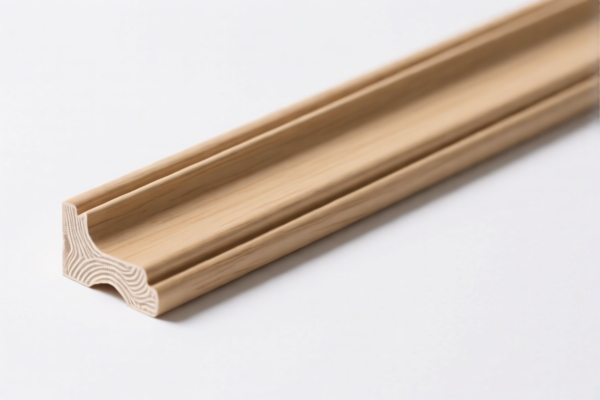
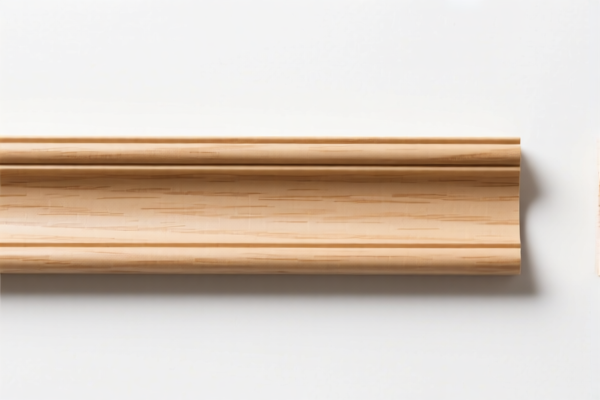
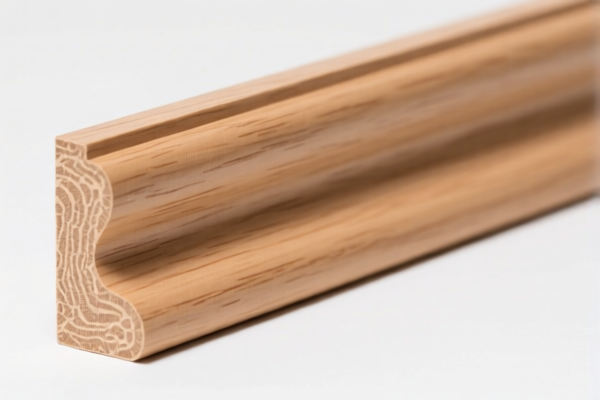
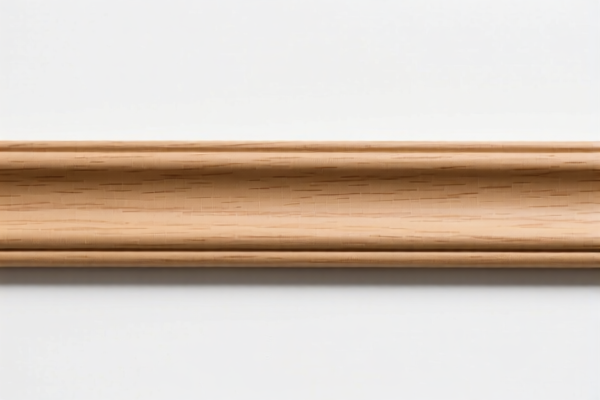
AI Analysis
🪵 Wood Planks and Strips (锯切/刨削木材及家具零件)
🌐 HS Code Reference & Customs Clearance Guide | 2026 Latest Tariff Analysis | Professional Strategy
📌 I. Product Definition & Classification: Are You Importing Furniture Parts or Raw Timber?
In international trade, "Wood Planks and Strips" is a dual-nature term that requires precise distinction between raw material and finished component. The classification depends entirely on the degree of processing and the intended function.
⚠️ Key Distinction Point:
- If the wood is merely cut, planed, or sawed into basic shapes (planks/strips) without specific furniture assembly features → It is classified as Sawn Wood (Chapter 44).
- If the wood pieces are specific components (e.g., legs, frames, panels) intended for wooden furniture assembly → It is classified as Parts of Wooden Furniture (Chapter 94).
📦 II. HS Code Classification Details (2026 Latest Tariff Authority Comparison)
Based on the provided data, here are the three potential classifications. Note that all options carry a high total tax burden due to current US trade policies.
| HS Code | Product Description | Application Scenario | Tax Category Logic |
|---|---|---|---|
4407.91.00.22 |
Other wood, sawn or chipped lengthwise, sliced or peeled, whether or not planed, sanded or end-jointed (Other tropical wood) | Raw planks, strips, lumber boards; basic construction or DIY materials; no furniture assembly features. | Raw Material (Sawn Wood) |
9403.91.00.10 |
Parts of wooden furniture | Primary wooden structural components (frames, legs, shelves) intended for furniture assembly; clear functional conflict with raw lumber. | Furniture Part (Primary) |
9403.91.00.80 |
Parts of wooden furniture | Other wooden furniture parts/components; general inference for "wooden parts" where specific sub-category doesn't fit 10 or other specific furniture part codes. | Furniture Part (General/Inferred) |
🔍 Critical Analysis of Provided Data:
- Material Match: All three codes match the "Wooden" (木制) material characteristic.
- Form Match:
-4407matches the physical form of "Planks/Strips" (boards, sheets).
-9403matches the functional form of "Parts/Components" (inferred from context).
- No Material Conflict: There are no conflicting material issues in any of the provided summaries.
💰 III. 2026 Latest Tariff Rate Breakdown (Including Add-on Taxes & Policy Surcharges)
✅ Applicable Country: United States (US)
✅ Origin: China (CN) (Implied by 122-Clause & USITC references)
✅ Effective Date: Current regime (Post-2025 updates)
🎯 1. 4407.91.00.22 —— Other Wood, Sawn/Planed (Raw Material)
| Item | Content |
|---|---|
| Base Tariff | 0.0% (ad valorem) |
| USITC Add-on Tariff | +25.0% (Section 301 / USITC Footnote) |
| 122-Clause Tariff (IEEPA) | +10.0% (针对中国产品) |
| Total Tax Rate | 35.0% |
| Tax Calculation | CIF Value × 35% |
| De Minimis Exemption | ❌ Not Applicable (High tariff items usually deny de minimis benefits) |
| Legal Basis Path | Base: 4407 → USITC: +25% → IEEPA/122: +10% |
📌 Explanation:
- Although it is a raw material, Section 301 tariffs still apply to many Chinese wood products.
- The 10% additional tariff (often referred to as the "122 Clause" in specific trade contexts or IEEPA authorities) further increases the cost.
- Total 35% is significant for low-margin raw timber imports.
🎯 2. 9403.91.00.10 —— Parts of Wooden Furniture (Primary Components)
| Item | Content |
|---|---|
| Base Tariff | 0.0% |
| USITC Add-on Tariff | +25.0% |
| 122-Clause Tariff (IEEPA) | +10.0% |
| Total Tax Rate | 35.0% |
| Tax Calculation | CIF Value × 35% |
| De Minimis Exemption | ❌ Not Applicable |
| Legal Basis Path | Base: 9403.91 → USITC: +25% → IEEPA/122: +10% |
📌 Explanation:
- Furniture parts are heavily scrutinized. The 25% USITC rate is standard for wooden furniture components under trade restrictions.
- The 10% add-on applies uniformly here as well.
🎯 3. 9403.91.00.80 —— Parts of Wooden Furniture (Other/Inferred Parts)
| Item | Content |
|---|---|
| Base Tariff | 0.0% |
| USITC Add-on Tariff | +25.0% |
| 122-Clause Tariff (IEEPA) | +10.0% |
| Total Tax Rate | 35.0% |
| Tax Calculation | CIF Value × 35% |
| De Minimis Exemption | ❌ Not Applicable |
| Legal Basis Path | Base: 9403.91 → USITC: +25% → IEEPA/122: +10% |
📌 Explanation:
- This code is often used for wooden parts that don't fit the specific "10" sub-category.
- Identical Tax Burden: Despite being a "general" part, the tariff structure is the same as the primary parts.⚠️ Summary of Tax Logic:
- Base Rate is 0%: This is a common "trap." The base WTO rate might be low or zero, but the political tariffs (301 + IEEPA) dominate, creating a flat 35% total.
- 122-Clause Clarification: The "+10%" is likely referring to specific USITC exclusions or IEEPA Section 1702 authorities applied to Chinese goods. Ensure your customs broker cites the correct statutory footnote.
🛠️ IV. Customs Clearance Practical Advice (Battle-Tested Pitfall Guide)
✅ 1. Documentation Checklist (Non-Negotiable)
| Document | Required? | Purpose |
|---|---|---|
| ✅ Commercial Invoice | ✔️ | Must clearly state "Wood Planks" OR "Furniture Parts". Never use vague terms like "Wooden Items". |
| ✅ Packing List | ✔️ | Specify dimensions, weight, and packaging type. |
| ✅ Fumigation Certificate | ✔️ | Critical for Wood Products. ISPM 15 compliant stamp is mandatory to prevent pest control rejection. |
| ✅ Product Photos | ✔️ | Show the cross-section, grain, and any pre-drilled holes (if furniture parts). |
| ✅ Certificate of Origin (CO) | ✔️ | To prove origin (China) and ensure correct application of 301/122 tariffs (no preferential relief available here). |
| ✅ Supplier Declaration | ✔️ | Confirm if items are "Sawn Lumber" or "Pre-assembled Furniture Components". |
✅ 2. Classification Strategy (Key Rules)
🔥 "Shape Defines Code: Raw = 44, Assembled = 94"
| Scenario | Recommended HS Code | Why? |
|---|---|---|
| Simple boards, strips, planks; no holes, no joints, no specific furniture shape. | 4407.91.00.22 |
Fits "Sawn/Planed Wood" description perfectly. |
| Wooden legs, table tops, shelves with pre-drilled holes or specific furniture contours. | 9403.91.00.10 or .80 |
These are "Parts" of furniture, not raw materials. |
| Mixed shipment (some raw, some parts). | Split Declaration | Do not mix codes in one line item. Split by type to avoid "Misclassification" penalties. |
✅ 3. Critical Warnings
| Risk | Consequence | Mitigation |
|---|---|---|
| Misclassification (Raw vs. Part) | If you declare 4407 but the wood is clearly a chair leg, customs may reclassify to 9403. Tax remains 35%, but you face delay + penalties. |
Provide detailed diagrams showing if the item is generic (44) or specific (94). |
| Fumigation Failure | Shipment rejected or destroyed by USDA APHIS. | Ensure ISPM 15 stamp is visible on every pallet/box. |
| Undervaluation | CBP may audit CIF value, leading to 35% tax on adjusted value + interest. | Keep detailed supplier contracts and proof of payment. |
| 122-Clause Ambiguity | Dispute over whether the 10% applies. | Confirm with broker if the specific wood species falls under the 122 exemption list (rare for Chinese wood). |
🌍 V. Global Market Comparison (2026)
| Region | HS Code Focus | Est. Total Tariff (China Origin) | Key Requirement |
|---|---|---|---|
| 🇺🇸 USA | 4407.91.00.22 / 9403.91.00.xx |
35% (Base 0 + 25% 301 + 10% IEEPA) | ISPM 15, Detailed Description |
| 🇨🇳 China | 4407.91.00.22 |
Low/Zero (Import Duty) | N/A |
| 🇪🇺 EU | 4407.91.00 / 9403.91.00 |
~0% - 5% (FLEGT/EUTR Compliance) | EUTR (EU Timber Regulation) Due Diligence |
| 🇯🇵 Japan | 4407.91.00 / 9403.91.00 |
~0% - 5% | Phytosanitary Certificate |
📌 Note: The US is currently the most expensive market for wooden planks/strips due to the叠加 (superposition) of Section 301 and IEEPA tariffs. The EU requires strict legality certification (EUTR), which can be more operationally challenging than the US tariff cost.
📌 VI. Common Errors & Pitfalls (Lessons Learned)
❌ Error 1: Declaring "Furniture Parts" as "Wooden Planks" to avoid scrutiny.
👉 Result: Customs rejects because the shape is clearly functional (e.g., a chair leg). Penalty + 35% Tax.
❌ Error 2: Ignoring the ISPM 15 Fumigation Stamp.
👉 Result: Detention at port. Unacceptable risk for wood products.
❌ Error 3: Assuming "Wood Strips" are always 4407.
👉 Result: If the strips are pre-cut for a specific cabinet door, they are 9403. The distinction is function over form.
❌ Error 4: Not accounting for the 10% Add-on Tariff.
👉 Result: Profit margin calculation fails. Many importers only budget for the 25% 301 tariff, forgetting the additional 10% IEEPA/122 levy.
✅ Correct Approach:
"Tropical Wood Planks, Sawn and Planed, Size 2x4x8, Fumigated, ISPM 15 Certified, Model: RAW-WOOD-01"
OR
"Wooden Table Frame Parts, Pre-drilled, Finished, Model: FURN-PART-01"
🎯 VII. Conclusion: Precision is Profit
🎯 Key Takeaway:
🔹 For Raw Material (Planks/Strips): Use
4407.91.00.22.
🔹 For Furniture Parts: Use9403.91.00.10or.80.
🔹 Tax Reality: Both categories face a 35% total tariff (0% Base + 25% 301 + 10% IEEPA). Cost planning must include this full 35% burden.🔹 "HS Code defines your tariff path, but Policy Defines your Tax Burden!"
🔹 "Don't let the 10% Add-on Kill Your Margin!"
📌 Pro Tip:
If you are importing large volumes, consider applying for an HS Code Advance Ruling from US Customs and Border Protection (CBP) to ensure your classification of "Plank vs. Part" is bulletproof. This prevents post-clearance audits and potential back-taxes.
📣 Immediate Action:
📞 Engage a licensed customs broker to verify the ISPM 15 status and confirm the 35% total liability.
🚀 Ensure your supplier provides the correct fumigation certificate before shipping!
✨ Professional Clearance Starts with Accurate Classification!
💼 Your profit margin depends on the details!
Customer Reviews
About HS Code Classification
The Harmonized System (HS) is an internationally standardized nomenclature developed by the World Customs Organization (WCO) to classify traded products. Over 200 countries use the HS system as the basis for customs tariffs, trade statistics, and import/export regulations.
Each HS code follows a hierarchical structure:
- Chapter (2 digits) — Broad category of goods (e.g., Chapter 84: Machinery and Mechanical Appliances)
- Heading (4 digits) — More specific grouping within the chapter
- Subheading (6 digits) — Internationally standardized breakdown, used by all WCO member countries
- National subdivisions (8-10 digits) — Country-specific extensions for further classification, such as US HTSUS 10-digit codes
Correct HS code classification is essential for smooth customs clearance, accurate duty payment, and compliance with trade regulations. Misclassification can lead to customs delays, overpayment of duties, or penalties.
When importing from CN to US, the applicable tariff rates may include:
- Most-Favored-Nation (MFN) rate — The standard duty rate applied to WTO members
- General rate — Applied to countries without trade agreements
- Trade remedy duties — Additional tariffs such as Section 301 (anti-dumping), Section 232 (national security), or countervailing duties
The information provided on this page is for reference purposes only. For official classification, please consult with your local customs authority or a licensed customs broker.