Wood Powder Bedding
CN → US| HS Code | Tariff Rate | Origin | Destination | Doc |
|---|---|---|---|---|
| 4401490020 | 35.0% | CN | US | Official Doc |
| 4401410000 | 35.0% | CN | US | Official Doc |
Product Images
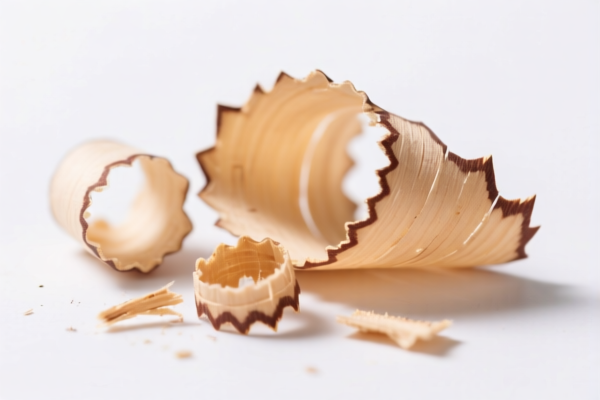
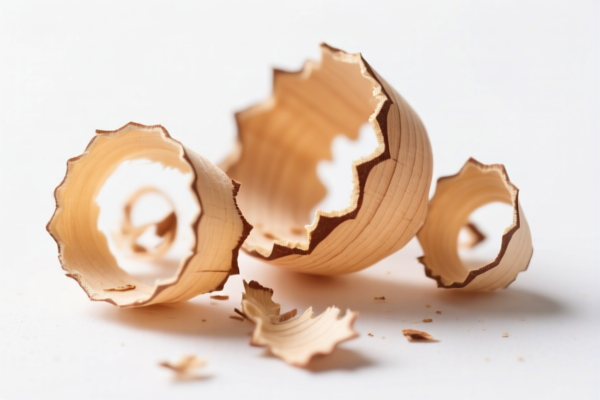
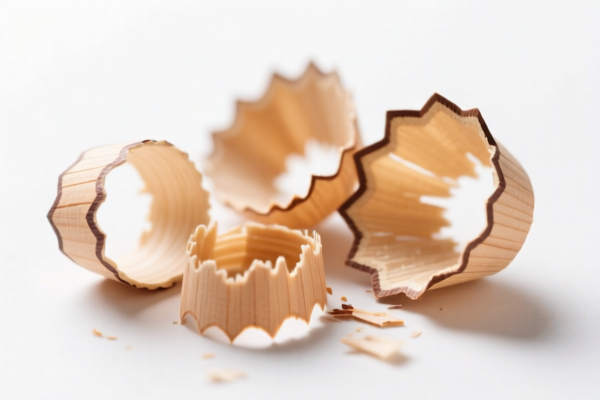

AI Analysis
🪵 Wood Powder Bedding (Sawdust & Wood Waste/Scrap)
🌐 HS Code Reference & Customs Clearance Guide | 2026 Latest Tariff Analysis | Professional Clearance Strategy
📌 I. Product Definition & Classification: What is "Wood Powder Bedding"?
"Wood Powder Bedding" typically refers to fine wood particles, sawdust, or shavings used as animal bedding (commonly for horses, rabbits, or poultry) or industrial absorbent material. In international trade, this is strictly classified under Chapter 44: Wood and Articles of Wood; Wood Charcoal.
Crucially, the classification depends on the physical form and agglomeration status: * Not Agglomerated: Loose sawdust, shavings, or particles. * Agglomerated: Pellets, briquettes, or logs made from compressed sawdust.
Based on the provided data, your product falls under "Sawdust and wood waste and scrap, not agglomerated". We must distinguish between Sawdust (fine powder) and Shavings (coarser chips), as this determines the specific HS Code.
⚠️ Key Distinction Point:
- If the material is fine powder/dust → HS Code 4401.41.00.00
- If the material is shavings/chips/twigs (coarser than dust) → HS Code 4401.49.00.20
- If agglomerated into pellets/briquettes → NOT covered in current data (would fall under 4401.10 or 4401.21/29)
📦 II. HS Code Classification Details (2026 Latest Tariff Authority Match)
| HS Code | Product Description | Applicable Scenario | Agglomeration Status |
|---|---|---|---|
4401.41.00.00 |
Sawdust | Fine wood powder, used for bedding, absorption, or industrial filler | ❌ Not Agglomerated |
4401.49.00.20 |
Other (Shavings) | Coarser wood chips, shavings, or similar forms, not classified as sawdust | ❌ Not Agglomerated |
🔍 Important Reminder:
- "Sawdust" (4401.41.00.00) is defined by its fine particle size, typically passing through a sieve. This is the most common classification for "wood powder" bedding.
- "Other Shavings" (4401.49.00.20) applies if the material contains larger chips or shavings that do not qualify as fine sawdust.
- Do not classify as "Fuel Wood" (4401.10-4401.39) unless the primary intent is strictly burning, though technically all listed items are "Fuel Wood" in the Chapter heading. The specific subheading for waste/powder takes precedence.
💰 III. 2026 Latest Tariff Rate Detailed Breakdown (Including Additional Duties & Policy Add-ons)
✅ Applicable Country: United States (US)
✅ Origin: China (CN)
✅ Effective Time: Current applicable rates based on provided data
🎯 1. 4401.41.00.00 —— Sawdust (Not Agglomerated)
| Item | Content |
|---|---|
| Base Tariff | 0.0% |
| Additional Tariff (Section 301) | +25.0% |
| Total Tax Rate | 25.0% |
| Tax Calculation | CIF Value × 25.0% |
| De Minimis Eligibility | ❌ No (High tariff rate typically excludes small package exemption) |
| Legal Basis Path | HS:4401.41.00.00 → Tariff: 25% Add-on |
📌 Explanation:
- Base Rate: 0% is standard for raw wood waste/powder under general MFN rates.
- Additional Tax: The 25% is the Section 301 additional duty imposed on specific Chinese goods, including wood products like sawdust.
- Total Cost Impact: You must budget for a 25% surcharge on top of the CIF value.
🎯 2. 4401.49.00.20 —— Other (Shavings/Wood Waste Not Agglomerated)
| Item | Content |
|---|---|
| Base Tariff | 0.0% |
| Additional Tariff (Section 301) | +25.0% |
| Total Tax Rate | 25.0% |
| Tax Calculation | CIF Value × 25.0% |
| De Minimis Eligibility | ❌ No |
| Legal Basis Path | HS:4401.49.00.20 → Tariff: 25% Add-on |
📌 Note:
- The tariff rate is identical to sawdust. Whether it's classified as fine sawdust or coarser shavings, the 25% additional duty applies uniformly.
- Ensure your commercial invoice clearly states "Sawdust" or "Wood Shavings" to match the physical evidence during customs inspection.
🛠️ IV. Customs Clearance Practical Advice (实战避坑指南)
✅ 1. Document Checklist (Mandatory)
| Document | Required? | Description |
|---|---|---|
| ✅ Commercial Invoice | ✔️ | Must specify "Wood Powder Bedding" and describe particle size (Sawdust vs. Shavings). |
| ✅ Packing List | ✔️ | Detail weight and volume. Wood powder is lightweight but bulky; ensure volumetric weight is calculated correctly. |
| ✅ Certificate of Origin (CO) | ✔️ | Required to prove origin. If not from China, duty may vary (but data provided is for CN origin). |
| ✅ Material Safety Data Sheet (MSDS) | ✔️ | Critical for Wood Powder. Proves it is not hazardous, flammable beyond normal limits, or chemically treated. |
| ✅ Phytosanitary Certificate | ✔️ | Often Required. Wood products often require ISPM 15 compliance or phytosanitary cert to prove pest-free status, even for waste. |
| ✅ Product Photos | ✔️ | Show the texture (powder vs. chips) to justify HS Code selection. |
✅ 2. Declaration Tips (Key Mnemonics)
🔥 "Specify Particle Size, Prove No Pests, Label as Waste/Powder!"
| Scenario | Correct Declaration | Common Error |
|---|---|---|
| Fine Wood Powder | 4401.41.00.00 - "Sawdust, not agglomerated" |
Calling it "Fuel" → May trigger different inspections. |
| Coarse Wood Chips | 4401.49.00.20 - "Wood Shavings/Waste" |
Calling it "Sawdust" → Potential misclassification penalty. |
| Compressed Pellets | NOT COVERED in this data set | Using 4401.41 for pellets → Customs Rejection/Seizure. |
| Treated/Aromatic Wood | Declare Treatment Process | Omitting treatment info → Phytosanitary violation. |
✅ 3. Special Considerations
| Situation | Handling Advice |
|---|---|
| Aromatic/Cedar Powder | If scented (e.g., cedar for pets), declare "Aromatic Wood Shavings/Sawdust". May require FDA or EPA review if claiming pest-repellent properties. |
| Treated Wood | If wood is pressure-treated or painted, it may be classified as hazardous waste or under different codes. Do not use as standard bedding without disclosure. |
| Volatility/Flammability | Wood dust is combustible. Ensure packaging meets fire safety standards for air freight. |
| De Minimis Rule | ❌ Cannot use Section 321 (De Minimis) for duties > 0%. The 25% tariff means even small shipments are taxable. |
🌍 V. Global Market Clearance Comparison (2026 Latest)
| Country/Region | Recommended HS Code | Tariff Rate | Certification Required | Notes |
|---|---|---|---|---|
| 🇺🇸 USA | 4401.41.00.00 or 4401.49.00.20 |
25% (Add-on) | Phytosanitary Cert, MSDS | Strict on pest-free certification. |
| 🇨🇳 China | 4401.41.00.00 |
0% - 5% | Standard Import License | Low tariff, high volume trade. |
| 🇪🇺 EU | 4401.41.00.00 |
0% (Most FTAs) | Phytosanitary (ISPM 15) | Strict on origin and pest control. |
| 🇬🇧 UK | 4401.41.00.00 |
0% - 5% | Phytosanitary | Post-Brexit rules apply. |
📌 Conclusion:
- USA is the most costly market due to the 25% additional tariff.
- Phytosanitary certification is the biggest logistical hurdle globally for wood products.
- Ensure your packaging is sealed and dust-proof to prevent contamination and satisfy customs hygiene checks.
📌 VI. Common Mistakes & Pitfalls (Blood Lessons)
❌ Mistake 1: Calling "Wood Powder" simply "Fuel Wood"
👉 Consequence: Customs may inspect for fuel-specific regulations or misclassify, causing delays. Use "Sawdust" or "Wood Waste".
❌ Mistake 2: Ignoring Phytosanitary Requirements
👉 Consequence: Shipment Quarantined or Destroyed. Wood products carry pests. Always include a phytosanitary certificate or proof of processing (e.g., heat treatment).
❌ Mistake 3: Confusing Sawdust with Pellets
👉 Consequence: If you ship compressed pellets but declare sawdust, customs will reject the declaration. Pellets have different HS codes (4401.10/4401.21) and may have different duty implications (though often similar, the classification error causes delays).
❌ Mistake 4: Underestimating Volumetric Weight
👉 Consequence: Wood powder is very light but bulky. Air freight charges will be based on volume, not actual weight. Compress or bag tightly to reduce shipping costs.
✅ Correct Declaration Example:
"Wood Sawdust (Not Agglomerated), Used for Animal Bedding, Fine Particle Size, 100% Natural Wood, No Chemical Treatment, HS Code 4401.41.00.00"
🎯 VII. Conclusion: Precise Classification, Smooth Clearance, Cost Control!
🎯 Remember the Mnemonic:
🔹 "Powder is 4401.41, Shavings are .49.20. Both carry 25% add-on in the US."
🔹 "Phytosanitary Cert is Key, No Pests Allowed, Clear the Path!"
🔹 "De Minimis is Off the Table, 25% Tax Awaits, Plan Ahead!"
📌 Pro Tip:
If your wood powder is scented (e.g., cedar, lavender) for pet bedding, check if it requires FDA or EPA registration in the US, as it may be classified as a pesticide/premises spray if it claims to repel insects. This can add significant compliance costs.
📣 Immediate Action:
📞 Contact your freight forwarder to confirm Phytosanitary requirements for wood waste.
📄 Prepare MSDS to prove non-hazardous nature.
📦 Label packages clearly as "Wood Sawdust/Shavings" and NOT "Fuel" unless intended for burning.
✨ Professional Clearance Starts with Accurate Classification!
💼 Every 1% of tax savings counts in the wood waste business!
Customer Reviews
About HS Code Classification
The Harmonized System (HS) is an internationally standardized nomenclature developed by the World Customs Organization (WCO) to classify traded products. Over 200 countries use the HS system as the basis for customs tariffs, trade statistics, and import/export regulations.
Each HS code follows a hierarchical structure:
- Chapter (2 digits) — Broad category of goods (e.g., Chapter 84: Machinery and Mechanical Appliances)
- Heading (4 digits) — More specific grouping within the chapter
- Subheading (6 digits) — Internationally standardized breakdown, used by all WCO member countries
- National subdivisions (8-10 digits) — Country-specific extensions for further classification, such as US HTSUS 10-digit codes
Correct HS code classification is essential for smooth customs clearance, accurate duty payment, and compliance with trade regulations. Misclassification can lead to customs delays, overpayment of duties, or penalties.
When importing from CN to US, the applicable tariff rates may include:
- Most-Favored-Nation (MFN) rate — The standard duty rate applied to WTO members
- General rate — Applied to countries without trade agreements
- Trade remedy duties — Additional tariffs such as Section 301 (anti-dumping), Section 232 (national security), or countervailing duties
The information provided on this page is for reference purposes only. For official classification, please consult with your local customs authority or a licensed customs broker.