Wood Pulp Cotton Paper Cardboard Roll
CN → US| HS Code | Tariff Rate | Origin | Destination | Doc |
|---|---|---|---|---|
| 4805911090 | 35.0% | CN | US | Official Doc |
| 4818900080 | 17.5% | CN | US | Official Doc |
| 4805911010 | 35.0% | CN | US | Official Doc |
| 4818900020 | 17.5% | CN | US | Official Doc |
| 4823908680 | 35.0% | CN | US | Official Doc |
Product Images
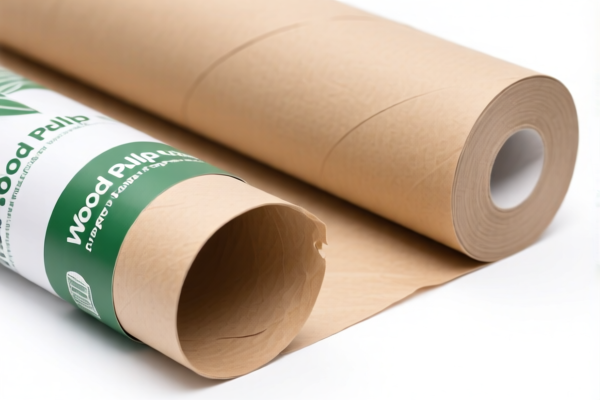
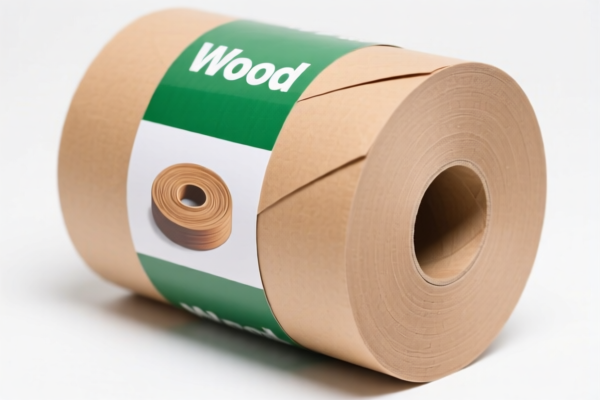
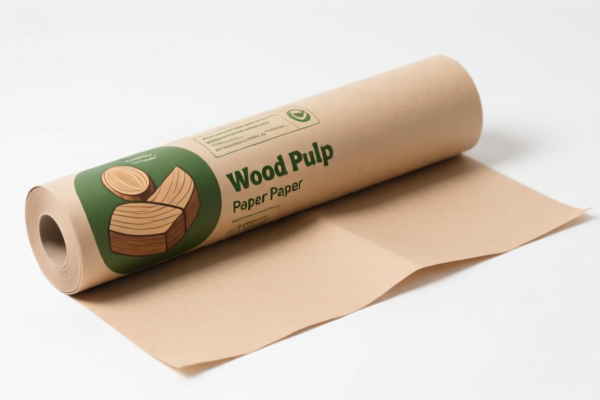
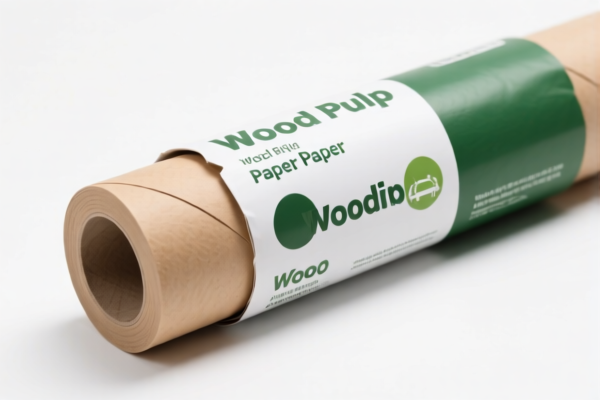
AI Analysis
🧻 Wood Pulp Cotton Paper Cardboard Roll: The Ultimate Importer’s Guide to HS Classification & Customs Clearance (2026 Update)
🌐 HS Code Reference & Customs Clearance Guide | 2026 Latest Tariff Analysis | Professional Strategy for Paper Products
📌 Part I: Product Definition & Classification: Do You Really Understand "Wood Pulp Cotton"?
Wood Pulp Cotton Paper Cardboard (often referred to as Wood Pulp Wadding, Cellulose Sponges, or Absorbent Paper Cards) is a versatile material derived from cellulose fibers, characterized by high absorbency, softness, and structural integrity. In international trade, the classification hinges on physical form and end-use application, not just the raw material.
1. Uncoated Paper & Paperboard (Raw/Intermediate Material)
Characteristics: Plain sheets or rolls, no specific shaping for final consumer use, primarily used as industrial backing, packaging liner, or raw material for further processing.
* Key Distinction: If it is cut into sheets or kept in rolls for further manufacturing, it often falls under Chapter 48, Heading 4805* (Other paper and paperboard).
2. Finished Paper Products (Consumer/Industrial Goods)
Characteristics: Cut into specific shapes (cards, pads, wipes), often used for cleaning, medical, or cosmetic applications.
* Key Distinction: If the product is "ready for use" or specifically shaped for a function (like wiping or absorbing), it may fall under Chapter 48, Heading 4818 (Sanitary paper) or 4823* (Cut paper products).
⚠️ Critical Classification Point:
- If the item is a raw sheet/board for packaging or lamination → 4805
- If the item is a finished wipe/card for hygiene/cleaning → 4818
- If the item is a custom-cut shape (e.g., puzzle pieces, specific industrial filters) → 4823
📦 Part II: HS Code Classification Details (2026 Official Tariff Alignment)
Based on the provided data, here is the precise breakdown of HS Codes for "Wood Pulp Cotton Paper Cardboard Rolls/Sheets":
| HS Code | Product Description | Physical Form | Material Composition | Typical Use Case |
|---|---|---|---|---|
4805.91.10.90 |
Other paper, paperboard, cellulose wadding and webs of cellulose fibers | Sheets | Wood pulp cotton | Uncoated paperboard, raw material for further processing |
4818.90.00.80 |
Sanitary paper and cellulose wadding in sheets, rolls, or shapes | Sheets | Wood pulp/cellulose | Finished wipes, cleaning pads, absorbent cards |
4805.91.10.10 |
Other paper and paperboard | Sheets | Paperboard (foldable) | Folding cartons, rigid packaging board, laminates |
4818.90.00.20 |
Other paper, cellulose wadding and webs | Sheets | Wood pulp cotton/cellulose fiber | Hygiene products, medical dressings, cosmetic pads |
4823.90.86.80 |
Other paper, paperboard, cellulose wadding and webs | Cut Shapes | Wood pulp cotton | Custom-cut cards, industrial filters, specific shapes |
🔍 Key Insight:
-4805is for uncoated, unfinished paper/board.
-4818is for sanitary/hygienic paper products (even if not strictly "toilet paper").
-4823is for cut paper products of a specific size or shape.
- The Tax Rate Difference is Massive:4805and4823incur 35% total tax, while4818incurs only 17.5%. Misclassification can double your duty cost!
💰 Part III: 2026 Tariff Rate Breakdown (Including Surcharge & Policy Add-ons)
✅ Applicable Market: United States (US)
✅ Origin: China (CN)
✅ Effective Date: 2025/2026 (Subject to current Section 301 & IEEPA rules)
🎯 Category A: High Tax Rate (35%) – Uncoated Paperboard & Cut Shapes
HS Codes: 4805.91.10.90, 4805.91.10.10, 4823.90.86.80
| Item | Details |
|---|---|
| Base Tariff | 0.0% (Most uncoated paper/board has low base rates) |
| Section 301 Surcharge | +25.0% (Additional tariff on Chinese goods) |
| IEEPA Surcharge | +10.0% (Tariff under International Emergency Economic Powers Act for Chinese-origin goods) |
| Total Effective Rate | 35.0% |
| Tax Calculation | CIF Value × 35% |
| De Minimis Exemption | ❌ Not Eligible (Value > $800 threshold for de minimis does not apply; high rates block low-value entry benefits) |
| Legal Basis Path | IEEPA:9903.01.25 → USITC:4805.91.10.90 → FOOTNOTE:301 |
📌 Explanation:
- The 25% is the standard Section 301 tariff for many paper products.
- The 10% is an additional layer under IEEPA, effectively creating a 35% barrier.
-4823.90.86.80is risky because "cut shapes" are often scrutinized for "finished goods" status, leading to high duties.
🎯 Category B: Lower Tax Rate (17.5%) – Sanitary/Cleaning Paper Products
HS Codes: 4818.90.00.80, 4818.90.00.20
| Item | Details |
|---|---|
| Base Tariff | 0.0% |
| Section 301 Surcharge | +7.5% (Note: Some sanitary paper items have reduced 301 rates) |
| IEEPA Surcharge | +10.0% |
| Total Effective Rate | 17.5% |
| Tax Calculation | CIF Value × 17.5% |
| De Minimis Exemption | ❌ Not Eligible |
| Legal Basis Path | IEEPA:9901.25 → USITC:4818.90.00.80 → FOOTNOTE:301 |
📌 Explanation:
-4818is classified under "Sanitary Paper," which often enjoys lower Section 301 surcharges (7.5% instead of 25%).
- Crucial Strategy: If your wood pulp cotton product is used for cleaning, wiping, or hygiene, classify it under 4818 to save 17.5% in duties.
- Proof Required: You must demonstrate the product is "finished" for hygiene/cleaning purposes (e.g., packaging as "wipes," "pads," "cotton cards" for cosmetics).
🛠️ Part IV: Customs Clearance Practical Advice (Battle-Tested Tips)
✅ 1. Documentation Checklist (Non-Negotiable)
| Document | Required? | Why? |
|---|---|---|
| Product Specification Sheet | ✔️ | Must state: Material (100% Wood Pulp Cotton), Form (Sheet/Roll/Cut), Absorbency Rate, Thickness |
| Commercial Invoice | ✔️ | Must use precise description: "Wood Pulp Cotton Wiping Cards" (for 4818) vs. "Uncoated Paperboard Sheets" (for 4805) |
| Packing List | ✔️ | Must clarify if items are cut to size or on rolls |
| Certificate of Origin (CO) | ✔️ | To prove Chinese origin and apply IEEPA/301 rules correctly |
| Product Photos | ✔️ | Show packaging, texture, and any branding indicating end-use (e.g., "Makeup Remover Pads") |
| Usage Declaration | ✔️ | Explicitly state: "Used for cosmetic wiping/household cleaning" to support 4818 classification |
✅ 2. Classification Strategy (Key Mantra)
🔥 "Shape Defines Use, Use Defines Tax!"
| Scenario | Correct HS Code | Tax Rate | Risk Level |
|---|---|---|---|
| Raw Sheets for Packaging | 4805.91.10.90 / 4805.91.10.10 |
35% | ⚠️ High (if mislabeled as cleaning product) |
| Cut Cards for Cleaning/Makeup | 4818.90.00.80 / 4818.90.00.20 |
17.5% | ✅ Low (If packaging says "Wipes") |
| Custom Cut Shapes (Industrial) | 4823.90.86.80 |
35% | ⚠️ High (Subject to scrutiny) |
📌 Strategic Recommendation:
- If your wood pulp cotton product can be reasonably described as a "wiping pad," "cleaning card," or "cosmetic cotton," aggressively pursue4818.90.00.80or4818.90.00.20.
- Do NOT classify finished wipes as "paperboard" (4805) unless they are explicitly for industrial lining. The 17.5% vs. 35% difference is significant.
✅ 3. Special Cases & Pitfalls
| Situation | Handling Advice |
|---|---|
| Rolls vs. Sheets | 4818 covers "sheets, rolls, or shapes." So, even if sold in rolls, if it’s for hygiene/cleaning, it can still be 4818. |
| Bleached vs. Unbleached | Both 4818 codes generally apply, but ensure chemical treatment is disclosed. |
| OEM/Private Label | Ensure the invoice description matches the physical use, not just the brand name. |
| Mixed Shipments | If you ship both raw board (4805) and finished wipes (4818), declare separately. Do not blend them. |
🌍 Part V: Global Market Comparison (2026)
| Market | Recommended HS Code | Total Tax Rate (China Origin) | Key Requirement |
|---|---|---|---|
| 🇺🇸 USA | 4818.90.00.80 (for wipes) |
17.5% | Must prove end-use as sanitary/cleaning |
| 🇺🇸 USA | 4805.91.10.90 (for board) |
35.0% | Raw material declaration |
| 🇪🇺 EU | 4818.90 (general) |
~6.5% (Duty) + VAT | No IEEPA/301 surcharges |
| 🇨🇳 China | 4818.90.00 |
~13% (Import Duty) | Standard MFN rate |
| 🇯🇵 Japan | 4818.90 |
0% (Most items) | Low duty, standard inspection |
📌 Conclusion for US Imports:
The 17.5% rate for4818is your biggest cost saver. Any justification that shifts the product from "paperboard" to "sanitary/cleaning paper" saves you 17.5% in duties.
📌 Part VI: Common Errors & How to Avoid Them (Lessons Learned)
❌ Error 1: Calling "Wood Pulp Cotton Cards" → "Paperboard"
👉 Consequence: 35% tax instead of 17.5%. $1,750 extra duty per $10,000 shipment!
❌ Error 2: Shipping finished wipes but declaring as "uncoated paper"
👉 Consequence: Customs may reclassify anyway, but delays occur. Better to declare correctly upfront.
❌ Error 3: Ignoring IEEPA 10% Surcharge
👉 Consequence: Underestimating landed cost. Remember: Base + 301 + IEEPA = Total.
❌ Error 4: Using vague terms like "Paper Product"
👉 Consequence: Customs officer assigns highest possible duty rate. Always specify: "Wood Pulp Cotton Cleaning Wipes"
✅ Correct Declaration Example:
"Wood Pulp Cotton Cleaning Wiping Cards, 100% Cellulose, Cut to Size, for Household/Cosmetic Use, HS: 4818.90.00.80"
🎯 Part VII: Conclusion: Maximize Profit, Minimize Risk
🎯 Remember the Mantra:
🔹 "If it wipes, it’s 4818. If it’s raw board, it’s 4805."
🔹 "17.5% vs 35%: A 17.5% Savings Worth Fighting For."
🔹 "IEEPA 10% is always on. Don’t forget it."
📌 Pro Tip:
If your product is not strictly for hygiene, but is still cut into shapes, try to argue 4823.90.86.80 only if you cannot prove a sanitary/cleaning use. However, 4818 is generally the safest for "cotton-like" paper products if any absorbency or wiping function exists.
📣 Immediate Action:
📞 Contact your customs broker with product photos and usage description.
📄 Request an Advance Ruling if your shipment value is high.
🚀 Optimize your invoice description to reflect the end-use (cleaning/hygiene) to secure the 17.5% rate.
✨ Smart Classification, Lower Costs, Faster Clearance!
💼 Every percentage point matters in international trade.
Customer Reviews
About HS Code Classification
The Harmonized System (HS) is an internationally standardized nomenclature developed by the World Customs Organization (WCO) to classify traded products. Over 200 countries use the HS system as the basis for customs tariffs, trade statistics, and import/export regulations.
Each HS code follows a hierarchical structure:
- Chapter (2 digits) — Broad category of goods (e.g., Chapter 84: Machinery and Mechanical Appliances)
- Heading (4 digits) — More specific grouping within the chapter
- Subheading (6 digits) — Internationally standardized breakdown, used by all WCO member countries
- National subdivisions (8-10 digits) — Country-specific extensions for further classification, such as US HTSUS 10-digit codes
Correct HS code classification is essential for smooth customs clearance, accurate duty payment, and compliance with trade regulations. Misclassification can lead to customs delays, overpayment of duties, or penalties.
When importing from CN to US, the applicable tariff rates may include:
- Most-Favored-Nation (MFN) rate — The standard duty rate applied to WTO members
- General rate — Applied to countries without trade agreements
- Trade remedy duties — Additional tariffs such as Section 301 (anti-dumping), Section 232 (national security), or countervailing duties
The information provided on this page is for reference purposes only. For official classification, please consult with your local customs authority or a licensed customs broker.