Wood Pulp Cotton Paper Napkin
CN → US| HS Code | Tariff Rate | Origin | Destination | Doc |
|---|---|---|---|---|
| 4802586020 | 35.0% | CN | US | Official Doc |
| 4801000140 | 35.0% | CN | US | Official Doc |
| 4801000120 | 35.0% | CN | US | Official Doc |
| 4802100000 | 12.0% | CN | US | Official Doc |
| 4805911010 | 35.0% | CN | US | Official Doc |
Product Images
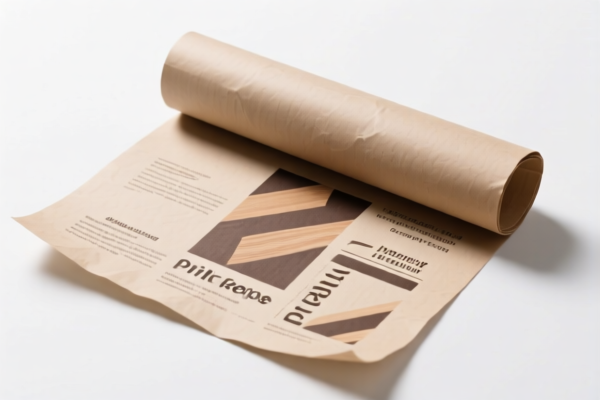
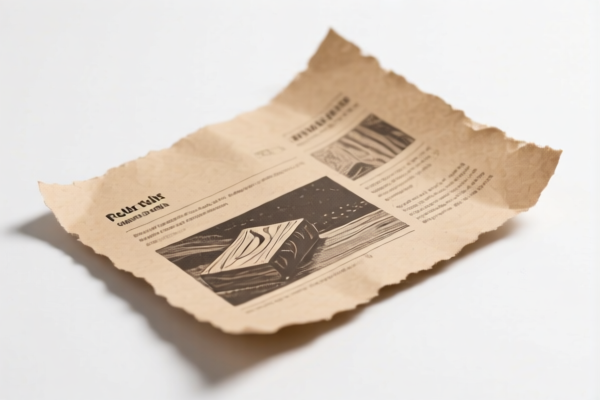


AI Analysis
🧻 Wood Pulp Cotton Paper Napkins (木浆棉纸巾/手工纸)
🌐 HS Code Reference & Customs Clearance Guide | 2026 Latest Tariff Analysis | Professional Entry Strategy
📌 I. Product Definition & Classification: Do You Really Understand "Wood Pulp Cotton"?
Wood Pulp Cotton Paper Napkins are specialized paper products combining wood pulp (cellulose fibers) and cotton fibers. In international trade, their classification depends heavily on the fiber composition ratio, manufacturing process (handmade vs. machine-made), and surface treatment (coated vs. uncoated).
Key Distinctions: * High Cotton Content + Handmade: Often falls under specialized paper categories for writing or graphic use. * Mixed Pulp/Cotton + Newsprint-like Attributes: May be classified under broader newsprint or general paper categories. * Board/Sheet Form: If cut into rigid sheets or cardboard-like forms, it may shift to "paperboard" classifications.
⚠️ Critical Classification Point:
- If the product is uncoated, used for writing/graphic purposes, and has a high cotton content with a handmade appearance → Typically aligns with 4802.58.60.20.
- If the product is considered a generic paper原料 (raw material) or has newsprint-like attributes (despite being napkins) → May fall under 4801.00.01.40 or 4801.00.01.20.
- If classified simply as handmade paper without specific graphic use emphasis → 4802.10.00.00.
- If the form factor is more like paperboard sheets/cards → 4805.91.10.10.
📦 II. HS Code Classification Details (2026 Latest Tariff Authority Mapping)
| HS Code | Product Description | Applicable Scenario | Key Attributes |
|---|---|---|---|
4802.58.60.20 |
Wood pulp cotton handmade paper, cotton-containing, uncoated, for writing/graphic use | Premium napkins, artistic paper, high-end packaging material | ✅ High cotton, handmade feel, uncoated |
4801.00.01.40 |
Wood pulp cotton as paper raw material, fits newsprint attribute, paper form, residual category | Bulk paper pulp, generic paper products with mixed fiber | ✅ Pulp-based, general paper use |
4801.00.01.20 |
Wood pulp cotton material, handmade paper form, fits basic paper category attributes | General handmade paper products, no specific graphic use emphasized | ✅ Paper form, basic classification |
4802.10.00.00 |
Wood pulp cotton belongs to paper category, handmade form, fits handmade paper & cardboard definition | General handmade paper, basic stationery use | ✅ Handmade, general paper |
4805.91.10.10 |
Wood pulp cotton paperboard sheets, fits paperboard attribute, sheet form, no material/form conflict | Rigid paper sheets, cardstock-like napkins, packaging boards | ✅ Sheet/board form, rigid structure |
🔍 Important Note:
- The term "Cotton" in "Wood Pulp Cotton" implies a blended fiber, not 100% cotton rag. Customs will scrutinize the cotton fiber percentage.
- Handmade is a key descriptor. If the product is machine-made, classification may shift, but the provided data assumes handmade characteristics.
- Uncoated is critical. Coated papers fall under different subheadings (e.g., 4802.56, etc.), which are not in the provided dataset.
💰 III. 2026 Latest Tariff Rate Details (Including Surcharges, Policy Add-ons)
✅ Applicable Country: United States (US)
✅ Origin: China (CN)
✅ Effective Date: From November 10, 2025 (including subsequent imports)
🎯 1. 4802.58.60.20 —— Wood Pulp Cotton Handmade Paper (Uncoated, Graphic Use)
| Item | Content |
|---|---|
| Base Tariff | 0.0% (ad valorem) |
| Section 301 Surtax | +25.0% (from USITC Footnote 9903.88.01) |
| IEEPA Surtax (Section 122) | +10.0% (China/HK products, effective Nov 10, 2025) |
| Total Tariff Rate | 35.0% |
| Tax Calculation | CIF Value × 35% |
| De Minimis Eligibility | ❌ Not Eligible (deny_de_minimis) |
| Legal Basis Path | IEEPA:9903.01.25 → IEEPA:9903.01.24 → USITC:4802.58.60.20 → FOOTNOTE:9903.88.01 |
📌 Explanation:
- The 25% Section 301 surcharge is applied to most Chinese-origin paper products.
- The 10% IEEPA surcharge is a new/additional layer targeting specific Chinese imports.
- Total 35% is a significant cost. This classification assumes the product is deemed a "specialty paper" rather than a simple disposable napkin.
🎯 2. 4801.00.01.40 & 4801.00.01.20 —— Paper Raw Material / General Paper Category
| Item | Content |
|---|---|
| Base Tariff | 0.0% |
| Section 301 Surtax | +25.0% |
| IEEPA Surtax (Section 122) | +10.0% |
| Total Tariff Rate | 35.0% |
| Tax Calculation | CIF × 35% |
| De Minimis Eligibility | ❌ Not Eligible |
| Legal Basis Path | IEEPA:9901.25 → IEEPA:9903.01.24 → USITC:4801.00.01.40/20 → FOOTNOTE:9903.88.01 |
📌 Note:
- These codes represent a broader, less specific classification. If customs views the product as a generic paper product rather than a specialty "graphic paper," this rate applies.
- The rate is identical to 4802.58.60.20, meaning there is no tariff advantage in choosing a broader code if the surcharges apply equally.
🎯 3. 4802.10.00.00 —— General Handmade Paper
| Item | Content |
|---|---|
| Base Tariff | 0.0% |
| Section 301 Surtax | +2.0% (Note: This is significantly lower than other codes in the dataset) |
| IEEPA Surtax (Section 122) | +10.0% |
| Total Tariff Rate | 12.0% |
| Tax Calculation | CIF × 12% |
| De Minimis Eligibility | ❌ Not Eligible |
| Legal Basis Path | IEEPA:9903.01.25 → IEEPA:9903.01.24 → USITC:4802.10.00.00 → FOOTNOTE:9903.88.01 |
📌 Critical Insight:
- This classification yields the lowest tariff (12%) in the provided data.
- Why? The Section 301 surcharge for4802.10.00.00is only 2%, unlike the 25% for others. This suggests this code might be for "basic" handmade paper not subject to the full 301 retaliation list, OR it is a specific exception.
- Caution: You must ensure the product strictly meets the definition of "handmade paper" under this code. Misclassification could lead to penalties.
🎯 4. 4805.91.10.10 —— Wood Pulp Cotton Paperboard Sheets
| Item | Content |
|---|---|
| Base Tariff | 0.0% |
| Section 301 Surtax | +25.0% |
| IEEPA Surtax (Section 122) | +10.0% |
| Total Tariff Rate | 35.0% |
| Tax Calculation | CIF × 35% |
| De Minimis Eligibility | ❌ Not Eligible |
| Legal Basis Path | IEEPA:9903.01.25 → IEEPA:9903.01.24 → USITC:4805.91.10.10 → FOOTNOTE:9903.88.01 |
📌 Note:
- This code applies if the "napkins" are rigid, sheet-like, or used as packaging boards.
- Rate is 35%, same as the specialty and general paper codes.
🛠️ IV. Customs Clearance Practical Advice (Real-World Pitfall Avoidance)
✅ 1. Document Checklist (Essential)
| Document | Required | Explanation |
|---|---|---|
| ✅ Product Specification Sheet | ✔️ | Must detail: Fiber composition (Wood Pulp % vs. Cotton %), Paper Weight (GSM), Coating status, Manufacturing process (Handmade/Machine). |
| ✅ Product Photos | ✔️ | Clear images showing texture, edges (handmade deckle edges?), packaging, and final product use (napkin vs. sheet). |
| ✅ Commercial Invoice | ✔️ | Accurate description: "Wood Pulp Cotton Handmade Paper Napkins, Uncoated." Avoid vague terms like "Craft Paper." |
| ✅ Packing List | ✔️ | Itemized list, weight, dimensions. |
| ✅ Origin Certificate (CO) | ✔️ | To prove Chinese origin for surcharge assessment. |
✅ 2. Declaration Strategy (Key Mantra)
🔥 "Be Specific on Fiber & Process, Avoid 'Napkin' Ambiguity!"
| Scenario | Correct Declaration | Incorrect Declaration | Risk |
|---|---|---|---|
| High Cotton, Handmade, Uncoated | 4802.58.60.20: "Uncoated wood pulp cotton handmade paper for graphic use" |
"Paper Napkins" | Customs may reclassify to a higher tariff or demand more info. |
| General Paper Product | 4801.00.01.20: "Handmade paper sheets, wood pulp/cotton blend" |
"Wood Pulp Cotton Paper Napkin" | May trigger deeper scrutiny on fiber content. |
| Low Tariff Strategy | 4802.10.00.00: "Handmade paper" (if applicable) |
"Paper Napkin" | Risk: If not truly "basic handmade paper," this is misclassification. Penalty + Back Taxes. |
| Rigid Sheets | 4805.91.10.10: "Wood pulp cotton paperboard sheets" |
"Napkins" | Wrong form factor description. |
✅ 3. Special Case Handling
| Scenario | Handling Advice |
|---|---|
| "Napkin" vs. "Paper" | If the product is used as a disposable napkin, customs may argue it's not "paper for graphic use" (4802.58). Justify its quality as a stationery/craft paper rather than a disposable good to potentially support higher-value codes if needed, or ensure the description matches the tariff definition. |
| Cotton Content Verification | Provide lab reports or supplier declarations on cotton fiber percentage. If it's <10%, it might not qualify for "cotton-containing" descriptors, affecting classification. |
| Coating Status | Ensure the product is uncoated. Any coating (matte, gloss, wax) may shift it to a different HS code (not in this dataset), potentially changing tariffs. |
🌍 V. Global Market Comparison (2026 Latest)
| Country/Region | Recommended HS Code | Tariff (China Origin) | Certification | Notes |
|---|---|---|---|---|
| 🇺🇸 USA | 4802.58.60.20 / 4801.00.01.20 |
35% (Base 0% + 25% + 10%) | None specific | High tariff due to Section 301 + IEEPA. |
| 🇨🇳 China | 4802.58.60.20 |
~5-10% | None | Low tariff domestically. |
| 🇪🇺 EU | 4802.58.60.20 |
0% (if GSP not applicable, standard is ~3-5%) | CE (if applicable) | No Section 301 equivalent. |
| 🇬🇧 UK | 4802.58.60.20 |
3-5% | UKCA | Post-Brexit tariffs apply. |
📌 Conclusion:
- The US market is the most challenging due to the 35% combined surcharge.
- For non-US markets, tariffs are significantly lower.
- Strategy: If exporting to the US, consider if the product can be classified under4802.10.00.00(12% rate) by emphasizing its "basic handmade paper" nature, though this carries compliance risk.
📌 VI. Common Errors & Pitfall Guide (Lessons Learned)
❌ Error 1: Describing the product simply as "Paper Napkins"
👉 Consequence: Customs may assign a generic code with unknown surcharges or demand reclassification.
👉 Fix: Use precise terms: "Uncoated Wood Pulp Cotton Handmade Paper."
❌ Error 2: Assuming "Cotton" means 100% Cotton
👉 Consequence: Misclassification if fiber content is low.
👉 Fix: Specify "Wood Pulp Blend with Cotton Fibers."
❌ Error 3: Ignoring the "Handmade" Attribute
👉 Consequence: If machine-made, 4802.10 or 4802.58 may not apply.
👉 Fix: Ensure production process is documented as handmade or aligns with the code's definition.
✅ Correct Practice:
"Wood Pulp Cotton Blend Uncoated Handmade Paper Sheets, for Stationery/Craft Use, 200 GSM, Model XYZ, Origin: China"
🎯 VII. Conclusion: Precise Classification, Cost Control!
🎯 Remember the Mantra:
🔹 "Handmade + Uncoated + Graphic Use = 4802.58 (35%)"
🔹 "General Handmade Paper = 4802.10 (12%)" (If eligible!)
🔹 "Paperboard Sheets = 4805.91 (35%)"🔹 "35% Tariff is High! Explore
4802.10if Product Fits, but Verify Compliance!"
📌 Pro Tip:
If your product can genuinely be classified as basic handmade paper (4802.10.00.00), the 23% tariff savings (35% → 12%) is substantial. However, ensure it does not violate any trade remedy measures.
Recommendation: Apply for an Advance Ruling from US Customs and Border Protection (CBP) to confirm the 12% rate applicability before shipping large volumes.
📣 Immediate Action:
📞 Consult a licensed customs broker.
📄 Submit product specs for pre-classification review.
🚀 Optimize your HS Code to minimize duty burden legally!
✨ Professional Customs Clearance Starts with Precise Classification!
💼 Your Cost Savings Are Calculated in Every Digit!
Customer Reviews
About HS Code Classification
The Harmonized System (HS) is an internationally standardized nomenclature developed by the World Customs Organization (WCO) to classify traded products. Over 200 countries use the HS system as the basis for customs tariffs, trade statistics, and import/export regulations.
Each HS code follows a hierarchical structure:
- Chapter (2 digits) — Broad category of goods (e.g., Chapter 84: Machinery and Mechanical Appliances)
- Heading (4 digits) — More specific grouping within the chapter
- Subheading (6 digits) — Internationally standardized breakdown, used by all WCO member countries
- National subdivisions (8-10 digits) — Country-specific extensions for further classification, such as US HTSUS 10-digit codes
Correct HS code classification is essential for smooth customs clearance, accurate duty payment, and compliance with trade regulations. Misclassification can lead to customs delays, overpayment of duties, or penalties.
When importing from CN to US, the applicable tariff rates may include:
- Most-Favored-Nation (MFN) rate — The standard duty rate applied to WTO members
- General rate — Applied to countries without trade agreements
- Trade remedy duties — Additional tariffs such as Section 301 (anti-dumping), Section 232 (national security), or countervailing duties
The information provided on this page is for reference purposes only. For official classification, please consult with your local customs authority or a licensed customs broker.