Wood Pulp Cotton Paper Packaging Box
CN → US| HS Code | Tariff Rate | Origin | Destination | Doc |
|---|---|---|---|---|
| 4802586020 | 35.0% | CN | US | Official Doc |
| 4801000120 | 35.0% | CN | US | Official Doc |
| 4801000140 | 35.0% | CN | US | Official Doc |
| 4802100000 | 12.0% | CN | US | Official Doc |
| 4805911090 | 35.0% | CN | US | Official Doc |
Product Images
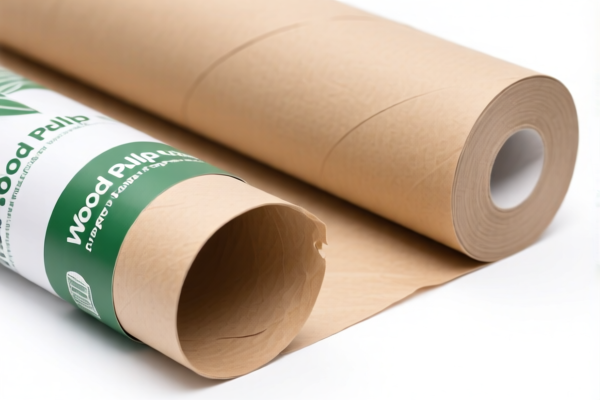
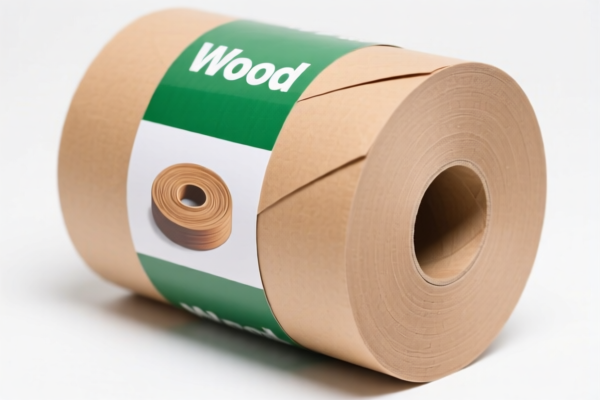
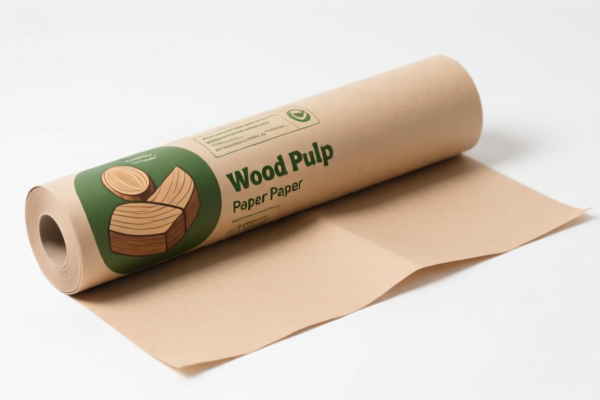
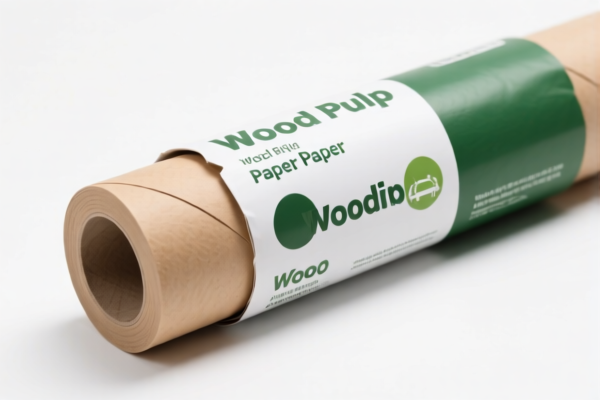
AI Analysis
📜 Wood Pulp Cotton Paper Packaging Box
🌐 HS Code Reference & Customs Clearance Guide | 2026 Latest Tariff Analysis | Professional Customs Strategy
📌 I. Product Definition & Classification: Do You Truly Understand "Wood Pulp Cotton Paper"?
Wood Pulp Cotton Paper is a premium, eco-friendly material made from a blend of wood pulp and cotton fibers. In international trade, it is primarily classified under Chapter 48 (Paper and Paperboard). However, its specific classification depends heavily on its form (sheet vs. board), finish (coated vs. uncoated), and intended use (writing/graphic vs. structural packaging).
Key Distinction:
- If the product is thin sheets for printing/writing → Classified under 4801/4802.
- If the product is thick board/sheets for structural packaging → Classified under 4805.
⚠️ Critical Clarification:
Even if labeled as "Packaging Box," if it is imported as raw paper sheets or blanks (not assembled boxes), it falls under paper categories. If it is an assembled box, it may fall under Chapter 48 (if just paper) or Chapter 46/49 depending on specifics, but the provided data focuses on the paper material itself.
📦 II. HS Code Classification Details (2026 Latest Tariff Authority Reference)
Based on the provided data, here are the applicable HS Codes for "Wood Pulp Cotton Paper" (whether for packaging blanks, writing, or raw material).
| HS Code | Product Description | Applicable Scenario | Material Conflict? |
|---|---|---|---|
4802.58.60.20 |
Wood pulp cotton handmade paper, cotton fiber content, uncoated, for writing/graphics | Premium writing paper, art prints, high-end label blanks | ❌ No |
4801.00.01.20 |
Wood pulp cotton handmade paper, fits basic paper attributes, no material conflict | General paper grade, standard pulp blend | ❌ No |
4801.00.01.40 |
Wood pulp pulp paper material, fits newsprint attributes, compatible with "others" | Raw paper stock, compatible with general newsprint categories | ❌ No |
4802.10.00.00 |
Wood pulp cotton handmade paper, fully fits "Handmade Paper & Paperboard" definition | Artisanal, luxury packaging blanks, specialty handmade sheets | ✅ Yes (Specialty) |
4805.91.10.90 |
Wood pulp cotton board sheets, uncoated paper/board, other category, sheet form | Packaging boxes, sturdy blanks, structural paperboard | ❌ No |
🔍 Key Reminder:
- Uncoated is a key factor. If coated, it would likely fall under different subheadings (e.g., 4810/4811), which are not in the provided data.
- Handmade (4802.10) often carries a different tariff rate than standard machine-made (4802.58or4801).
- Board/Sheet Form (4805) is typically used for packaging structures, while Writing/Graphic (4802/4801) is for printing surfaces.
💰 III. 2026 Latest Tariff Rate Breakdown (Including Surcharges & Policy Add-ons)
✅ Applicable Country: United States (US)
✅ Origin: China (CN)
✅ Effective Date: From November 10, 2025 (including subsequent imports)
🎯 1. Standard Category (Codes: 4802.58.60.20, 4801.00.01.20, 4801.00.01.40, 4805.91.10.90)
| Item | Details |
|---|---|
| Base Tariff Rate | 0.0% (Ad Valorem) |
| USITC Surcharge (Section 301) | +25.0% (From USITC Footnote 9903.88.01) |
| 122-Clause Tariff | +10.0% (Targeted Chinese Imports) |
| Total Tariff Rate | 35.0% |
| Tax Calculation | CIF Value × 35% |
| De Minimis Eligibility | ❌ Not Eligible (Deny de minimis) |
| Legal Basis Path | USITC:4802.58.60.20 → Footnote:9903.88.01 → 122-Clause:10% |
📌 Explanation:
- The 0% base rate reflects the WTO Most Favored Nation (MFN) rate for paper.
- The +25% is the standard Section 301 tariff on many Chinese paper products.
- The +10% is an additional levy under specific "122" provisions targeting certain Chinese exports.
- Total 35% is a high tariff, significantly impacting cost competitiveness.
🎯 2. Handmade Paper Category (4802.10.00.00)
| Item | Details |
|---|---|
| Base Tariff Rate | 0.0% (Ad Valorem) |
| USITC Surcharge (Section 301) | +2.0% (Reduced/Exempted Section 301 rate for specific handmade items) |
| 122-Clause Tariff | +10.0% (Targeted Chinese Imports) |
| Total Tariff Rate | 12.0% |
| Tax Calculation | CIF Value × 12% |
| De Minimis Eligibility | ❌ Not Eligible (Deny de minimis) |
| Legal Basis Path | USITC:4802.10.00.00 → Footnote:Reduced_301 → 122-Clause:10% |
📌 Explanation:
- Handmade paper (4802.10) benefits from a reduced Section 301 surcharge (+2% vs +25%).
- However, the 122-Clause +10% still applies, keeping the total at 12%.
- This is a significantly cheaper option than standard paper (12% vs 35%) IF the product can be legitimately classified as "Handmade."
🛠️ IV. Customs Clearance Practical Advice (Real-World Pitfall Avoidance)
✅ 1. Document Checklist (Indispensable)
| Document | Required | Note |
|---|---|---|
| ✅ Product Specification Sheet | ✔️ | Must specify: Wood pulp %, Cotton %, GSM, Coating status (Uncoated), Handmade vs. Machine-made. |
| ✅ Material Composition Declaration | ✔️ | Proof of "Wood Pulp + Cotton" blend. Crucial for distinguishing from 100% cotton or pure wood pulp. |
| ✅ Product Photos (Clear Label) | ✔️ | Show texture, edge (handmade deckle edge?), and any branding. |
| ✅ Commercial Invoice | ✔️ | Clearly state "Wood Pulp Cotton Paper" and intended use (e.g., "For Packaging Blanks" vs. "For Writing"). |
| ✅ Packing List | ✔️ | Detail sheet dimensions, weight, and quantity. |
| ✅ Origin Certificate (CO) | ✔️ | If claiming any preferential treatment or for country-of-origin verification. |
✅ 2. Declaration Strategy (Key Rules)
🔥 "Handmade Gets a Break, Standard Pays More, Uncoated is Key!"
| Scenario | Correct Declaration | Wrong Declaration |
|---|---|---|
| Luxury Packaging Blanks (Handmade) | 4802.10.00.00 |
Misclassify as standard paper → 35% tariff |
| Standard Packaging Cardboard | 4805.91.10.90 |
Misclassify as handmade → Audit Risk |
| Coated Paper (Not in Data) | ❌ Not covered in provided data | Must use correct Chapter 48 coated code (higher risk) |
| Assembled Boxes | ❌ Not in provided data | If assembled, may need Chapter 48/49 code, but data assumes raw paper. |
✅ 3. Special Considerations
| Situation | Handling Advice |
|---|---|
| "Handmade" Claim | Must provide proof of manual production (e.g., handmade deckle edges, batch records). Misdeclaration can lead to fraud penalties. |
| Packaging vs. Writing Use | Use is less critical than physical attributes (thickness, coating, handmade). Focus on material specs. |
| 122-Clause Targeting | Verify if your specific supplier/country origin triggers the 122-Clause. Recent policies may vary. |
| De Minimis Exemption | ❌ Do not expect $800 de minimis exemption. Paper products from China are explicitly excluded. |
🌍 V. Global Market Comparison (2026 Latest)
| Country/Region | Recommended HS Code | Tariff (CN Origin) | Certification | Notes |
|---|---|---|---|---|
| 🇺🇸 USA | 4802.10.00.00 (Handmade) |
12% | N/A | Best Rate. Other codes: 35% |
| 🇺🇸 USA | 4805.91.10.90 (Board) |
35% | N/A | High tariff for standard packaging paper |
| 🇨🇳 China | 4802.10.00.00 |
~6-12% | CCC (if applicable) | Domestic trade lower tax |
| 🇪🇺 EU | 4802.10.00.00 |
~6-7% | FSC/PEFC (Eco-cert) | No Section 301 or 122-Clause |
| 🇬🇧 UK | 4802.10.00.00 |
~6-7% | N/A | Post-Brexit rules apply |
📌 Conclusion:
- USA is the most challenging market due to 35% or 12% tariffs.
- EU/UK/Asia have significantly lower tariffs (~6-7%), making them more cost-effective for Chinese paper exports.
- Handmade classification is the golden key to reducing US tariffs from 35% to 12%.
📌 VI. Common Errors & Pitfall Guide (Blood & Tears Lessons)
❌ Error 1: Calling standard machine-made paper "Handmade" to get 12% rate.
👉 Consequence: Customs audit, penalty, and forced payment of back-tariffs + interest.
❌ Error 2: Ignoring the 122-Clause surcharge.
👉 Consequence: Unexpected 10% charge at customs, disrupting cash flow.
❌ Error 3: Assuming "Packaging Box" means a different HS Code (e.g., Chapter 46).
👉 Consequence: If it's paper-based, it stays in Chapter 48. Misclassification leads to delays.
❌ Error 4: Believing De Minimis ($800) applies.
👉 Consequence: Small shipments will still be taxed at 12-35%, plus processing fees.
✅ Correct Approach:
"Uncoated Wood Pulp Cotton Paper, Handmade, for Luxury Packaging Blanks, HS 4802.10.00.00"
(If Handmade)"Uncoated Wood Pulp Cotton Board Sheets, for Packaging, HS 4805.91.10.90"
(If Standard Board)
🎯 VII. Conclusion: Professional Declaration, Save Costs!
🎯 Remember the Rule:
🔹 "Handmade = 12%, Standard = 35%, Uncoated is Key, Handmade Proof is Gold!"
🔹 "HS Code determines survival, 23% difference is huge, declare accurately, save thousands!"
📌 Pro Tip:
If you can process the paper into Handmade sheets (or source from handmade producers), you can save 23% in tariffs in the US market.
Consider applying for Advance Rulings from US Customs (CBP) to confirm the "Handmade" status before shipping.
📣 Immediate Action:
📞 Contact a professional customs broker + Provide Material Specs + Apply for HS Code Advance Ruling
🚀 Let your Wood Pulp Cotton Paper clear customs smoothly, maximize profit, and scale globally!
✨ Professional Customs Clearance Starts with Accurate Classification!
💼 Every cent of your cost deserves precise calculation!
Customer Reviews
About HS Code Classification
The Harmonized System (HS) is an internationally standardized nomenclature developed by the World Customs Organization (WCO) to classify traded products. Over 200 countries use the HS system as the basis for customs tariffs, trade statistics, and import/export regulations.
Each HS code follows a hierarchical structure:
- Chapter (2 digits) — Broad category of goods (e.g., Chapter 84: Machinery and Mechanical Appliances)
- Heading (4 digits) — More specific grouping within the chapter
- Subheading (6 digits) — Internationally standardized breakdown, used by all WCO member countries
- National subdivisions (8-10 digits) — Country-specific extensions for further classification, such as US HTSUS 10-digit codes
Correct HS code classification is essential for smooth customs clearance, accurate duty payment, and compliance with trade regulations. Misclassification can lead to customs delays, overpayment of duties, or penalties.
When importing from CN to US, the applicable tariff rates may include:
- Most-Favored-Nation (MFN) rate — The standard duty rate applied to WTO members
- General rate — Applied to countries without trade agreements
- Trade remedy duties — Additional tariffs such as Section 301 (anti-dumping), Section 232 (national security), or countervailing duties
The information provided on this page is for reference purposes only. For official classification, please consult with your local customs authority or a licensed customs broker.