Wood Pulp Cotton Paper Tape
CN → US| HS Code | Tariff Rate | Origin | Destination | Doc |
|---|---|---|---|---|
| 4802100000 | 12.0% | CN | US | Official Doc |
| 4801000120 | 35.0% | CN | US | Official Doc |
| 4801000140 | 35.0% | CN | US | Official Doc |
| 4802586020 | 35.0% | CN | US | Official Doc |
Product Images
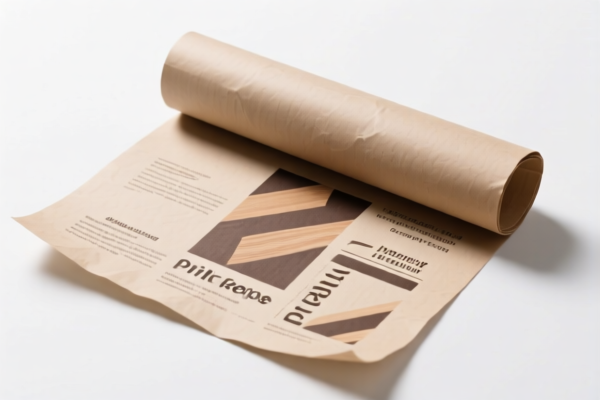
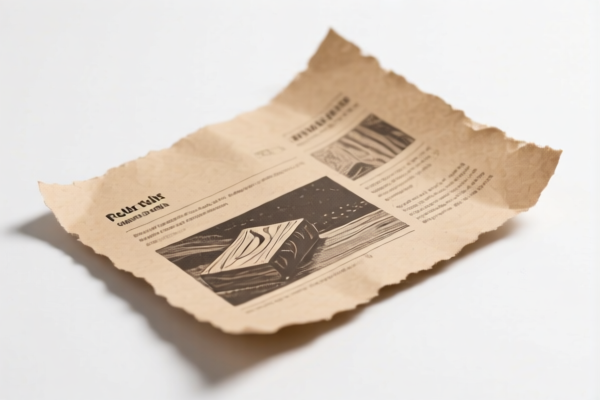


AI Analysis
📜 Wood Pulp Cotton Paper Tape (HS Code Classification & Duty Analysis)
🌐 HS Code Reference & Customs Clearance Guide | 2026 Latest Tariff Rules | Professional Clearance Strategy
📌 I. Product Definition & Classification: What is "Wood Pulp Cotton Paper Tape"?
Wood Pulp Cotton Paper Tape is a composite paper product made primarily from wood pulp and cotton fibers. In international trade, it is generally classified under Chapter 48 (Paper and Paperboard) rather than textiles or tapes (Chapter 54/56), due to its base material and form.
Its classification depends on the specific manufacturing process, surface treatment, and intended use: * Handmade Paper Characteristics: If produced via traditional handmade methods, it may fall under heading 4802. * Printing/Writing Paper Characteristics: If designed for printing or writing, it falls under specific subheadings of 4801/4802. * Uncoated/Non-Specific Use: If used for general wrapping or industrial purposes without specific coating, it follows different subheadings.
⚠️ Key Distinction Point:
- Is it handmade (traditional craft method)? → Likely 4802.10.
- Is it standard industrial/commercial paper (wood pulp + cotton blend)? → Likely 4801.00 or 4802.58.
- Is it coated/glossy? → Note: All provided HS codes are for uncoated paper.
📦 II. HS Code Classification Details (2026 Latest Tariff Authoritative Comparison)
| HS Code | Product Description | Applicable Scenario | Material/State Logic |
|---|---|---|---|
4802.10.00.00 |
Handmade Paper: Paper and paperboard made mainly of wood pulp, in sheet or roll form, produced by hand methods | Traditional craft paper, handmade art paper, decorative handmade tape | ✅ Handmade form |
4801.00.01.20 |
Newsprint/Printing Paper: Wood pulp cotton material, conforms to basic paper attributes, no conflict with standard paper categories | General commercial paper, high-quality printing base, uncoated writing paper | ✅ Standard paper category |
4801.00.01.40 |
Newsprint: Wood pulp cotton belongs to paper raw materials, conforms to newsprint material attributes, compatible with other categories | Paper raw materials, newsprint-style paper, general purpose paper | ✅ Paper raw material/newsprint |
4802.58.60.20 |
Uncoated Paper for Writing/Graphic Use: Contains cotton fibers, uncoated, for writing or graphic purposes, conforming to weight and fiber composition logic | High-quality stationery, art paper for graphic design, cotton-based uncoated paper | ✅ Uncoated, cotton content, writing/graphic use |
🔍 Important Reminder:
- The presence of cotton fiber does not automatically place it in textile categories (Chapter 50-63). If paper is the essential character, it stays in Chapter 48.
- Handmade status is critical: If the production process involves hand-forming sheets,4802.10is the most accurate. If it’s machine-made but "wood pulp + cotton," use4801or4802.58.
💰 III. 2026 Latest Tariff Rate Details (Including Surtaxes, Policy Surcharges)
✅ Applicable Country: United States (US)
✅ Country of Origin: China (CN)
✅ Effective Time: November 10, 2025 onwards (including subsequent imports)
🎯 1. 4802.10.00.00 —— Handmade Paper
| Item | Content |
|---|---|
| Base Tariff Rate | 0% (ad valorem) |
| Section 301 Surcharge | +2.0% (From USITC Section 301 List) |
| Section 122 Surcharge | +10% (From Section 122, related to national security/trade remedies) |
| Total Tariff Rate | 12.0% |
| Tax Calculation | CIF Value × 12.0% |
| De Minimis Eligibility | ❌ No (deny_de_minimis applies to China origin under these surcharges) |
| Legal Basis Path | USITC:4802.10.00.00 → SECTION301:2% → SECTION122:10% |
📌 Explanation:
- "Base 0%": Standard most-favored-nation (MFN) rate for handmade paper.
- "Section 301 +2%": A specific surcharge applied to certain paper products from China.
- "Section 122 +10%": An additional tariff imposed under Section 122 of the Trade Expansion Act of 1962, often used for national security or broad trade adjustments.
- Total 12%: This is a moderate tariff burden compared to other categories.
🎯 2. 4801.00.01.20 —— General Paper (Wood Pulp/Cotton)
| Item | Content |
|---|---|
| Base Tariff Rate | 0% (ad valorem) |
| Section 301 Surcharge | +25.0% (From USITC Section 301 List, Item 9903.88.01) |
| Section 122 Surcharge | +10% (From Section 122) |
| Total Tariff Rate | 35.0% |
| Tax Calculation | CIF Value × 35.0% |
| De Minimis Eligibility | ❌ No (deny_de_minimis) |
| Legal Basis Path | IEEPA:9903.01.25 → USITC:4801.00.01.20 → SECTION301:25% → SECTION122:10% |
📌 Note:
- "Section 301 +25%": This is the standard high-tier surcharge applied to most Chinese imports under Section 301.
- "Section 122 +10%": Additional burden.
- Total 35%: This is a high tariff, significantly impacting profitability. Must be factored into pricing strategy.
🎯 3. 4801.00.01.40 —— Newsprint Category
| Item | Content |
|---|---|
| Base Tariff Rate | 0% (ad valorem) |
| Section 301 Surcharge | +25.0% (From USITC Section 301 List) |
| Section 122 Surcharge | +10% (From Section 122) |
| Total Tariff Rate | 35.0% |
| Tax Calculation | CIF Value × 35.0% |
| De Minimis Eligibility | ❌ No (deny_de_minimis) |
| Legal Basis Path | IEEPA:9903.01.25 → USITC:4801.00.01.40 → SECTION301:25% → SECTION122:10% |
📌 Note:
- Same tariff structure as4801.00.01.20.
- Whether classified as general paper or newsprint, the Section 301 surcharge is 25%.
🎯 4. 4802.58.60.20 —— Uncoated Paper for Writing/Graphic Use
| Item | Content |
|---|---|
| Base Tariff Rate | 0% (ad valorem) |
| Section 301 Surcharge | +25.0% (From USITC Section 301 List) |
| Section 122 Surcharge | +10% (From Section 122) |
| Total Tariff Rate | 35.0% |
| Tax Calculation | CIF Value × 35.0% |
| De Minimis Eligibility | ❌ No (deny_de_minimis) |
| Legal Basis Path | IEEPA:9903.01.25 → USITC:4802.58.60.20 → SECTION301:25% → SECTION122:10% |
📌 Note:
- Applies to cotton-based uncoated paper for writing/graphic use.
- Despite being "high-quality" or "cotton-rich," it is not exempt from Section 301 tariffs if of Chinese origin.
🛠️ IV. Customs Clearance Practical Advice (Practical Pitfall Avoidance Guide)
✅ 1. Preparation Checklist (No Exceptions)
| Material | Must Provide | Explanation |
|---|---|---|
| ✅ Product Specification Sheet | ✔️ | Detail: Composition (Wood Pulp %, Cotton %), Grammage (GSM), Thickness, Size, Handmade vs. Machine-made. |
| ✅ Production Process Description | ✔️ | Crucial for 4802.10. Must describe "hand-forming" or "mould-made" process to qualify for lower tariffs. |
| ✅ Product Photos | ✔️ | Show texture, edges, packaging. Highlight any "handmade" markers. |
| ✅ Commercial Invoice | ✔️ | Clearly state "Wood Pulp Cotton Paper Tape" or "Handmade Paper Roll". Avoid vague terms like "Tape". |
| ✅ Packing List | ✔️ | Detail weight, dimensions, number of rolls/sheets. |
| ✅ Certificate of Origin (CO) | ✔️ | Mandatory for tariff calculation. |
✅ 2. Declaration Tips (Key Mantra)
🔥 "Handmade Proof, Material Clear, Avoid 'Tape', Use 'Paper'!"
| Situation | Correct Declaration | Incorrect Practice |
|---|---|---|
| Traditional Handmade Paper | 4802.10.00.00 + Proof of Handmade Process |
Declare as "Paper Tape" → Risk of misclassification |
| Machine-Made Wood/Cotton Paper | 4802.58.60.20 or 4801.00.01.20 |
Claim it's handmade without proof → Penalty |
| Paper with Adhesive Backing | Still likely Chapter 48 if paper is essential character | Declare as "Adhesive Tape" (3919/5911) → Higher duty/Regulation |
| General Commercial Paper | 4801.00.01.20 |
Use vague "Stationery" → Delayed clearance |
✅ 3. Special Case Handling
| Situation | Handling Advice |
|---|---|
| "Paper Tape" vs. "Paper Roll" | If it’s a long strip used for wrapping/bundling, do not declare as "Adhesive Tape" (HS 3919). If unadhesive, declare as Paper Roll/Sheet (HS 4802/4801). |
| Cotton Content > 10% | Ensure documentation highlights "Cotton Fiber" to support classification under 4802.58 (Uncoated paper containing ≥ 10% cotton). |
| Handmade Claims | Must provide photos of the production process or a manufacturer’s letter confirming handmade status. Customs may inspect physically. |
| Small Samples | Even small quantities are subject to the same tariff rates (12% or 35%). No de minimis exemption for China origin under Section 301/122. |
🌍 V. Global Market Clearance Comparison (2026 Latest)
| Country/Region | Recommended HS Code | Tariff Rate | Certification | Note |
|---|---|---|---|---|
| 🇺🇸 USA | 4802.10.00.00 |
12.0% | None specific | Lowest rate for handmade. |
| 🇺🇸 USA | 4801.00.01.20 etc. |
35.0% | None specific | High rate for standard paper. |
| 🇨🇳 China | 4802.10.00.00 |
7.0% | None | Standard import duty. |
| 🇪🇺 EU | 4802.55.00 |
0% | REACH (if chemicals used) | Generally low duty for paper. |
| 🇬🇧 UK | 4802.55.00 |
0% | UKCA (if applicable) | Post-Brexit rules apply. |
📌 Conclusion:
- USA has the highest tariff burden due to Section 301 and Section 122.
- Handmade classification (4802.10) saves 23% compared to standard paper categories.
- Europe and China have much lower tariffs, making them more cost-effective markets for this product.
📌 VI. Common Errors & Pitfall Guide (Lessons Learned)
❌ Error 1: Declaring as "Adhesive Tape" (HS 3919)
👉 Consequence: Incorrect classification. If the paper is not self-adhesive, this is fraud. If it is adhesive, the tariff may be different, but customs will reject if material is misstated.
❌ Error 2: Claiming "Handmade" without evidence
👉 Consequence: Customs reclassifies to 4802.58 or 4801, increasing tariff from 12% to 35%. Plus, back taxes and fines.
❌ Error 3: Vague Description "Paper Tape"
👉 Consequence: Customs delays request for more info. Delays in clearance lead to demurrage charges.
❌ Error 4: Ignoring Section 122
👉 Consequence: Underestimating total landed cost. Section 122 is often overlooked but adds 10% on top of Section 301.
✅ Correct Practice:
"Handmade Wood Pulp Cotton Paper Roll, Uncoated, for Art Use, Processed by Hand Mould, Model HMC-01, No Adhesive"
🎯 VII. Conclusion: Professional Declaration, Save Costs!
🎯 Remember the Mantra:
🔹 "Handmade Proof = 12% Duty"
🔹 "Machine-Made = 35% Duty"
🔹 "No De Minimis for China"
🔹 "Clarify 'Paper', Not 'Tape'"
📌 Pro Tip:
If your product is machine-made, consider if it can be modified to qualify as handmade (e.g., final finishing by hand) to reduce tariffs from 35% to 12%. This requires careful process documentation.
📣 Immediate Action:
📞 Consult a customs broker to confirm Section 301/122 applicability for your specific product variant.
🚀 Accurate classification can save you 23% in tariffs!
✨ Professional Customs Clearance Starts with Accurate Classification!
💼 Every dollar of cost is worth precise calculation!
Customer Reviews
About HS Code Classification
The Harmonized System (HS) is an internationally standardized nomenclature developed by the World Customs Organization (WCO) to classify traded products. Over 200 countries use the HS system as the basis for customs tariffs, trade statistics, and import/export regulations.
Each HS code follows a hierarchical structure:
- Chapter (2 digits) — Broad category of goods (e.g., Chapter 84: Machinery and Mechanical Appliances)
- Heading (4 digits) — More specific grouping within the chapter
- Subheading (6 digits) — Internationally standardized breakdown, used by all WCO member countries
- National subdivisions (8-10 digits) — Country-specific extensions for further classification, such as US HTSUS 10-digit codes
Correct HS code classification is essential for smooth customs clearance, accurate duty payment, and compliance with trade regulations. Misclassification can lead to customs delays, overpayment of duties, or penalties.
When importing from CN to US, the applicable tariff rates may include:
- Most-Favored-Nation (MFN) rate — The standard duty rate applied to WTO members
- General rate — Applied to countries without trade agreements
- Trade remedy duties — Additional tariffs such as Section 301 (anti-dumping), Section 232 (national security), or countervailing duties
The information provided on this page is for reference purposes only. For official classification, please consult with your local customs authority or a licensed customs broker.