Wood Sawdust Fuel Bulk Blocks
CN → US| HS Code | Tariff Rate | Origin | Destination | Doc |
|---|---|---|---|---|
| 4401394210 | 35.0% | CN | US | Official Doc |
| 4401310000 | 35.0% | CN | US | Official Doc |
| 4405000000 | 38.2% | CN | US | Official Doc |
| 4402900100 | 35.0% | CN | US | Official Doc |
| 3606903000 | 15.9% | CN | US | Official Doc |
Product Images
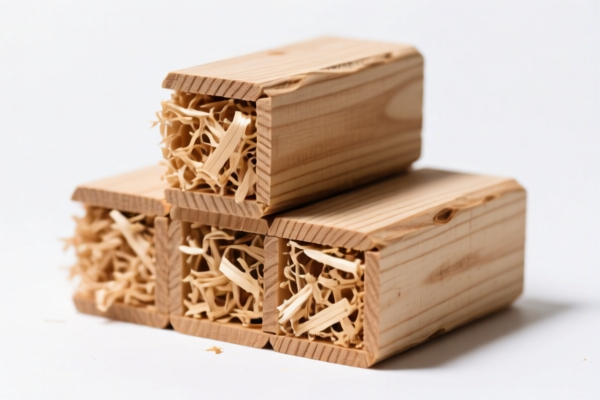
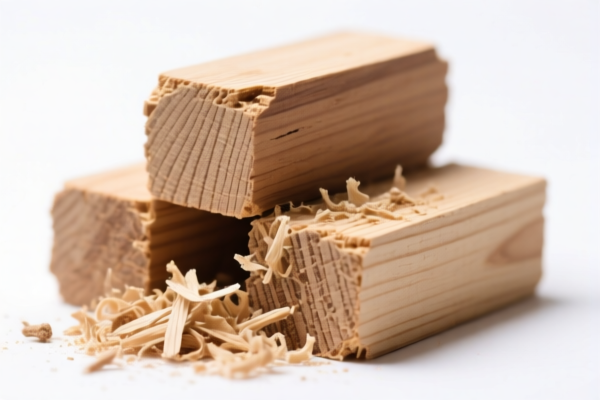
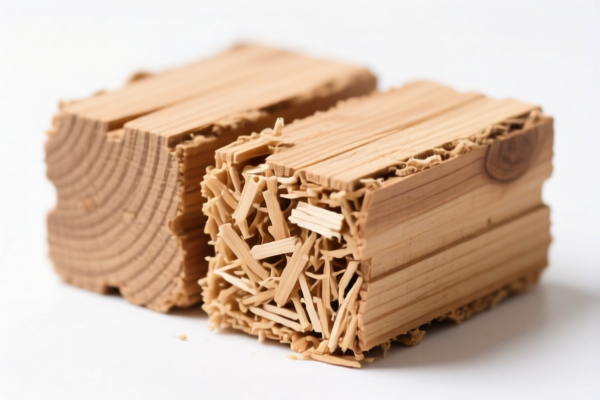
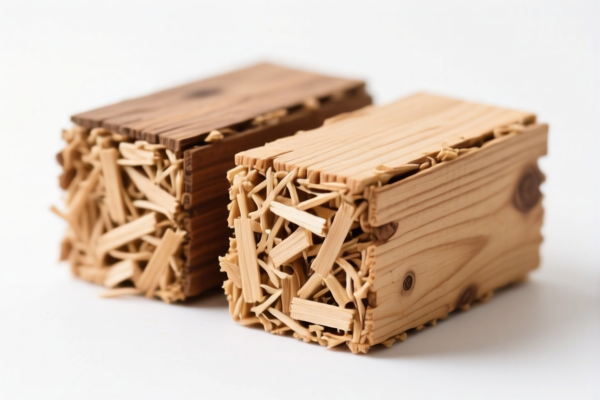
AI Analysis
🔥 Wood Sawdust Fuel Bulk Blocks | Biomass Energy Solutions
🌐 HS Code Classification & Customs Clearance Guide | 2026 Latest Tariff Analysis | Professional Strategy
📌 I. Product Definition & Classification: What Are "Wood Sawdust Fuel Bulk Blocks"?
Wood sawdust fuel bulk blocks are dense, solid fuel units manufactured from compressed wood waste, sawdust, or biomass residues. Unlike standard pellets, these blocks are larger, often irregular or rectangular, and intended for bulk combustion in industrial boilers, residential stoves, or energy generation plants.
In international trade, the classification depends heavily on form (bulk/block vs. pellet), processing level (raw vs. treated/ignitable), and intended use (fuel vs. fire-starting aid).
⚠️ Key Distinction Points:
- If the product is a simple compressed block of wood/sawdust used strictly as fuel → It falls under Chapter 44 (Wood and articles of wood).
- If the product is a small, treated igniter designed for fire-starting rather than bulk fuel → It falls under Chapter 36 (Explosives; Pyrotechnic articles).
- Critical Difference: Volume, density, and packaging indicate "bulk fuel" vs. "small igniter."
📦 II. HS Code Classification Details (2026 Latest Tariff Authority Comparison)
| HS Code | Product Description | Application Scenario | Key Identifier |
|---|---|---|---|
4401.39.42.10 |
Biomass fuel pellets (granules), form: Pellets, Use: Fuel | Industrial biomass fuel, dense wood pellets | ✅ Fuel, Pellet Form |
4401.31.00.00 |
Wood pellets, material: Sawdust/Wood, form: Pellets | Standard wood pellet fuel, residential/industrial | ✅ Fuel, Pellet Form |
4405.00.00.00 |
Wood powder and granules, material: Wood, form: Granules/Powder | Raw biomass granules, less dense than pellets | ✅ Fuel, Granule/Powder |
4402.90.01.00 |
Wood briquette firelighters, material: Wood, form: Briquette/Block | Compressed wood blocks used as fuel/briquettes | ✅ Fuel, Block/Briquette Form |
3606.90.30.00 |
Wood sawdust fire starters, use: Ignition, material: Combustible Biomass | Small blocks for starting fires, not bulk fuel | ❌ Fire Starter (Chapter 36) |
🔍 重点提醒 (Critical Notes):
- "Bulk Blocks" (压块) typically fall under 4402.90.01.00 if they are solid fuel briquettes.
- "Pellets" (颗粒) fall under 4401.31.00.00 or 4401.39.42.10.
- "Fire Starters" (引火物) fall under 3606.90.30.00 if designed specifically for ignition assistance, not primary fuel.
- Misclassification Risk: Declaring a solid fuel block as "wood powder" (4405) or a fire starter as "fuel" (4401) can lead to customs delays, fines, or incorrect duty assessments.
💰 III. 2026 Latest Tariff Rate Details (Including Additional Duties & Policy Surcharges)
✅ Applicable Country: United States (US)
✅ Country of Origin: China (CN)
✅ Effective Date: November 10, 2025 (and subsequent imports)
🎯 1. 4401.39.42.10 – Biomass Fuel Pellets (Granules), Fuel Use
| Item | Content |
|---|---|
| Base Tariff | 0.0% (ad valorem) |
| USITC Additional Duty (Section 301) | +25.0% |
| IEEPA Additional Duty (Section 122/China Specific) | +10.0% |
| Total Effective Rate | 35.0% |
| Tax Calculation | CIF Value × 35% |
| De Minimis Eligibility | ❌ Not Eligible (deny_de_minimis) |
| Legal Basis Path | IEEPA:9903.01.25 → USITC:4401.39.42.10 → FOOTNOTE:301/122 |
📌 Explanation:
- Although the base tariff for wood fuel is 0%, the 301 Tariff (25%) and IEEPA Surcharge (10%) apply to Chinese-origin biomass fuels.
- Total 35% is a significant cost factor for bulk fuel imports.
🎯 2. 4401.31.00.00 – Wood Pellets (Sawdust), Fuel Form
| Item | Content |
|---|---|
| Base Tariff | 0.0% |
| USITC Additional Duty (Section 301) | +25.0% |
| IEEPA Additional Duty | +10.0% |
| Total Effective Rate | 35.0% |
| Tax Calculation | CIF × 35% |
| De Minimis Eligibility | ❌ Not Eligible |
| Legal Basis Path | IEEPA:9903.01.25 → USITC:4401.31.00.00 → FOOTNOTE:301/122 |
📌 Note:
- Identical tariff structure to4401.39.42.10.
- Applies to standard wood pellets made from sawdust or wood chips.
🎯 3. 4405.00.00.00 – Wood Powder & Granules
| Item | Content |
|---|---|
| Base Tariff | 3.2% |
| USITC Additional Duty (Section 301) | +25.0% |
| IEEPA Additional Duty | +10.0% |
| Total Effective Rate | 38.2% |
| Tax Calculation | CIF × 38.2% |
| De Minimis Eligibility | ❌ Not Eligible |
| Legal Basis Path | IEEPA:9903.01.25 → USITC:4405.00.00.00 → FOOTNOTE:301/122 |
📌 Note:
- Higher base tariff (3.2%) compared to pellets.
- Applies to less processed wood powders or loosely compacted granules.
🎯 4. 4402.90.01.00 – Wood Briquette Firelighters (Fuel Blocks)
| Item | Content |
|---|---|
| Base Tariff | 0.0% |
| USITC Additional Duty (Section 301) | +25.0% |
| IEEPA Additional Duty | +10.0% |
| Total Effective Rate | 35.0% |
| Tax Calculation | CIF × 35% |
| De Minimis Eligibility | ❌ Not Eligible |
| Legal Basis Path | IEEPA:9903.01.25 → USITC:4402.90.01.00 → FOOTNOTE:301/122 |
📌 Note:
- Despite the name "Firelighters," if classified under 4402, it is considered a fuel briquette.
- Rate is 35.0%, same as pellets.
🎯 5. 3606.90.30.00 – Wood Sawdust Fire Starters (Ignition Use)
| Item | Content |
|---|---|
| Base Tariff | 5.9% |
| USITC Additional Duty (Section 301) | 0.0% |
| IEEPA Additional Duty | +10.0% |
| Total Effective Rate | 15.9% |
| Tax Calculation | CIF × 15.9% |
| De Minimis Eligibility | ❌ Not Eligible (Check specific de minimis rules for Chapter 36) |
| Legal Basis Path | IEEPA:9903.01.25 → USITC:3606.90.30.00 → FOOTNOTE:122 |
📌 Note:
- Significantly Lower Tariff (15.9%) because it is classified under Chapter 36 (Pyrotechnics) and is not subject to the 25% Section 301 duty.
- Critical: Must be clearly defined as an ignition aid (small size, treated with accelerants, not primary fuel). Misclassifying a large fuel block as a "fire starter" to avoid 301 duties is a high-risk customs violation.
🛠️ IV. Customs Clearance Practical Advice (Real-World Pitfall Guide)
✅ 1. Document Checklist (Must-Have)
| Document | Required | Description |
|---|---|---|
| ✅ Product Specification Sheet | ✔️ | Details composition (100% wood? additives?), density, moisture content. |
| ✅ Product Photos | ✔️ | Clear images showing shape (block vs. pellet), size, and packaging. |
| ✅ Commercial Invoice | ✔️ | Must specify "Wood Briquettes" or "Wood Pellets" accurately. |
| ✅ Certificate of Origin (CO) | ✔️ | Critical for determining applicability of USITC/IEEPA duties. |
| ✅ Packaging List | ✔️ | Specify weight and dimensions to distinguish bulk vs. small igniters. |
| ✅ Safety Data Sheet (SDS) | ✔️ | Required for customs and safety verification. |
✅ 2. Classification Strategy (Key Mantra)
🔥 "Shape Matters: Pellets/Blocks = Ch 44 (35-38%), Small Igniters = Ch 36 (15.9%)"
| Scenario | Correct HS Code | Incorrect Code | Consequence |
|---|---|---|---|
| Large Compressed Wood Blocks (Fuel) | 4402.90.01.00 |
3606.90.30.00 |
Risk of Penalty: Misclassification to avoid 25% tariff is fraud. |
| Standard Wood Pellets | 4401.31.00.00 or 4401.39.42.10 |
4405.00.00.00 |
Overpaying: 4405 has higher base tariff (3.2% vs 0%). |
| Wood Powder/Loose Granules | 4405.00.00.00 |
4401.31.00.00 |
Underpaying: 4401 is for pellets; powder is 4405. |
| Small Fire Starter Cubes | 3606.90.30.00 |
4402.90.01.00 |
Paying Too Much: 15.9% vs 35.0% if correctly classified as igniters. |
✅ 3. Special Handling Tips
| Situation | Handling Advice |
|---|---|
| Biomass Fuel Blocks | Clearly state "Fuel" in description. Avoid terms like "Fire Starter" unless it is small and treated for ignition only. |
| Mixed Shipments | If pellets and blocks are mixed, declare separately. Do not lump them under one code. |
| Moisture Content | High moisture may affect classification or require additional declaration. Ensure moisture content is within standard limits (usually <20% for pellets/briquettes). |
| Additives | If chemical binders or accelerants are used, ensure compliance with Chapter 36 rules if claiming "Fire Starter" status. |
🌍 V. Global Market Customs Comparison (2026 Latest)
| Country/Region | Recommended HS Code | Tariff Rate | Certification | Notes |
|---|---|---|---|---|
| 🇺🇸 USA | 4401.31.00.00 / 4402.90.01.00 |
35.0% (China Origin) | None Specific | High Duty: Subject to 301 + IEEPA. |
| 🇨🇳 China | 4401.31.00.00 / 4402.90.01.00 |
0% - 5% | None | Low duty for domestic trade. |
| 🇪🇺 EU | 4401.31.00 / 4402.90 |
0% (if FSC Certified) | FSC/PEFC | Green Incentive: Carbon-neutral status may qualify for exemptions. |
| 🇬🇧 UK | 4401.31.00 / 4402.90 |
0% - 5% | FSC/PEFC | Similar to EU post-Brexit. |
| 🇦🇺 Australia | 4401.31.00 / 4402.90 |
5% | None | Standard import duty. |
📌 Conclusion:
- USA is the most expensive market for Chinese-origin wood fuel due to 35% total duty.
- EU/UK offer opportunities for duty-free entry if sustainability certifications (FSC/PEFC) are provided.
- China has low duties, making it a production hub for export.
📌 VI. Common Errors & Pitfall Guide (Blood-Lesson Wisdom)
❌ Error 1: Declaring large fuel blocks as "Fire Starters" (3606.90.30.00) to avoid 25% Section 301 duty.
👉 Consequence: Customs will inspect, reject classification, apply 35% duty + penalties.
❌ Error 2: Misclassifying "Wood Pellets" as "Wood Powder" (4405.00.00.00).
👉 Consequence: Higher base tariff (3.2% vs 0%) → Overpayment.
❌ Error 3: Not declaring "Country of Origin" accurately.
👉 Consequence: If origin is not clearly China, IEEPA/301 duties may not apply, but if discovered later, back taxes + interest.
❌ Error 4: Using vague descriptions like "Biomass Fuel" without specifying form (pellet vs. block).
👉 Consequence: Customs may request additional info, causing delays.
✅ Correct Approach:
"Wood Pellets, 6mm diameter, 100% Pine, Moisture <10%, for Industrial Boiler Fuel, HS Code 4401.31.00.00"
OR
"Wood Briquettes, Rectangular Blocks, 100% Hardwood Sawdust, for Residential Heating, HS Code 4402.90.01.00"
🎯 VII. Conclusion: Professional Classification Saves Money!
🎯 Remember the Mantra:
🔹 "Pellets/Blocks = 35% Duty (Ch 44)"
🔹 "Small Igniters = 15.9% Duty (Ch 36)"
🔹 "Misclassification = Fines + Delays"
📌 Pro Tip:
If your product is genuinely a small fire starter (e.g., 5cm cubes, treated with wax/accelerant for ignition only), classify it under 3606.90.30.00 to save 19.1% in tariffs.
However, if it is bulk fuel (large blocks, no accelerants), stick to 4402.90.01.00 to avoid fraud accusations.
📣 Immediate Action:
📞 Consult a customs broker for a Pre-Ruling if unsure about classification.
🚀 Accurate HS Code declaration ensures smooth clearance and cost optimization.
✨ Professional Customs Clearance Starts with Accurate Classification!
💼 Every dollar saved in duty counts!
Customer Reviews
About HS Code Classification
The Harmonized System (HS) is an internationally standardized nomenclature developed by the World Customs Organization (WCO) to classify traded products. Over 200 countries use the HS system as the basis for customs tariffs, trade statistics, and import/export regulations.
Each HS code follows a hierarchical structure:
- Chapter (2 digits) — Broad category of goods (e.g., Chapter 84: Machinery and Mechanical Appliances)
- Heading (4 digits) — More specific grouping within the chapter
- Subheading (6 digits) — Internationally standardized breakdown, used by all WCO member countries
- National subdivisions (8-10 digits) — Country-specific extensions for further classification, such as US HTSUS 10-digit codes
Correct HS code classification is essential for smooth customs clearance, accurate duty payment, and compliance with trade regulations. Misclassification can lead to customs delays, overpayment of duties, or penalties.
When importing from CN to US, the applicable tariff rates may include:
- Most-Favored-Nation (MFN) rate — The standard duty rate applied to WTO members
- General rate — Applied to countries without trade agreements
- Trade remedy duties — Additional tariffs such as Section 301 (anti-dumping), Section 232 (national security), or countervailing duties
The information provided on this page is for reference purposes only. For official classification, please consult with your local customs authority or a licensed customs broker.