Wood Sawdust Fuel Clean Blocks
CN → US| HS Code | Tariff Rate | Origin | Destination | Doc |
|---|---|---|---|---|
| 4401310000 | 35.0% | CN | US | Official Doc |
| 4401394210 | 35.0% | CN | US | Official Doc |
| 4405000000 | 38.2% | CN | US | Official Doc |
Product Images
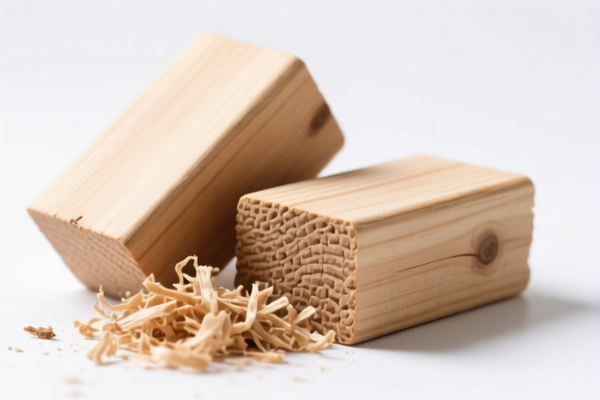
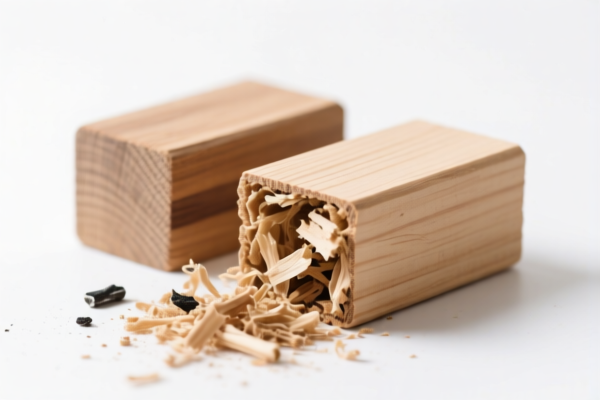
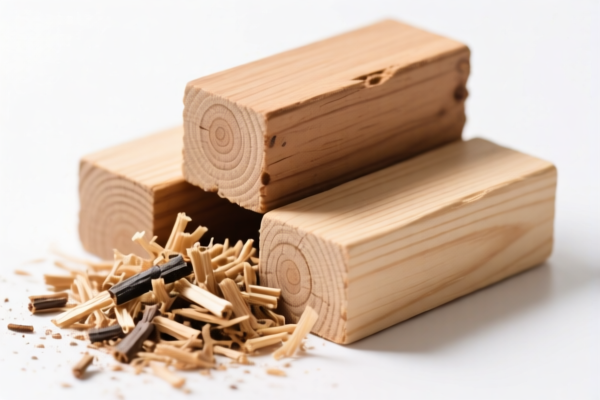
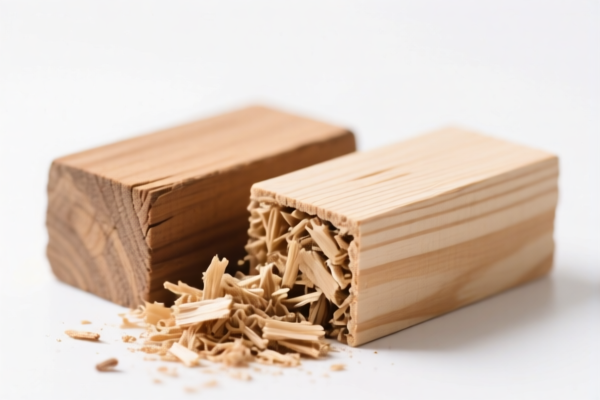
AI Analysis
🪵 Wood Sawdust Fuel Clean Blocks (Biomass Energy Solutions)
🌐 HS Code Reference & Customs Clearance Guide | 2026 Latest Tariff Analysis | Professional Clearance Strategy
📌 I. Product Definition & Classification: What Exactly is "Clean Wood Sawdust Fuel"?
"Wood Sawdust Fuel Clean Blocks" refers to compressed biomass fuel made from wood residues. In international trade, the classification depends heavily on the physical form (powder, block, or pellet) and the processing level. The key distinction lies between loose sawdust/blocks and compressed pellets.
⚠️ Key Distinction Point:
- If the product is irregular blocks or loose sawdust compressed into irregular shapes without being uniform pellets → It falls under Section 44 (Wood and Articles of Wood), specifically chapters for wood fuel.
- If the product is uniform cylindrical pellets (standard biomass pellets) → It also falls under Section 44 but may have a different sub-heading due to the specific "pellet" morphology.
- Crucial Note: The term "Clean" implies low ash/moisture, but does not change the HS code. It affects the value but not the tariff classification directly, unless processed into charcoal (which is different).
📦 II. HS Code Classification Details (2026 Latest Tariff Authority Comparison)
Based on the provided data, here are the specific HS Codes for Wood Sawdust Fuel:
| HS Code | Product Description | Morphology/Material | Key Characteristics |
|---|---|---|---|
4401.31.00.00 |
Wood fuel in the form of logs, twigs, brushwood, faggots, or wood chips or sawdust | Sawdust fuel irregular blocks | Material: Sawdust; Form: Irregular blocks/pellets clustered together. |
4401.39.42.10 |
Other wood fuel; wood in the form of logs, twigs, brushwood, faggots, wood chips or sawdust | Wood sawdust fuel irregular blocks | Material: Wood raw material; Form: Irregular blocks. Fits the category of fuel wood/sawdust. |
4405.00.00.00 |
Wood powder and wood waste in agglomerated form | Wood sawdust fuel pellets | Material: Wood; Form: Pellets. Specifically targets "powder and agglomerated waste." |
🔍 Critical Reminder:
-4401.31.00.00and4401.39.42.10are for irregular blocks or loose sawdust forms.
-4405.00.00.00is specifically for pellets (uniform agglomerated forms).
- Do not confuse "clean blocks" with "charcoal" (which would fall under HS 4402). If it is still wood, it stays in 4401/4405.
💰 III. 2026 Latest Tariff Rate Details (Including Additional Taxes & Policy Surcharges)
✅ Applicable Country: United States (US)
✅ Origin: China (CN)
✅ Effective Date: From November 10, 2025 (including subsequent imports)
🎯 1. 4401.31.00.00 —— Wood Fuel: Sawdust, Irregular Blocks
| Item | Content |
|---|---|
| Base Tariff | 0.0% (ad valorem) |
| USITC Additional Tax | +25.0% (from USITC Footnote related to Section 301) |
| Section 122 Tax | +10.0% (Under IEEPA or specific bilateral trade measures) |
| Total Tariff Rate | 35.0% |
| Tax Calculation | CIF Value × 35% |
| De Minimis Eligibility | ❌ No (Not eligible for de minimis exemption) |
| Legal Basis Path | Base: 0% → Section 301: +25% → Section 122: +10% |
📌 Explanation:
- Even though the base tariff is 0%, the 25% Section 301 tariff and 10% Section 122 tariff apply due to the origin (China).
- Total burden is 35%. This is a significant cost factor for biomass fuel imports.
🎯 2. 4401.39.42.10 —— Other Wood Fuel: Irregular Blocks
| Item | Content |
|---|---|
| Base Tariff | 0.0% |
| USITC Additional Tax | +25.0% |
| Section 122 Tax | +10.0% |
| Total Tariff Rate | 35.0% |
| Tax Calculation | CIF Value × 35% |
| De Minimis Eligibility | ❌ No |
| Legal Basis Path | Base: 0% → Section 301: +25% → Section 122: +10% |
📌 Note:
- Same tax structure as4401.31.00.00.
- Applies to irregular blocks of wood sawdust that do not fit the specific "sawdust" definition of 4401.31 or are categorized under "other wood fuel."
- Key Difference: Ensure the physical form is truly "irregular" and not uniform "pellets."
🎯 3. 4405.00.00.00 —— Wood Powder & Agglomerated Pellets
| Item | Content |
|---|---|
| Base Tariff | 3.2% |
| USITC Additional Tax | +25.0% |
| Section 122 Tax | +10.0% |
| Total Tariff Rate | 38.2% |
| Tax Calculation | CIF Value × 38.2% |
| De Minimis Eligibility | ❌ No |
| Legal Basis Path | Base: 3.2% → Section 301: +25% → Section 122: +10% |
📌 Important:
- This is the highest tariff bracket among the three options.
- Applies specifically to pellets (agglomerated wood powder).
- Do not misclassify irregular blocks as pellets to avoid higher duties, unless the product is genuinely uniform pellets.
- The 3.2% base duty is unique to this subheading compared to the 0% base for the other two.
🛠️ IV. Customs Clearance Practical Advice (Real-World Pitfall Avoidance Guide)
✅ 1. Required Documentation Checklist (Mandatory)
| Document | Required | Notes |
|---|---|---|
| ✅ Product Specification Sheet | ✔️ | Must clearly state: Material (Wood/Sawdust), Form (Block/Pellet), Moisture Content, Ash Content. |
| ✅ Physical Photos | ✔️ | Show the shape clearly: Are they irregular blocks or uniform cylinders? This determines HS Code. |
| ✅ Commercial Invoice | ✔️ | Declare as "Wood Sawdust Fuel Blocks" or "Wood Pellets." Avoid vague terms like "Biomass." |
| ✅ Packing List | ✔️ | Detail net/gross weight and package dimensions. |
| ✅ Certificate of Origin (CO) | ✔️ | Essential for confirming Chinese origin and applying (or confirming) Section 301/122 taxes. |
| ✅ Phytosanitary Certificate | ✔️ | Often required for wood products to prove freedom from pests. |
✅ 2. Declaration Strategy (Key Mnemonic)
🔥 "Form Defines Code, Shape Defines Tax: Irregular 35%, Pellet 38.2%!"
| Scenario | Correct Declaration | Wrong Approach |
|---|---|---|
| Irregular Clumps/Blocks | 4401.31.00.00 or 4401.39.42.10 |
Misdeclaring as pellets → Risk of penalty. |
| Uniform Cylindrical Pellets | 4405.00.00.00 |
Misdeclaring as irregular blocks → Penalty for misclassification! |
| Charcoal (Burnt Wood) | NOT Covered Here (HS 4402) | Declaring as "Wood Sawdust" → Severe Penalty & Retention. |
| Mixed Waste Wood | Varies by composition | Declaring as "Clean Fuel" without proof → Delays. |
✅ 3. Special Case Handling
| Situation | Handling Advice |
|---|---|
| "Clean" Labeling | Ensure "Clean" refers to low impurities. If treated with chemicals, it may change classification. |
| Moisture Content | High moisture increases weight but not value. Ensure CIF value is accurate. |
| Packaging | If bundled in bags, declare as such. If loose in container, clarify in invoice. |
| Third-Party Testing | Provide lab reports for ash content and calorific value to justify "Fuel" grade. |
🌍 V. Global Market Comparison (2026 Latest)
| Country/Region | Recommended HS Code | Total Tariff (China Origin) | Certification Requirements | Notes |
|---|---|---|---|---|
| 🇺🇸 USA | 4401.31.00.00 / 4405.00.00.00 |
35.0% (Blocks) / 38.2% (Pellets) | Phytosanitary + IEEPA/301 Compliant | High tariff burden. |
| 🇪🇺 EU | 4401.31.00.00 / 4405.00.00.00 |
~1.5% - 3.2% (Standard MFN) | ENplus Certification (for pellets) | No Section 301/122 taxes. |
| 🇨🇳 China | 4401.31.00.00 |
0% (Import Duty) | None specific | Imports sawdust for re-export or domestic use. |
| 🇬🇧 UK | 4401.31.00.00 |
~1.5% - 3.2% | UKCA (if applicable) | Post-Brexit tariffs similar to EU pre-2020. |
📌 Conclusion:
- USA is the most expensive market due to Section 301 (25%) and Section 122 (10%) surcharges.
- EU/UK are more favorable for tariff-wise, but require ENplus/UKCA certification for pellets.
- Pellets (4405) are 3.2% more expensive in duty than irregular blocks (4401) in the US.
📌 VI. Common Mistakes & Pitfall Avoidance (Lessons Learned)
❌ Mistake 1: Misclassifying Pellets as Irregular Blocks
👉 Consequence: Penalty for Undervaluation/Misclassification. Customs will reclassify to 4405.00.00.00 and charge 38.2% instead of 35%, plus fines.
❌ Mistake 2: Declaring Charcoal as Wood Sawdust
👉 Consequence: Detention & Return. Charcoal (HS 4402) has different rules. Sawdust fuel is unburnt wood.
❌ Mistake 3: Ignoring Phytosanitary Requirements
👉 Consequence: Quarantine Hold. Wood products are high-risk for pests. Missing phytosanitary cert = Delayed Delivery.
❌ Mistake 4: Assuming "Clean" Means Exempt from Tariffs
👉 Consequence: Surprise Bills. "Clean" only describes quality, not origin or tariff status. 35-38.2% tax still applies.
✅ Correct Practice:
"Wood Sawdust Fuel Irregular Blocks, Moisture <10%, Ash <2%, Origin: China, HS 4401.31.00.00"
🎯 VII. Conclusion: Precision in Classification Saves Money!
🎯 Remember the Rule:
🔹 "Irregular Blocks = 35% (0% Base + 25% + 10%)"
🔹 "Pellets = 38.2% (3.2% Base + 25% + 10%)"
🔹 "Charcoal = Different HS (4402) – Do Not Mix!"
📌 Pro Tip:
If you are importing pellets, consider if irregular block forms are acceptable for your end-use. If yes, 4401.31.00.00 saves you 3.2% in base duty. However, pellets often have better logistics/handling. Weigh the 0.5% total tax difference against logistical costs.
📣 Immediate Action:
📞 Verify Physical Form with your supplier (Photo Evidence is Key).
📝 Prepare Phytosanitary Certificate in advance.
🚀 Calculate Landed Cost using 35% (Blocks) or 38.2% (Pellets) to ensure profitability.
✨ Professional Clearance Starts with Accurate HS Classification!
💼 Every Percentage Point Counts in Biomass Trade!
Customer Reviews
About HS Code Classification
The Harmonized System (HS) is an internationally standardized nomenclature developed by the World Customs Organization (WCO) to classify traded products. Over 200 countries use the HS system as the basis for customs tariffs, trade statistics, and import/export regulations.
Each HS code follows a hierarchical structure:
- Chapter (2 digits) — Broad category of goods (e.g., Chapter 84: Machinery and Mechanical Appliances)
- Heading (4 digits) — More specific grouping within the chapter
- Subheading (6 digits) — Internationally standardized breakdown, used by all WCO member countries
- National subdivisions (8-10 digits) — Country-specific extensions for further classification, such as US HTSUS 10-digit codes
Correct HS code classification is essential for smooth customs clearance, accurate duty payment, and compliance with trade regulations. Misclassification can lead to customs delays, overpayment of duties, or penalties.
When importing from CN to US, the applicable tariff rates may include:
- Most-Favored-Nation (MFN) rate — The standard duty rate applied to WTO members
- General rate — Applied to countries without trade agreements
- Trade remedy duties — Additional tariffs such as Section 301 (anti-dumping), Section 232 (national security), or countervailing duties
The information provided on this page is for reference purposes only. For official classification, please consult with your local customs authority or a licensed customs broker.