Wood Sawdust Fuel Custom Blocks
CN → US| HS Code | Tariff Rate | Origin | Destination | Doc |
|---|---|---|---|---|
| 4402900100 | 35.0% | CN | US | Official Doc |
| 3606903000 | 15.9% | CN | US | Official Doc |
| 4401392000 | 35.0% | CN | US | Official Doc |
| 4401310000 | 35.0% | CN | US | Official Doc |
| 4401394210 | 35.0% | CN | US | Official Doc |
Product Images
AI Analysis
🔥 Wood Sawdust Fuel Custom Blocks (Biomass Ignition Logs)
🌐 HS Code Classification & Clearance Guide | 2026 Tariff Analysis | US-China Trade Policy
📌 I. Product Definition & Core Characteristics: What Are You Actually Shipping?
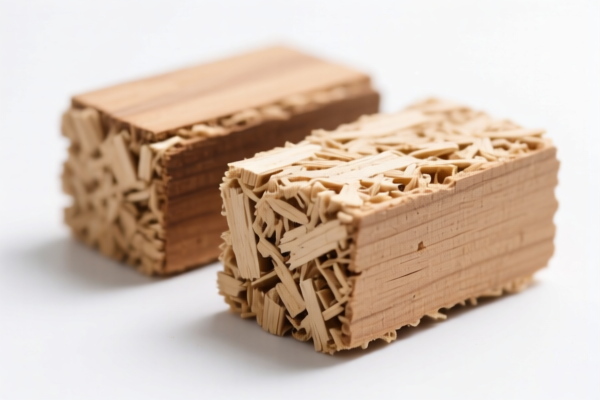
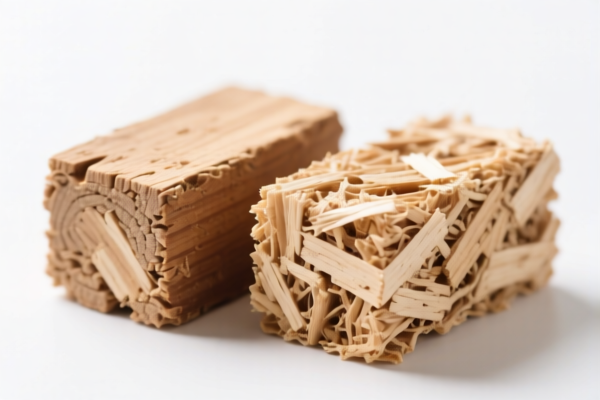
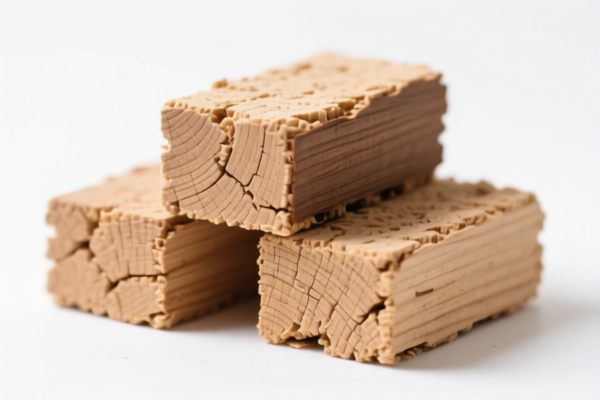
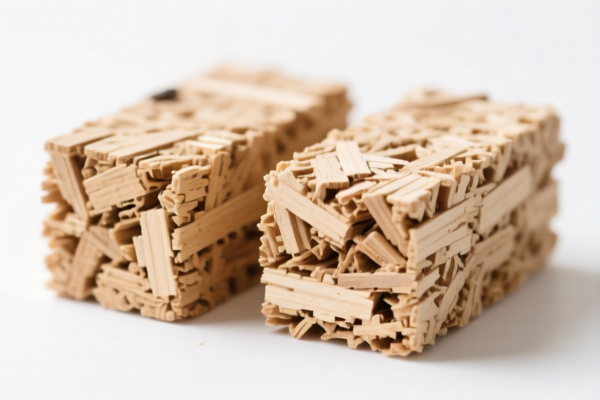
Wood Sawdust Fuel Custom Blocks are compressed biomass products designed for high-efficiency ignition and sustained burning. Unlike loose sawdust, these are engineered "long-lasting" ignition blocks. In international trade, their classification depends heavily on form (shape), composition, and intended use.
⚠️ Key Classification Logic:
- If treated as raw fuel material → Falls under Chapter 44 (Wood).
- If treated as pyrotechnic/ignition device → Falls under Chapter 36 (Pyrotechnics).
- Crucial Distinction: The presence of specific igniting alloys or chemicals may shift the code from general fuel to specialized ignition material.
📦 II. HS Code Classification Matrix (2026 Latest Tariff Book)
Based on the provided data, there are 5 distinct classification paths for Wood Sawdust Fuel Custom Blocks. The differences lie in the specific description of the material state and usage.
| HS Code | Product Description | Material/Form | Intended Use | Total Tax Rate |
|---|---|---|---|---|
4402.90.01.00 |
Wood Sawdust Fuel Long-Lasting Ignition Block | Wood-based, Compressed Block | Ignition Material | 35.0% |
3606.90.30.00 |
Wood Sawdust Fuel Long-Lasting Ignition Block | Combustible Biomass + Ignition Alloy | Pyrotechnic/Ignition Alloy Product | 15.9% |
4401.39.20.00 |
Wood Sawdust Fuel Long-Lasting Ignition Block | Wood Sawdust, Block Shape | General Fuel | 35.0% |
4401.31.00.00 |
Wood Sawdust Biomass Fuel Pellet | Wood Sawdust, Granule/Pellet | Fuel Wood | 35.0% |
4401.39.42.10 |
Wood Sawdust Biomass Fuel Pellet | Wood Sawdust/Sawdust, Pellet | Fuel Wood/Pellet | 35.0% |
🔍 Critical Insight:
- The "Ignition Alloy" Exception: Only HS Code 3606.90.30.00 offers a significantly lower tax rate (15.9%). This applies if the block is explicitly defined as a "pyrotechnic article" or contains an "ignition alloy" that functions as a distinct chemical ignition component.
- Standard Biomass Fuel: Codes4402and4401result in a 35.0% tax rate. These are viewed as standard wood waste/processed wood fuel, not specialized pyrotechnics.
💰 III. Detailed 2026 Tariff Breakdown (US Import from China)
✅ Applicable Country: United States (US)
✅ Origin: China (CN)
✅ Policy Context: Includes Base Tariff + Section 301 Additional Tariff + Section 122 Tariff
🎯 1. 3606.90.30.00 — LOWEST TARIATH PATH (Pyrotechnic/Ignition Alloy)
| Item | Details |
|---|---|
| Product Type | Pyrotechnic articles; ignition alloys / combustible materials |
| Base Tariff | 5.9% |
| Section 301 Additional Tariff | 0.0% |
| Section 122 Tariff | 10.0% |
| Total Effective Rate | 15.9% |
| Calculation Basis | CIF Value × 15.9% |
| De Minimis Eligibility | ❌ No (High-risk category for de minimis exemptions due to chemical/pyrotechnic nature) |
| Legal Basis | Chapter 36 (Pyrotechnics) |
📌 Why is it lower?
- It avoids the 25% Section 301 tariff often applied to wood products.
- It is classified under "Pyrotechnic Articles" rather than "Wood Fuel," which may fall under different trade restrictions.
- Requirement: You must prove the product contains specific ignition alloys or is designed for immediate ignition purposes, not just slow-burning firewood.
🎯 2. 4402.90.01.00, 4401.39.20.00, 4401.31.00.00, 4401.39.42.10 — HIGH TARIFF PATH (Wood/Biomass Fuel)
| Item | Details |
|---|---|
| Product Type | Wood Fuel; Charcoal; Wood Sawdust Blocks/Pellets |
| Base Tariff | 0.0% |
| Section 301 Additional Tariff | 25.0% |
| Section 122 Tariff | 10.0% |
| Total Effective Rate | 35.0% |
| Calculation Basis | CIF Value × 35.0% |
| De Minimis Eligibility | ❌ No (Biomass products are heavily scrutinized for pests) |
| Legal Basis | Chapter 44 (Wood and Articles of Wood) |
📌 Why is it higher?
- Section 301 Tariff (25%): Most wood products from China are subject to this additional tariff under US Trade Policy.
- Section 122 Tariff (10%): Additional levy on certain imports.
- Base Tariff (0%): Wood fuel often has low base tariffs, but the add-ons make it expensive.
- Risk: High incidence of customs delays due to ISPM 15 (wood packaging) and pest control inspections.
🛠️ IV. Customs Clearance Strategic Advice
✅ 1. Documentation Checklist (Critical for Wood/Biomass)
| Document | Mandatory? | Notes |
|---|---|---|
| ✅ Commercial Invoice | ✔️ | Must clearly state: "Wood Sawdust Fuel Blocks," Material: "100% Wood Sawdust," Form: "Compressed Block." |
| ✅ Packing List | ✔️ | Weight, dimensions, number of blocks. |
| ✅ ISPM 15 Certificate | ✔️ | Essential for all wood/biomass products. Must show heat treatment or fumigation mark on packaging. |
| ✅ Material Safety Data Sheet (MSDS) | ✔️ | Required to prove flammability class and chemical composition (especially if claiming HS 3606). |
| ✅ Manufacturer’s Declaration | ✔️ | Confirm no invasive species (pest-free). |
| ✅ Certificate of Origin | ✔️ | To prove CN origin for tariff calculation. |
✅ 2. Classification Strategy: How to Choose?
🔥 "Claim Pyrotechnic to Save 19.1%"
| Scenario | Recommended HS Code | Tax Rate | Strategy |
|---|---|---|---|
| Standard Fire Starter Logs (just sawdust + binder) | 4402.90.01.00 or 4401.39.20.00 |
35.0% | Safe but expensive. Accept the cost if product is generic fuel. |
| Specialty Ignition Blocks (with chemical ignition core, spark-ignited, or alloy-based) | 3606.90.30.00 |
15.9% | STRATEGIC ADVANTAGE. Requires strong documentation proving "pyrotechnic/ignition alloy" nature. |
| Pellets (granular form) | 4401.31.00.00 or 4401.39.42.10 |
35.0% | Same high tax. Form is pellet, not block. |
⚠️ Warning:
- Do NOT misdeclare standard sawdust blocks as "pyrotechnics" to save taxes. CBP (Customs and Border Protection) will inspect, find no ignition alloy, and reclassify under Chapter 44 + apply penalties.
- Only use3606.90.30.00if your product contains a distinct ignition mechanism/alloy.
✅ 3. Clearance Pitfalls & Solutions
| Pitfall | Consequence | Solution |
|---|---|---|
| Missing ISPM 15 Mark | Shipment held, fumigated at owner’s cost, or returned. | Ensure all wooden pallets/crates have the official IPPC logo and heat treatment stamp. |
| Vague Description | Customs flags for "unknown biomass." | Use specific terms: "Compressed Wood Sawdust Fuel Blocks," "No Chemical Additives" (unless true). |
| Pest Control Issues | Detention at port. | Provide third-party pest-free certificate. Ensure blocks are fully carbonized or treated. |
| Incorrect HS for Tax Saving | Audit, back-tariffs + penalties. | If using 3606.90.30.00, have engineering specs ready to prove ignition alloy content. |
🌍 V. Global Market Context (2026)
| Market | HS Code Trend | Tariff Outlook | Notes |
|---|---|---|---|
| 🇺🇸 USA | 4402/4401 (35%) or 3606 (15.9%) |
High due to 301/122 tariffs | Strict on wood pests. |
| 🇪🇺 EU | 4401 |
Low Base Tariff (0-6.5%) | No Section 301. Strict on carbon footprint. |
| 🇬🇧 UK | 4401 |
Low Base Tariff | Post-Brexit rules apply. |
| 🇨🇦 Canada | 4401 |
Free Trade (CUSMA) | If originating in NAFTA zone. |
📌 Conclusion:
- USA is the highest-cost market due to Section 301 and 122 tariffs.
- Europe/Canada are more favorable for biomass fuel imports.
📌 VI. Common Mistakes & Avoidance Tips
❌ Mistake 1: Declaring "Wood Pellets" when shipping "Compressed Blocks."
👉 Result: Customs mismatch, delay, potential penalty.
✅ Fix: Match physical form (block vs. pellet) exactly in description.
❌ Mistake 2: Ignoring ISPM 15.
👉 Result: Port detention, fumigation costs ($500+), delays.
✅ Fix: Always use ISPM 15-compliant packaging.
❌ Mistake 3: Trying to use 3606.90.30.00 for plain sawdust blocks.
👉 Result: CBP reclassification, 19.1% tax difference + penalties.
✅ Fix: Only use 3606 if you have ignition alloys/chemicals.
🎯 VII. Final Recommendation
🎯 For Maximum Cost Efficiency:
If your product is a standard wood sawdust block, accept the 35.0% tax under
4402or4401. It is the compliant, low-risk path.
🎯 For Strategic Tax Savings:
If your product is an advanced ignition block with a chemical ignition core, declare under
3606.90.30.00to save 19.1% in tariffs. Ensure MSDS and specs support this.🔹 "Compliance First, Tax Second: Biomass is High-Risk for Customs!"
🔹 "Wood Needs Wood Marks: ISPM 15 is Non-Negotiable!"
📌 Pro Tip:
Consider shipping to non-US markets (EU, Canada, Asia) where biomass fuel tariffs are lower, to mitigate US Section 301/122 impacts.
📣 Action Item:
✅ Review product composition (Is there an ignition alloy?)
✅ Secure ISPM 15 certification
✅ Choose HS Code:3606.90.30.00(if pyrotechnic) OR4402.90.01.00(if standard fuel)
🚀 Clear the way for efficient cross-border trade!
✨ Precise Classification Saves Thousands!
💼 Your Supply Chain, Optimized for 2026 Trade Policies!
Customer Reviews
About HS Code Classification
The Harmonized System (HS) is an internationally standardized nomenclature developed by the World Customs Organization (WCO) to classify traded products. Over 200 countries use the HS system as the basis for customs tariffs, trade statistics, and import/export regulations.
Each HS code follows a hierarchical structure:
- Chapter (2 digits) — Broad category of goods (e.g., Chapter 84: Machinery and Mechanical Appliances)
- Heading (4 digits) — More specific grouping within the chapter
- Subheading (6 digits) — Internationally standardized breakdown, used by all WCO member countries
- National subdivisions (8-10 digits) — Country-specific extensions for further classification, such as US HTSUS 10-digit codes
Correct HS code classification is essential for smooth customs clearance, accurate duty payment, and compliance with trade regulations. Misclassification can lead to customs delays, overpayment of duties, or penalties.
When importing from CN to US, the applicable tariff rates may include:
- Most-Favored-Nation (MFN) rate — The standard duty rate applied to WTO members
- General rate — Applied to countries without trade agreements
- Trade remedy duties — Additional tariffs such as Section 301 (anti-dumping), Section 232 (national security), or countervailing duties
The information provided on this page is for reference purposes only. For official classification, please consult with your local customs authority or a licensed customs broker.