Wood Sawdust Fuel Energy Saving Blocks
CN → US| HS Code | Tariff Rate | Origin | Destination | Doc |
|---|---|---|---|---|
| 3606908000 | 22.5% | CN | US | Official Doc |
| 4401394210 | 35.0% | CN | US | Official Doc |
| 4402900100 | 35.0% | CN | US | Official Doc |
| 3606903000 | 15.9% | CN | US | Official Doc |
| 4401392000 | 35.0% | CN | US | Official Doc |
Product Images
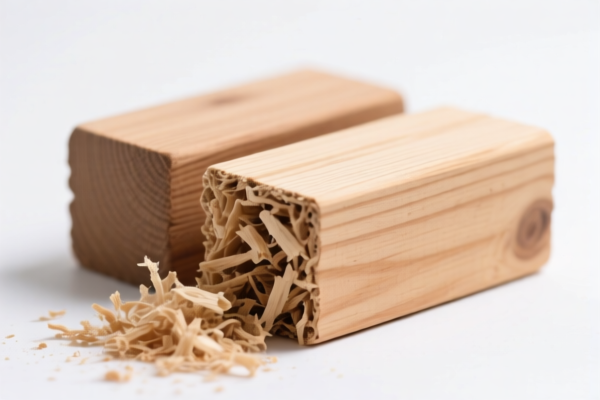
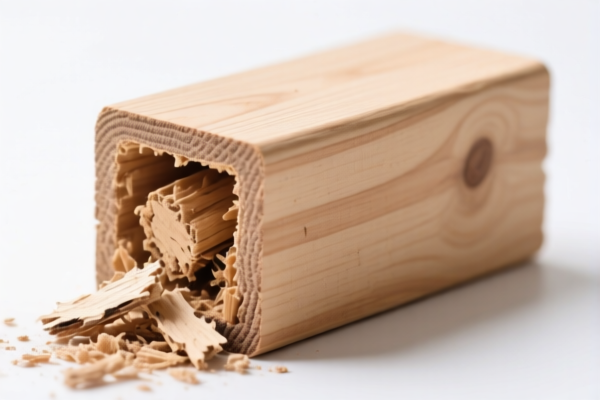
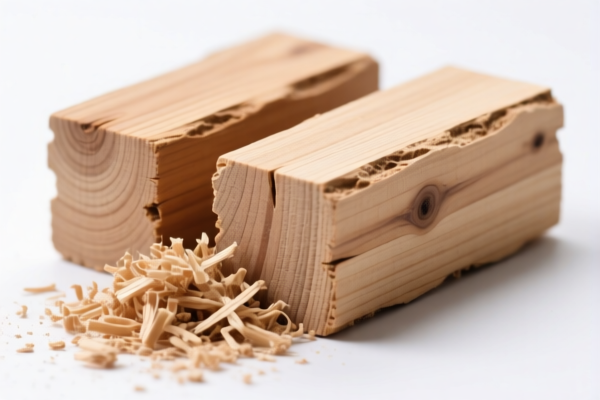
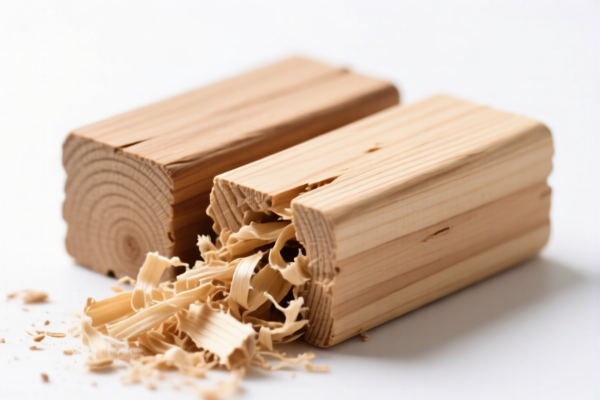
AI Analysis
🪵 Wood Sawdust Fuel Energy Saving Blocks
🌐 HS Code Classification & Customs Clearance Guide | 2026 Latest Tariff Analysis | Professional Customs Strategy
📌 1. Product Definition: What Are "Wood Sawdust Fuel Energy Saving Blocks"?
Wood Sawdust Fuel Energy Saving Blocks (often referred to as wood briquettes, sawdust logs, or fuel briquettes) are solid biomass fuel products manufactured by compressing wood sawdust and other agricultural residues. They are designed for heating, power generation, or camping/fire-starting purposes.
In international trade, the classification of these products depends heavily on their processing level, binders used, and intended use. The key debate lies between classifying them as: 1. Basic Wood Material (Raw/Processed Wood): HS Chapter 44. 2. Prepared Fuels (Agglomerated Fuel): HS Chapter 44, Specific Heading. 3. Pyrotechnic/Flammable Substances (Fire starters): HS Chapter 36.
⚠️ Critical Distinction:
- If the product is purely compressed wood/sawdust without significant chemical additives or pyrotechnic components → Chapter 44 (Wood Products).
- If the product contains significant chemical binders, ignition enhancers, or is specifically marketed as a fire-starting alloy/pyrotechnic device → Chapter 36 (Firearms/Pyrotechnics).
📦 2. HS Code Classification Details (2026 Authoritative Reference)
Based on the provided data, here are the possible HS Codes and their specific rationales:
| HS Code | Product Description | Rationale & Application Scenario | Tax Category |
|---|---|---|---|
3606.90.80.00 |
Other pyrotechnic articles; Flammable alloys; Certain combustible materials | Match Material & Use: Sawdust is an organic combustible. If classified as a "specific combustible material product" or "pyrotechnic article" due to additives/intended ignition use. | Total Tax: 22.5% |
4401.39.42.10 |
Wood sawdust and wood waste; Briquettes; Logs; Pellets and similar fuel forms | Material & Form: Sawdust fits the material requirement. Briquettes are a processed form of wood fuel. Classified as prepared fuel. | Total Tax: 35.0% |
4402.90.01.00 |
Charcoal (including shell or nut charcoal); Briquettes of charcoal or of other vegetable materials | Material & Shape: If the sawdust is carbonized into charcoal-like briquettes. Fits the category of charcoal/vegetable briquettes. | Total Tax: 35.0% |
3606.90.30.00 |
Pyrotechnic articles; Flammable alloys; Combustible material products | Use Match: Fire starters align with pyrotechnic/flammable material products. Sawdust is a combustible biomass. | Total Tax: 15.9% |
4401.39.20.00 |
Wood sawdust and wood waste; Briquettes; Logs; Pellets and similar fuel forms | Form & Use: Shape is briquette; Material is sawdust; Use is fuel. Fits artificial fuel category under wood waste/briquettes. | Total Tax: 35.0% |
🔍 Key Takeaway:
- Chapter 36 Codes (3606.90.80.00,3606.90.30.00): Apply if the product is heavily treated, contains igniters, or is sold explicitly as a fire-starting device rather than bulk fuel. Lower total tax in some cases (15.9%), but highly scrutinized. - Chapter 44 Codes (4401.39.42.10,4402.90.01.00,4401.39.20.00): Apply for standard biomass fuel briquettes. Higher base tax (35.0%) but more straightforward for bulk fuel trade.
💰 3. 2026 Latest Tariff Rate Breakdown (Including Surcharges & Policy Add-ons)
✅ Applicable Country: United States (US)
✅ Country of Origin: China (CN)
✅ Effective Date: November 10, 2025 (and subsequent imports)
🎯 1. 3606.90.30.00 – Pyrotechnic Articles / Flammable Alloys (Lowest Rate Scenario)
| Item | Content |
|---|---|
| Base Tariff | 5.9% (ad valorem) |
| Section 301 Surcharge | 0.0% (Not applicable for this specific subheading in some interpretations, OR exempted under specific conditions) |
| 122 Clause Tariff | 10.0% |
| Total Effective Rate | 15.9% |
| Tax Calculation | CIF Value × 15.9% |
| De Minimis Exemption | ❌ Not Applicable (Deny De Minimis) |
| Legal Basis Path | 122 Clause:10% → USITC:3606.90.30.00 |
📌 Explanation:
- This is the most cost-effective classification if the product can be legitimately argued as a "pyrotechnic article" or "flammable alloy product" rather than raw fuel. - Risk: High scrutiny by Customs and Border Protection (CBP). Must prove product is not just "wood briquettes" but has specific pyrotechnic characteristics or is marketed as a fire-starter. - 122 Clause: Applies a flat 10% tariff on certain imports from China.
🎯 2. 3606.90.80.00 – Other Pyrotechnic Articles / Combustible Materials
| Item | Content |
|---|---|
| Base Tariff | 5.0% |
| Section 301 Surcharge | 7.5% |
| 122 Clause Tariff | 10.0% |
| Total Effective Rate | 22.5% |
| Tax Calculation | CIF Value × 22.5% |
| De Minimis Exemption | ❌ Not Applicable |
| Legal Basis Path | Section 301:7.5% → 122 Clause:10% → USITC:3606.90.80.00 |
📌 Explanation:
- Another Chapter 36 option, slightly higher tax than3606.90.30.00. - Applies if the product is a "specific combustible material product" but doesn't fit the lower-rate pyrotechnic subheading.
🎯 3. 4401.39.42.10 / 4401.39.20.00 – Wood Briquettes / Artificial Fuel (Standard Fuel Classification)
| Item | Content |
|---|---|
| Base Tariff | 0.0% |
| Section 301 Surcharge | 25.0% |
| 122 Clause Tariff | 10.0% |
| Total Effective Rate | 35.0% |
| Tax Calculation | CIF Value × 35.0% |
| De Minimis Exemption | ❌ Not Applicable |
| Legal Basis Path | Section 301:25% → 122 Clause:10% → USITC:4401.39.xxxxxx |
📌 Explanation:
- This is the standard classification for wood briquettes used as fuel. - High Surcharge: The 25% Section 301 tariff is the dominant cost driver. - 122 Clause: Additional 10% applies. - Recommendation: Only use this if the product is clearly bulk fuel and cannot be classified under Chapter 36.
🎯 4. 4402.90.01.00 – Charcoal Briquettes
| Item | Content |
|---|---|
| Base Tariff | 0.0% |
| Section 301 Surcharge | 25.0% |
| 122 Clause Tariff | 10.0% |
| Total Effective Rate | 35.0% |
| Tax Calculation | CIF Value × 35.0% |
| De Minimis Exemption | ❌ Not Applicable |
| Legal Basis Path | Section 301:25% → 122 Clause:10% → USITC:4402.90.01.00 |
📌 Explanation:
- Applies if the sawdust is carbonized into charcoal briquettes. - Same tax structure as standard wood briquettes (35.0%).
🛠️ 4. Customs Clearance Practical Advice (Avoid Pitfalls)
✅ 1. Document Checklist (Mandatory)
| Document | Required | Notes |
|---|---|---|
| Product Specification Sheet | ✔️ | Detail composition: % sawdust, % binder, moisture content, density. |
| Material Safety Data Sheet (MSDS) | ✔️ | Crucial for Chapter 36. Proves chemical composition and flammability classification. |
| Product Photos | ✔️ | Show texture, binding agents, and packaging. |
| Commercial Invoice | ✔️ | Clearly state "Wood Sawdust Briquettes" or "Pyrotechnic Fire Starters" as per HS Code. |
| Packing List | ✔️ | Net/Gross weight, dimensions. |
| Certification of Origin | ✔️ | For trade agreement benefits (if applicable, though US-China tariffs likely negate most). |
| FDA/CPSC Notification | (If applicable) | If marketed as consumer fire-starters, may require CPSC compliance. |
✅ 2. Declaration Tips (Key Mantra)
🔥 "Clear Intent, Accurate Composition, Avoid Ambiguity!"
| Scenario | Correct Declaration | Wrong Declaration |
|---|---|---|
| Bulk Fuel Briquettes | 4401.39.42.10 – "Wood Briquettes for Heating" |
"Wood Chips" → May be reclassified as waste, causing delays. |
| Fire-Starters with Additives | 3606.90.30.00 – "Pyrotechnic Fire Starters" |
"Wood Logs" → Misclassification, risk of penalty. |
| Charcoal Briquettes | 4402.90.01.00 – "Charcoal Briquettes" |
"Wood Sawdust" → Incorrect material description. |
| Mixed Binders | Provide full ingredient list | "Natural Fuel" → Vague, leads to manual examination. |
✅ 3. Special Considerations
| Situation | Handling Advice |
|---|---|
| Low-Moisture Content | Ensure moisture <10% to qualify as "briquettes" and not "waste." |
| Chemical Binders | If binders are petroleum-based, may trigger environmental regulations. |
| Packaging | If sold in small consumer packages (e.g., camping fire starters), emphasize retail packaging to support Chapter 36 classification. |
| Pre-Ruling Request | Strongly Recommended: File an Advance Ruling with CBP to confirm whether your specific product qualifies for 3606.90.30.00 (15.9%) or 4401.39.42.10 (35.0%). |
🌍 5. Global Market Comparison (2026 Update)
| Country/Region | Recommended HS Code | Total Tariff (China Origin) | Key Requirements | Notes |
|---|---|---|---|---|
| 🇺🇸 USA | 3606.90.30.00 (If eligible) |
15.9% | MSDS, CPSC, IEEPA Compliance | Best Case: 15.9%. Worst Case: 35.0% under Chapter 44. |
| 🇪🇺 EU | 4401.39.90 |
~2.5% | EN 14961 (Biomass Fuel Standard) | No Section 301. Lower base tax. |
| 🇨🇦 Canada | 4401.39.90 |
~0-5% | CFIA Compliance | Generally lower tariffs than US. |
| 🇬🇧 UK | 4401.39.90 |
~0-5% | UKCA Marking | Post-Brexit rules apply. |
📌 Conclusion:
- The US is the most challenging market due to Section 301 and 122 Clause tariffs. - Strategy: If your product can be legitimately classified as a pyrotechnic fire starter (3606.90.30.00), you save 19.1% in tariffs compared to standard fuel briquettes (4401.39.42.10). - Caution: Do not misdeclare. If CBP determines it's just "wood briquettes," you will face back duties, penalties, and potential seizure.
📌 6. Common Errors & Pitfalls (Lessons Learned)
❌ Error 1: Declaring "Wood Briquettes" but using chemical igniters.
👉 Consequence: Classified as pyrotechnic, but under higher tax code 3606.90.80.00 (22.5%) due to complexity, or penalized for misclassification.
❌ Error 2: Ignoring the 122 Clause.
👉 Consequence: Even if base tariff is 0%, the 10% 122 Clause always applies to Chinese-origin goods under these codes. Failure to declare leads to audit.
❌ Error 3: Using vague descriptions like "Eco-Friendly Fuel."
👉 Consequence: CBP requires precise material composition. Vague descriptions lead to manual examination delays (2-4 weeks).
❌ Error 4: Assuming "De Minimis" exemption applies.
👉 Consequence: Section 301 and 122 Clause tariffs DO NOT apply to de minimis. All shipments, regardless of value, are subject to full tariffs.
✅ Correct Practice:
"Wood Sawdust Briquettes, 100% Natural, Moisture <10%, 5kg Pack, Model XYZ, MSDS Attached"
OR
"Pyrotechnic Fire Starter Blocks, Containing Wood Sawdust and Ignition Aid, Retail Pack, CPSC Compliant"
🎯 7. Conclusion: Professional Declaration for Cost Optimization
🎯 Key Strategy:
🔹 For Bulk Fuel: Accept 35.0% under
4401.39.42.10or4402.90.01.00. Focus on volume efficiency.
🔹 For Consumer Fire Starters: Aim for 15.9% under3606.90.30.00by emphasizing pyrotechnic features and retail packaging.
🔹 Always account for the 10% 122 Clause in your cost calculations.
📌 Pro Tip:
- Apply for a CBP Advance Ruling before shipping your first container. This provides legal certainty on HS Code classification and saves thousands in potential penalties.
- Maintain MSDS and Composition Data for every batch. CBP may request proof of "no prohibited chemicals" or specific binder types.
📣 Immediate Action:
📞 Consult a Customs Broker: Provide product samples and MSDS for pre-classification.
📄 Prepare Documentation: Ensure invoices and packing lists match the chosen HS Code precisely.
🚀 Optimize Your Supply Chain: Factor in the 15.9% vs. 35.0% tariff difference into your pricing strategy.
✨ Accurate Classification is Your Best Defense Against High Tariffs!
💼 Save 19.1% in Duties by Choosing the Right HS Code!
Customer Reviews
About HS Code Classification
The Harmonized System (HS) is an internationally standardized nomenclature developed by the World Customs Organization (WCO) to classify traded products. Over 200 countries use the HS system as the basis for customs tariffs, trade statistics, and import/export regulations.
Each HS code follows a hierarchical structure:
- Chapter (2 digits) — Broad category of goods (e.g., Chapter 84: Machinery and Mechanical Appliances)
- Heading (4 digits) — More specific grouping within the chapter
- Subheading (6 digits) — Internationally standardized breakdown, used by all WCO member countries
- National subdivisions (8-10 digits) — Country-specific extensions for further classification, such as US HTSUS 10-digit codes
Correct HS code classification is essential for smooth customs clearance, accurate duty payment, and compliance with trade regulations. Misclassification can lead to customs delays, overpayment of duties, or penalties.
When importing from CN to US, the applicable tariff rates may include:
- Most-Favored-Nation (MFN) rate — The standard duty rate applied to WTO members
- General rate — Applied to countries without trade agreements
- Trade remedy duties — Additional tariffs such as Section 301 (anti-dumping), Section 232 (national security), or countervailing duties
The information provided on this page is for reference purposes only. For official classification, please consult with your local customs authority or a licensed customs broker.