Wood Sawdust Fuel Smokeless Blocks
CN → US| HS Code | Tariff Rate | Origin | Destination | Doc |
|---|---|---|---|---|
| 4401394210 | 35.0% | CN | US | Official Doc |
| 4401310000 | 35.0% | CN | US | Official Doc |
| 3606908000 | 22.5% | CN | US | Official Doc |
| 4402900100 | 35.0% | CN | US | Official Doc |
| 3606903000 | 15.9% | CN | US | Official Doc |
Product Images
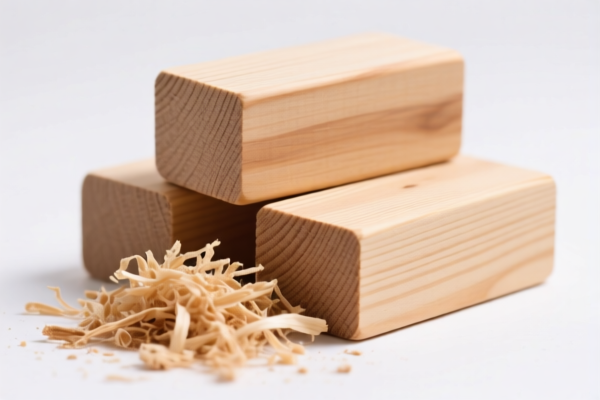
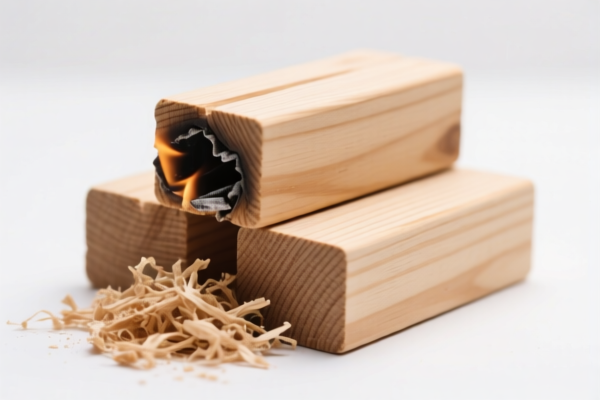
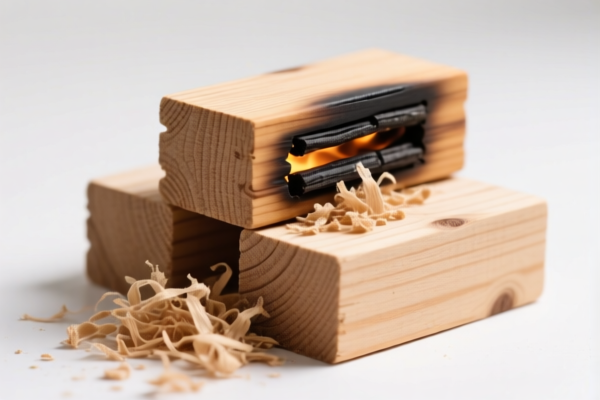
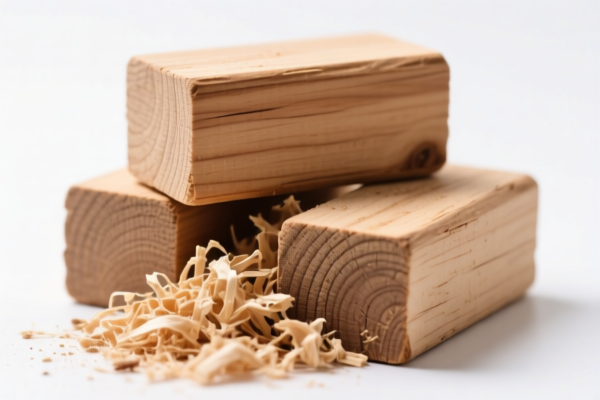
AI Analysis
🪵 Wood Sawdust Fuel Smokeless Blocks (Wood Briquettes/Kindling)
🌐 HS Code Reference & Customs Clearance Guide | 2026 Latest Tariff Analysis | Professional Entry Strategies
📌 I. Product Definition & Classification: What Exactly Are "Smokeless Wood Blocks"?
Wood Sawdust Fuel Smokeless Blocks are compressed biomass fuel products. In international trade, their classification depends heavily on physical form, processing method, and intended use. They generally fall into two main categories:
- Raw Biomass Fuel (4401/4402): Simple compressed wood sawdust or chips, used primarily for heating or combustion.
- Pyrotechnic/Kindling Items (3606): Blocks treated or formulated specifically for easy ignition (e.g., fire starters), containing combustible mixtures or alloys.
⚠️ Key Distinction Point:
- If the product is pure compressed wood/sawdust without special ignition aids →归入 4401 or 4402
- If the product is a fire starter/kingling block with specific combustion properties →归入 3606
📦 II. HS Code Classification Details (2026 Latest Tariff Authority Mapping)
| HS Code | Product Description | Application Scenario | Key Characteristic |
|---|---|---|---|
4401.39.42.10 |
Irregular wood briquettes, made of wood raw materials, categorized as fuel wood/sawdust | General heating, biomass energy, unrefined fuel blocks | ✅ Raw biomass fuel |
4401.31.00.00 |
Irregular wood briquettes, wood material, lump form, consistent with compacted sawdust description | Standard wood fuel, industrial burning | ✅ Compressed wood fuel |
3606.90.80.00 |
Long-lasting smokeless wood briquettes, material: organic combustible, fits pyrotechnic/alloy category | Fire starters, camping gear, emergency kits | ✅ Specialized combustible |
4402.90.01.00 |
Long-lasting smokeless wood briquettes, wooden composition, compressed shape, fits charcoal/coco-char category | Premium fire starters, BBQ fuel, slow-burning fuel | ✅ Charcoal-like fuel |
3606.90.30.00 |
Long-lasting smokeless wood briquettes, use: igniting alloy/combustible material制品, material: combustible biomass | Industrial ignition aids, specialized pyrotechnics | ✅ Pyrotechnic item |
🔍 Important Reminder:
- Unprocessed/Basic Fuel: If it's just pressed sawdust with no special ignition chemicals, it falls under Chapter 44 (Wood). - Specialized Kindling: If it's designed specifically for quick/easy ignition with specific additives or structural properties for burning, it may fall under Chapter 36 (Pyrotechnics).
💰 III. 2026 Latest Tariff Rate Breakdown (Including Surcharge & Policy Add-ons)
✅ Applicable Country: United States (US)
✅ Country of Origin: China (CN)
✅ Effective Time: From November 10, 2025 (including subsequent imports)
🎯 1. 4401.39.42.10 —— Irregular Wood Briquettes (Raw Fuel)
| Item | Details |
|---|---|
| Base Tariff | 0.0% |
| Section 301 Surcharge | +25.0% |
| Section 122 Tariff | +10.0% |
| Total Tariff | 35.0% |
| Calculation Method | CIF Value × 35% |
| De Minimis Exemption | ❌ Not Eligible |
| Legal Basis Path | 301: Footnote 9903.88.01 → 122: IEER → USITC:4401.39.42.10 |
📌 Explanation:
- This is a raw biomass fuel. It is subject to both the Section 301 (25%) and Section 122 (10%) tariffs. - Total Cost Impact: 35%. This is a high tariff rate. Importers must account for this in pricing strategies.
🎯 2. 4401.31.00.00 —— Other Wood Briquettes (Compressed Fuel)
| Item | Details |
|---|---|
| Base Tariff | 0.0% |
| Section 301 Surcharge | +25.0% |
| Section 122 Tariff | +10.0% |
| Total Tariff | 35.0% |
| Calculation Method | CIF Value × 35% |
| De Minimis Exemption | ❌ Not Eligible |
| Legal Basis Path | 301: Footnote 9903.88.01 → 122: IEER → USITC:4401.31.00.00 |
📌 Note:
- Same tariff structure as4401.39.42.10. - Even if the briquettes are more uniform in shape, if they are basic wood fuel, the 35% total tariff applies.
🎯 3. 3606.90.80.00 —— Long-lasting Kindling Blocks (Pyrotechnic Category)
| Item | Details |
|---|---|
| Base Tariff | 5.0% |
| Section 301 Surcharge | +7.5% |
| Section 122 Tariff | +10.0% |
| Total Tariff | 22.5% |
| Calculation Method | CIF Value × 22.5% |
| De Minimis Exemption | ❌ Not Eligible |
| Legal Basis Path | 301: Footnote 9903.88.01 → 122: IEER → USITC:3606.90.80.00 |
📌 Advantage:
- By classifying as a specialized combustible/pyrotechnic item rather than raw fuel, the Section 301 surcharge drops from 25% to 7.5%. - Total Cost Impact: 22.5%. This is 12.5% lower than raw wood fuel. - Critical: Must prove the product fits the "organic combustible" or "pyrotechnic" definition (e.g., specific ignition properties, not just raw wood).
🎯 4. 4402.90.01.00 —— Wood Charcoal-like Briquettes
| Item | Details |
|---|---|
| Base Tariff | 0.0% |
| Section 301 Surcharge | +25.0% |
| Section 122 Tariff | +10.0% |
| Total Tariff | 35.0% |
| Calculation Method | CIF Value × 35% |
| De Minimis Exemption | ❌ Not Eligible |
| Legal Basis Path | 301: Footnote 9903.88.01 → 122: IEER → USITC:4402.90.01.00 |
📌 Warning:
- Even if the product looks like charcoal (compressed, black), if it is classified under Chapter 44 (Charcoal), it is still subject to the 35% total tariff. - Classification as3606(Pyrotechnic) may offer tax savings if the product meets the technical criteria.
🎯 5. 3606.90.30.00 —— Igniting Alloy/Combustible Material Blocks
| Item | Details |
|---|---|
| Base Tariff | 5.9% |
| Section 301 Surcharge | 0.0% |
| Section 122 Tariff | +10.0% |
| Total Tariff | 15.9% |
| Calculation Method | CIF Value × 15.9% |
| De Minimis Exemption | ❌ Not Eligible |
| Legal Basis Path | 122: IEER → USITC:3606.90.30.00 |
🏆 Best Option for Savings:
- If the product is specifically an igniting alloy or specialized combustible material, and not subject to Section 301, the total tariff is only 15.9%. - Savings: 19.1% lower than raw wood fuel (4401), 6.6% lower than standard pyrotechnics (3606.90.80.00). - Condition: Must meet the definition of "igniting alloy" or "combustible material制品" and potentially qualify for exemption from Section 301.
🛠️ IV. Customs Clearance Practical Advice (Battle-Tested Pitfall Guide)
✅ 1. Documentation Checklist (Mandatory)
| Document | Required | Notes |
|---|---|---|
| ✅ Product Specification Sheet | ✔️ | Details: Material composition, compression ratio, ignition time, smoke level. |
| ✅ Test Report | ✔️ | Combustion test, smoke emission test, flammability certification. |
| ✅ Product Photos | ✔️ | Clear images of the block, packaging, and any labels. |
| ✅ Commercial Invoice | ✔️ | Must accurately describe the product (e.g., "Kindling Block" vs. "Wood Briquette"). |
| ✅ Packing List | ✔️ | Weight, dimensions, quantity. |
| ✅ Origin Certificate | ✔️ | If applicable for preferential treatment (not applicable here due to 301/122). |
✅ 2. Declaration Strategy (Key Mnemonic)
🔥 "Form Defines Code, Usage Defines Tax: Raw Fuel 35%, Kindling 15-22%!"
| Scenario | Correct Declaration | Incorrect Approach |
|---|---|---|
| Plain Compressed Sawdust | 4401.31.00.00 or 4401.39.42.10 |
Misdeclaring as 3606 → Audit risk, penalties |
| Fire Starter Blocks | 3606.90.80.00 |
Misdeclaring as 4401 → Overpaying 12.5% |
| Special Igniting Alloy Block | 3606.90.30.00 |
Misdeclaring as 4401 → Overpaying 19.1% |
| Charcoal-like Briquettes | 4402.90.01.00 |
Misdeclaring as 3606 → Potential misclassification |
✅ 3. Special Case Handling
| Case | Handling Advice |
|---|---|
| OEM Custom Briquettes | Provide design specs to justify 3606 classification if special ignition aids are used. |
| "Smokeless" Claim | Provide test reports proving low smoke emission; helps in marketing but doesn't change HS Code unless it affects classification. |
| Packaging with Other Items | If sold with lighting fluid, declare separately to avoid mixing tariff codes. |
| Bulk vs. Retail | Consistency in description; large industrial blocks vs. small camping blocks may have different subheadings. |
🌍 V. Global Market Comparison (2026 Latest)
| Country/Region | Recommended HS Code | Tariff (China Origin) | Notes |
|---|---|---|---|
| 🇺🇸 USA | 3606.90.30.00 |
15.9% | Lowest rate if qualified for no 301. |
| 🇪🇺 EU | 4401.39 |
~15-20% | No 301/122 surcharges. |
| 🇨🇦 Canada | 4401.39 |
~5-10% | Lower baseline tariffs. |
| 🇬🇧 UK | 4401.39 |
~5-10% | Post-Brexit tariffs vary. |
| 🇯🇵 Japan | 4401.39 |
~10-15% | No major surcharges. |
📌 Conclusion:
- USA is the most complex market due to Section 301 and 122 tariffs. - Strategic Classification: Aim for3606.90.30.00if the product qualifies as a specialized igniting material to save 19.1% compared to raw wood fuel.
📌 VI. Common Errors & Pitfalls (Lessons from Experience)
❌ Error 1: Declaring all wood blocks as 4401 without considering 3606 options.
👉 Result: Paying 35% instead of 15.9% or 22.5%. Overpayment of $19.10 per $100 value.
❌ Error 2: Using vague descriptions like "Wood Fuel" on invoices.
👉 Result: Customs may classify under the highest applicable tariff or demand additional documentation.
❌ Error 3: Ignoring Section 122 Tariffs.
👉 Result: Surprise 10% charge on all shipments, regardless of HS Code.
❌ Error 4: Assuming "Smokeless" means "Non-Combustible" or different classification.
👉 Result: It’s still a combustible fuel. Classification remains within Chapter 44 or 36.
✅ Correct Approach:
"Smokeless Fire Starter Blocks, Organic Combustible Material, Compressed, Model XYZ, Fire-Rated Certification"
🎯 VII. Conclusion: Smart Classification, Maximize Profit!
🎯 Remember the Mnemonic:
🔹 "Raw Wood 35%, Kindling 22%, Special Alloy 16%!"
🔹 "HS Code is King, Tariff Difference is King, Declare Right, Save Big!"
📌 Pro Tip:
- If your product can be technically classified under
3606.90.30.00(Igniting Alloy/Combustible Material), USE IT. It offers the lowest tariff rate (15.9%).- Prepare technical documentation proving the product's specialized ignition properties to support this classification.
- Always consult with a customs broker for pre-classification rulings if unsure.
📣 Immediate Action:
📞 Contact a licensed customs broker + Provide product specs + Apply for HS Code Pre-Ruling
🚀 Ensure smooth customs clearance, optimize costs, and maximize your profit margin!
✨ Professional Clearance Starts with Accurate Classification!
💼 Every Cent Saved Counts!
Customer Reviews
About HS Code Classification
The Harmonized System (HS) is an internationally standardized nomenclature developed by the World Customs Organization (WCO) to classify traded products. Over 200 countries use the HS system as the basis for customs tariffs, trade statistics, and import/export regulations.
Each HS code follows a hierarchical structure:
- Chapter (2 digits) — Broad category of goods (e.g., Chapter 84: Machinery and Mechanical Appliances)
- Heading (4 digits) — More specific grouping within the chapter
- Subheading (6 digits) — Internationally standardized breakdown, used by all WCO member countries
- National subdivisions (8-10 digits) — Country-specific extensions for further classification, such as US HTSUS 10-digit codes
Correct HS code classification is essential for smooth customs clearance, accurate duty payment, and compliance with trade regulations. Misclassification can lead to customs delays, overpayment of duties, or penalties.
When importing from CN to US, the applicable tariff rates may include:
- Most-Favored-Nation (MFN) rate — The standard duty rate applied to WTO members
- General rate — Applied to countries without trade agreements
- Trade remedy duties — Additional tariffs such as Section 301 (anti-dumping), Section 232 (national security), or countervailing duties
The information provided on this page is for reference purposes only. For official classification, please consult with your local customs authority or a licensed customs broker.