Wood Sawdust Shavings
CN → US| HS Code | Tariff Rate | Origin | Destination | Doc |
|---|---|---|---|---|
| 4401394210 | 35.0% | CN | US | Official Doc |
| 4401310000 | 35.0% | CN | US | Official Doc |
| 4405000000 | 38.2% | CN | US | Official Doc |
| 4401220000 | 35.0% | CN | US | Official Doc |
| 4401210000 | 35.0% | CN | US | Official Doc |
Product Images
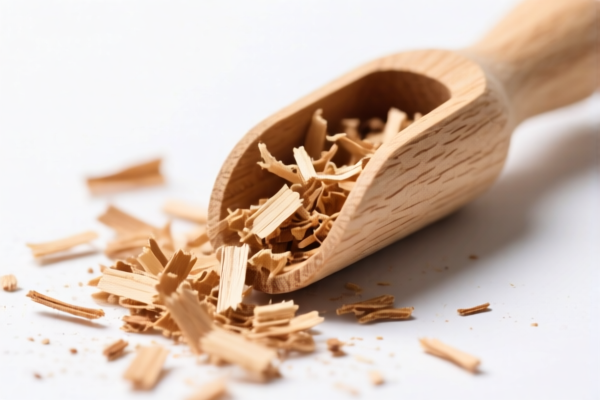
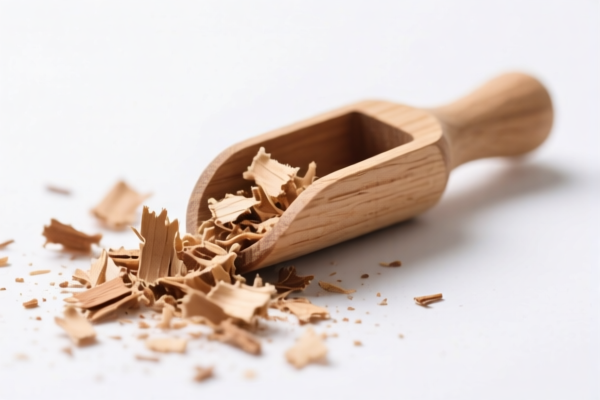
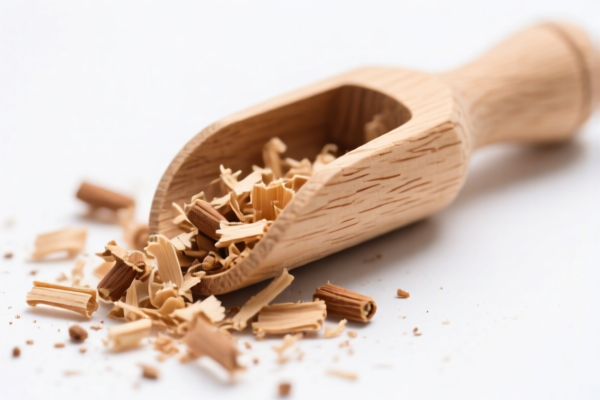
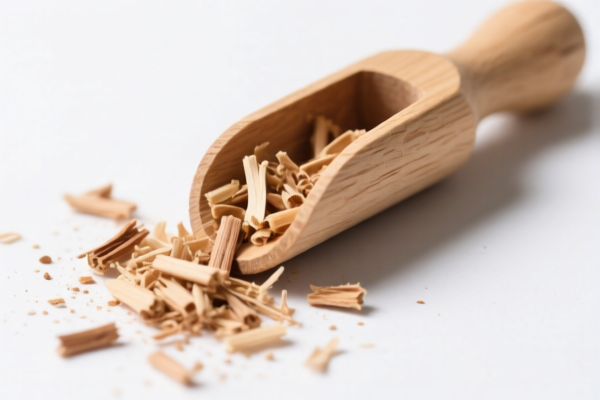
AI Analysis
🌲 Wood Sawdust & Shavings (Pellets/Granules)
🌐 HS Code Reference & Customs Clearance Guide | 2026 Latest Tariff Analysis | Professional Entry Strategy
📌 I. Product Definition & Classification: Do You Really Understand "Wood Sawdust"?
Wood sawdust and shavings (often referred to as wood pellets or granules in fuel contexts) are primary by-products of wood processing. In international trade, they are primarily classified as fuel wood or wood waste. The critical distinction lies in the physical form (powder, chips, pellets) and the material state (raw, processed).
Wood Pellets/Granules: Compressed form of sawdust/shavings, dense and uniform.
Raw Sawdust/Shavings: Loose, unprocessed fragments or chips from woodworking.
⚠️ Key Distinction Point:
- If it is compressed into uniform pellets/granules used for fuel → It typically falls under Heading 4401 (Fuel Wood);
- If it is loose sawdust/powder used for industrial processing (e.g., particle board) → It may fall under Heading 4405 (Wood Dust);
- Crucial Note: The specific subheading depends on the exact physical description provided by customs. However, based on the provided data, the majority of wood waste/pellet forms are classified under 4401 variants.
📦 II. HS Code Classification Details (2026 Latest Tariff Authoritative Comparison)
| HS Code | Product Description | Application Scenario | Material/State Definition |
|---|---|---|---|
4401.39.42.10 |
Wood sawdust and shavings, in the form of pellets or granules; wood waste | Fuel wood, biomass energy pellets | ✅ Matches "fuel wood, wood chips, or wood waste" form |
4401.31.00.00 |
Wood sawdust and shavings, in the form of pellets or granules | Bulk fuel wood, biomass pellets | ✅ Matches "material and form" definition of fuel wood |
4405.00.00.00 |
Wood dust, whether or not agglomerated | Industrial wood dust, powder form | ✅ Matches "wood dust/sawdust" material definition |
4401.22.00.00 |
Wood chips and shavings | Fuel wood, raw wood chips | ✅ Matches "primary product attribute" of fuel wood |
4401.21.00.00 |
Wood sawdust and shavings (non-pellet) | Raw sawdust, wood shavings | ✅ Matches "material and form" of fuel wood type |
🔍 Important Reminder:
- 4401 Series: Primarily for Fuel Wood (including chips, shavings, pellets). If the product is intended for combustion/energy, this is the primary category.
- 4405 Series: Specifically for Wood Dust (powder). If the material is very fine dust (not compressed pellets), this code applies.
- Tax Implication:4405.00.00.00has a higher base tariff (3.2%) compared to4401variants (0% base). Therefore, accurate description of form (pellet vs. dust) is critical for cost optimization.
💰 III. 2026 Latest Tariff Rate Details (Including Surcharges & Policy Add-ons)
✅ Applicable Country: United States (US)
✅ Origin: China (CN)
✅ Effective Date: From November 10, 2025 (including subsequent imports)
🎯 1. 4401.39.42.10 & 4401.31.00.00 & 4401.22.00.00 & 4401.21.00.00
Product: Wood sawdust/shavings in pellet/granule/chip form (Fuel Wood Category)
| Item | Content |
|---|---|
| Base Tariff | 0% (ad valorem) |
| USITC Surcharge | +25% (Section 301) |
| 122 Provision Tariff | +10% (Specific to certain wood products/waste) |
| Total Tariff | 35.0% |
| Tax Calculation | CIF Value × 35% |
| De Minimis Exemption | ❌ Not Applicable (deny_de_minimis) |
| Legal Basis Path | Base Tariff 0% + Section 301 (25%) + Section 122 (10%) |
📌 Explanation:
- These codes fall under Fuel Wood/Waste.
- The base tariff is 0%, but the Section 301 tariff (25%) and Section 122 tariff (10%) apply due to the origin (China) and product type.
- Total effective rate is 35%. This is a high-cost category for biomass fuels from China.
🎯 2. 4405.00.00.00
Product: Wood Dust (Powder Form)
| Item | Content |
|---|---|
| Base Tariff | 3.2% (ad valorem) |
| USITC Surcharge | +25% (Section 301) |
| 122 Provision Tariff | +10% (Specific to certain wood products/waste) |
| Total Tariff | 38.2% |
| Tax Calculation | CIF Value × 38.2% |
| De Minimis Exemption | ❌ Not Applicable (deny_de_minimis) |
| Legal Basis Path | Base Tariff 3.2% + Section 301 (25%) + Section 122 (10%) |
📌 Explanation:
- This code applies specifically to Wood Dust (powder).
- Unlike the 4401 series, it has a base tariff of 3.2%, making the total tax 38.2%.
- Cost Warning: If you can classify your product as "chips/shavings/pellets" (4401) rather than "fine dust" (4405), you save 3.2% on the base rate. However, if the product is genuinely fine dust, misclassification leads to penalties.
🛠️ IV. Customs Clearance Practical Advice (Real-World Pitfall Avoidance Guide)
✅ 1. Preparation Checklist (Missing Documents = Delay)
| Document | Required | Explanation |
|---|---|---|
| ✅ Product Specification Sheet | ✔️ | Must detail form (pellet, chip, dust), moisture content, density, and intended use (fuel/industrial). |
| ✅ Photos of Product | ✔️ | Clear shots showing granule size (pellets vs. dust vs. chips). |
| ✅ Commercial Invoice | ✔️ | Must explicitly state "Wood Sawdust/Shavings/Pellets" and correct HS Code. |
| ✅ Packing List | ✔️ | Show net/gross weight. Ensure weight matches declaration. |
| ✅ Phytosanitary Certificate | ✔️ | Crucial for wood products. May be required to prove pest-free status. |
| ✅ Certificate of Origin (CO) | ✔️ | If applicable for non-China origin, but for China origin, it confirms origin for Section 301 assessment. |
✅ 2. Declaration Tips (Key Mantras)
🔥 “Form Determines Code, Origin Determines Tax, Description Determines Speed!”
| Scenario | Correct Declaration | Wrong Practice |
|---|---|---|
| Wood Pellets (Fuel) | 4401.31.00.00 or 4401.39.42.10 |
Misclassify as 4405 → Higher tax (38.2% vs 35%) |
| Raw Wood Chips/Shavings | 4401.21.00.00 or 4401.22.00.00 |
Call it "Wood Powder" → Wrong code |
| Fine Wood Dust | 4405.00.00.00 |
Try to classify as pellets → Misdeclaration Penalty |
| Biomass Energy Pellets | 4401.31.00.00 |
Declare as "Raw Wood Waste" without detail → Audit Risk |
✅ 3. Special Situation Handling
| Situation | Handling Advice |
|---|---|
| Moisture Content > 25% | Ensure invoice states moisture content. Dry pellets are preferred for classification as "processed" fuel wood. |
| Mix of Chips and Pellets | Declare separately if possible. Mixing may complicate classification. |
| Phytosanitary Issues | Ensure wood is heat-treated (HT) or methyl bromide (MB) treated if required by US customs/USDA. |
| Section 122 Tariff Applicability | Confirm with customs broker if the specific product falls under Section 122. If not, the 10% may not apply, reducing tax to 25%. (Based on provided data, it is included). |
🌍 V. Global Market Comparison for Wood Products (2026)
| Country/Region | Recommended HS Code | Tariff (China Origin) | Certification Requirements | Notes |
|---|---|---|---|---|
| 🇺🇸 USA | 4401.31.00.00 / 4405.00.00.00 |
35% / 38.2% | Phytosanitary, HT Label | High surcharges (Section 301 + 122) |
| 🇪🇺 EU | 4401.30 / 4405.00 |
0% - 2.5% | EUTR (EU Timber Regulation) | Lower base tariffs, strict environmental checks |
| 🇨🇳 China (Import) | 4401 / 4405 |
0% - 5% | Quarantine | Lower tariffs if imported into China |
| 🇯🇵 Japan | 4401 / 4405 |
0% - 2.5% | ISPM 15 | Low base tariffs |
📌 Conclusion:
- USA has the highest total tariff burden (35%-38.2%) due to Section 301 and Section 122.
- EU and Japan offer lower base tariffs but have strict phytosanitary and sustainability regulations.
- Cost Optimization: If possible, source wood products from non-China origins to avoid Section 301/122 tariffs, or explore duty drawback programs if re-exporting.
📌 VI. Common Mistakes & Pitfall Guide (Lessons Learned)
❌ Mistake 1: Classifying Wood Pellets as 4405.00.00.00 (Wood Dust)
👉 Consequence: Tax increases from 35% to 38.2%. Unnecessary cost increase!
❌ Mistake 2: Declaring Raw Wood Chips as "Wood Waste" without specifying form
👉 Consequence: Customs may reclassify, leading to delays and potential penalties for misdeclaration.
❌ Mistake 3: Ignoring Phytosanitary Requirements
👉 Consequence: Goods held at port, destroyed, or returned. Huge logistic cost!
❌ Mistake 4: Assuming De Minimis Exemption applies
👉 Consequence: Wood products from China do NOT qualify for de minimis exemption under current rules. Full duty applies.
✅ Correct Action:
"Wood Pellets, Biomass Fuel, Compressed Sawdust, Heat-Treated, HS Code 4401.31.00.00"
🎯 VII. Conclusion: Professional Declaration, Save Cost, Ensure Compliance!
🎯 Remember the Mantra:
🔹 "Pellets = 4401 (35%), Dust = 4405 (38.2%), Origin = China = +35% Tax!"
🔹 "Form Matters: Chips/Pellets vs. Dust. Tax Differs by 3.2%!"
🔹 "Phytosanitary is Key: No Certificate = No Entry!"
📌 Pro Tip:
- Pre-Arrival Ruling: Consider applying for a Binding Tariff Information (BTI) or Pre-Arrival Ruling with US Customs to confirm the exact HS Code and tax rate.
- Cost Calculation: For every $10,000 CIF value, expect $3,500 - $3,820 in duties. Plan accordingly!
📣 Immediate Action:
📞 Contact a licensed customs broker + Provide product photos + Prepare Phytosanitary Certificate
🚀 Ensure smooth clearance, avoid penalties, and optimize your supply chain costs!
✨ Professional Customs Clearance Starts with Accurate Classification!
💼 Every percent in tax matters for low-margin goods like wood products!
Customer Reviews
About HS Code Classification
The Harmonized System (HS) is an internationally standardized nomenclature developed by the World Customs Organization (WCO) to classify traded products. Over 200 countries use the HS system as the basis for customs tariffs, trade statistics, and import/export regulations.
Each HS code follows a hierarchical structure:
- Chapter (2 digits) — Broad category of goods (e.g., Chapter 84: Machinery and Mechanical Appliances)
- Heading (4 digits) — More specific grouping within the chapter
- Subheading (6 digits) — Internationally standardized breakdown, used by all WCO member countries
- National subdivisions (8-10 digits) — Country-specific extensions for further classification, such as US HTSUS 10-digit codes
Correct HS code classification is essential for smooth customs clearance, accurate duty payment, and compliance with trade regulations. Misclassification can lead to customs delays, overpayment of duties, or penalties.
When importing from CN to US, the applicable tariff rates may include:
- Most-Favored-Nation (MFN) rate — The standard duty rate applied to WTO members
- General rate — Applied to countries without trade agreements
- Trade remedy duties — Additional tariffs such as Section 301 (anti-dumping), Section 232 (national security), or countervailing duties
The information provided on this page is for reference purposes only. For official classification, please consult with your local customs authority or a licensed customs broker.