Wood Sawn or Chipped Lengthwise
CN → US| HS Code | Tariff Rate | Origin | Destination | Doc |
|---|---|---|---|---|
| 4408900151 | 35.0% | CN | US | Official Doc |
| 4408900197 | 35.0% | CN | US | Official Doc |
| 4407110053 | 10.0% | CN | US | Official Doc |
| 4407190093 | 35.0% | CN | US | Official Doc |
| 4409109040 | 35.0% | CN | US | Official Doc |
| 4409299100 | 35.0% | CN | US | Official Doc |
Product Images
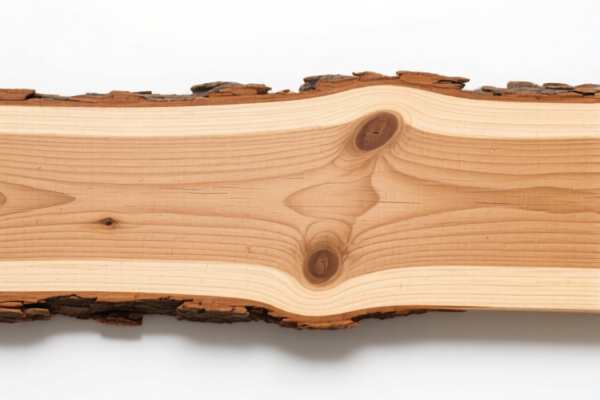
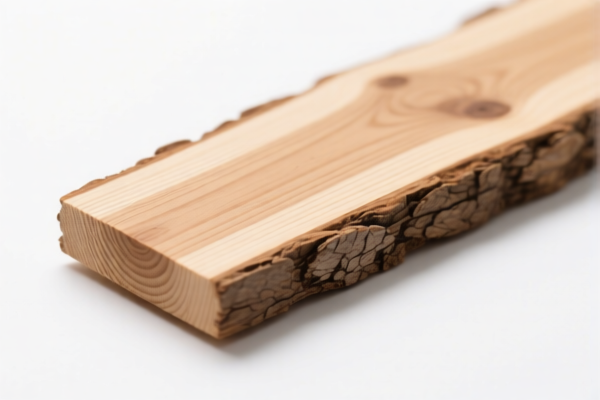
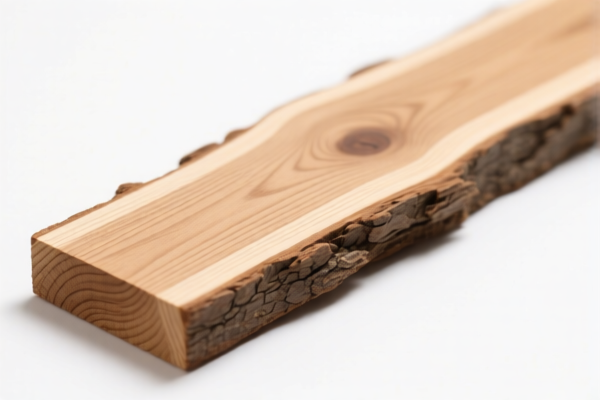
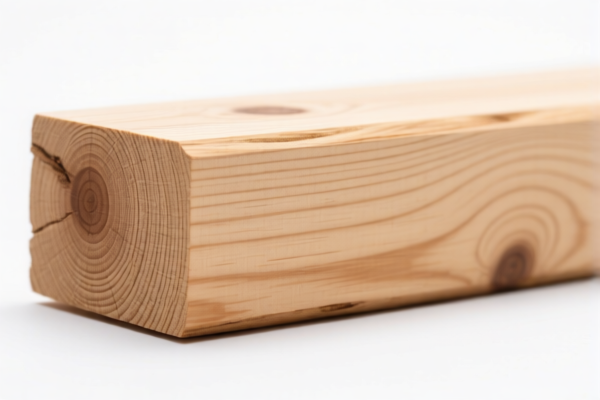
AI Analysis
🪵 Wood Sawn or Chipped Lengthwise (Lumber & Veneer Sheets)
🌐 HS Code Reference & Customs Clearance Guide | 2026 Latest Tariff Analysis | Professional Clearance Strategy
📌 Part 1: Product Definition & Classification: Do You Really Understand "Wood Products"?
The phrase "Wood sawn or chipped lengthwise, sliced or peeled" covers a broad range of processed timber products in international trade. These are not raw logs, but wood that has been mechanically processed to specific dimensions or shapes. They are primarily divided into three categories based on thickness, processing method, and end-use:
- Solid Lumber (Thickness > 6mm): Standard timber used for construction, furniture, or flooring.
- Shaped Wood (Profiled): Wood with tongues, grooves, or molds (e.g., parquet strips, moldings).
- Veneer Sheets (Thickness ≤ 6mm): Thin slices of wood used for plywood, laminates, or high-end furniture veneering.
⚠️ Key Distinction Points:
- Thickness is King: If the wood is > 6mm, it is generally "Lumber" (HS 4407/4409). If it is ≤ 6mm, it is "Veneer" (HS 4408).
- Processing Level: Plainly sawn vs. continuously shaped (tongued/grooved) determines whether it falls under HS 4407 or HS 4409.
- Species: Coniferous (Softwood, e.g., Pine) vs. Non-coniferous (Hardwood) significantly affects the HS code suffix.
📦 Part 2: HS Code Classification Details (2026 Latest Tariff Authority Comparison)
Below are the specific HS Codes extracted from the provided dataset, mapped to their precise product descriptions and tax implications.
| HS Code | Product Description | Applicable Scenario | Thickness | Processing Type |
|---|---|---|---|---|
4407.11.00.53 |
Wood of Pine (Pinus spp.), Sawn/Chipped, Other | Construction lumber, Furniture stock | > 6mm | Sawn/Sliced/Pealed, Planed/Sanded |
4407.19.00.93 |
Other Coniferous Wood (Non-Pine), Sawn/Chipped | Softwood timber (Spruce, Fir, etc.) | > 6mm | Sawn/Sliced/Pealed, Planed/Sanded |
4409.10.90.40 |
Shaped Coniferous Wood (Other) | Parquet strips, Moldings, Tongue & Groove | Any | Continuously Shaped (Tongued/Grooved) |
4409.29.91.00 |
Shaped Non-Coniferous Wood (Other) | Hardwood moldings, Decorative strips | Any | Continuously Shaped (Tongued/Grooved) |
4408.90.01.51 |
Veneer Sheets, Spliced/End-Jointed | Plywood core, High-end veneer sheets | ≤ 6mm | Sliced/Sawn, Spliced or End-Jointed |
4408.90.01.97 |
Veneer Sheets, Other | Standard veneer sheets, Laminate bases | ≤ 6mm | Sliced/Sawn, Not Spliced/End-Jointed |
🔍 Critical Reminder:
- HS 4407/4409 applies to structural or solid wood products.
- HS 4408 applies strictly to thin sheets used for laminating (Veneer).
- "Coniferous" refers to Softwoods (Pine, Spruce, Fir). "Non-coniferous" refers to Hardwoods (Oak, Mahogany, Walnut, etc.).
- "Other" in the description usually means "Not specified elsewhere" (e.g., not planed, not treated).
💰 Part 3: 2026 Latest Tariff Rate Breakdown (Detailed Tax Clauses)
✅ Applicable Country: United States (US)
✅ Origin: China (CN) (Inferred from the 25% additional tariff pattern common in US-China trade data)
✅ Effective Time: Current US Tariff Schedule (Section 301)
🎯 1. Solid Lumber & Shaped Wood (HS 4407 & 4409)
| HS Code | Product Type | Tax Detail | Total Tax Rate | Calculation Base | Legal Basis |
|---|---|---|---|---|---|
4407.11.00.53 |
Pine Lumber (>6mm) | Base: 0.0% Additional: 25.0% |
25.0% | CIF Value × 25% | USITC Footnote 9903.88.01 (Section 301) |
4407.19.00.93 |
Other Coniferous (>6mm) | Base: 0.0% Additional: 25.0% |
25.0% | CIF Value × 25% | USITC Footnote 9903.88.01 (Section 301) |
4409.10.90.40 |
Shaped Coniferous Wood | Base: 0.0% Additional: 25.0% |
25.0% | CIF Value × 25% | USITC Footnote 9903.88.01 (Section 301) |
4409.29.91.00 |
Shaped Non-Coniferous | Base: 0.0% Additional: 25.0% |
25.0% | CIF Value × 25% | USITC Footnote 9903.88.01 (Section 301) |
📌 Explanation:
- Base Tariff: 0% (General MFN rate for these wood products).
- Additional Tariff: 25% is applied due to Section 301 tariffs on Chinese goods.
- Total Cost Impact: For every $10,000 CIF value, you pay $2,500 in duties.
- No De Minimis: These goods are not eligible for de minimis exemption (Section 321) if shipped from China due to recent regulatory changes or if the value exceeds thresholds.
🎯 2. Veneer Sheets (HS 4408)
| HS Code | Product Type | Tax Detail | Total Tax Rate | Calculation Base | Legal Basis |
|---|---|---|---|---|---|
4408.90.01.51 |
Veneer, Spliced/End-Jointed | Base: 0.0% Additional: 0.0% |
0.0% | CIF Value × 0% | Exempt from Section 301 List 3/4 (Specific Item) |
4408.90.01.97 |
Veneer, Other | Base: 0.0% Additional: 0.0% |
0.0% | CIF Value × 0% | Exempt from Section 301 List 3/4 (Specific Item) |
📌 Key Insight:
- Zero Tariff Advantage: Unlike solid lumber, Veneer Sheets (HS 4408) listed here have a 0% total tax rate.
- Reason: Many wood veneer products were excluded from Section 301 tariffs or placed on different tariff lists.
- Strategic Value: If your product can be technically classified as "Veneer" (≤6mm) rather than "Lumber," you save 25% on duties.
🛠️ Part 4: Customs Clearance Practical Advice (Pitfall Avoidance Guide)
✅ 1. Preparation Checklist (Non-Negotiable)
| Document | Required | Description |
|---|---|---|
| ✅ Product Specifications | ✔️ | Must specify: Thickness, Width, Length, Species (e.g., Pine, Oak), Moisture Content (<19% is standard for US). |
| ✅ Processing Certificate | ✔️ | Confirm if wood is "Sawn," "Pealed," or "Sliced." Crucial for HS 4407 vs. 4408. |
| ✅ Phytosanitary Certificate | ✔️ | Mandatory for all wood products to prove freedom from pests (ISPM 15 standards). |
| ✅ Fumigation Certificate | ✔️ | If wood is not heat-treated (HT), it must be fumigated. Label "HT" or "MB" (Methyl Bromide) required. |
| ✅ Commercial Invoice | ✔️ | Must clearly state "Wood Sawn Lengthwise," species, and thickness. Avoid vague terms like "Timber." |
| ✅ Packing List | ✔️ | Show net/gross weight. Ensure packaging is robust to prevent damage. |
✅ 2. Classification Strategy (Critical Keywords)
🔥 "Thickness Defines, Shape Determines, Species Specifies!"
| Scenario | Correct HS Code | Incorrect Code | Risk |
|---|---|---|---|
| Pine Board, 10mm thick, plain cut | 4407.11.00.53 (25%) |
4408.90.01.97 (0%) |
High Risk: Misclassification penalty if >6mm. |
| Pine Board, 4mm thick, sliced | 4408.90.01.97 (0%) |
4407.11.00.53 (25%) |
High Risk: Under-declaration of tariff. |
| Parquet Strip, Tongue & Groove | 4409.10.90.40 (25%) |
4407... |
Medium Risk: Shaping changes HS chapter significantly. |
| Raw Logs | Not in Dataset (HS 4403/4404) | 4407... |
High Risk: Logs are NOT sawn wood. Wrong HS leads to immediate rejection. |
✅ 3. Special Handling Tips
| Situation | Advice |
|---|---|
| Mixed Shipment | If Pine and Oak are mixed, declare separately or use the highest tariff code if indistinguishable. |
| Moisture Content | US Customs requires wood to be at 19% or less moisture to prevent mold/quarantine issues. Provide a lab test report. |
| Veneer vs. Lumber | If your product is 5.9mm, it might be classified as Veneer (0% tax) or Lumber (25% tax). Consult a customs broker for pre-classification. |
| End-Jointed Wood | If veneers are spliced, ensure the invoice says "Spliced/End-Jointed" to match 4408.90.01.51. |
🌍 Part 5: Global Market Comparison (2026 Latest)
| Country/Region | Recommended HS Code | Tariff Rate (CN Origin) | Key Requirement | Note |
|---|---|---|---|---|
| 🇺🇸 USA | 4407.11.00.53 |
25% (Additional) | Phytosanitary + ISPM 15 | Veneer (4408) is 0%! |
| 🇨🇳 China | 4407.11.00.53 |
Varies (0-10%) | Fumigation Certificate | Import duty varies by species. |
| 🇪🇺 EU | 4407.11.00 |
0% (Most FTE) | EUDR (Deforestation Regulation) | New 2024/2025 Rule: Proof of sustainability required. |
| 🇬🇧 UK | 4407.11.00 |
0% | UKCA Marking (if applicable) | Similar to EU post-Brexit. |
| 🇯🇵 Japan | 4407.11.00 |
2.0% - 5.0% | Phytosanitary | No Section 301 equivalent. |
📌 Conclusion:
- USA: Be aware of the 25% penalty for solid wood, but exploit the 0% rate for veneers.
- EU: Prepare for EUDR compliance (geolocation data of timber origin).
- Global: Phytosanitary certificates are universally required for wood products.
📌 Part 6: Common Errors & Pitfalls (Lessons Learned)
❌ Error 1: Classifying 5mm thick plywood core as "Lumber" (4407...)
👉 Consequence: Pay 25% tariff instead of 0%. Cost increase: 25%!
❌ Error 2: Shipping unfurnished logs as "Sawn Wood" (4407...)
👉 Consequence: Customs inspection → Seizure or fines for incorrect declaration. Logs have different HS codes (4403/4404).
❌ Error 3: Ignoring Moisture Content
👉 Consequence: US Customs may reject shipment if >19% moisture due to mold risk. Return/Destroy.
❌ Error 4: Vague Description "Wood Pieces"
👉 Consequence: Customs cannot classify → Delay for additional documentation. Always specify: "Pine, Sawn, >6mm."
✅ Correct Declaration Example:
"Wood, Pine (Pinus spp.), Sawn Lengthwise, Planed, Thickness 12mm, Moisture Content <18%, Fumigated, HS Code 4407.11.00.53"
🎯 Part 7: Conclusion: Professional Classification, Cost Savings, Risk Reduction!
🎯 Remember the Golden Rules:
🔹 ">6mm = Lumber (25% Tax)"
🔹 "≤6mm = Veneer (0% Tax)"
🔹 "Tongued/Grooved = HS 4409 (25% Tax)"
🔹 "Always provide Phytosanitary Certificate!"🔹 "HS Code saves money, Description prevents delays!"
📌 Pro Tip:
If your wood product is between 5mm and 7mm, consult a customs broker immediately. A slight change in specification (e.g., from "Sawn" to "Pealed") or thickness measurement can shift you from 25% tax to 0% tax.
📣 Immediate Action:
📞 Contact a licensed customs broker for Pre-Classification Ruling.
🚀 Ensure ISPM 15 labeling on all pallets/crates.
💼 Your profit margin depends on accurate HS coding!
✨ Professional Customs Clearance Starts with Precision!
💼 Every percentage point of tax saved is pure profit!
Customer Reviews
About HS Code Classification
The Harmonized System (HS) is an internationally standardized nomenclature developed by the World Customs Organization (WCO) to classify traded products. Over 200 countries use the HS system as the basis for customs tariffs, trade statistics, and import/export regulations.
Each HS code follows a hierarchical structure:
- Chapter (2 digits) — Broad category of goods (e.g., Chapter 84: Machinery and Mechanical Appliances)
- Heading (4 digits) — More specific grouping within the chapter
- Subheading (6 digits) — Internationally standardized breakdown, used by all WCO member countries
- National subdivisions (8-10 digits) — Country-specific extensions for further classification, such as US HTSUS 10-digit codes
Correct HS code classification is essential for smooth customs clearance, accurate duty payment, and compliance with trade regulations. Misclassification can lead to customs delays, overpayment of duties, or penalties.
When importing from CN to US, the applicable tariff rates may include:
- Most-Favored-Nation (MFN) rate — The standard duty rate applied to WTO members
- General rate — Applied to countries without trade agreements
- Trade remedy duties — Additional tariffs such as Section 301 (anti-dumping), Section 232 (national security), or countervailing duties
The information provided on this page is for reference purposes only. For official classification, please consult with your local customs authority or a licensed customs broker.