Wood Sawn or Chipped Lengthwise, Sliced or Peeled
CN → US| HS Code | Tariff Rate | Origin | Destination | Doc |
|---|---|---|---|---|
| 4407110001 | 35.0% | CN | US | Official Doc |
| 4407190055 | 35.0% | CN | US | Official Doc |
Product Images
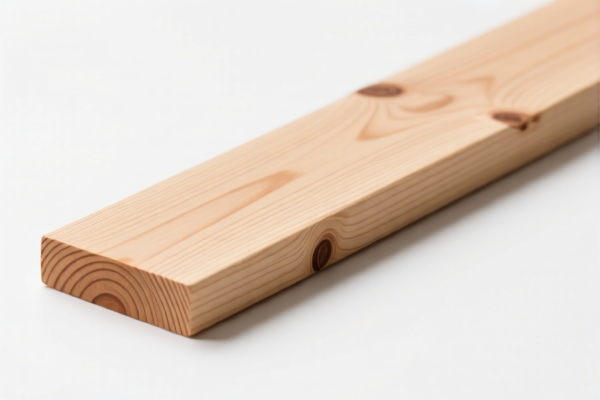
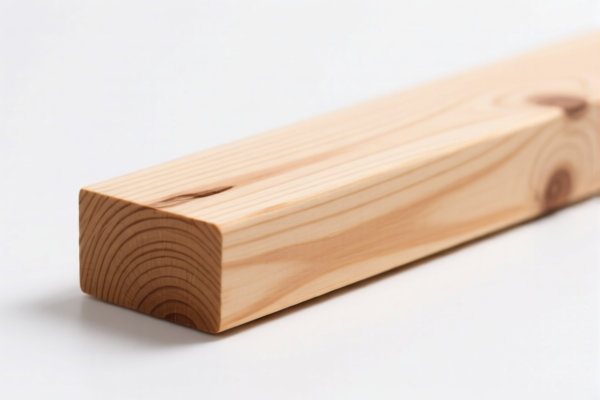
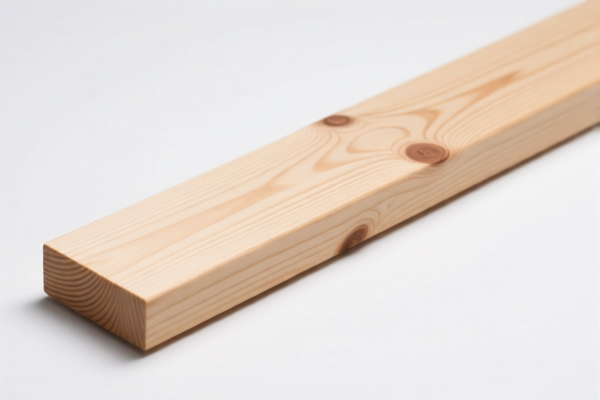
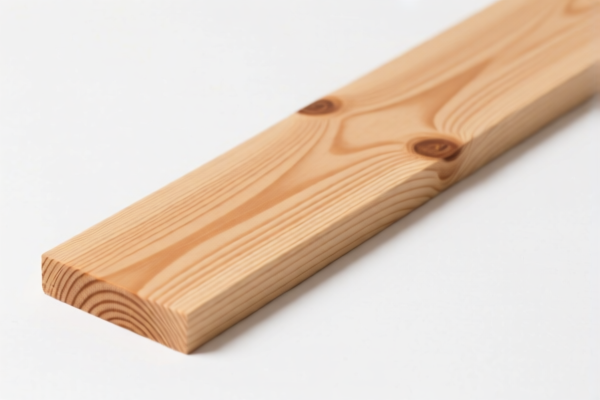
AI Analysis
🌲 Wood Sawn, Chipped, Sliced, or Peeled (Thick Timber & Lumber)
🌐 HS Code Reference & Customs Clearance Guide | 2026 Latest Tariff Analysis | Professional Clearance Strategy
📌 I. Product Definition & Classification: Do You Really Know "Wood"?
Wood processed by sawing, chipping, slicing, or peeling—whether planed, sanded, or end-jointed—is a fundamental raw material for construction, furniture, and manufacturing. In international trade, it is strictly categorized by species (Coniferous vs. Non-Coniferous) and processing level (Raw vs. Treated/Dimensioned).
⚠️ Key Distinction:
- Thickness > 6mm: Classified under Chapter 44 (Wood and articles of wood).
- Specific Species: Must be identified by Latin name (e.g., Pinus, Pseudotsuga) for accurate HS Code assignment.
- Processing State: "Rough" (unplaned) vs. "Planed/Sanded" affects valuation and potential duty scrutiny.
📦 II. HS Code Classification Details (Based on Provided Data)
| HS Code | Product Description | Application Scenario | Species | Processing State |
|---|---|---|---|---|
4407.11.00.01 |
Wood sawn/chipped lengthwise, planed/sanded/end-jointed; Thickness > 6mm; Coniferous; Pine (Pinus spp.) Finger-jointed | Finger-jointed lumber for furniture, shelving, interior trim | Pine (Pinus spp.) | Finger-jointed (End-jointed) |
4407.19.00.55 |
Wood sawn/chipped lengthwise, planed/sanded/end-jointed; Thickness > 6mm; Coniferous; Other; Douglas-fir (Pseudotsuga menziesii) Rough; Min dimension ≥ 5.1cm & < 12.7cm | Rough-sawn lumber for construction framing, pallets, structural beams | Douglas-fir (Pseudotsuga menziesii) | Rough (Not Treated) |
🔍 Critical Note:
- HS Code4407.11.00.01applies ONLY to Pine species that are finger-jointed. Non-jointed pine or other conifers fall into different subheadings.
- HS Code4407.19.00.55applies ONLY to Rough Douglas-fir with specific dimensional constraints (min 5.1 cm, max 12.7 cm). Planed or treated Douglas-fir has different codes.
💰 III. 2026 Latest Tariff Rate Breakdown (Including Additional Taxes)
✅ Applicable Country: United States (US)
✅ Country of Origin: China (CN) (Implied by tax structure in data)
✅ Effective Time: 2025 onwards (as per data context)
🎯 1. 4407.11.00.01 —— Pine Wood, Finger-Jointed, > 6mm
| Item | Detail |
|---|---|
| Base Tariff | 0.0% |
| Additional Tariff (Section 301) | +25.0% |
| Total Tax Rate | 25.0% |
| Tax Calculation | CIF Value × 25% |
| De Minimis Exemption | ❌ Not Applicable (High tariff items excluded) |
| Legal Basis | HTSUS:4407.11.00.01 → Section 301 Additional Duty |
📌 Explanation:
- The 0% base rate reflects standard MFN (Most Favored Nation) treatment for wood products.
- The 25% additional duty is imposed under Section 301 of the Trade Act of 1974, targeting specific Chinese-origin wood products.
- Total Effective Rate: 25%. This is a significant cost factor for furniture and construction materials.
🎯 2. 4407.19.00.55 —— Douglas-fir, Rough, Specific Dimensions
| Item | Detail |
|---|---|
| Base Tariff | 0.0% |
| Additional Tariff (Section 301) | +25.0% |
| Total Tax Rate | 25.0% |
| Tax Calculation | CIF Value × 25% |
| De Minimis Exemption | ❌ Not Applicable |
| Legal Basis | HTSUS:4407.19.00.55 → Section 301 Additional Duty |
📌 Note:
- Even though this is "Rough" (unprocessed) timber, it still attracts the 25% Section 301 tariff.
- Dimensional precision is critical: If the wood is < 5.1 cm or ≥ 12.7 cm, it may fall under a different HS code with potentially different tax implications (though likely similar 301 treatment).
- Species must be verified: Misidentifying Douglas-fir as Spruce or Fir can lead to customs penalties for incorrect classification.
🛠️ IV. Customs Clearance Practical Advice (Avoiding Pitfalls)
✅ 1. Required Documentation Checklist
| Document | Required? | Purpose |
|---|---|---|
| ✅ Commercial Invoice | ✔️ | Must specify: Species (Pinus or Pseudotsuga), Processing (Rough/Finger-jointed), Dimensions, Thickness > 6mm |
| ✅ Packing List | ✔️ | Detailed weight and dimensions; must match invoice exactly |
| ✅ Species Identification Certificate | ✔️ | Proof of Latin species name (e.g., Pinus taeda, Pseudotsuga menziesii) |
| ✅ Fumigation/Phytosanitary Certificate | ✔️ | Required for raw wood to prevent pest introduction (ISPM 15 standard) |
| ✅ Bill of Lading/Air Waybill | ✔️ | Proof of shipment |
✅ 2. Classification Strategy (Key Rules)
🔥 “Species First, Dimension Second, Processing Third!”
| Scenario | Correct HS Code | Wrong Code | Consequence |
|---|---|---|---|
| Pine, Finger-jointed, >6mm | 4407.11.00.01 |
4407.11.00.99 (Other Pine) |
Potential misclassification, but tax rate likely same (25%). However, accuracy is key for compliance. |
| Douglas-fir, Rough, 10cm wide | 4407.19.00.55 |
4407.19.00.99 (Other) |
Risk of audit if dimensions are out of spec (5.1-12.7cm). |
| Non-Coniferous Wood | ❌ Not in Data | 4407.91-99 |
Different HS Code, different tax rate (check separately). Do not use these codes for non-coniferous wood. |
✅ 3. Special Considerations
| Situation | Handling Advice |
|---|---|
| Mixed Shipments | If a container has both Pine and Douglas-fir, separate the HS Codes on the customs entry. Do not average them. |
| Dimension Disputes | Ensure all pieces meet the "minimum dimension ≥ 5.1 cm" rule for 4407.19.00.55. Smaller pieces may be classified as "wood chips" or "other," leading to different duties. |
| End-Jointed vs. Finger-Jointed | Ensure documentation clearly states "Finger-Jointed" for Pine. If it's merely "End-Jointed" (glued but not fingered), it may not qualify for 4407.11.00.01. |
| Treated Wood | If wood is treated with preservatives, it may fall under a different subheading. The data specifies "Not Treated" for Douglas-fir. |
🌍 V. Global Market Comparison (2026 Context)
| Market | Recommended HS Code | Base Tariff | Additional Duty | Total Rate | Notes |
|---|---|---|---|---|---|
| 🇺🇸 USA | 4407.11.00.01 / 4407.19.00.55 |
0.0% | +25.0% | 25.0% | High tariff due to Section 301. Strict species verification. |
| 🇨🇳 China | 4407.11.00.00 / 4407.19.00.00 |
~5-10% | 0% | ~5-10% | Lower base rate. No Section 301. |
| 🇪🇺 EU | 4407.10 / 4407.24 |
~0-10% | 0% | ~0-10% | Varies by species. No blanket 25% duty. |
| 🇬🇧 UK | 4407.10 / 4407.24 |
~0-10% | 0% | ~0-10% | Post-Brexit tariff schedule. Similar to EU. |
📌 Conclusion:
- The USA imposes a 25% additional tariff on these specific Chinese-origin wood products, making it the most costly market.
- For other markets, the base tariff applies, which is significantly lower.
📌 VI. Common Errors & Pitfalls (Lessons Learned)
❌ Error 1: Misidentifying Pine Species
👉 Consequence: Customs may reject the entry or assign a higher general rate.
Fix: Provide Latin species name (Pinus spp.) and physical proof if requested.
❌ Error 2: Ignoring Dimensional Limits for Douglas-fir
👉 Consequence: If wood is < 5.1 cm wide, it may be classified as "other," potentially leading to different scrutiny or duty calculations.
Fix: Strictly measure and verify all pieces.
❌ Error 3: Claiming "Finger-Jointed" When It’s Just "Glued"
👉 Consequence: Misclassification. Finger-jointing has a specific industrial process (interlocking teeth).
Fix: Use accurate terminology and provide photos or factory specs.
❌ Error 4: Overlooking Phytosanitary Requirements
👉 Consequence: Shipment held at border for pest inspection.
Fix: Ensure ISPM 15 fumigation certification is included.
🎯 VII. Conclusion: Precision in Classification Saves Costs
🎯 Key Takeaways:
🔹 “Species and Dimensions Define the Code.”
🔹 “25% Tariff is Inevitable for US Imports of These Items.”
🔹 “Accurate Documentation Prevents Delays.”
📌 Pro Tip:
If you are importing these wood products into the US, factor in the 25% additional duty in your pricing model. Consider third-country sourcing (e.g., from Vietnam or Mexico, if applicable and rules of origin are met) to potentially avoid Section 301 tariffs, but consult a customs attorney for legality.
📣 Immediate Action:
📞 Verify Species & Dimensions with your supplier.
📄 Ensure Phytosanitary Certificates are in order.
🧮 Calculate Total Landed Cost including 25% duty.
✨ Professional Customs Clearance Starts with Accurate Classification!
💼 Every percentage point matters in global trade!
Customer Reviews
About HS Code Classification
The Harmonized System (HS) is an internationally standardized nomenclature developed by the World Customs Organization (WCO) to classify traded products. Over 200 countries use the HS system as the basis for customs tariffs, trade statistics, and import/export regulations.
Each HS code follows a hierarchical structure:
- Chapter (2 digits) — Broad category of goods (e.g., Chapter 84: Machinery and Mechanical Appliances)
- Heading (4 digits) — More specific grouping within the chapter
- Subheading (6 digits) — Internationally standardized breakdown, used by all WCO member countries
- National subdivisions (8-10 digits) — Country-specific extensions for further classification, such as US HTSUS 10-digit codes
Correct HS code classification is essential for smooth customs clearance, accurate duty payment, and compliance with trade regulations. Misclassification can lead to customs delays, overpayment of duties, or penalties.
When importing from CN to US, the applicable tariff rates may include:
- Most-Favored-Nation (MFN) rate — The standard duty rate applied to WTO members
- General rate — Applied to countries without trade agreements
- Trade remedy duties — Additional tariffs such as Section 301 (anti-dumping), Section 232 (national security), or countervailing duties
The information provided on this page is for reference purposes only. For official classification, please consult with your local customs authority or a licensed customs broker.