Wood Shaving Fuel Pellets (Household)
CN → US| HS Code | Tariff Rate | Origin | Destination | Doc |
|---|---|---|---|---|
| 4402900100 | 35.0% | CN | US | Official Doc |
| 4401394220 | 35.0% | CN | US | Official Doc |
| 4405000000 | 38.2% | CN | US | Official Doc |
| 4401310000 | 35.0% | CN | US | Official Doc |
| 2701190050 | 35.0% | CN | US | Official Doc |
Product Images


AI Analysis
🔥 Wood Shaving Fuel Pellets (Household)
🌐 HS Code Reference & Customs Clearance Guide | 2026 Latest Tariff Analysis | Professional Clearance Strategy
📌 I. Product Definition & Classification: Do You Really Understand "Fuel Pellets"?
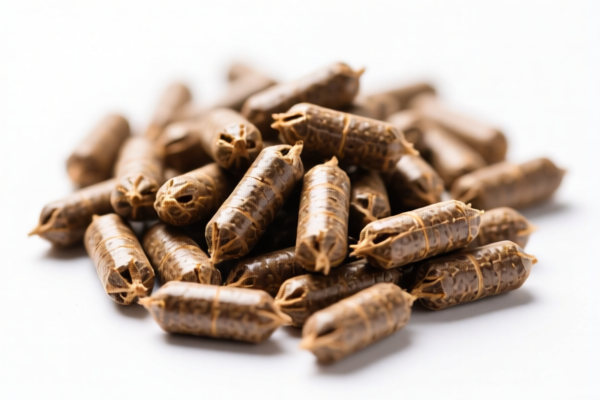
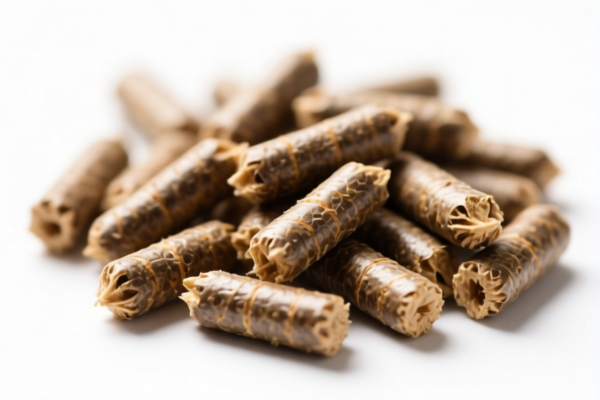
"Wood Shaving Fuel Pellets" are compressed biomass fuels derived from wood shavings or sawdust, primarily used for household heating, stoves, and fireplaces. In international trade, these products are categorized based on their material form (shavings vs. pellets) and end-use (fuel vs. raw material).
Biomass Fuel (Pellets): Compressed wood particles processed for combustion energy. Wood Shavings/Particles: Raw or semi-processed wood material, potentially classified as raw wood products rather than finished fuel.
⚠️ Key Distinction Point:
- If the product is explicitly processed into densified pellets for fuel use → It falls under 4401.39 / 4401.31 (Wood Pellets) or 4402.90 (Charcoal/Biomass Fuels).
- If the product is considered uncompressed wood shavings or loosely packed → It may be classified under 4405 (Wood in Chips, Particles, etc.).
- If classified strictly as solid fuel regardless of form → It might be erroneously placed under 2701 (Coal/Brittle Fuel), though this is less common for wood-derived products unless specific criteria are met.
📦 II. HS Code Classification Details (2026 Latest Tariff Authority Match)
| HS Code | Product Description | Applicability | Tax Rate |
|---|---|---|---|
4402.90.01.00 |
Wood-based fuel pellets, classified under charcoal/biomass fuels | Compressed wood pellets for fuel; fits "other" wood-based fuel categories | 35.0% |
4401.39.42.20 |
"Wood Shaving" matches shavings, "Pellets" matches pellets; material and form align | Standard wood pellets from shavings; common classification for processed fuel | 35.0% |
4405.00.00.00 |
"Wood Shaving" matches wood chips/particles; "Pellets" seen as semi-processed wood powder form | Loose or semi-processed wood particles; less dense than standard fuel pellets | 38.2% |
4401.31.00.00 |
"Wood Shaving" and "Pellets" fully match definition of wood屑 (wood屑) processed into pellets | Standard wood pellets specifically defined under wood屑 category | 35.0% |
2701.19.00.50 |
"Fuel" matches solid fuel; "Pellet" as energy form; inferred as biomass fuel | Broad classification for solid fuels including biomass; less specific | 35.0% |
🔍 Key Reminder:
- All classifications above incur significant additional tariffs due to US-China trade policies. - 4405.00.00.00 has the highest total tax rate (38.2%) due to a base tariff of 3.2%. - Most other codes have a 0% base tariff, but still face 35% total due to additional levies.
💰 III. 2026 Latest Tariff Rate Details (Including Additional Taxes, Policy Surcharges)
✅ Applicable Country: United States (US)
✅ Origin: China (CN)
✅ Effective Time: From November 10, 2025 (and subsequent imports)
🎯 1. 4402.90.01.00 —— Wood-Based Fuel Pellets (Biomass/Charcoal Category)
| Item | Content |
|---|---|
| Base Tariff | 0% (ad valorem) |
| USITC Additional Tariff | +25% (under USITC Footnote 9903.88.01 / Section 301) |
| IEEPA Additional Tariff | +10% (against Chinese/HK products, effective from Nov 10, 2025) |
| Total Tax Rate | 35.0% |
| Tax Calculation | CIF Value × 35% |
| De Minimis Exemption Available? | ❌ No (deny_de_minimis) |
| Legal Basis Path | IEEPA:9903.01.25 → IEEPA:9903.01.24 → USITC:4402.90.01.00 → FOOTNOTE:9903.88.01 |
📌 Explanation:
- The 25% USITC tariff is under the "Section 301" additional tariffs; - The 10% IEEPA tariff is under the International Emergency Economic Powers Act; - Total 35%, which is a high tariff, must be anticipated in advance!
🎯 2. 4401.39.42.20 —— Wood Pellets (From Shavings)
| Item | Content |
|---|---|
| Base Tariff | 0% |
| USITC Additional Tariff | +25% |
| IEEPA Additional Tariff | +10% |
| Total Tax Rate | 35.0% |
| Tax Calculation | CIF × 35% |
| De Minimis Exemption Available? | ❌ No |
| Legal Basis Path | IEEPA:9901.25 → IEEPA:9903.01.24 → USITC:4401.39.42.20 → FOOTNOTE:9903.88.01 |
📌 Note:
- Same tax structure as above; - Applies to standard wood pellets derived from shavings; - Commonly used for household heating stoves.
🎯 3. 4405.00.00.00 —— Wood in Chips, Particles, etc.
| Item | Content |
|---|---|
| Base Tariff | 3.2% |
| USITC Additional Tariff | +25% |
| IEEPA Additional Tariff | +10% |
| Total Tax Rate | 38.2% |
| Tax Calculation | CIF × 38.2% |
| De Minimis Exemption Available? | ❌ No |
| Legal Basis Path | IEEPA:9901.25 → IEEPA:9903.01.24 → USITC:4405.00.00.00 → FOOTNOTE:9903.88.01 |
📌 Warning:
- This code has the highest total tax rate at 38.2%; - Applies if the product is classified as "wood particles" rather than "pellets"; - Avoid this classification if possible to save 3.2% in base tariffs.
🎯 4. 4401.31.00.00 —— Wood Pellets (From Wood屑)
| Item | Content |
|---|---|
| Base Tariff | 0% |
| USITC Additional Tariff | +25% |
| IEEPA Additional Tariff | +10% |
| Total Tax Rate | 35.0% |
| Tax Calculation | CIF × 35% |
| De Minimis Exemption Available? | ❌ No |
| Legal Basis Path | IEEPA:9901.25 → IEEPA:9903.01.24 → USITC:4401.31.00.00 → FOOTNOTE:9903.88.01 |
📌 Note:
- Standard classification for wood pellets; - Same tax burden as4401.39.42.20; - Most accurate for densely compressed wood fuel pellets.
🎯 5. 2701.19.00.50 —— Coal, Briquettes, etc. (Solid Fuel)
| Item | Content |
|---|---|
| Base Tariff | 0% |
| USITC Additional Tariff | +25% |
| IEEPA Additional Tariff | +10% |
| Total Tax Rate | 35.0% |
| Tax Calculation | CIF × 35% |
| De Minimis Exemption Available? | ❌ No |
| Legal Basis Path | IEEPA:9901.25 → IEEPA:9903.01.24 → USITC:2701.19.00.50 → FOOTNOTE:9903.88.01 |
📌 Caution:
- Misclassification risk: Wood pellets are biomass, not coal; - However, if declared broadly as "solid fuel," this code may be applied; - Same 35% total rate, but legally risky if challenged.
🛠️ IV. Customs Clearance Practical Advice (Pitfall Avoidance Guide)
✅ 1. Required Documents List (All Are Mandatory)
| Document | Must Provide | Explanation |
|---|---|---|
| ✅ Product Specification Sheet | ✔️ | Includes size, density, moisture content, heating value |
| ✅ Material Safety Data Sheet (MSDS) | ✔️ | For fire safety and chemical composition |
| ✅ Product Photos (with Label) | ✔️ | Clear image of packaging, brand, model, origin |
| ✅ Third-Party Test Report | ✔️ | ASTM D5511 (pellet density), ENplus certification (if EU-style) |
| ✅ Commercial Invoice | ✔️ | Clearly state "Wood Shaving Fuel Pellets for Household Use" |
| ✅ Certificate of Origin (CO) | ✔️ | If non-Chinese origin, may qualify for preferential rates |
| ✅ Packing List | ✔️ | Detail inner/outer packaging to avoid unpacking during inspection |
✅ 2. Declaration Tips (Key Mantra)
🔥 “Pellets Not Chips, Fuel Not Raw, Name Precise, Tax Rate Down!”
| Scenario | Correct Declaration | Wrong Practice |
|---|---|---|
| Standard Wood Pellets | 4401.31.00.00 or 4401.39.42.20 |
Misdeclare as "Chips" → 38.2% |
| Loose Wood Shavings | 4405.00.00.00 |
Misdeclare as "Pellets" → 35% (but risky) |
| Biomass Fuel Bricks | 4402.90.01.00 |
Misdeclare as "Coal" → 35% (but legally questionable) |
| Wood Chips for Mulch | 4405.00.00.00 |
Misdeclare as "Fuel" → Higher scrutiny |
✅ 3. Special Case Handling
| Scenario | Handling Advice |
|---|---|
| OEM Custom Pellets | Provide customer order + design specs to avoid "non-standard" classification |
| Flavored/Scented Pellets | Still classified under wood pellets, but may require additional chemical disclosures |
| Pellets with Additives | If binders are used, declare full composition to avoid MSIA violations |
| Biomass for Industrial Use | If used in large-scale plants, still classified under 4401, but may qualify for different port entries |
🌍 V. Global Main Market Clearance Comparison (2026 Latest)
| Country/Region | Recommended HS Code | Tariff | Certification Requirements | Notes |
|---|---|---|---|---|
| 🇺🇸 USA | 4401.31.00.00 |
35% (China origin) | None required for basic clearance | High additional tariffs |
| 🇨🇳 China | 4401.31.00.00 |
5% | None | No additional tariffs |
| 🇪🇺 EU | 4401.31.00.00 |
0% (if ENplus certified) | CE + ENplus | No additional tariffs |
| 🇬🇧 UK | 4401.31.00.00 |
0% | UKCA + ENplus | No additional tariffs |
| 🇦🇺 Australia | 4401.31.00.00 |
5% | None | No additional tariffs |
📌 Conclusion:
- The US is the only major market with significant additional tariffs on Chinese wood pellets; - Chinese-origin wood pellets face high clearance costs in the US; - Consider supply chain diversification to Vietnam, Malaysia, or Thailand for preferential treatment.
📌 VI. Common Errors & Pitfall Guide (Blood Lessons)
❌ Error 1: Declaring "Wood Chips" as "Fuel Pellets"
👉 Consequence: Higher tax rate (38.2%) + potential legal issues for misdeclaration
❌ Error 2: Not providing MSDS or Test Reports
👉 Consequence: Customs hold for 7–14 days, possible return or destruction
❌ Error 3: Using "Wood Shavings" as the only description
👉 Consequence: Classified as raw material (4405) → 38.2% tax
❌ Error 4: Ignoring IEEPA 10% tariff
👉 Consequence: Underpayment + penalties + interest
✅ Correct Practice:
“Wood Shaving Fuel Pellets, Household Grade, Compressed, 8mm Diameter, Low Moisture Content, Model XYZ, ASTM D5511 Certified”
🎯 VII. Conclusion: Professional Declaration, Time-Saving, Cost-Effective!
🎯 Remember the Mantra:
🔹 “Pellets Not Chips, Fuel Not Raw, 35% Tax, 38.2% Risk, Declare Precisely, Save Thousands!”
🔹 “HS Code Determines Life, Tax Rate Differs 3%, Declaration Error Costs $10,000!”
📌 Tips:
- If your wood pellets are originally from Vietnam, Mexico, Thailand, or Malaysia, you may qualify for IEEPA Exemption, with tariffs as low as 0%~5%;
- It is highly recommended to apply for an Advance Ruling before shipment to avoid clearance risks.
📣 Take Action Now:
📞 Contact a Professional Customs Broker + Provide Product Photos + Apply for HS Code Advance Ruling
🚀 Let Your Wood Pellets Clear Customs Smoothly, Export Efficiently, and Double Profits!
✨ Professional Clearance Starts with Accurate Classification!
💼 Every Cent of Your Cost Deserves Precision!
Customer Reviews
About HS Code Classification
The Harmonized System (HS) is an internationally standardized nomenclature developed by the World Customs Organization (WCO) to classify traded products. Over 200 countries use the HS system as the basis for customs tariffs, trade statistics, and import/export regulations.
Each HS code follows a hierarchical structure:
- Chapter (2 digits) — Broad category of goods (e.g., Chapter 84: Machinery and Mechanical Appliances)
- Heading (4 digits) — More specific grouping within the chapter
- Subheading (6 digits) — Internationally standardized breakdown, used by all WCO member countries
- National subdivisions (8-10 digits) — Country-specific extensions for further classification, such as US HTSUS 10-digit codes
Correct HS code classification is essential for smooth customs clearance, accurate duty payment, and compliance with trade regulations. Misclassification can lead to customs delays, overpayment of duties, or penalties.
When importing from CN to US, the applicable tariff rates may include:
- Most-Favored-Nation (MFN) rate — The standard duty rate applied to WTO members
- General rate — Applied to countries without trade agreements
- Trade remedy duties — Additional tariffs such as Section 301 (anti-dumping), Section 232 (national security), or countervailing duties
The information provided on this page is for reference purposes only. For official classification, please consult with your local customs authority or a licensed customs broker.